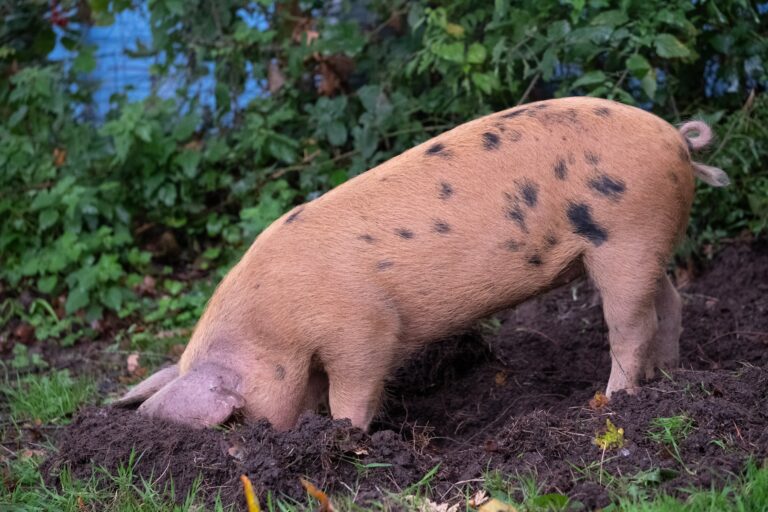
Frustrated with rooting pigs destroying your pastures? Have the pigs work for you by letting them till your garden.
When I first got into Mulefoot pigs, a friend recommended that I ring their snouts or risk ruining my pastures. I decided to forego the ringing because I wanted to see for myself whether I could manage around the rooting. And then it happened. One morning over coffee, while watching my Mulefoot pigs do what they do, it occurred to me that using them as plows for tilling a garden would be a great way to break a little sod, get rid of the pesky grasses, and fertilize the ground in preparation for planting gardens and small fields.
Next time you get the chance, take a careful look at a pig while it’s rooting and you’ll undoubtedly agree that the snout acts very much like a chisel plow shank. The pigs use it to tear up vegetation, turn the soil, and eat all the grass roots, weed roots and grubs they can find.
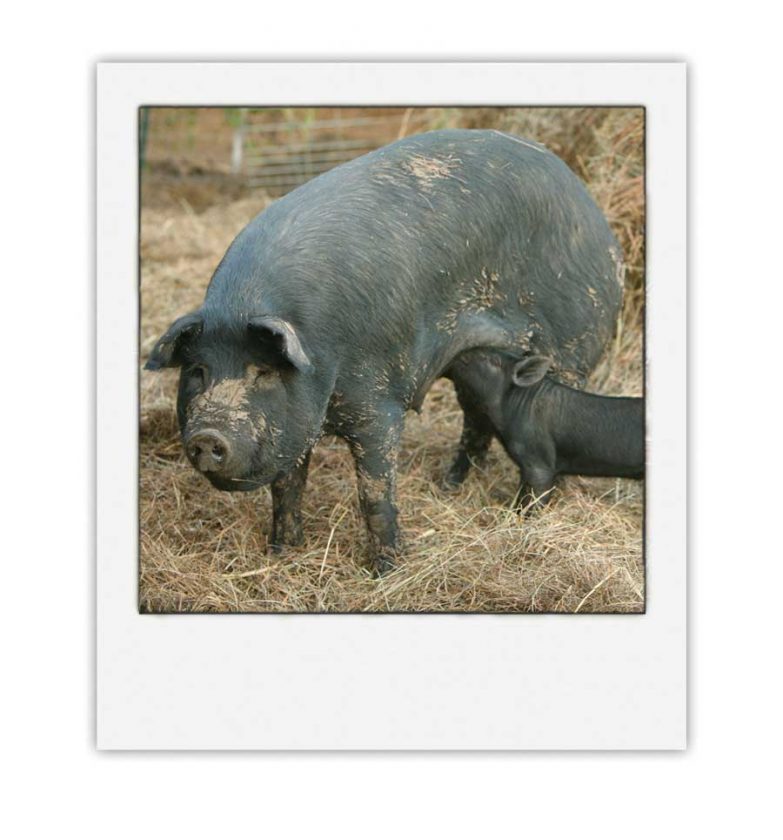
Eager to try my hand at plowing with rooting pigs, when I laid out their large wooded pen I fenced in a dogleg of fine Kansas sod that would one day make a great place to grow corn, wheat and forages such as the giant mangel beets whose tops are every bit as palatable as their 20-pound roots. My ancestors used pig-harvested corn and mangels to help make the bacon, so I figured why not try it for myself. Last spring, I fenced the pigs out of that dogleg and planted some crops that will soon support our efforts in the kitchen and that the pigs will also enjoy.
Buy Hank’s book, Plowing With Pigs and Other Creative, Low-Budget Homesteading Solutions.
Unlike modern commercial pigs, Mulefoot pigs are most definitely not the other white meat. They are a heritage breed, and they thrive outdoors. Mulefoots have loins that are too short and carry far too much body fat for the modern hog industry. But these animals know how to look after themselves and are as useful for plowing up ground for planting as they are delicious and nutritious. Plus, they’re easy to control with portable electric fencing, so it’s a breeze to move them around.
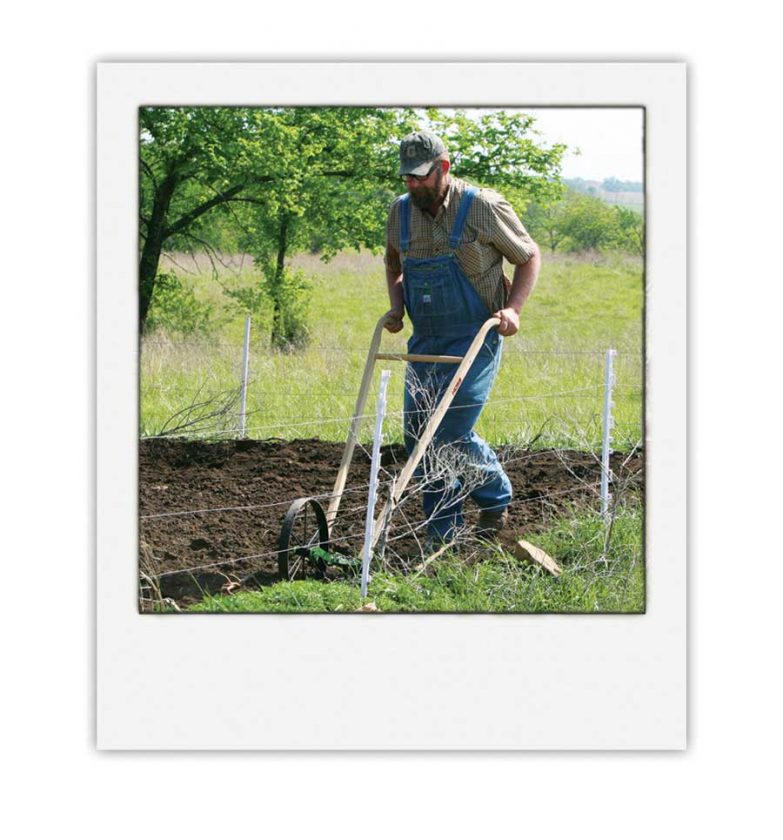
Generally, when I plan to plant after the pigs have been in an area for any length of time, I’ll give the soil a light stirring with a wheel hoe or tiller to loosen things up a bit and render it fit. I also use this opportunity to remove the few chunks of limestone the pigs unearth. Our farm sits atop a limestone ledge that’s within 8 feet of the surface in most places, so we “grow” plenty of limestone in this country. The pigs have unearthed pieces of limestone that weigh in the vicinity of 100 pounds – often these chunks are pushed all the way to the edge of their wooded pen.
Once the soil is ready to accept seed, I put one of my several walk-behind single-row planters to the test. For larger areas, I choose the heavy-duty Cole Planet Jr. plate planter. This tool is sufficiently stout to be mounted on a tractor’s toolbar, but I find walking the rows while planting to be relaxing and good exercise. I’d probably think again if I were planting much more than a couple of acres in a season – but if we had that much corn, I’d need to rethink hand harvesting, and I’m not ready for that just yet.
Hank Will raises hair sheep, heritage cattle and many varieties of open-pollinated corn on his rural Osage County, Kansas farm.