Discover fun nature activities to do with kids as they grow, to teach them outdoor skills such as foraging, fishing, and hunting.
Elaine and I made the decision about 15 years ago to buy the house and 9 acres that adjoin our home and 29 acres. We then deeded the house to our daughter, Sarah, and her husband, David, and have since experienced the old-fashioned joy of having our grandchildren grow up nearby on the 38 acres we share. From the time that Sam and Eli were preschoolers to their current status as middle schoolers, I’ve tried to teach them many of the outdoor skills that are part of a rural lifestyle. Here are some of those skills.
Hunting and Fishing for Pleasure and Food
I grew up in a family where no one fished or hunted, and I was told that those two pastimes are for idlers, and idle hands are the work of the devil. Since fishing was presented as a proverbial forbidden fruit, I became obsessed with going. When I was 9 years old, I began stealing away from the house and biking to a creek about a mile away. Once I felt the tug of a sunfish on my line, I was forever hooked … pun intended.
Youngsters can teach themselves how to fish, but kids need a mentor to learn how to hunt. So, it wasn’t until I was 33 and my father-in-law took me hunting that I killed my first deer. Now, four decades later, I annually try to harvest 10 whitetails, and venison is the only red meat that Elaine and I consume.
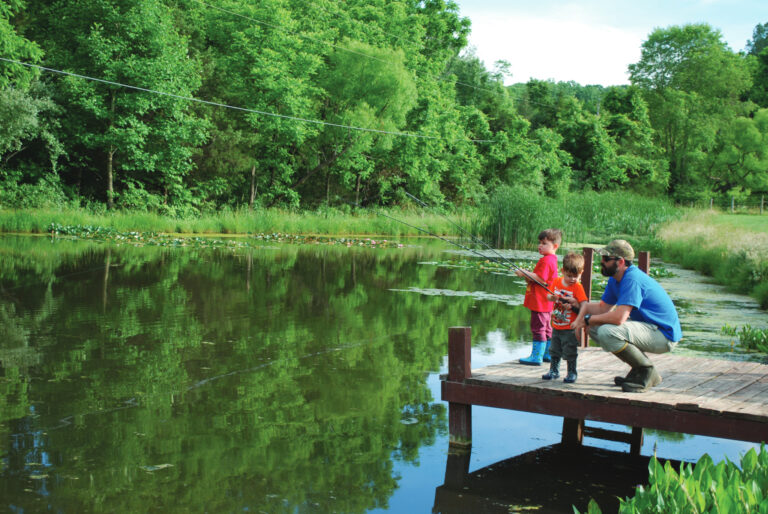
Of course, it’s better to have a mentor in most anything, so I started taking Sam and Eli fishing when they were 5 and 3, respectively. For generations, parents and grandparents have introduced kids to fishing by having them dig for nightcrawlers and seine for minnows and crayfish for bait. The grandsons enjoy sifting through soil to find worms, but they’re positively euphoric about wading the creek behind our house and herding creatures into a seine. I showed the duo how to wade through shallow, rock-laden backwaters and grab a crawdad behind the neck to mobilize it. And they learned why most species of minnows prefer well-aerated riffle areas to feed – and be fed upon. All of these activities were how the boys began to learn about the importance of clean water and healthy ecosystems.
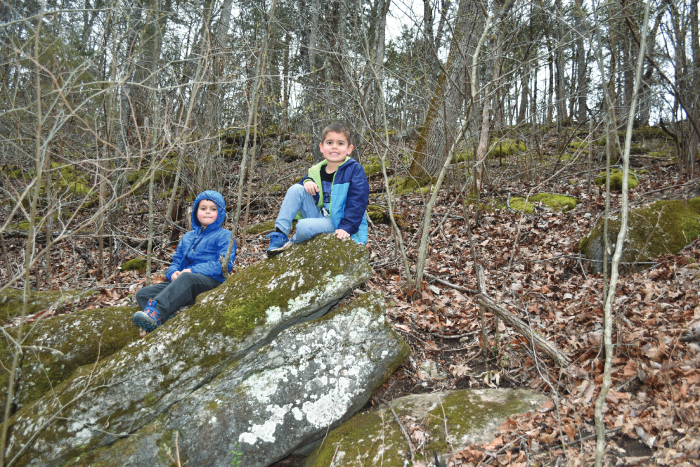
Because pond bluegills were the boys’ first quarry, we never kept any of the crayfish or minnows for bait. Of course, the time-honored way to catch still water sunfish is to dunk a nightcrawler on a size 10 longshank hook under a red-and-white bobber a foot or two above. The delightful squeals of kids when they observe a bluegill tug a bobber beneath the surface are wonderful to hear.
Don’t feel bad about employing this ruse – generations of parents and grandparents have done so. Set the hook on a bluegill, give it slack line, and announce that you’re tired of fishing and would your child or grandchild like to use your rod for a while? Both boys caught most of their early bluegills this way.
Eli seems to enjoy fishing more than Sam, and during the summer months, often asks me to take him down to our creek. At age 11, he’s become interested in bigger prey – smallmouth bass – and I’ve taught him how to retrieve crankbaits through eddies, riffles, and rocky pools for smallies, which we always catch and release, as is the sporting ethic for stream bass. We have no such restrictions for pond bluegills, and taking home several of them for dinner is a way to celebrate the day. Indeed, Eli is now learning how to fly fish and recently caught four bluegills, and he was able to dine on those fillets for dinner, making the fishing experience even more fulfilling.
Conversely, Sam, age 13, seems to be more interested in hunting than his brother and asked his father (David) and me to take him afield for deer last fall. Obviously, a hunter safety class and much practice with a gun are prerequisites to actually going afield. Before the teen’s initial outing, I took the boys behind our houses to a well-known deer crossing and had them build a blind out of downed trees and red cedar boughs for Sam’s initial hunt with his dad.
Both David and I felt that a 12-gauge shotgun, loaded with one buckshot shell, was the best gun to introduce Sam to pursuing deer. Sam also learned to use a rangefinder and restrict his shots to 25 to 30 yards – a nod to his inexperience. The hunter safety class proved excellent at teaching Sam to aim for the boiler room (heart and lungs) and the importance of sitting still and keeping his clothes and body as scent-free as possible while in the outdoors.
We also took Sam turkey hunting with Eli as the designated caller, thus involving both boys in the experience. Box calls and pot and peg calls are the easiest to learn how to use, and Eli’s use of the latter resulted in a hen turkey answering the younger boy’s yelps, a thrill to both grandsons.
Although Sam has yet to even fire a shot at game, he’s excited about going hunting again this coming season, and Eli is warming to participating as well. This leads to another point. We can express how much we adults cherish an outdoor pastime, but ultimately, young people have to make their own decisions about what their passions will become. Forcing a kid to begin an activity could be a mistake. Also, I believe there’s no set age to start a child hunting. Some youngsters might be ready as elementary schoolers, and others might never be responsible enough.
Surprisingly, neither boy is interested in pursuing squirrels, which for generations were the starter game animal for American youth. I’ve noticed an almost obsession with deer among the high school youth I teach. Meanwhile, both boys relish eating venison and wild turkey, which will taste even better to them when taken by their own means.
Identifying and Eating Wild Edibles
Both grandsons began gathering wild foods when they were preschool age and remain fascinated with this activity. The boys’ foraging careers started by them picking native raspberries and blackberries growing around the perimeter of Elaine’s and my backyard. My spouse rewarded their efforts with berry pies and cobblers, which solidified their joy of going and became a summer tradition.
Come fall in those early years, the boys and I gathered summer grapes, persimmons, black walnuts, and shagbark and mockernut hickory nuts. Elaine made persimmon and black walnut bread and cookies as well as wild grape jelly – more incentives to forage. Until I was absolutely sure they could identify all these wild foods, the rule was that they could gather on their own, but they weren’t to eat anything until I confirmed its edibility … or inedibility.
When Sam and Eli were 10 and 8, respectively, we began gathering wild mushrooms, but the preceding rule was in force for fungi, too, and remains so. Every winter, we search for oysters and amber jelly rolls; in spring and summer, chicken of the woods is a favorite fungi target. And summer also finds us seeking out summer oysters, smooth chanterelles, black-staining polypore, and a host of others. I’ve also encouraged the boys to read online about wild edibles and peruse field guides on the topic.
Identifying Tracks and Scat, Especially in Snow
A wonderful wintertime activity for kids, especially after a snow, is to take them looking for tracks and scat. This is a particularly fetching activity for preschool youth as a way to introduce them to wildlife and the woods. We have a 0.8-mile trail that runs around the perimeter of most of our land, and that’s an ideal length for young legs to traverse.
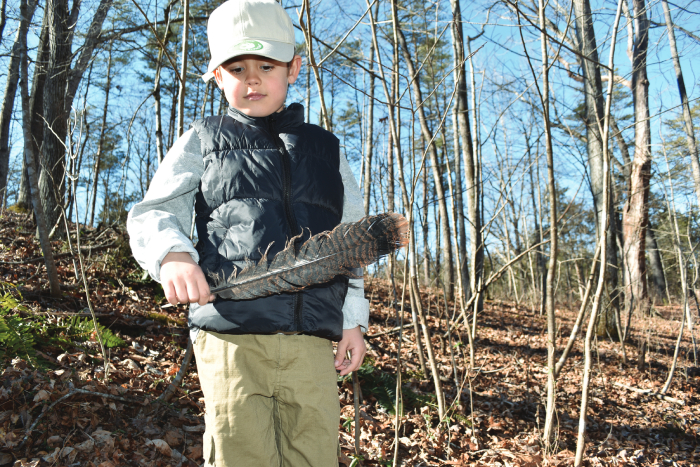
Deer are common in most of America, and Sam and Eli quickly learned how to distinguish deer tracks and that round, brown pellets are indicative that whitetails have been consuming acorns and dry, woody browse. If scat is clumped, then soft mast and greenery are the main courses. Raccoon, opossum, and rabbit tracks are also common, and it’s always a thrill when we find turkey tracks in fresh snow.
Another lesson to learn while snow tracking is that youngsters can follow tracks to where a detour occurs and an animal stops to feed. For example, a common winter food for deer is honeysuckle, and it’s illuminating for the boys to follow tracks that indicate that a whitetail stopped, fed, and defecated at a honeysuckle patch.
Identifying Wildflowers
At the beginning of the COVID-19 pandemic, when school went online, I began brainstorming a spring outdoor activity that the boys and I could do after their lessons and my teaching were done for the day. The solution was obvious – wildflower walks on the trail behind our houses.
Armed with field guides, we prowled our woodlot, and the grandsons quickly learned how to identify bloodroots, trilliums, Virginia bluebells, and hoary puccoons, for example. I also stressed the importance of wildflowers for various pollinators, such as butterflies, moths, and bees, when the earth is first awaking from winter and nourishment is still scarce.
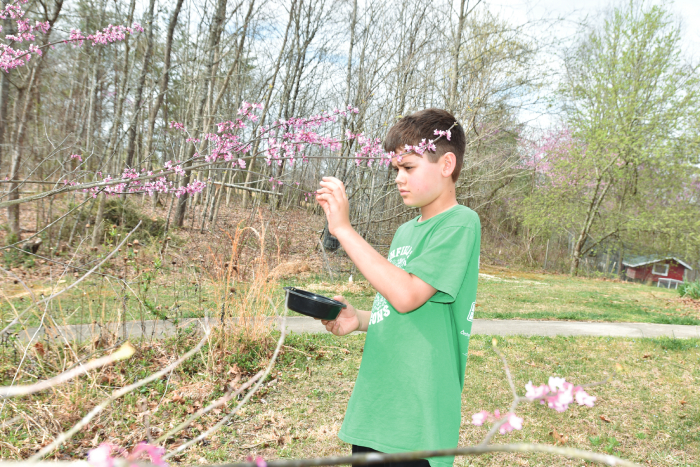
The grandsons also learned how to recognize the showy white blooms of dogwoods and the reddish-purple ones of redbuds, and their importance to pollinators. I also taught them that redbud blooms are edible and are, in fact, delicious when scattered across the top of a fresh salad.
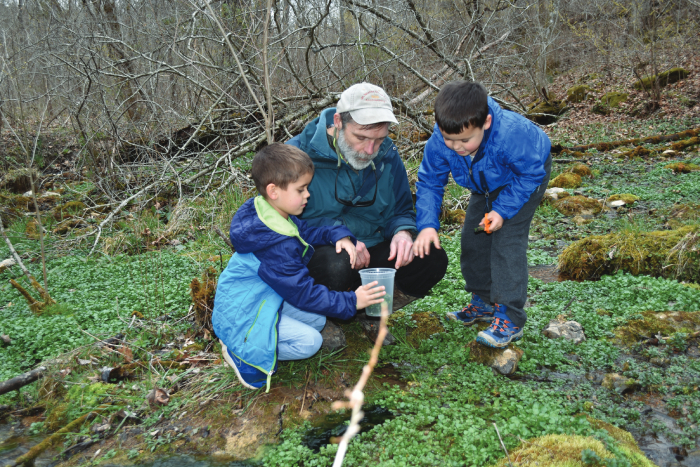
Indeed, we combined the spring wildflower walks with gathering dandelion leaves, wild onion bulbs and stems, bittercress, and redbud blooms to make an all-wild salad. Side trips to the two springs that bubble forth on our land resulted in the boys learning how to identify and gather watercress, which Elaine added to egg entrees for the boys and me.
Learning How to Manage a Woodlot for Food, Fuel, and Wildlife
Part of land stewardship is learning how to manage a woodlot for food, fuel, and wildlife. During the winter and early spring (when the woods are barren) are fine times to examine a woodlot, determine what needs to be done, and become more familiar with the concept of stewardship. Now that the boys are older, I’m weaving that philosophy in with normal woodland activities.
For example, although I cut firewood all year round, most of this activity takes place in winter and early spring. During one of our firewood-cutting jaunts, we stopped at a section where Virginia pines, red cedars, a lone persimmon tree, and 25-year-old oaks were competing for sunlight.
First, I explained to the boys that the oaks and persimmon couldn’t receive enough sunlight to spread their crowns and produce more mast. The boys quickly understood that our first task was to level the pines and cedars. But after doing so, I pointed out that the oaks and persimmon still didn’t have enough room to fulfill their mast-bearing potential. So, next, we selected several of the crooked, inferior oaks for removal and future firewood.
Next, we went to a section where a number of ashes had died because of the emerald ash borer infestation. We talked about the danger of invasive species, both plant and animal, and the latter was why all the older ashes in our woodlot had died. I cut the ashes that had fallen into stove-length wood, but I left one particular ash standing and asked the boys why they thought I’d made that decision.
Sam and Eli remembered that oyster mushrooms regularly appear on that ash, and I added that the cavity-laden tree also provides nesting opportunities for woodpeckers and songbirds alike. On another occasion, we leveled numerous small ashes that were growing in a wineberry thicket. I explained that we wanted to keep this section in the early succession stage so that we, and wildlife, could continue to take advantage of the wineberries, which require full sun to thrive and produce fruit.
Reeling It In
There’s so much still to teach Sam and Eli, and I know that the time is rapidly approaching when girls, grades, and life in general will command more of their time. That’s the way it’s always been … and should be. But I hope that the lessons I’ve taught them about the outdoors will become part of their lives, and maybe one day give them the insight to share with others.
Bruce and Elaine Ingram are the authors of Living the Locavore Lifestyle, a book about hunting, fishing, and gathering for food. For more information, email them at BruceIngramOutdoors@gmail.com.
Originally published in the May/June 2026 issue of Grit magazine and regularly vetted for accuracy.