As a freelance writer, I spend a great deal of time on the road. While my focus is on the articles I’m writing, sometimes the interesting people I meet make the travel more worthwhile. Such was the case when I visited Montana.
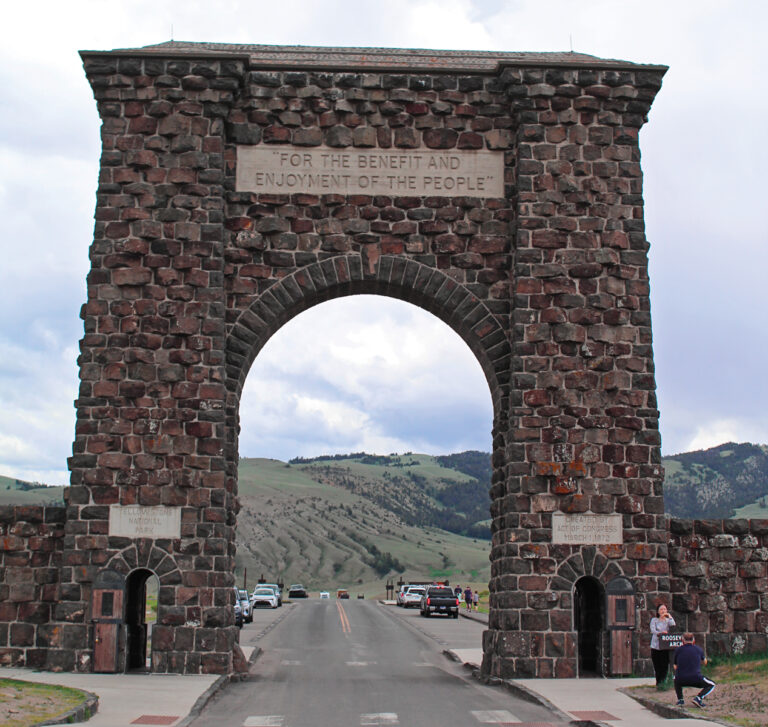
To experience an area properly means to do it in sections. For this trip, I decided to concentrate on the Yellowstone Country area, with my base of operations the town of Gardiner. Situated at the north entrance to Yellowstone National Park, Gardiner is rich in history, wildlife, and great people.
From Gardiner, I’d fan out in different directions: from Yellowstone, then north through Paradise Valley, and, finally, to the Bozeman area. Above all, I wanted to meet “real” people, discuss “real” issues, learn the history, and, of course, watch for wildlife around every corner.
Arriving in Gardiner
After arriving in Jackson, Wyoming, I drove north through Yellowstone Park. Before leaving Jackson, I picked up groceries and arrived in Gardiner just ahead of a thunderstorm. After unloading my vehicle, I popped open a beer and sat back to watch the clouds roll in. My first day in Montana ended with heavy rain and claps of thunder. I was eager to see what the next day would bring.
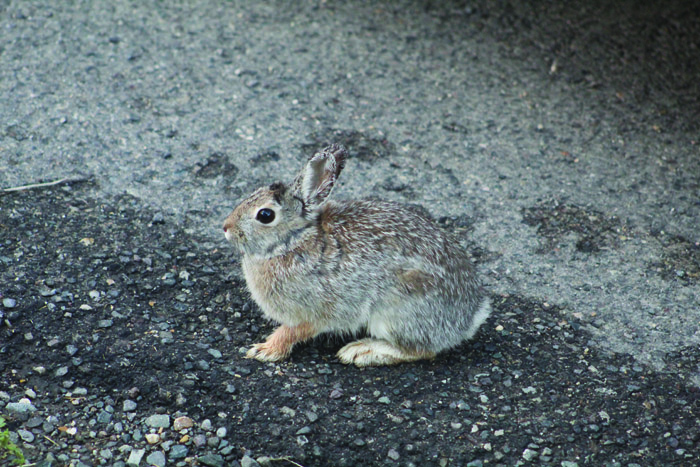
Morning greeted me with some time to take in the topography. Rocky soil covered in sage is the norm, with lodgepole pine, aspen, and cottonwood the most common trees. The morning also introduced me to my new “friend,” a cottontail rabbit that joined me for my morning cup of coffee, which I picked up from the nice people at Bears Brew. This small coffee shop, operating out of a trailer, was a welcome relief from the chilly Montana mornings.
Emigrant and the Old Saloon
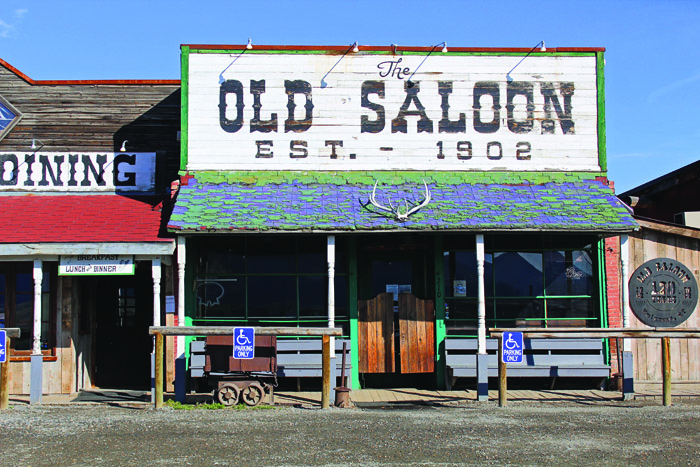
The first full day of my trip would find me leaving Gardiner and heading north on Route 89 to the town of Emigrant, and its historic watering hole: Old Saloon. If you’re interested in meeting local people and learning about some of the history, then visit a saloon. Emigrant sits halfway between Livingston and Gardiner, nestled between the Absaroka and Gallatin mountain ranges – an area better known as Paradise Valley.
When I arrived at the Old Saloon, the bartender, Sandy, provided a wealth of information – not only about the saloon, but about the entire area. Above all, she was fun to talk with. Saloons, like taverns back home in New Hampshire, are gathering places for the community. If you want to hear the news, just visit the local saloon; bartenders, like barbers, know everything, and the Old Saloon was no different.
An Easterner and a journalist carrying a notebook and camera garnered some suspicions among the patrons, and I can understand why. I made a point to ease their minds by talking about hunting, fishing, and my military service. I also promised not to mention names or share photos of those who wished it so. After this, everything was fine and people spoke freely.
Sandy told me she’d arrived in Emigrant about 30 years before and never left. She went on to tell me that when the saloon was established, back in 1902, Emigrant was a mining and railroad town, with gold the mineral of choice. Today, the people there live much the same way as their parents and grandparents did 100 or more years ago. Most hunt and fish to put food on the table, and ranching and tourism have replaced the railroads and gold mines. The one thing that’s stayed constant is the Old Saloon.
Sandy reminisced about the “old days,” before regulations held drinking establishments and bartenders accountable for the amount of alcohol people drank. The people of Emigrant talked about how the town had changed, such as when the gas station was built on the other side of Route 89 and a flashing light was put in at the intersection. Before then, when the sun went down, all was dark.
During our conversation, I said that one of the things I wanted to do while I was there was to see a wolf in the wild. This brought up the issue of the reintroduction of wolves. Here in Emigrant, the majority of people seemed to be against it. As a person who feeds my family by hunting and fishing, I can see why they have concerns. While the wolves bring in much-needed tourist dollars, hunters and ranchers are concerned about the effect they’re having on the deer and elk populations and the predation on livestock. I listened with interest, as each point had some validity. With the conversation still going on, fueled by some local beer and a taste of Montana bourbon, it was time for me to move on.
Exploring Gardiner
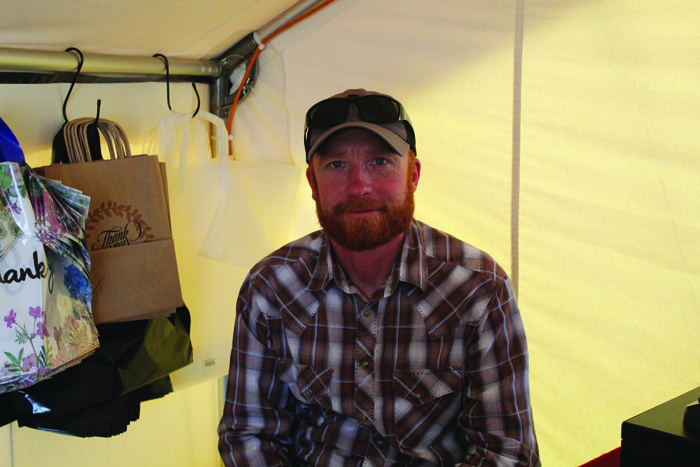
Back in Gardiner, I decided to walk around town and check out the shops. In a lot where a building once stood prior to the floods of two years ago, I found a large tent. There, I met Bret Garretson. Bret and his wife, Donna Moyer, own Alpine Peaks, a farm located in Paradise Valley, and have a storefront in Livingston. Bret makes the drive down to Gardiner every day to work in this satellite location, where he sells the honey products they produce, as well as other farm and handcrafted items. Bret was easy to talk to, and I could’ve talked with him for hours (and probably did over the time I was there), but I needed to get my gear ready for my trip into Yellowstone with Yellowstone Wolf Tracker.
Yellowstone Animals
After a night of poring over the maps provided to me by the National Park Service, I was up and ready when Quinn Harrison, my guide for the day, arrived at 5 a.m. Quinn and I hit it off right from the start, and I knew I was in good hands. Prior to my visit, I’d done my research – including reading Grizzlies On My Mind by Michael W. Leach – which gave me some insight into the park. I’d also read Rick McIntyre’s book The Reign of Wolf 21; Nate Blakeslee’s book American Wolf; and Kathleen Snow’s book Taken by Bear in Yellowstone.
Early morning is always best when viewing wildlife, and Yellowstone is no different. Shortly after we’d entered the park proper, and in extremely low light and ground fog, a small group of elk crossed the road. I took this as a good sign. As we drove, Quinn and I had a chance to talk while keeping our eyes trained for any wildlife that decided to show itself.
Quinn is a wildlife biologist by education and trade. He’s worked with many state agencies, including in Arizona, where he worked on the Mexican gray wolf project. As we drove, we discussed bears and wolves and their place in the Yellowstone ecosystem. We also spoke about some of the opinions I’d heard on my visit to Emigrant. Quinn, who hunts elk and deer to fill his freezer, had heard it all before. He said he understands the questions and the controversy, but he also explained that most people hadn’t studied all of the data. Then, our attention was drawn to activity just ahead.
On the left side of the road, we spotted a grizzly bear sow with three cubs. Despite the early hour, more than a few people were leaving their vehicles and getting way too close to the bears, all trying to get a perfect photo with their cellphones. After taking a few photos, we moved on.
We eventually ended up at the pullouts around Antelope Creek. Using binoculars, we spotted a female elk that acted as if she had a calf hidden in the nearby sage. We then watched the elk chase a coyote out of the area. We moved to the next pullout, where we saw a small herd of bull elk acting spooked.
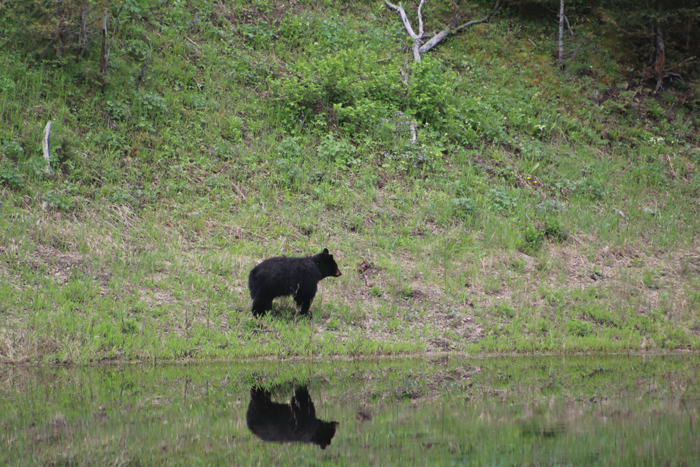
Out came the scopes, and while I watched the elk, Quinn began to scan the area. He soon saw a large black bear walking through the valley. After the bear had passed, we saw the real cause of unrest: wolves. For the next 45 minutes, we watched as five wolves, two black and three gray, worked their way into position. The hunt was on. For the sake of brevity, I’ll just say that the elk got away.
After leaving, we soon came upon a black bear sow with two cubs. Not long after that, we saw a lone black bear close to the road, and ran into the all-too-common “bear jam.” The day ended around noon. The animals we’d seen included bison, elk, antelope, coyote, marmot, black and grizzly bears, and wolves. While the wildlife was what I’d come to Yellowstone for, the company I kept made it much more special.
A Meal at the Iron Horse
After stowing my gear, I decided to treat myself to the first real meal since I’d arrived. I made my way to the Iron Horse Bar & Grill, an establishment that was heavily impacted during the June 2022 Yellowstone flood. I had a great burger and fries and a cold beer. The best part was enjoying it while overlooking the Yellowstone River, which was running high and muddy because of the rain and snowmelt. After dinner, I sat back and reviewed my photos and notes from the day, repacked my gear, and went to bed. The next day, I was heading to Bodhi Farms.
The Final Day of the Trip
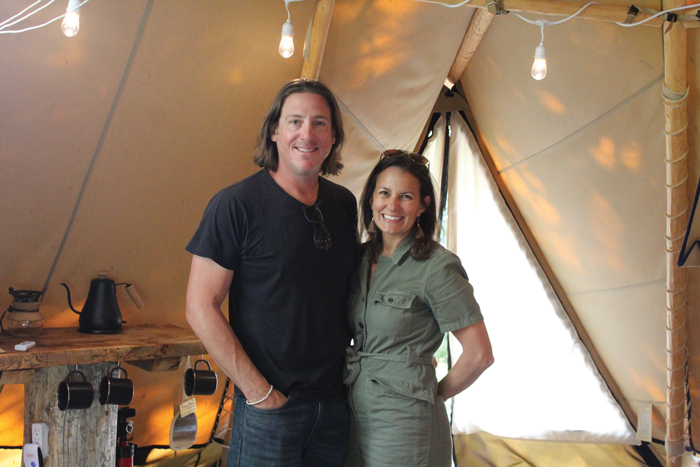
Located outside of Bozeman, at the base of the Gallatin mountains, Bodhi Farms is an eco-resort that involves the importance of protecting the environment in daily activities. Bodhi Farms is all about being self-sufficient and living well doing it. Food is organically grown on the farm in permaculture gardens, and what can’t be grown on the property is sourced from local organic farms. Visitors stay in well-furnished luxury tents (“glamping”), complete with heat. All waste is recycled or composted, and most of the construction materials are from recycled or repurposed materials.
Tanya and Rayner Smith, owners of Bodhi Farms, guided me through the farm, glamping facilities, and self-wellness area. I learned a great deal about how one can live well and responsibly at the same time. With a world-class chef on staff, and food prepared over open fire or in wood-fired ovens, everyone eats food normally found in five-star restaurants. The farm is an amazing operation.
My time in Yellowstone Country was coming to an end. The next day, I’d be heading back to Bozeman to catch my flight. The last evening gave me time to reflect on this wonderful country, the wildlife, the history, and, most of all, the people. Every person I met was unique and I’ll never forget any of them. I’m already planning my next trip, perhaps to the Glacier National Park area.
Dana Benner has written about all aspects of the outdoors, environment, and sustainability for over 35 years. His work has appeared in numerous publications, including Grit, Mother Earth News, Countryside & Small Stock Journal, and Backwoods Survival Guide.
Originally published in the January/February 2026 issue of Grit magazine and regularly vetted for accuracy.