These canid predators play a vital role in the environment. Learn about the canidae lower classifications, including wolves, foxes, and coyotes.
While dogs fill our hearts with love and passion, wolves, coyotes, and foxes often fill our imaginations with dread. How often are our perceived feelings and problems with wild canids a direct result of our own actions? Humans’ relationship with wild canids has always been a contentious one.
From the beginning of time, humans have feared large predators, and for good reason. Early in our history, we were low on the food chain. When you’re on the menu of dire wolves, short-faced bears, and saber-toothed cats, you tend to be a bit cautious.
Humans started to domesticate livestock about 10,000 years ago (see “Domestication of Animals in Neolithic Age“ – Grit Editors), and we turned from “fearing” predators to actively destroying them to protect our investment. Though times have changed, our way of thinking about predators hasn’t, which is why we find ourselves in our current predicament.
A little over a year ago, I found myself sitting in a saloon in Montana talking with some of the locals. Wolves, particularly the release of wolves in Yellowstone, was a hot topic. Many of the people I spoke to, while sympathetic to the environment as a whole, weren’t overly fond of wolves and coyotes. They perceived the wolves as infringing on their livelihoods. Eli Francovich, in his book The Return of Wolves, found the same perspective while researching the return of wolves to the Pacific Northwest. The big difference was that the wolves in Washington repopulated the area naturally, unlike those reintroduced in Yellowstone. In Diane K. Boyd’s book A Woman Among Wolves – which documents her 40 years of studying wolves that naturally repopulated northern Idaho and Montana’s Glacier National Park – she found the same reaction.
Whether it’s the return of wolves, coyotes in the suburbs, or foxes in the chicken coop, our issue with wild canids is just that: our issue. Somewhere along the way, humans decided we weren’t part of the natural world. Instead, we believed we ruled it and everything was put here for our use, and abuse.
We’ve lost touch with the other creatures, including predators, that we share the world with. But we can regain our connection to these creatures by learning more about them.
Coyotes
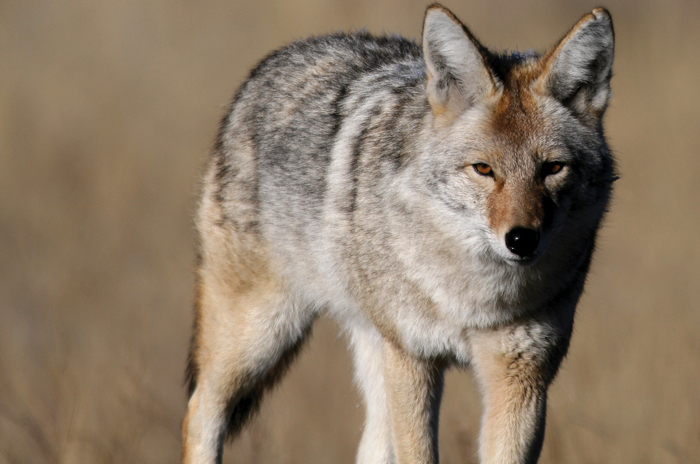
To the Lakota, the coyote (Canis latrans) is known as “the trickster,” and to early European explorers, it was known as the “prairie wolf.” These canids were often seen following wolves that were, in turn, following the vast herds of bison, elk, and pronghorn. Once an animal of the American West, the coyote is now found from Alaska to South America, and east to Maine and Florida. Each group of coyotes has developed its own distinct traits, depending on its environment.
Coyotes can be distinguished from wolves by their erect, pointed ears; slender muzzles; longer legs; and bushy tails, which hang down when they walk. They range in color from grayish-brown to almost red, with cream or light-brown bellies. In some areas, the coyote has replaced the wolf as the top canine predator.
The plains coyote, one of 19 subspecies, isn’t a large animal, weighing in at only 25 to 44 pounds. Evidence shows that these coyotes moved east and crossbred with wolves. This introduction of wolf genetics made coyotes physically larger. Where coyotes traditionally fed on small game, carrion, and the occasional fawn, with their larger size, eastern coyotes are capable of also taking down sick and older deer.
According to Eric Orff, retired furbearer and bear biologist for the New Hampshire Fish and Game Department, “Samples from New England coyotes show a great deal of wolf genes, and this is why New Hampshire coyotes weigh 48 to 60 pounds.” This is about twice the size of their western cousins. Eastern coyotes have also been found to have a tendency to form small packs, possibly a trait they inherited from their wolf ancestry.
Foxes
Red Fox
The red fox (Vulpes vulpes) is the largest of the foxes, measuring about 3 feet long, counting the tail. It stands almost 2 feet at the shoulder and weighs between 7 and 15 pounds at maturity. It also has the largest range, from Alaska and Canada south to Mexico, and from Maine to Florida. The red fox is hard to miss, with its scarlet coloring, pointed ears, and white-tipped bushy tail. Red isn’t its only color, as this fox can be black or various mixtures of red and gray.
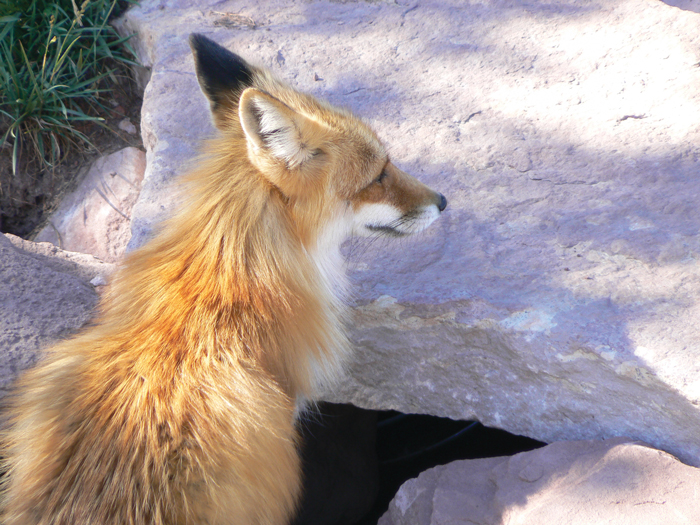
Red foxes prefer broken woodland or forests near open fields, agricultural land, or prairies, where they hunt mice, voles, squirrels, and other small animals. They’ll also eat berries and other fruit. While red foxes will dig their own dens, they prefer to reuse woodchuck or skunk holes.
Gray Fox
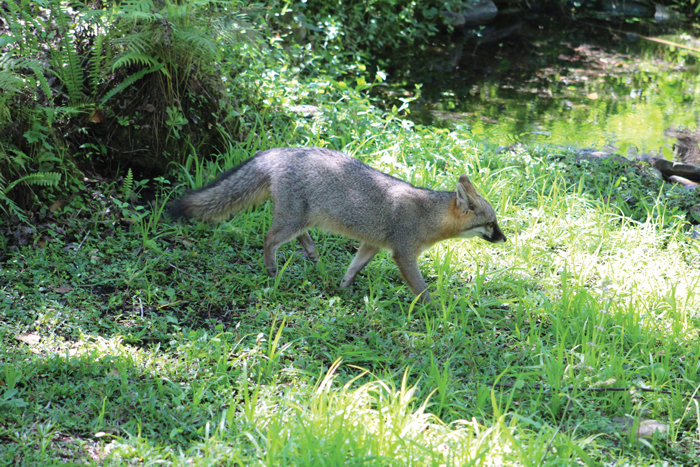
The gray fox (Urocyon cinereoargenteus) is the fox I have the most experience with. Gray foxes are the only American canids that climb trees; in some places, they’re known as “tree foxes.” They measure about 15 inches at the shoulder, are 40 inches long, and weigh about 7 to 12 pounds. Their silver-gray fur gives them their name, and their tail tips are black, as opposed to the white-tipped tail of the red fox.
Gray foxes have a wide distribution throughout North America, except the mountains of the Northwest. They prefer heavy forest cover and make dens in hollow logs, large brush piles, and other areas where there’s sufficient cover. They’re omnivorous, with a diet that consists of everything from grasshoppers to rabbits and grapes to apples.
Swift Fox
Of the foxes covered here, I’ve seen only one swift fox (V. velox) – when I was in Colorado. I consider myself lucky, as the swift fox is a species of great concern in much of its natural range. Swift fox habitat consists of the short-grass prairie and plains of the western United States and Canada; from Alberta, Saskatchewan, and Manitoba, Canada, south to Texas and Oklahoma.
Swift foxes are the smallest foxes in the U.S., standing about 12 inches at the shoulder, measuring 30 inches long, and weighing between 4 and 8 pounds. They’re grayish-tan, which allows them to blend in with their habitat. Their diet consists mainly of small game (rodents, rabbits, and lizards), with insects and carrion filling the gaps.
Like many animals, swift foxes suffer from loss of habitat, which makes them more vulnerable to natural predators, such as coyotes and golden eagles. With roads crisscrossing the plains, many foxes also fall victim to motor vehicles. Efforts are being made to restore swift foxes to their historic range in both the U.S. and Canada. To find out more, I recommend reading Back from the Collapse by Curtis H. Freese.
Wolves
According to Mandy Witt of the International Wolf Center, only two different wolf species are found in North America: the gray wolf (C. lupus) and the red wolf (C. rufus). Every other wolf is a subspecies of one of the two. The gray wolf now survives only in pockets in Alaska, the Rockies, the Upper Great Lakes, and parts of Canada. A small population of Mexican gray wolves are barely hanging on in the Southwest. There are a few remnant populations of red wolves in North Carolina.
Gray Wolf
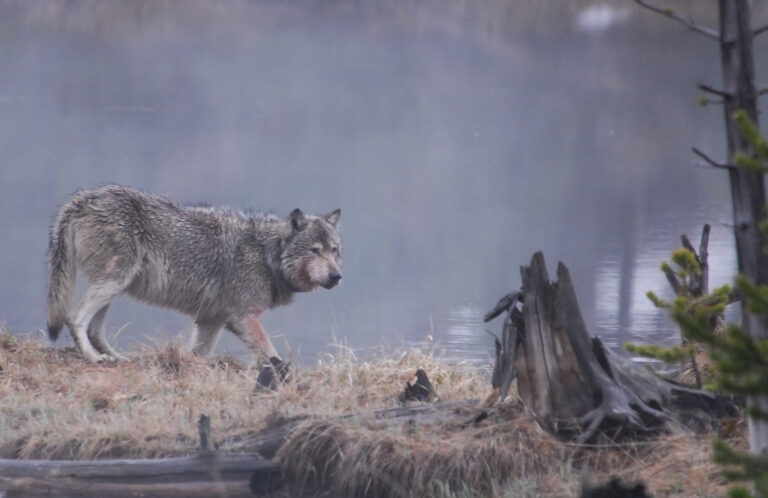
It was in Yellowstone National Park where I saw my first gray wolf, while with Yellowstone Wolf Tracker, a guide service. Gray wolves generally range in size from 40 to 175 pounds and measure 3 to 5 feet long. Size depends mainly on where they’re found, with wolves in the north being larger than those in the south. Their usual color is a mix of gray and brown, though black and white aren’t uncommon. Habitat varies from woodland to open prairie and Arctic tundra. Because gray wolves are strictly carnivorous, their range greatly depends on the availability of prey. Their diet consists of large hooved animals, but they’ll also feed on beavers, rabbits, and rodents.
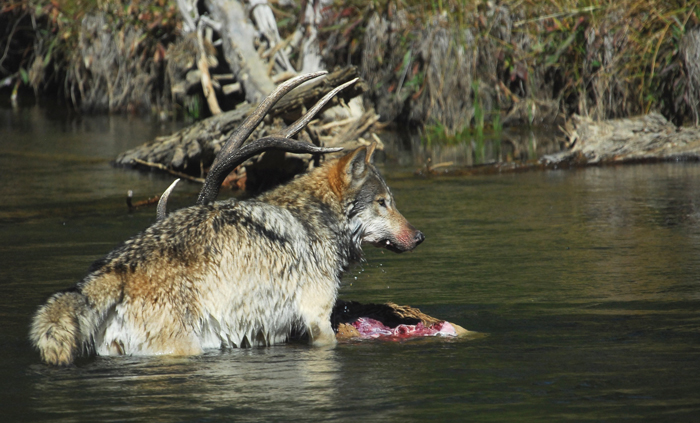
Gray wolves are pack animals, and these packs are close-knit. Studies show that a pack’s territory can range from 50 to over 1,000 square miles.
According to Boyd, when it comes to gray wolves, “resilience is key to [their] survival.” She goes on to say, “They can survive in any habitat, in any climate, and on any diet.” She says that no matter what humans try to do, wolves seem to hang on. Despite all this, humans control the fate of these magnificent animals, and their environment as a whole.
Rick McIntyre, a leading expert on gray wolves in Yellowstone, has written numerous books on the subject. His book The Reign of Wolf 21 tells the story of an alpha male and female that mated for life. That story aired during the week of Nov. 18, 2022, on PRX “Living on Earth.”
Red Wolf
While all wolves are endangered, the red wolf is in the most trouble. According to the U.S. Fish and Wildlife Service (USFWS), red wolves were once common throughout the Southeast, but they were “decimated” by predator control programs of the early 20th century, and habitat loss. Today, wild red wolf populations are found only in small groups in North Carolina.
Red wolves stand about 26 inches at the shoulder and measure about 4 feet long. Adults weigh from 40 to 80 pounds. Their color is reddish-brown, hence the name. They’re most active at dawn and dusk, with a range of 20 to 80 miles, depending on the availability of prey–which consists of deer, raccoons, rabbits, and rodents.
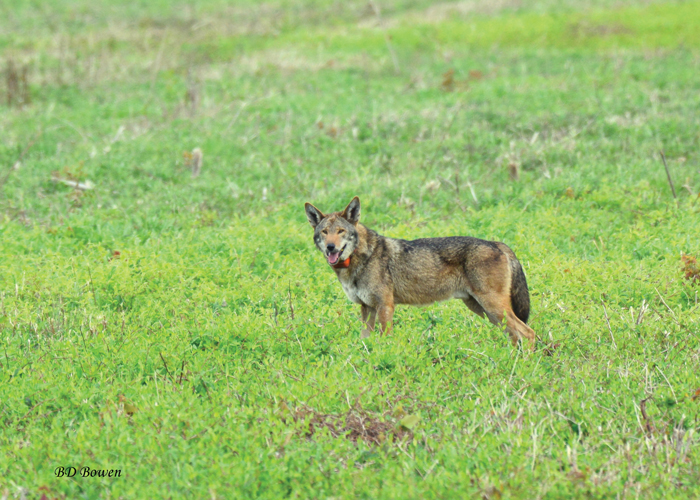
Like gray wolves, red wolves form close family packs that number from 5 to 8 members, which consist of the alpha pair and offspring of various ages. At about 2 years old, members will leave to form their own packs. The problem is that, with so few wild wolves, it’s almost impossible for new packs to form.
In 1987, the USFWS, in cooperation with other organizations, began a program to reintroduce wolves that had been bred in captivity. In 2010, 130 red wolves roamed on 1.7 million acres of public and private land. Despite wolves being fully protected, 2011 and 2012 saw a sharp increase in illegal shootings. As of 2018, only 25 red wolves remained in the wild. The program continues, with 43 captive-breeding facilities housing 200 wolves, and a goal to see red wolves once again occupy their place in the environment.
Sadly, I’ve never seen a red wolf, but I’d like to. More importantly, I hope my grandchildren get the chance to see a red wolf in the wild. Whether that happens or not is entirely up to us.
The Canid Role
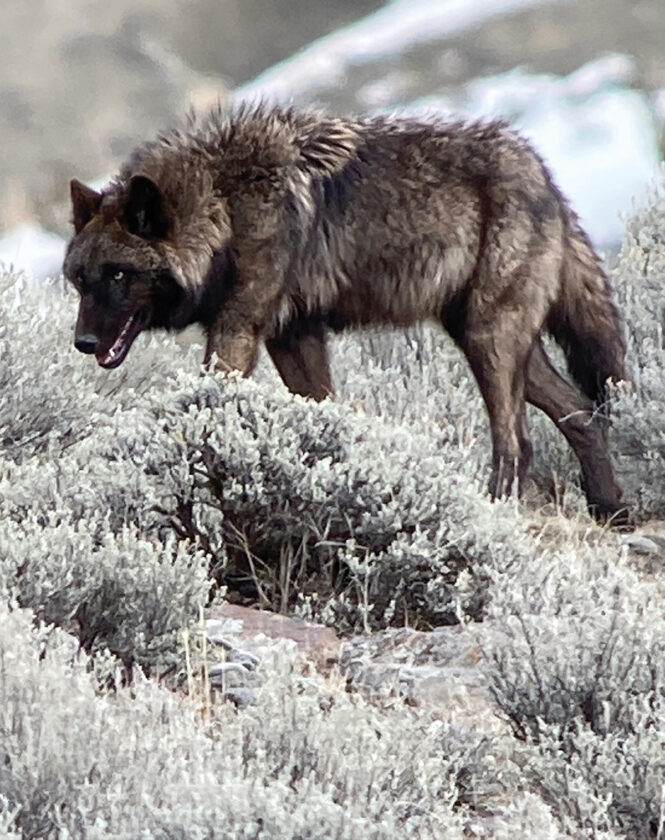
The role that predators, particularly wild canids, play in the environment is immense. Without them, ungulates (hooved animals) and rodents would remain unchecked, valuable habitat would be lost, and millions of acres of crops would be destroyed. Hunting alone can’t solve the problem. Without coyotes and foxes, rodent populations would quickly explode, affecting agriculture. I can safely say that we need wild canids.
Mending the Circle
My ancestors believed that everything is part of a great circle, with each being depending on the others for survival, and if that circle is broken, we’re all in a world of hurt. We can mend the circle by learning about and respecting those other beings we live with, including wild canids.
Dana Benner has been writing about all aspects of the outdoors, the environment, self-reliance, and sustainability for 35 years. His work appears in Grit, Mother Earth News, Countryside & Small Stock Journal, Backwoods Survival Guide, and other magazines.