What does a weasel look like, and are skunks mustelids? These endangered, threatened, or indicator species play a vital role in the environment and reflect the damage we’re doing to it.
Many of us have stepped outside for fresh air, only to be greeted by a musky aroma wafting through the air. While our first thought may be to blame a skunk, the smell may not be from a skunk at all. It could just be one of the many members of the Mustelidae, or weasel, family. There are 11 members of this family in North America, and their highly desirable fur and destruction of their habitat have put many on the Endangered Species List as endangered or threatened.
Are Skunks Mustelids?
These animals are well-known for using their musky scent glands to mark territory and food caches and for defense. Surprisingly, although the skunk is often the one blamed for that offensive smell, it isn’t a mustelid, it’s a member of the Mephitidae family.
I’ll cover four mustelids in this article: the American marten, the black-footed ferret, the sea otter, and the wolverine. All four are either endangered, threatened, or indicator species that reflect the damage we’re doing to the environment.
American Marten
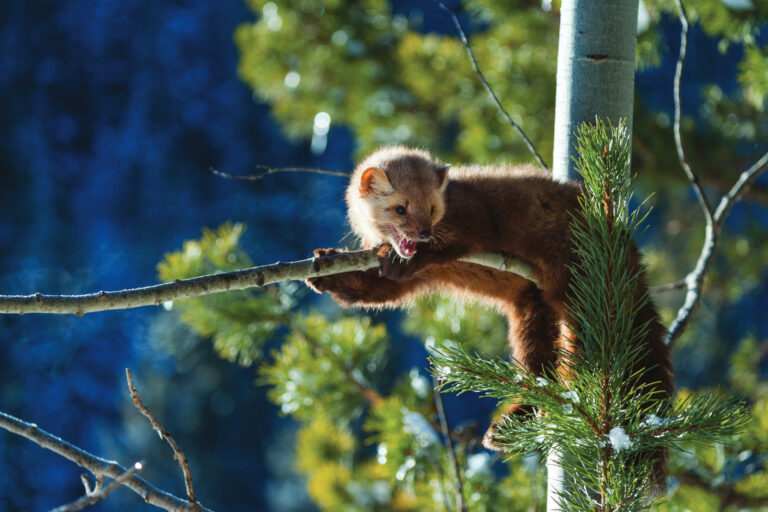
The American marten (Martes americana) is found in the northern boreal forests, where it’s known as, simply, the marten. Here in northern New England (Maine, New Hampshire, and Vermont), this animal is known as the pine marten.
On the Pacific coast, the Pacific marten (M. caurina) was thought to be the same as the American marten, but it’s now known to be unique. It’s considered to be threatened.
No matter what it’s called, the marten is highly prized for its fur, which tends to bring a constant return – meaning it’s a reliable source of income. Because of this, the marten has been overhunted and is now protected in much of its range, including here in New Hampshire.
I’ve never seen a live marten in the wild, but I’ve seen their tracks in the snow on a piece of property I own in northern New Hampshire. The property has thick hemlock groves and plenty of snowshoe hares – the marten’s main prey here.
What Does a Weasel Look Like?
Martens are medium-sized, measuring 20 to 25 inches long, with the typical sleek “weasel” body. In their hemlock, spruce, and fir forest homes, martens prey on small mammals, such as red squirrels, voles, and rabbits, but they’ll also eat fruit and nuts, if needed. Martens are known for their golden-brown fur – although the color can vary from pale yellow to dark reddish-brown or black, depending on the type of marten and the time of year.
According to the Minnesota Department of Natural Resources, the marten was common in northern Minnesota before the late 1800s, but because of logging, a great deal of marten habitat was lost. By the 1950s, martens there were believed to be extinct. In 1985, they began to show up again, and by 2001, the marten population in the state had grown to around 10,000.
The Pennsylvania Game Commission states that martens were originally found in the northern part of the state, but by the 19th century, the species was extirpated because of logging and overharvest. The state considered a reintroduction program to bring martens back, but shelved it in 2024.
In Oregon, the American marten is found in the Blue and Wallowa Mountains, which are part of the Cascade Range. It isn’t believed to be a species of concern there, but it needs to be monitored.
Alaska is the best place to be if you’re a marten. According to the Alaska Department of Fish and Game, both Pacific and American martens are found from southeast of Alaska to the northern and western parts of the state. Basically, to the tree line before you enter the Arctic.
Black-Footed Ferret
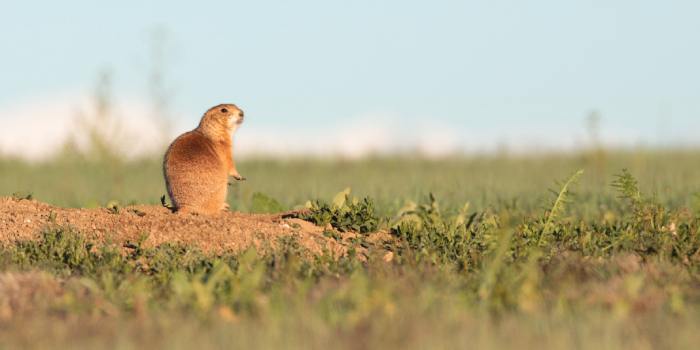
The black-footed ferret (Mustela nigripes) is the only ferret native to the Americas, and it also happens to be the most endangered. It’s estimated that in the late 1800s, about a million of these animals were living from the Plains to the Rocky Mountains. By the 1950s, they were considered extinct, because of habitat loss and a government-sponsored eradication program aimed at the prairie dog population – their main food source.
In 1964, a small population of black-footed ferrets was discovered in South Dakota, and a captive breeding program was started, but failed. In 1981, another population was found in Wyoming, and the Black-Footed Ferret Recovery program was launched. Because of these programs, small groups of ferrets are being released back into the wild with the hope of reestablishing viable populations.
According to the U.S. Fish and Wildlife Service, the primary stressors to the black-footed ferret populations now in the wild are disease, drought, and reduced genetic diversity. A positive note is that in some areas, prairie dog populations are starting to increase, which is good news for ferrets.
Historically, black-footed ferrets were found in the Great Plains and grasslands from Nebraska and Oklahoma west to the base of the Rockies, north to Saskatchewan, Canada, and south to Chihuahua, Mexico. Today, the largest released population of black-footed ferrets is in Wyoming.
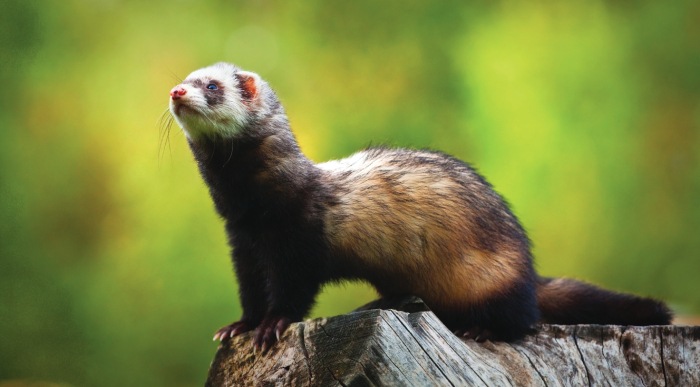
Black-footed ferrets have long, slender bodies and short legs. They measure about 20 inches long and weigh about 3 pounds. Their coloration is golden-brown, with black feet, ears, and tail, and a black “mask” on the face.
Wolverine
The wolverine (Gulo gulo) is the largest land-dwelling member of the mustelid family; only sea otters are larger. Despite this, the wolverine is one of the most elusive of all the mustelids because of the rugged areas the solitary animal inhabits. One fact that makes the wolverine interesting is that it’s an indicator species for its mountain ecosystem.
Wolverines weigh anywhere from 17 to 40 pounds, though males up to 50 pounds have been reported. The wolverine, an animal known for its toughness, is susceptible to hunting and habitat loss, like most predators.
According to the Wolverine Foundation, the wolverine is considered threatened in the U.S. Both the U.S. Forest Service and the U.S. Bureau of Land Management classify the wolverine as a sensitive species.
According to information from the National Forest Foundation, wolverines once roamed throughout the United States from Michigan to California. As of today, an estimated 250 to 300 wolverines can be found in the Lower 48.
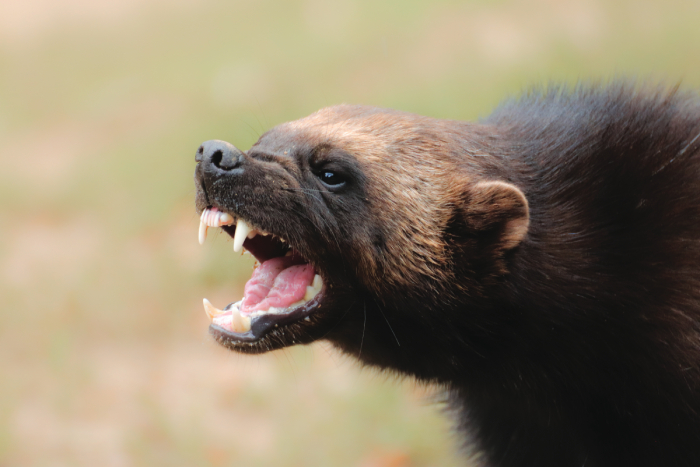
The last refuge of the wolverine in the U.S. is Alaska. The Alaska Department of Fish and Game states that wolverines are found throughout the state, with individual ranges running 115 to 300 square miles.
Wolverines are animals of higher elevations. During summer, they prefer rocky alpine terrain, but in winter, they seek thick snowpack, where they make their dens and raise their young.
The wolverine’s pelt has long been cherished for coat and cloak ruffs because of its long, dense fur. Its coloration ranges from dark brown to black, with a cream-to-gold stripe running from the shoulders to the flanks, and then to the base of the tail. They have thick bodies and short legs, along with short, rounded ears and broad, flat heads characteristic of other weasels.
Although it’s a voracious predator, the wolverine will eat anything and everything presented. A frozen moose, deer, or caribou carcass would be a great find. When large game carcasses aren’t available, wolverines prey on smaller game, such as voles, squirrels, snowshoe hares, and nesting birds.
Despite their deserved reputation for being ferocious, wolverines don’t carelessly confront bears and wolves. In fact, wolverines are on the menu of both of these animals. That said, wolverines will defend their kills and young from both grizzly bears and wolves.
Sea Otter
While on a ship on my way to Kenai Fjord in Alaska, I spotted my first sea otter. The sea otter (Enhydra lutris) is the smallest of all sea mammals and the largest of the American mustelids. There are two subspecies of sea otters in American waters: the northern (E. lutris kenyoni), which is found in the waters around the Aleutian Islands and the southern Alaska coast, and the southern (E. lutris nereis), which is found from the central California coast north to Oregon. Both are considered threatened species.
Of the two, the northern sea otter is slightly larger, measuring 4 to 5 feet long and weighing between 50 and 100 pounds. Its fur is brown to reddish-brown in color. Sea otter fur is the densest of all mammal fur, and this dense, water-repellent fur almost led to its extinction, as it was prized by fur traders.
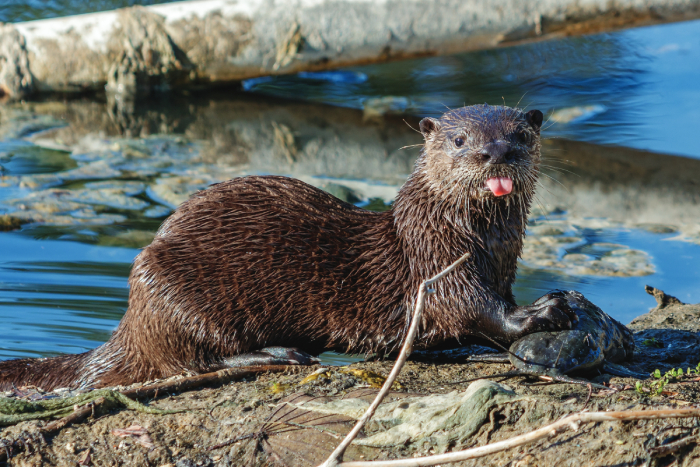
Sea otters are best-known for their circular, furry faces, complete with round noses and small rounded ears. Their rear feet are broad and webbed – ideal for life in the water.
Like all mustelids, sea otters are carnivores and will eat just about any fish or marine invertebrate available, as well as crab, octopus, and squid. One thing that makes sea otters unique is their use of rocks to break open the shells of their prey. Scientists have found that sea otters are vital to the kelp forests, because they feed heavily on sea urchins, which eat kelp. If left unchecked, sea urchins will quickly overgraze the kelp.
Is It Too Late to Save These Creatures?
Humanity has probably pushed the black-footed ferret to the point of no return. Massive mining and timber operations have eliminated valuable habitat for the American marten. The Arctic National Wildlife Refuge, possibly the last refuge of the wolverine, is now endangered by climate change, as well as oil and gas drilling. Last, but not least, is the sea otter – an animal on the Endangered Species List.
How many more tons of trash, how much chemical runoff, or how many oil spills will it take to eliminate this beautiful creature?
Dana Benner has been writing about all aspects of the outdoors, the environment, and sustainability for over 35 years. His work appears in numerous publications, including Grit, Mother Earth News, Countryside & Small Stock Journal, and many more.
Originally published in the November/December 2025 issue of Grit magazine and regularly vetted for accuracy.