Ingredients
- 1 pound beef liver, partially frozen
- 1/2 cup rice vinegar
- 1/2 cup water
- 1/3 cup cornmeal
- 1/3 cup whole-wheat flour
- 2 tablespoons tapioca starch
- 1 teaspoon salt
- 1/4 cup cooking oil
- 2 tablespoons butter
- 3 large onions, finely sliced
- 2 cloves garlic, minced
- 1 tablespoon finely minced ginger
- 2 teaspoons sugar
- 3 tablespoons soy sauce
- 1 teaspoon dried or fresh thyme
- 1 teaspoon red chili flakes (optional)
Directions
- Slice liver into 1/2-inch-wide ribbons. Combine vinegar and water in a nonreactive bowl and add liver strips. Refrigerate for 1 to 4 hours.
- In a mixing bowl, combine cornmeal, flour, tapioca starch, and salt. Drain and rinse liver slices, and then dredge them in the cornmeal mixture.
- In a cast-iron skillet over medium heat, heat cooking oil until sizzling. Fry liver in batches until thoroughly cooked and nicely browned. Set aside.
- In another skillet, melt butter and add sliced onions, garlic, and ginger. Cook until onions are soft.
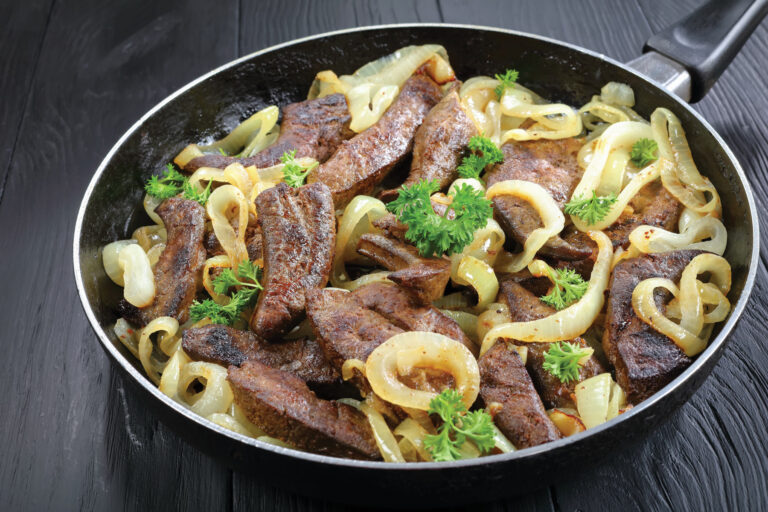
- To the onion mixture, add sugar, soy sauce, thyme, and chili flakes (if using), then stir in liver pieces until coated. Continue to heat until all ingredients are piping hot.
- Serve with brown rice and a brightly colored vegetable, such as broccoli florets or steamed pumpkin slices.
What is offal meat? Learn how to cook with organ meat from beef and poultry, including a liver and onion recipe updated for the modern palate.
“These for your dogs?” the rancher asked us at the farmers market, as my husband and I loaded our cooler with three beef hearts, 10 pounds of sliced liver, and a magnificently huge beef tongue.
“We eat them!” we replied. The rancher leaned forward in curiosity. “How do you manage that?” She confessed that, though she and her husband often sold out of choice cuts of grass-fed beef at the market, they never managed to sell even half of the organ meats. And frankly, she admitted, she had no idea what to do with them.
This isn’t unusual. The typical American diet is entirely absent of organ meats. Instead, we refer to unwanted animal parts as “offal,” a term of disgust. “Chopped liver,” after all, is an expression of inferiority. But for all their underutilization and idiomatic slurs, the organs of meat animals are highly nutritious, and they can be delicious when prepared with care.
What Is Offal Meat?
Almost all traditional cultures prize organ meats as healthful and strength-giving. Modern studies have revealed that the long-established veneration of these meats is sound, because they’re rich in vitamins A and D, essential fatty acids, and macro and trace minerals in amounts not found in other animal tissue.
Nutrient-rich organ meat is decidedly not in demand in North America, and tends to sell at rock-bottom prices. I buy grass-fed, organic beef offal for a ridiculous $3 a pound. Ask around at your local butchery, farmers market, or grocery store meat counter — you’re almost guaranteed to find plenty of options. Ethnic markets are also great places to find organ meats. Finally, if you hunt or raise animals for food, you can thoughtfully consume their meat from head to tail.
Underutilized Parts Worthy of Your Consideration

Hearts, livers, tongues, and gizzards: Some may be repulsed by those words, but there’s an unfair preconceived notion that organ meats taste bad. That mentality emerged because offal is largely unfamiliar to Americans, and because it’s been associated in the past with extreme poverty. These connections have created a stigma around organ meats that’s led us to reach for familiar chicken breasts and T-bone steaks instead. So, let’s get acquainted with inexpensive, tasty offal options.
Beef hearts
A whole beef heart is shockingly large but can easily be sliced into manageable pieces. This organ is an excellent source of gristle-free, fine-grained meat. The flavor resembles beef accented with a slight iron taste. Cooked, its color is much darker than steak.
Poultry gizzards
Similar to heart in both flavor and texture, gizzards are also pure muscle, and likewise free of excess fat and gristle.
Beef tongues
One of the most delicious meats I’ve ever tasted, beef tongue, when slow-cooked with spices, becomes meltingly tender and surprisingly rich. It’ll taste like the best stew beef you’ve ever eaten. The biggest stumbling block to enjoying tongue is getting over its disembodied appearance in your fridge.
Livers
With the most distinctive taste of all the meats I’ve listed, liver has a minerally, rich flavor that’s unforgettable and hard to describe. Raw liver’s pliant, slimy texture can make it difficult to slice, so I like to partially freeze it to make handling easier. Once cooked, it firms up to offer a fine-grained bite.
Whether you raise your own meat animals or have access to a local farmer with a wallet-friendly surplus of these undeservingly undesired parts, you have a huge opportunity for good nutrition and thrifty meal preparation if you accept that offal is anything but awful.
Updated Liver and Onion Recipe
This recipe gives a flavor and texture update to the classic combination of liver and onions. The untraditional combination of soy sauce and butter merges beautifully with the breaded liver’s distinctive flavor. Caramelized onions complete the package.
More Offal Recipes that Are Far from Awful
Wren Everett and her husband live on an Ozark homestead, where they seek to live as self-sufficiently as possible.