Ingredients
- 2 medium potatoes
- 1 tablespoon cornmeal
- 1 tablespoon all-purpose flour
- 1 tablespoon chickpea flour (optional)
- 3/4 teaspoon baking soda
- 1 quart boiling water
- For Sponge: Enough all-purpose flour to form a thin dough
Dough
- 1-1/4 cups water, heated to 110 degrees Fahrenheit
- 2 teaspoons salt
- 3-3/4 cups all-purpose flour
- 1 egg
- 1 teaspoon water, for egg wash
Directions
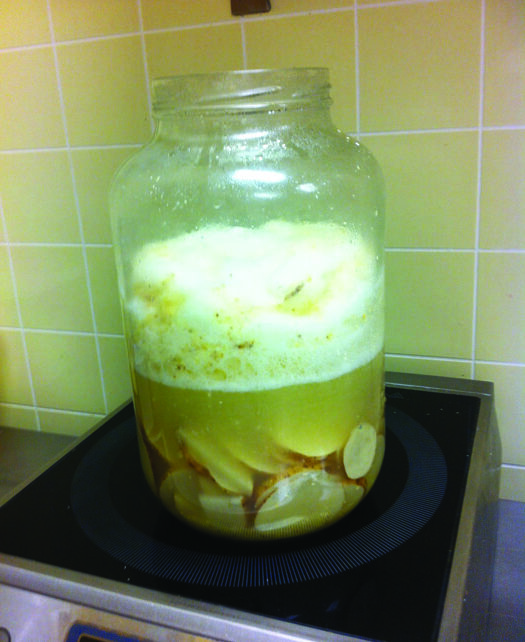
- Starter: Peel any green spots off potatoes and then cut potatoes into slices. Put potato slices in a glass quart jar. Add cornmeal, flours, and baking soda. Pour enough boiling water into jar to cover dry ingredients. Swirl to combine ingredients.
- Cover jar with plastic wrap and poke a hole for air. Keep starter in a warm place (between 103 and 110 degrees Fahrenheit) overnight, until it becomes stinky and foamy. (The starter must stay between 103 and 110 degrees Fahrenheit to get a successful fermentation. One way to keep the temperature steady at 104 degrees Fahrenheit is to use a multifunctional food cooker on the yogurt setting.)
- Sponge: Check starter after 8 to 11 hours. If it’s stinky and foamy, it’s ready!
- Remove potatoes. Add 1/2 to 1 cup water (heated to around 110 degrees Fahrenheit) and enough flour to make a slurry the consistency of pancake batter.
- Cover jar and return to the warm place. Let sponge double in volume, which can take 30 minutes to 2 hours. Keep a close eye on it and use it before it falls.
- Dough Pour sponge into a large bowl. Add water, salt, and flour. Keep a handful of flour aside for kneading. Knead dough until smooth.
- Form dough into loaf shapes, and place smooth side up in greased loaf pans. Set loaves in a warm place to rise. They’ll be ready when they reach the top of the pans.
- Preheat oven to 375 degrees Fahrenheit. Beat 1 egg and 1 teaspoon water together, and lightly brush the tops of the loaves with the mixture right before they go in the oven.
- Bake loaves for 15 minutes, and then turn them around. Bake another 10 minutes until golden brown. Remove loaves from pans and transfer to a baking sheet. Bake another 5 minutes, or until hollow when tapped on the bottom. Let loaves cool on a rack.
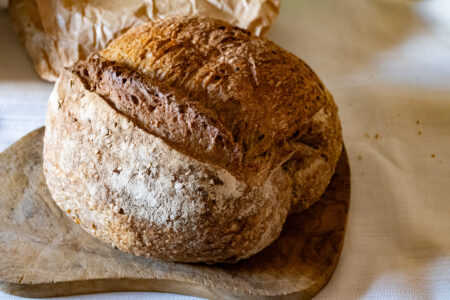
What is salt-rising bread? This traditional Appalachian bread uses an unusual method of fermentation — wild bacteria — to produce a pungent staple. Try out this salt-rising bread recipe for yourself!
 This article is also in audio form for your listening enjoyment.
Audio Article
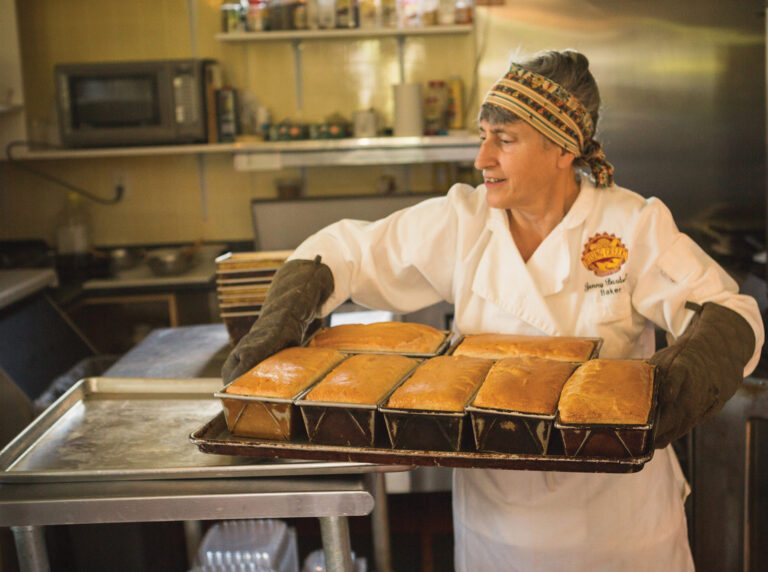
Atop a high hill in the heart of Appalachia in 1988, I first learned about salt-rising bread. I was making soap at my neighbor’s house, and as we entered the kitchen, I noticed a unique, pungent smell that was new to me. The smell turned out to be salt-rising bread delicately browning in a frying pan for grilled-cheese sandwiches. In all my decades of studying and baking bread, I’d never smelled a bread like this. After the first bite, I fell in love with its delicious, rich, and tangy flavor.
A Unique Fermentation
The Appalachian people have always been proud of their salt-rising bread, and rightly so. It’s a tricky bread to make. It uses local grains to raise the dough, and it has a reputation for making excellent toast. Unlike sourdough, which is a primarily yeasted bread whose starter is refreshed, salt-rising bread “starter” is made from scratch each time. The wild bacteria on the grains prefer a temperature of 104 degrees Fahrenheit; after several hours of fermentation, these bacteria produce bubbles of gas that raise the dough. However, the smell of a salt-rising starter isn’t for everyone. Some people call it “stinky bread,” as the odor is reminiscent of a powerfully pungent cheese. Some people even refuse to have the bread in their homes. Yet for many Appalachians, by the time the bread is pulled from the oven, the seductive “cheesy” aroma initiates fond memories that linger for centuries.
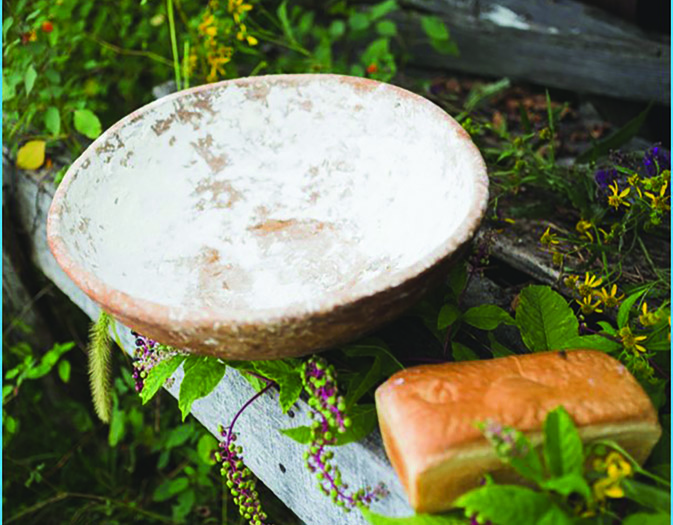
After several failures, my colleague Susan Brown and I became skilled in making salt-rising bread. Susan was born and raised in West Virginia, and was brought up on the bread; she provided tremendous insight into the salt-rising legacy that I, as a New Englander, lacked. We collected hundreds of recipes and talked with elders about the folklore. We researched historical recipes, diary entries, and newspaper articles from the local archives of cities and state universities within the Appalachian region. The earliest salt-rising bread recipe we found was from 1778 in the small town of Ronceverte, in what is now West Virginia. Historically, salt-rising bread was an oral tradition passed down through generations. When looking at a written recipe for the bread, we can assume people had already been using that recipe for decades.
Salt-Rising Bread History
Our quest was to find the origins of this unique method of fermentation. Initially, we spoke to European bakers and researched early European cookbooks, only to find recipes for sourdough bread fermentations. Then, we reached out to historians of enslaved people in the United States and read related literature, but we still didn’t find any reference to a fermented bread with corn or potatoes. We also researched Native American historical food culture, focusing on how potash was used by Indigenous peoples for thousands of years. Potash was used in the nixtamalization process to break down corn hulls and remove the bitters from acorns. However, we didn’t find evidence of Indigenous peoples historically using potash for fermentation.
Our research culminated in the conclusion that salt-rising bread was the ingenuity of the early women settlers in Appalachia, who discovered a method of raising bread without yeast. Back in the 1700s, these women became knowledgeable about their hearths through the daily cooking and heating of their homes. They knew where the hot spot in the fire was, and where food could be kept warm without burning. We imagined a scenario where a crock of gravy was forgotten overnight at the back of the fire and then found the next morning, with a head of foam and an exceptionally strong odor. Life was hard back then, and no food was wasted, so the woman who found it wouldn’t have thrown this gravy mixture away. She would’ve noted the smell, added more flour, observed how it rose, and then baked it into bread. Upon baking this newly discovered raised bread, the matriarch could fill bellies and satisfy her family, especially after a long winter of just cornbread. Imagine how delicious a freshly baked loaf would be when slathered with butter and homemade jam.
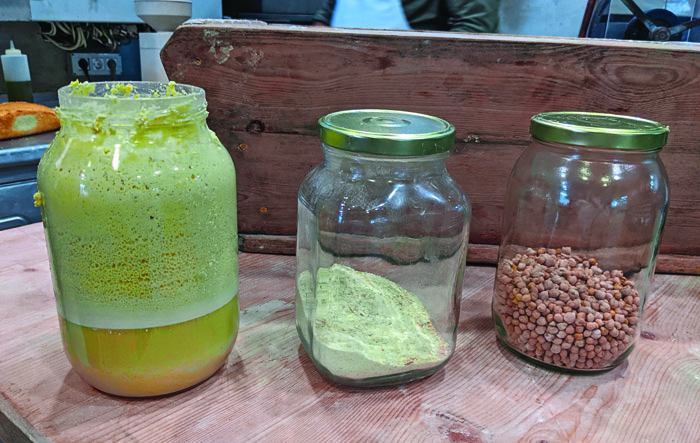
The Europeans cherish their food traditions, and in Belgium, the Puratos Sourdough Library honors bread fermentations that’ve developed all over the world. I’ve spoken with the curator, Karl De Smedt, about the hundreds of sourdoughs collected there. Preserved in this library are the famous San Francisco sourdough starter and an Alaskan gold-digger’s sourdough starter, along with many famous European sourdough starters. The lack of a salt-rising bread fermentation in Europe confirmed our findings that salt-rising bread has an Appalachian origin. (The Puratos Sourdough Library also includes a starter from Syria that uses chickpeas fermented the same way as salt-rising potato or cornmeal starters. This led to my current research on chickpea-fermented breads in Greece, Cyprus, Turkey, Sudan, and Syria. See my website, Wild Fermented Breads, for the history of and recipes for these fermented breads.)
What is Salt-Rising Bread Made of?
Why is it called “salt-rising bread?” After reading hundreds of recipes, we’ve found almost exclusively that salt is added in the first starter stage. Most often, recipes call for common table salt. We also found old recipes that include a salt called “saleratus,” which was an early formulation of baking soda in the 1800s. And even further back, we found a recipe that added potash, which is another type of chemist’s salt.
A second hypothesis posits that blocks of rock salt were warmed in the fire and then placed around salt-rising bread starter to keep it warm while it fermented. We came across a detailed diary entry from a Mormon woman as her family traveled west in wagon trains. She placed the salt barrel on the side of the wagon in the sun, and then buried her starter jar in the salt. As the sun warmed the salt, her starter fermented at a perfect temperature. In the evening, when the wagons circled around the fire, she completed the second and third stages of bread formation and provided fresh loaves for the families along the trail.

It seems the salt, along with the added warmth, inhibits wild yeasts while promoting bacterial growth. Susan and I delved deeper to understand how the wild microbes worked. We sent samples away for identification and learned a progression of bacteria was involved, primarily consisting of Clostridium perfringens. We were shocked at first, because this particular bacteria is known to be a human pathogen and can cause food poisoning. But salt-rising bread has been made for centuries, and we were feeding it to our families with absolutely no evidence of anyone getting sick. We contacted Bruce McClane at the University of Pittsburgh, who’s a world-renowned expert on C. perfringens. We brought him a dozen samples of salt-rising starter and a baked loaf. As we entered his lab, it smelled just like salt-rising bread! McClane and his team of scientists analyzed all the bread samples for pathogenic toxins, but they didn’t find any. Next, they conducted a thorough genetic analysis and didn’t find any of the genes that produce the toxins. We exhaled a sigh of relief, and then published our findings in “The Microbiology in Salt Rising Bread.” Of course, this raises more questions about the workings of this complex fermentation.
Keeping Knowledge Alive
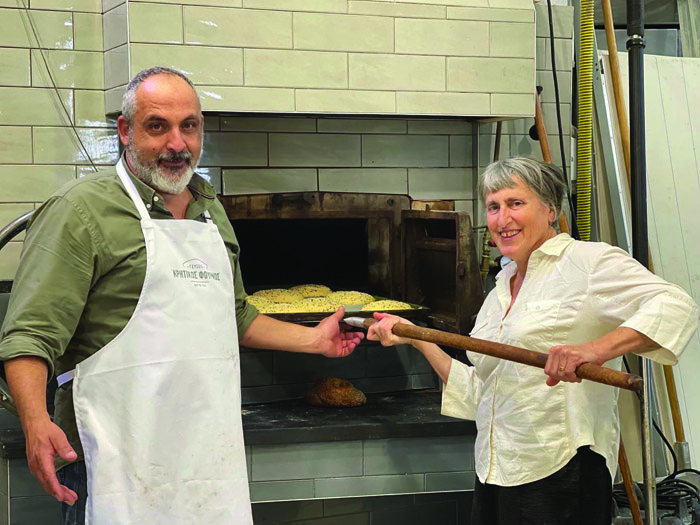
There are so many reasons to keep the tradition of salt-rising bread alive. With only a few methods known to raise bread — wild and commercial yeasts, chemical leaveners (such as baking soda), and eggs — here’s a method that uses wild bacteria, which are found all over the world. This bacterial fermentation results in bread with a marvelous, complex flavor. The production of wild and local foods is diminishing. Valuable knowledge about ways to prepare basic foodstuffs in unique ways is being lost. The Appalachian culture that supported this innovation is unassuming and full of grit. The world needs such people, who are humble yet persevering, to help solve global problems.
Finally, with the current scientific research around bacterial interactions, this unique fermentation may prove to be instructive in developing new approaches to how antibiotics fight disease or how our microbiome benefits our immune system. Anecdotally, the bread is thought to soothe stomachs, as a cup of chamomile would. Perhaps it’s not so outlandish that a raised bread invented by rural women in the 1700s could play a role in preventing disease.
Salt-Rising Bread Recipe
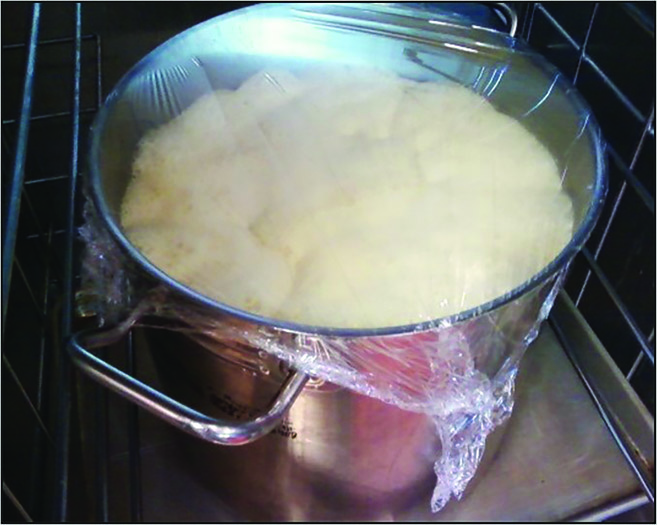
For more information on salt-rising bread, check out my book Salt Rising Bread: Recipes and Heartfelt Stories of a Nearly Lost Appalachian Tradition, which I co-wrote with Susan Ray Brown. It’s available at Wild Fermented Breads. This recipe is a good place to start.
Genevieve Bardwell lives in Mount Morris, Pennsylvania, an Appalachian community where salt-rising bread has been a part of life for centuries. In 2010, she started Rising Creek Bakery, which specializes in salt-rising bread. She’s the co-author of Salt Rising Bread: Recipes and Heartfelt Stories of a Nearly Lost Appalachian Tradition — the only book on this bread. Genevieve also conducts research on chickpea-fermented breads and teaches classes on salt-rising bread. She graduated from the Culinary Institute of America in New York, and earned a master’s in plant pathology at the University of Massachusetts, Amherst. Learn more about her research at Wild Fermented Breads.