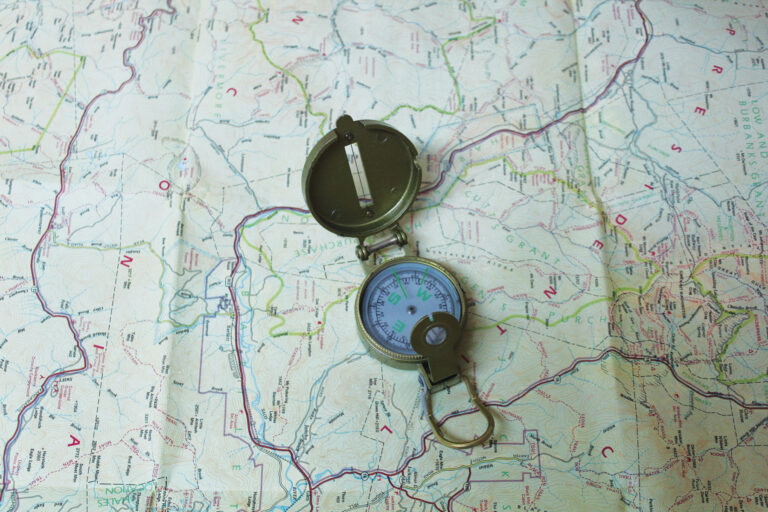
To avoid overpacking, determine what to bring on a short hike during the day by studying the terrain, paying attention to the weather, and deciding which hiking essentials to always carry.
I spend a great deal of time in the “wilds” of this country. Whether in the mountains of New England, the swamps of Florida, the deserts of Arizona, or the High Plains of Montana, I often run into people who are either underprepared for the environments and conditions they’re in or, worse yet, carrying too much gear that isn’t needed or appropriate to the area. Being bogged down with gear that isn’t needed can not only make your time outdoors unpleasant, but also be dangerous. You don’t want to overstress your body or run out of steam halfway through your adventure. Carry what you need and leave everything else at home. It’s about packing right and packing light.
What to Bring on a Short Hike
Every great outing starts with a plan. Study maps and speak with others. Work the environmental conditions (sun, wind, rain, and snow, as well as terrain features) and the season into your plan. This will dictate how you want to manage your trip. Is a short, leisurely hike best, or do you want to push it to the limits? Will you be facing harsh conditions ranging from intense sun and heat to possibly rain, sleet, snow, and high winds? With this plan, you’ll decide what to carry upon your back, no matter which route you choose, and, more importantly, what you’ll leave behind. Remember that with each passing mile, ounces quickly turn into pounds. Pick wisely.
Let’s take a day hike as an example. Under most conditions, you won’t need to carry a tent, sleeping bag, or cooking gear, though I’ve seen people do so. I’ve seen people so overloaded with stuff that they couldn’t possibly be enjoying themselves. Dress for the conditions. Depending on the time of year and the area you’re hiking, carry some warm clothing, a snack, or even a sandwich. A compass and a map of the area you’re in are always good things to have on hand.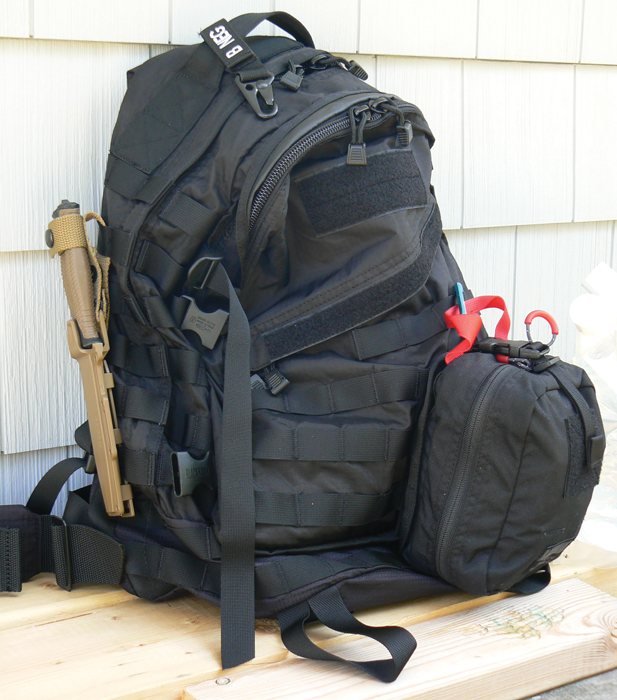
Water
Water is the one thing you should never cut back on, yet many people seem to skimp on it. Dehydration will take you out quickly, even on a casual day hike. Of everything you carry, water will weigh the most, but every ounce of it is precious. A few years ago, I was on a day hike at Bear Butte in South Dakota. It was June, and it was hot, so I made sure I was fully loaded with water. Something told me to bring extra (as if there’s such a thing), and I’m glad I did.
On my descent, I ran into a group of schoolchildren and their teachers going up. Kids, being kids, were running up the trail with the teachers pulling up the rear. I stopped to speak to the teachers and only noticed a couple of bottles of water. Not wanting to be obtrusive or to give them a lecture, I just offered them my remaining water, as I knew they’d need it.
I tell this story for two reasons. First, to emphasize the need to always carry water. Second, to emphasize that you should never underestimate the environment you’ll be in. Mother Nature doesn’t play games, and neither should you with safety.
With that being said, in reality, there’s no such thing as “too much water,” but its sheer weight prohibits us from carrying enough. In some cases, you’ll need to refill along the way. Never drink water from a wild source without filtering it first. You have no idea what could be in it. Always carry some sort of filtering system with you. Most are lightweight and easy to use. Sawyer puts out many small filtration systems to fit your needs. I personally always carry a Sawyer MINI in my pack.
Food
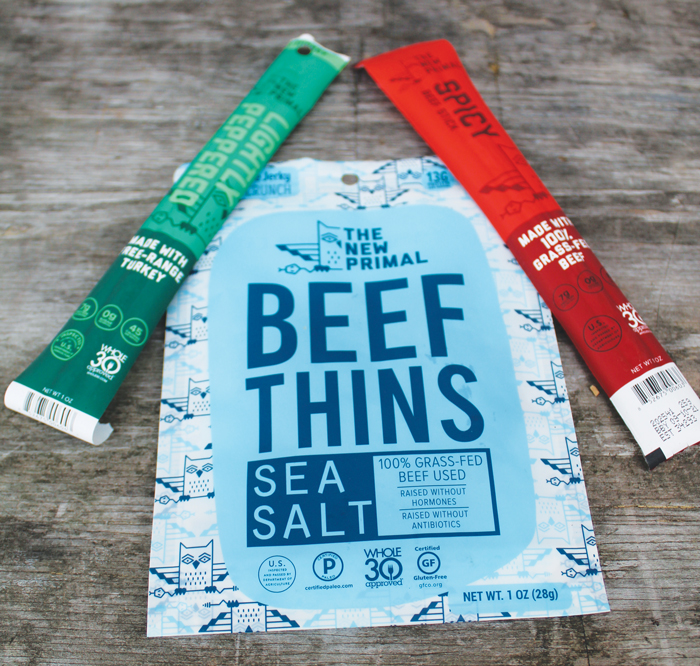
No matter how long or short your outdoor adventure is, you’ll need to eat. The problem is that food adds weight to your load, so you’ll need to pack wisely. Short hikes may require nothing more than some snacks that are high in protein and fat. Think trail mix or meat snacks. Longer trips may require something a little more, especially when you’re out in cooler weather. Freeze-dried meals are great when a hot meal is called for (you’ll need to carry some way to heat the water that goes into them). Stay away from canned foods; they’re heavy, and you’ll need to carry the cans out.
First-Aid Kits
Like water, you should always carry a first-aid kit. Unlike water, when it comes to first-aid kits, there is such a thing as too much of a good thing. Often, I run into people either carrying a small box of bandages or a huge kit with enough gear to do brain surgery. This article is about packing light, and while a first-aid kit is a must, it doesn’t have to be anything elaborate. Many lightweight kits available on the market will do the job. You can even make one yourself.
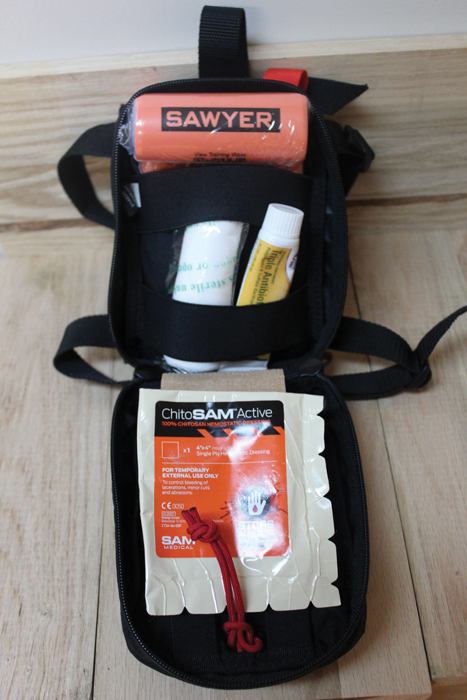
A homemade kit always starts with a good pouch. The best ones attach to the outside of your pack. The contents can be picked up at any store that sells first-aid supplies. By doing this yourself, you can customize your first-aid kit to your needs, not to what someone else thinks you need.
Communication
Cellphones are great when they work. Unfortunately, they don’t often work where I go. For that reason, I carry a portable two-way radio. First responders always monitor radio frequencies, so they’re a safe bet.
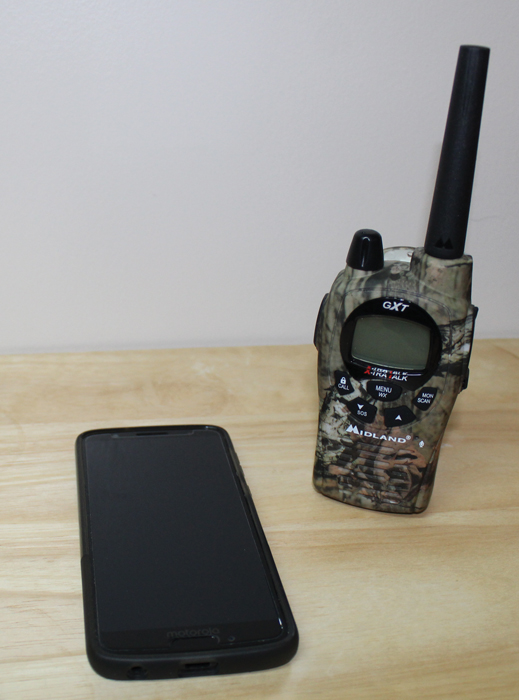
Today’s radios aren’t those big, heavy walkie-talkies of old. They’re now state-of-the-art and weigh no more than a cellphone. They have great distance and can even pick up emergency weather broadcasts. I personally use Midland radios, but there are others out there. Get the one that works best for you.
Tools
We all carry tools into the field – some of us way too many of them. The thing about tools is that most of the time you won’t need them, but they’re great to have when you do. The problem is that most of the time, they’re dead weight. For that reason, pick only tools that have multiple functions. For example, a saw has only one function, whereas a thick-bladed knife has multiple functions. Unless I’m on an extended trip, the saw stays at home.
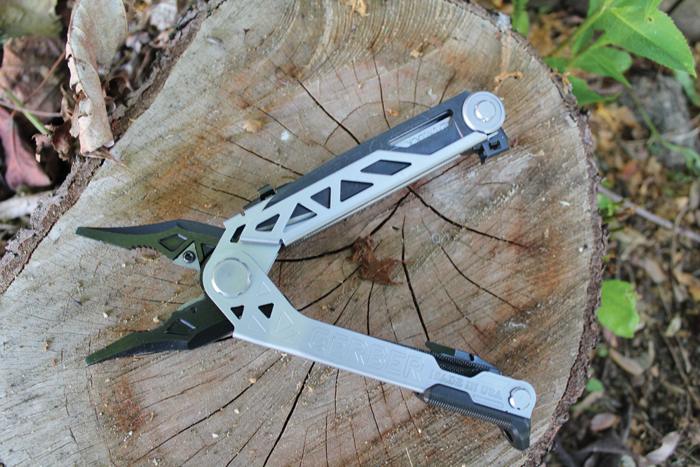
I always carry a knife, but the knife I carry depends on the need. On extensive outings, I carry a fixed-blade knife and a folding knife in my pocket. On short day hikes, I’ll carry a Swiss Army folding knife or a multi-tool. I like the ones made by Gerber. These tools will handle most of your needs.
The ‘Other Stuff’
I fully realize that in some cases you’ll need “other stuff.” There will be times when you’ll need items other than those I previously mentioned. It could be some way to heat food or some means to make shelter. It could be ways of dealing with cooler weather. From the very beginning, I mentioned packing according to the environment and conditions; both will dictate what other stuff you’ll carry.
A long hike up a mountain, even a small one, on a cool fall day will require a warm beverage, or even a hot meal. So now you’re thinking you’ll need to lug that old Coleman stove, or one of those small gas stoves, on your back. Remember that I’m talking about packing light. Any stove that requires “gas” means the added weight of both the stove and the fuel to power it.
To save weight, when I plan a large adventure, one that’s a little more than a leisurely day hike, I carry a biofuel stove. These stoves are lightweight and designed to burn whatever natural fuel is available. I’m talking sticks, leaves, bark, pine cones, etc.
Every year, thousands of people head into the wilds of our mountains and deserts but fail to bring some sort of cover to protect them from the elements in case of an emergency. In the mountains, you may face cold and snow; in desert areas, your biggest threat will be the sun. Keeping weight in mind, I’ll carry a tarp and some cordage instead of a tent.
Whether you’re in the desert or the mountains, it does get cold when the sun goes down. Always pack a light jacket or a sweatshirt in your bag. They don’t take up much room or add much weight, so throw one in; you’ll be glad you did.
So, there you go. Did I cover everything? No, that would be impossible. What I hope is that I’ve gotten you to think about what you carry on your next adventure. You don’t need to load up the latest and greatest to have an enjoyable time outdoors. Deer hunters will carry more gear than a day hiker, but both need to consider weight, the environment, and conditions before packing up.
Pack the right things, and you’ll find that you’re packing just right.
Read on for Essential Outdoor Survival Skills if needed one day.
Dana Benner has been writing about all aspects of the outdoors, sustainability, the environment, and Native history for over 35 years. His work appears in Grit, Mother Earth News, Countryside & Small Stock Journal, and others. He also produces and hosts sustainability programming on HCTV in Hudson, New Hampshire.
Originally published in the May/June 2026 issue of Grit magazine and regularly vetted for accuracy.