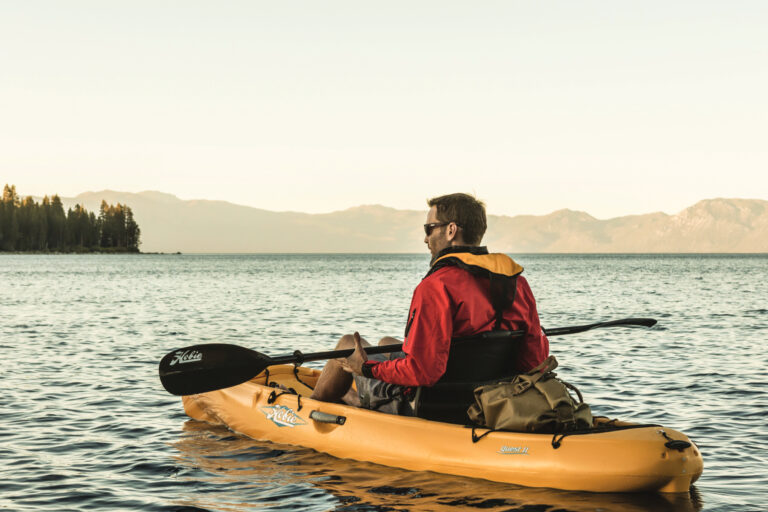
Follow these general paddling safety tips and bring essential gear to avoid calamity while kayaking or rafting for a fun and safe experience.
The first of April is the opening of trout season throughout most of the Northeast United States. Thousands of anglers, long cooped up by winter, pack their gear and head out, eager to wet a line. I know, as I’m one of them. But this time of year is also one of the most dangerous to be on or near the water. Rivers and streams are usually running high because of snowmelt and spring rains. Water is extremely cold, and riverbanks can be weak. These conditions can lead to disaster.
Water is nothing to mess around with. According to the U.S. Coast Guard, 556 fatalities and 2,170 nonfatal injuries occurred on the water in 2024. During 2020 and 2021, canoe and kayak injuries rose noticeably. The COVID-19 pandemic partially explains the increase in incidents, because a significant number of first-time boaters took to the water during these years.
In our zeal to get out, many of us throw caution to the wind, but this is actually the time when we should be most vigilant, falling back on all the lessons that should’ve been drilled into our heads about water safety. All too often, people forget the basics. Fight complacency and take care around the water, whether you’re out in early spring or the height of summer. Accidents happen, but we can mitigate their frequency or severity by paying attention.
It Happened to Me
It was a summer day up on the Saco River, which borders New Hampshire and Maine. My wife and I were meeting up with my daughter, her husband, and my two granddaughters for a leisurely canoe trip. We rented two 12-foot canoes from a local tour company – and this decision was where I made my first mistake. The models I chose were large, made more for open, flat water and not for river running.
My daughter, son-in-law, one of my granddaughters, and their dog took one canoe. I settled into the other with my wife, our other granddaughter, and our own dog. My daughter and her husband are experienced paddlers, and I’ve been paddling most of my life. My wife, on the other hand, is good in a kayak but nervous in a canoe. This was my second mistake: I should never have taken my wife out on the river knowing her inexperience and lack of confidence.
The canoe company assured us that we’d embark on “an easy, calm stretch of water.” This was mistake number three: Never rely solely on others for river info, even guides. I should’ve scouted the river myself. If I’d done so, I would’ve called off the trip, because the canoes were wrong for the water conditions and the skill levels of the paddlers. The water would’ve been perfect for a kayak or my single-person canoe, but not for the barges we were using.
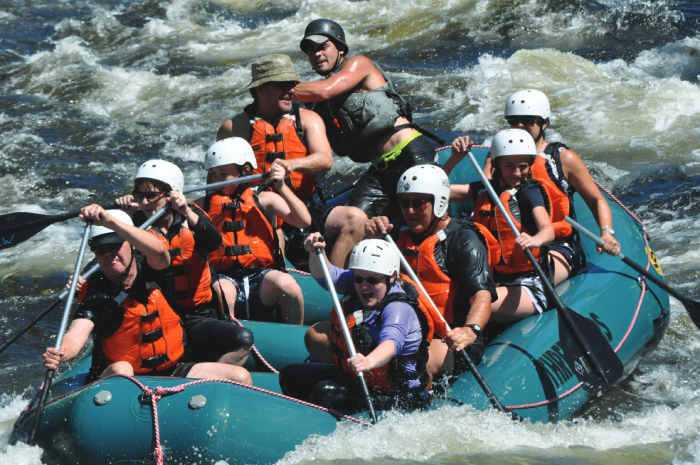
The water level was low, which meant the water flow was constricted to certain channels. Big canoes are hard to maneuver even on good water, more so in skinny water, and ours were fully loaded and heavy. The routes through these channels were meant for faster runs with little margin for error. Add to the equation the numerous exposed stumps and sweepers, and the conditions made for a white-knuckle ride for even experienced paddlers!
We encountered a section of low water, fast current, and sharp turns. My daughter’s canoe made it through, barely, but only because it was steered by two experienced paddlers.
The canoe I was in didn’t fare as well. We got pulled into a “washing machine” near a stump that flipped the canoe. We all had on personal flotation devices (the only thing I did right on this trip), so we ended up being okay. My wife grabbed onto our granddaughter, but our dog, who was also wearing a flotation device, was swept downriver. I swam after the dog and was able to grab him, but I was pulled under when my leg got caught on a submerged log. I held the pup up as the current pulled me under. Only my hand and our dog remained above water.
I managed to free myself from the log, but my leg was in bad shape. We all thought I’d broken it. After getting medical care, we later found out the injury looked worse than it was; it hurt like heck, but it wasn’t broken. Everyone was safe, but it was an accident that shouldn’t have happened – and it wouldn’t have if I’d followed well-worn safety rules.
General Paddling Safety Tips
Don’t make the mistakes I did. Follow both the rules of safety and your own gut instincts. If a stretch of water doesn’t look or feel right for any individual in your party, don’t attempt it. If you’ve ever bought a canoe or kayak at any of the big-box or department stores, you know the salespeople often won’t ask if you’re skilled. Many people head out on the water without any safety training. In 2025, 70 percent of fatalities involved people who’d received no boating safety instruction.
While kayaking along the Gulf Coast in Florida to look for manatees, I saw people forgoing life vests, overloading their kayaks, and bringing children along in kayaks made to hold only one person. All makings of an accident waiting to happen. As I watched these people, a manatee surfaced right under my kayak, lifting me out of the water.
How much better would things be if we simply adhered to the basics? What follows is a basic checklist of what you should do prior to heading to the water, and it applies whether you’re in a watercraft or just walking the shore.
- Let someone know where you’re going. Name the river, lake, or pond. Tell them when you expect to be back. If you’re using a watercraft, let someone know where you’ll be launching from.
- Travel in a group. If something does go wrong, having more people to help could save a life.
- Know your limits. Take a good, hard look at your own abilities and skills. Now is the time to be honest with yourself.
- Scope out the area before launching. Be aware of water temperature, fast currents, and submerged obstacles. Along the coast, be aware of rip currents and waves breaking on shore. Both are particularly dangerous, because you can’t always see them, but they’ll take you out quickly. Are there warning signs posted? If so, pay attention to them, because they’re there for a reason.
- Never let children go to the water by themselves. It takes only an instant for something to go terribly wrong.
What to Bring
Whenever you head to the water, keep a few items on hand “just in case.” I hope you’ll never have to use them, but you never know. It’s better to have them and not need them than it is to need them and not have them. Here are the items I always keep on hand.
- First-aid kit. There are a host of issues, some major and some minor, that will need to be taken care of. A well-equipped first-aid kit is something you should always have.
- Personal floatation devices (PFDs). PFDs are necessary, especially when you’re on a boat. In most areas, it’s the law, so check with the local regulations for the area you’re in. Each person needs to wear one at all times. They’ll do you no good if they’re stored away under a seat.
- Communication devices. You need to be able to call for help if something happens. Cellphones are great if they work. In many areas I go to, cell service isn’t available. For that reason, I carry a two-way radio. Every emergency responder monitors radio frequencies. Even if you can’t reach emergency responders, you may reach ham operators who can relay your message.
- Throw rope. I always carry about 30 feet of paracord in my pack. If someone falls into the water, you need to get them out. Don’t rely on them swimming to shore or back to the boat. Cold water robs the body’s muscles and mind of working properly, so getting the person out as fast as possible is a must. Having a rope handy can make all the difference. You can find commercially available “throw bags,” and if you canoe or kayak a great deal, particularly on fast-moving water, they’re worth the investment.
- Fire starters. Make sure you have the ability to make a fire. After you or someone else gets out of the water, the ability to get warm is essential. Warm blankets and jackets are nice, but if you’re on shore, a fire will get you warm faster. I always have multiple ways to get a fire started, including matches (stored in a watertight container), a butane lighter, and a ferro rod.
There’s no way to cover all of the “could happens” here in one article. What I do hope is that this article will make you think. While I’ve always respected the power of water, what happened to me and my family, because I let my guard down, almost cost me more than I like to think about. Please use caution around water and don’t let what happened to me happen to you.
Dana Benner has been writing about the outdoors, environment, self-sustainability, and Indigenous history and culture for over 35 years. His writing appears in Grit, Mother Earth News, Countryside & Small Stock, and more. He hosts outdoor programing on HCYV in Hudson, New Hampshire.
Originally published in the May/June 2026 issue of Grit magazine and regularly vetted for accuracy.