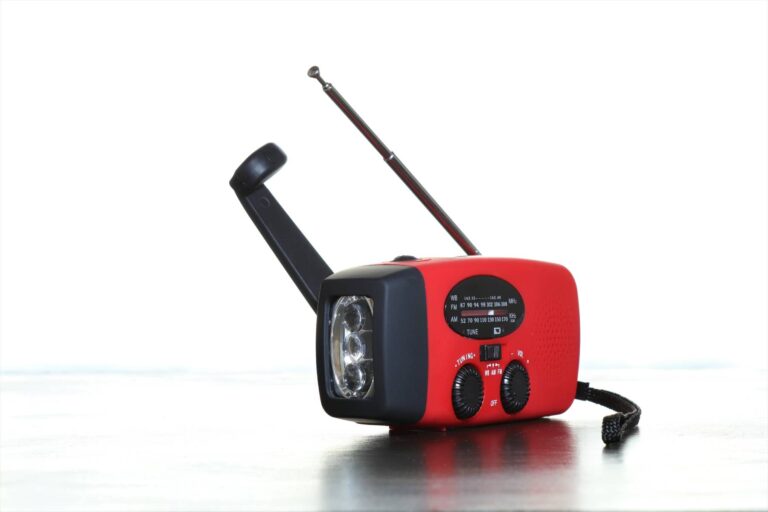
Ensure you are prepared for a world without cell phones and the internet by learning about the options for prepper radio communication.
The ability to receive information and communicate with family and the outside world, when cell phones and internet are out, will be important to you during a disaster. There are several options for emergency communications that are inexpensive and easy to use. Shortwave lets you listen to emergency broadcasts, talk locally, and even communicate around the world. It is relatively inexpensive and easy to get the equipment you need to stay informed during an emergency.
One of the best things you can do to help yourself in a disaster situation is to learn how to collect as much information as possible. Well before you need to call for help you will want reliable information on the situation. As far as disasters are concerned, or even temporary power outages caused by nasty weather, shortwave radio communication is your friend. There are a couple of reasons for this.
Information via shortwave
The first reason shortwave is useful is that the emergency management communications system is built around shortwave technologies. Shortwave is far reaching and dependable. Much of the infrastructure for shortwave is specifically not available for commercial use and is reserved for private radio experimentation and emergency broadcasting. Most of this equipment is intentionally designed to work when commercial radio can’t. Shortwave is used almost exclusively in emergency management, police, fire, emergency medical response (ambulance), and private industry like gas and electric companies. In many cases after a disaster strikes, it is ham radio operators that get out the first situation reports and calls for help.
Inexpensive and effective Shortwave emergency communication
The second is that shortwave communications equipment is available and relatively inexpensive. You can find reasonably priced radios that listen, talk locally, or talk around the world. The “listen and local” kinds don’t require a license to use. The talk around the world radios require a HAM license. Ham licenses are inexpensive and not hard to get.
Most shortwave radios are designed to work in disaster situations
The third reason is that most shortwave radio equipment works on batteries or 12 volts (like a car battery). This means that even when the power goes out shortwave radios can still work. AM/FM radios use batteries as well but the radios stations are often on the grid so if power outages are widespread these stations may go off the air.
Radio Options
Weather radios and short-wave receivers
If you just want to listen, then National Oceanic and Atmospheric Administration / National Weather Service (NOAA/NWS) weather radios and short-wave marine receives are the perfect choice. They require no license to operate and can be very inexpensive.
Listening to a shortwave receiver takes a bit of getting used to. You will need to learn the tricks that were common knowledge for your great-grandparents when they tuned their radios back in the day. With a little practice you can get just as good at finding stations and “chasing the signals”. It is well worth your time to learn about shortwave broadcasts and discover its benefits for emergency communication.
Transceivers
Transceivers (Transmission-Receivers) are able to both send and receive. These are fascinating machines that vary widely in price, communication range, and complexity. Some less powerful, short range radios are inexpensive, easy to use, and need no special training or licensing. Other radios are wildly complex, very expensive, and require special training and licensing to operate. Between these two extremes are radio options to meet any requirement for family and community communication. You just need to decide what capacities you desire to meet your needs.
It is important to understand that the Federal Communications Commission (FCC) dictates that these different types of radios can only be used within controlled output power and assigned frequency ranges. If you use a radio outside of these assigned parameters, you may be subject to FCC fines and penalties. If you are licensed and caught breaking the rules, you will lose any license privileges you have. The best recommendation I can give you is to decide what kind of communications capacity you need, research what kind of radios meet that requirement, get the proper training and license to use the equipment effectively. Take the time to learn the FCC rules and follow them.
Transceiver Options
All transceivers are designed to work within certain parameters, but their ranges can be improved in two ways. First is to use more output power, which is not always legal. Second is to use a better antenna, which is always legal. Because radios are made with different power settings and frequency capabilities, they are often referred to by their intended use. This is why you hear names like “Weather radio”, and “HAM radio”.
The government has assigned specific frequencies (channels) and ranges of frequencies (bands) to different types of radios based on power output. At the less powerful levels you don’t need a license to operate the radios. At higher levels of power, you do.
- Multi-Use Radio Service (MURS) Radios: 5 channels dedicated to low power (2 watt) walkie-talky type radios with a range of 1 to 2 miles, 8 with the right antenna. No license is required to use these radios.
- Family Radio Service (FRS) Radios: 14 channels dedicated to low power (5 watt) walkie-talky type radios with a range of 2 to 8 miles, 20 with the right antenna. No license is required to use these radios.
- General Mobile Radio Service (GMRS) Radios: 14 channels and 8 repeater channels dedicated to mid power (5 watt) walkie-talkies and high-power (50 watt) vehicle mounted radios. Range at 5 watts is 10 to 16 miles, 40 with the right antenna. Range at 50 watts is 10 to 35 miles, 50+ with the right antenna. Longer distances are possible in good atmospheric conditions. A license (with no test) is required to use these radios because of their increased power.
- Citizens band radios (CB) Radios: 40 channels dedicated to low power (4 watt) walkie-talky and vehicle mounted radios with a range of 3 to 10 miles, 20 with the right antenna. Longer distances are possible in good atmospheric conditions. No license is required to use these radios.
Amateur (Ham) Radio
Ham radio can offer a whole new world of communications options. The government provides 13 bands of hundreds of frequencies. You will need to get a HAM license to operate these radios. 2-meter transceivers offer ranges of up to 25 miles on their own and much further using local repeaters (privately owned, open access, repeating stations). 6-meters and above can get you across the United States and around the globe with the right antenna setup. Ham radio frequencies use the shifting shortwave frequencies and you will need to learn how to “chance the signals”. Many HAM transceivers have multiple band width capabilities.
Community Emergency Communication
All of these two-way, transceiver radios provide an opportunity to build an informal emergency radio network, or NET, within your community. An inexpensive and easy to use radio in a home can provide effective emergency communication when the community “net” is up and monitored on a base transceiver. Schedules can be set up for check-ins and message exchanges. This is common in the open ocean sailing community around the world.
One of the first casualties of a disaster is going to be communication. Web access and cable transmission are often the least durable forms of communication. Cell phone infrastructure (cell towers) can be disabled, damaged, or destroyed. If power goes out, cell phones will last a day or two without a charge. Commercial radio (AM / FM) stations may not be operating.
What will work are the government emergency broadcast stations. These include the emergency broadcast system and the national weather service broadcast facilities. These are specifically designed for durability and function even in the worst conditions. Emergency weather radios are specifically designed to receive these signals. A good weather radio is a must for even the simplest disaster plan.
Having some transceivers of your own, walkie-talkies, CBs, government radios service, or ham, can help you fill the communications gap if cell phone and landline communications are not operating. This will require you to know how to use the equipment and what frequencies to use but those skills are easy to learn. By giving yourself some extra communications options in the form of short-wave equipment, you can keep yourself up to date on important information and ensure you can stay in touch with family and friends.

For more details on practical preparedness check out – Disaster Response SMARTBook 3 – Disaster Preparedness, 2nd Edition his latest book, Practical Preparedness, was published in June 2020.