Take a look at small fishing boat types to make fishing memories with affordable kayaks, canoes, and jon boats.
It’s hard to beat a beautiful summer day on the water. A cool breeze ripples the water, the sunshine feels divine, and a tug on the line reminds you that the fish are active. You don’t need a big, fancy fishing boat to have a great experience. Small boats are not only less expensive and easier to maintain than large vessels, but they can also better position a fisherman right in the action.
I live in the Upper Midwest, where it seems there’s a boat in every driveway during summer. Most boats I see are over 16 feet long and decked out with all sorts of bells and whistles, giant outboard motors hanging off their transom ends. While I sometimes envy those boats’ owners, I can’t imagine forking over $50,000 for a boat (or the thousands in upkeep), living in a place where the water is frozen nearly half the year.
Fortunately, you can find inexpensive options for watercrafts. An old duck hunter gave me the kayak he was tired of storing, and my canoe came from a friend who was moving and didn’t want to haul it along. A quick search on Facebook or other online marketplaces can usually net a boat for little cash outlay.
What follows are my experiences with each of a few small boats I’ve used for fishing trips. When using a small boat, take care to find waters that will accommodate it. Large, windswept lakes or wide, deep rivers aren’t the place for a small craft. Rather, search out small, out-of-the-way lakes, gentle rivers, and creeks. These are perfect for diminutive boats.
Kayaks
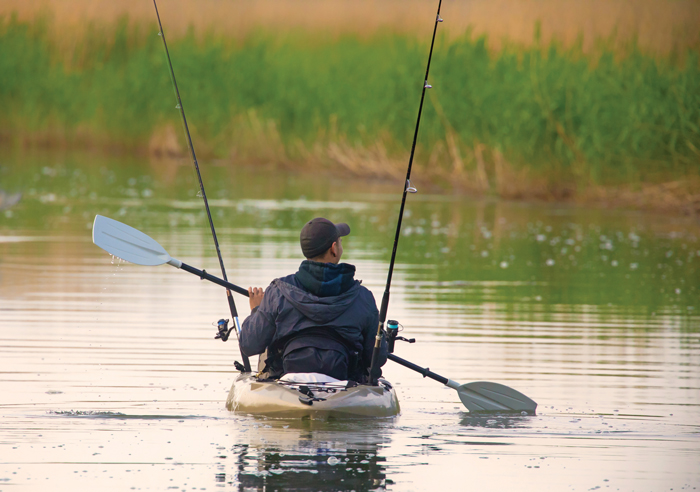
Kayaks are an ideal means for enjoying the water for many. On lakes with docks and good access, kayaks tend to work fine. However, I find kayaks difficult when dealing with poorly maintained landings or on lakes and rivers without docks. My sit-on-top kayak almost ensures I’ll get wet and is difficult to maneuver with fishing gear.
Canoes
Many sporting catalogs, especially those of yesteryear, show a pair of hunters in the Northwoods, drifting slowly down a river toward an unsuspecting moose. The guide controls the craft with a wooden paddle, directing the boat toward the shore.
I recently got a canoe and was surprised at how well it works. Canoes are lightweight and can be handled by one person. I do most of my boating alone, so this aspect is important to me. You can drag a canoe down a riverbank to launch solo, and they come in a range of materials (and, therefore, varying weights), including fiberglass, wood, plastic, and aluminum.
For a novice canoeist, however, a canoe can be a tippy nightmare. Years ago, I was fishing out of an aluminum canoe with my buddy, Andy. It was late spring, and the largemouth bass were finishing their spawn. A major weed bloom meant it was easier to slip a canoe into shallow water than to use a boat with an outboard motor. After catching a few nice fish, my next cast resulted in a fierce strike. Forgetting where I was, I stood up and set the hook with force. Unfortunately, not only did I miss the hookset, but the momentum caused me to lose my balance and go over the gunwales (the rim of the top of the hull). Worst of all, my feet hooked the side of the canoe and tipped it. The water was only a few feet deep, but Andy still hasn’t let me live it down!
Before I tipped the craft, however, Andy had instructed me on how to use the paddles. Rather than jabbing into the water, he showed me how to gently break the water’s surface. You push the blade of the paddle backward and remove it at the end of the stroke. Even gentle paddles work much better than quick jabs.
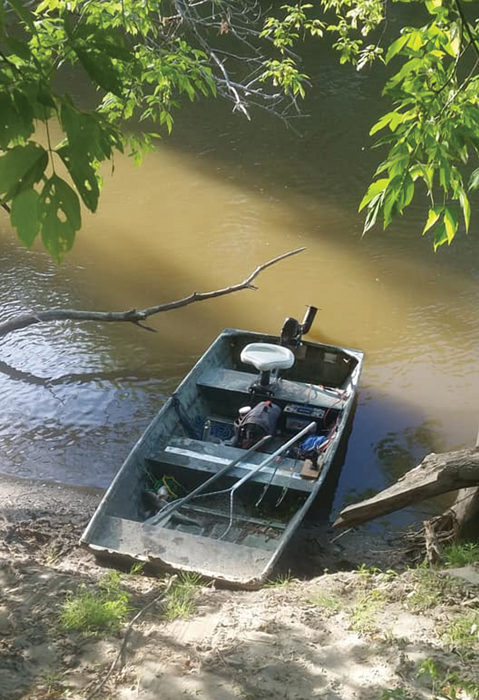
Jon Boats
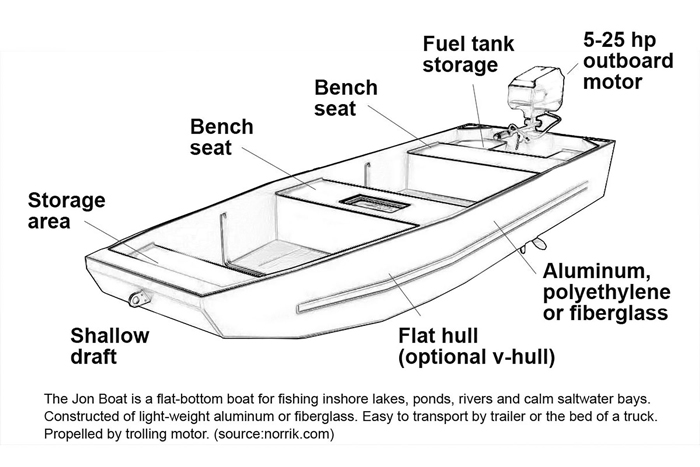
Jon boats are known to be stable, with a small draft – the distance between the waterline and the lowest submerged part of the boat – that makes them ideal for shallow water. One drawback is that a jon boat can be heavy, making it difficult to launch by yourself.
Though jon boats usually have oar attachments, I prefer to use a small electric motor. It’s a delicate balance between applying enough pounds of thrust and conserving battery power. On a lake, a small jon boat can be pushed along very well with a 30-to-40-pound thrust motor; however, even on a small river, that range is likely too small. For years, I used a 35-pound thrust on my home river, and when it failed, I purchased a 50-pound thrust. After the first day on the water, I wished I’d made the switch years before.
The downside to using an electric trolling motor is the battery. Deep-cycle batteries are heavy, and trucking one down a riverbank is no fun. It also adds additional weight to the boat. Despite the drawbacks, electric motors make propulsion much easier. Check the rules and laws in your state when using a motor. In my home state of North Dakota, for instance, I don’t need to license my kayak or canoe. However, my jon boat needs to be licensed because it has a motor.
Snagless Anchors
I outfitted my rig with an anchor, because even a slight current will drift a boat – but finding the right one required a bit of trial and error. A regular anchor proved to be a recipe for disaster; I’d have to cut the anchor rope a time or two each summer, when the anchor became hopelessly jammed in underwater debris. After discovering that using a concrete block as an anchor was useless (it just rolled along the bottom), I turned to the internet, where I eventually came across snagless anchors.
Though variations of snagless anchors exist, I purchased mine from Cat River Anchors. It has a chain welded onto the bottom of the anchor, below the flukes. The chain attaches, via zip tie, to the eye on the top of the anchor. When the anchor becomes lodged in underwater debris, a sharp jerk on the anchor rope will break the zip tie. With the chain attached to the bottom of the anchor, it will flip over, and is easy to extract. Though they aren’t cheap at about $165, mine paid for itself the first year.
Memories on the Water
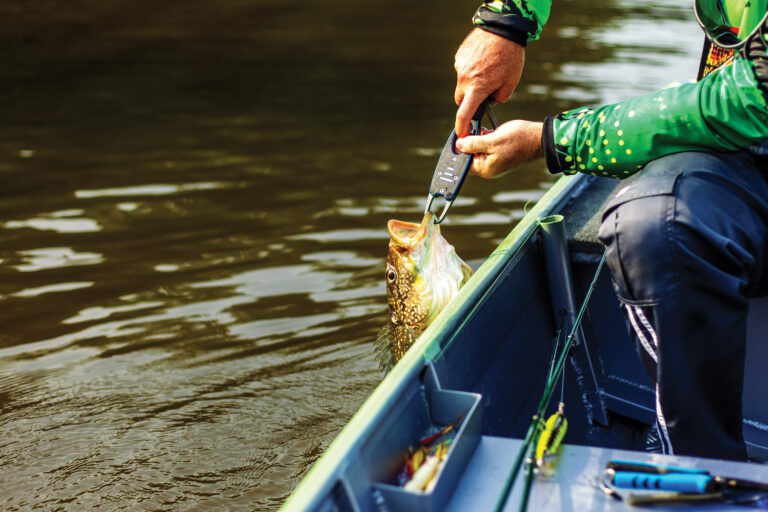
A few years ago, my oldest daughter, Naomi, and I would make the hour-long drive from our home to a small lake in western Minnesota. Though it’s a public lake, it has no access. Rather, a public road runs parallel to the lake on its northern side. We simply parked off the road and dragged the jon boat down to the water. Facing zero fishing pressure, we had a ball catching largemouth bass. As is typical for shallow lakes in northern climates, it succumbed to periodic die-offs when thick ice and deep snow deprived it of oxygen. As a result, the age class of the lake’s adult bass put them at about 12 inches in length. For my money, bass of that size make for a wonderful meal.
For the last few hours of daylight on Friday evenings that summer, Naomi and I cast spinnerbaits and crankbaits and caught the limits of fish. She’s nearly an adult now, but that summer was a time for us to create memories and enjoy her fleeting moments of childhood.
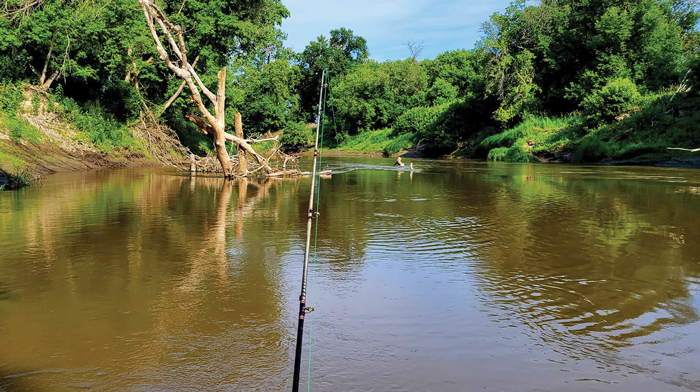
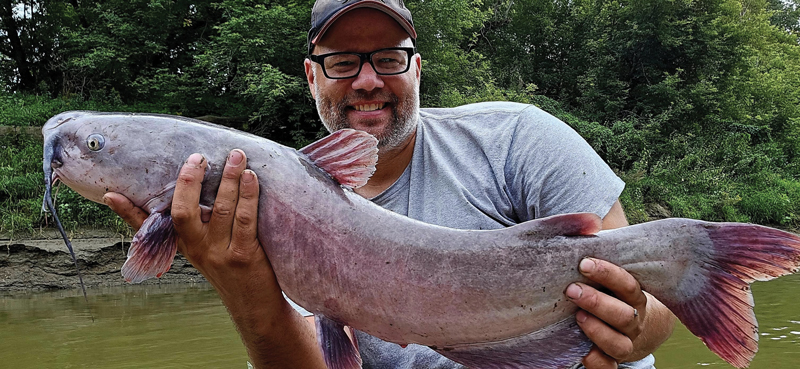
These days, I try to get on the river at least once a week during summer. Though I enjoy all fishing, catching channel catfish on a warm summer day is one of my favorites. I’m lucky that my family’s homestead is bordered by a river to the north, allowing me easy access. I rigged up a hand-cranked winch to drag the boat up the bank when it’s not in use, and I simply free-spool the line and drop it into the water.
There’s ample room for a tackle box, a pair of rods, the battery, and rod holders. A bench seat is available for when I can talk the kids or my partner, Ashley, into accompanying me. Anytime you’re on the water, use a personal flotation device, because even small rivers and lakes can be dangerous. Sometimes, I bring along a floating seat so I can remove my vest when anchored.
During a busy summer on the homestead, sitting in the middle of the river, hearing the sounds of birds, water, and wind all around, is a much-needed balm. When a brutish channel cat tugs on the line, the experience is all the better. Small boats make it possible to enjoy the water and catch some fish without breaking the bank.
Jeffrey Miller is the director of a conservation district in South Dakota. He and his family strive for self-sufficiency, whether through trapping, hunting, fishing, or gardening.
Originally published in the May/June 2026 issue of Grit magazine and regularly vetted for accuracy.