Learn how to care for sheep year-round by following a farmer through a year of making hay, hauling water hoses, rotating pastures, and general tending to the herd.
 This article is also in audio form for your listening enjoyment. Scroll down just a bit to find the recording.
Ask 10 shepherds how they manage their flock in each season, and you’ll probably get 10 different answers. Although the details will vary depending on the needs of each homestead, their responses will have some commonalities. Food, water, and shelter are three things every person raising sheep is concerned about, and to top it off, we’re all thinking at least one season ahead!
Don’t get me wrong, I make sure to enjoy the present, especially when the weather is warm and the lambs are bouncing around their mothers on fresh, green grass. But that won’t last, and I need to plan as best I can to keep my flock healthy and safe all year. What’s happening with the sheep each season, and what does planning a season ahead look like at Innisfree on the Stillwater?
Make Hay While the Sun Shines
I keep two separate flocks of Shetland sheep. The main flock consists of the ram and my fiber wethers. The second flock is the non-breeding and nursery flock, which comprises my retired ewes, mamas, new lambs, and lambs too young to be bred. The main flock uses the largest pastures, while the non-breeding flock rotates around the farm and grazes the yards, marginal areas, and smaller pastures by the barn.
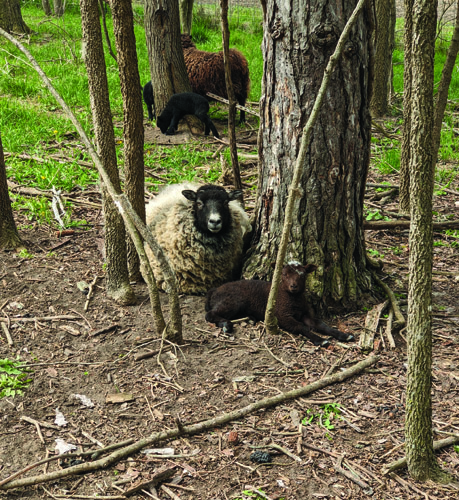
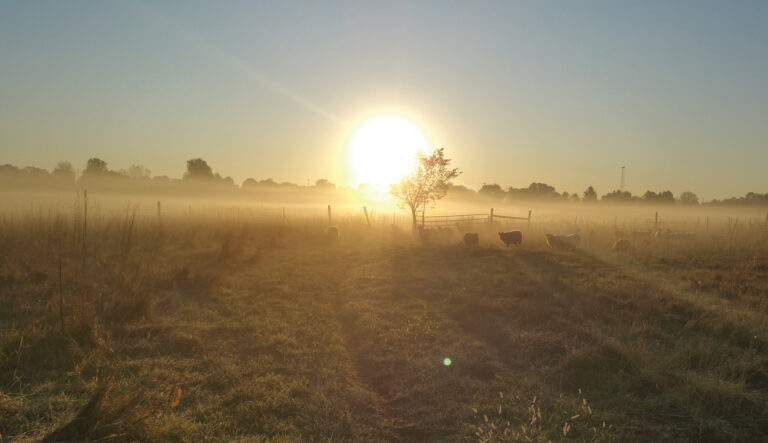
My main jobs during summer are to keep the water troughs and mineral feeders filled, and to rotate the non-breeding flock to new grass. Since that flock sometimes needs to be moved twice a week, this means regularly checking the permanent fences and moving the portable fencing panels. It can get hot here in southwest Ohio, so I’ll ensure there’s plenty of shade wherever I move the sheep. They’re fine if they can lie down in a shady spot during the day, either under trees and bushes or in a barn or other shelter.
While the sheep enjoy their pastures, I’m watching the grass and the weather — it’ll soon be time to cut and bale hay. I have around two dozen sheep, so my hay requirements aren’t huge, but I like to overestimate how much my sheep will eat over winter. Better to have too much than to run out! When the grass is ready (between late June and August), we’ll cut, bale, and move the hay to the barn. It’s a good feeling to see the barn full and know there’s plenty of food for winter.
Decisions, Decisions
Summer is also the time to make decisions about my lambs. The ewe lambs are usually reserved before they’re born, and I tend to keep the boys as fiber producers. If it looks like I’ll have too many with the same color of wool, I’ll sell them or trade them for a boy with a color I don’t have. I’m still working on getting all 11 main colors.
Both flocks are still out on their separate pastures in July, and I use this time to do some sheep shuffling. I move the mama ewes from the non-breeding flock to the main flock. I only have one ram and three or four ewes to breed each year, so I don’t keep the breeding ewes separate from the ram. Shetland breeding season is roughly from October to January, and they gestate for 147 to 152 days, but I’ve had ewes give birth from Feb. 18 through July 27. Their lambs will stay in the non-breeding flock until they’ve grown enough to hold their own with the “big girls.”
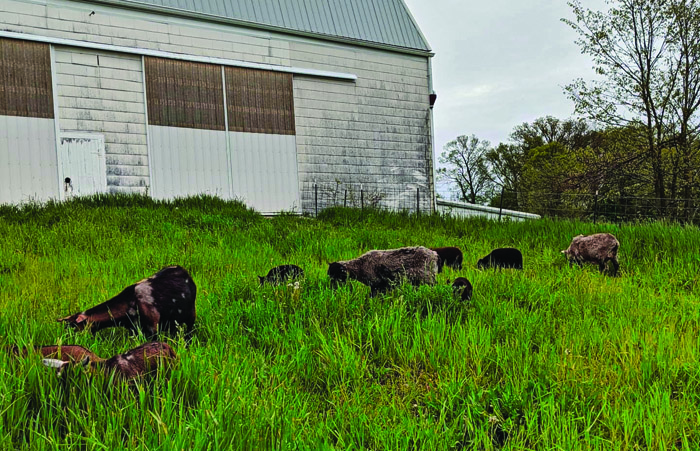
Our local county fairs are in mid-August, and that’s when I’ll begin to keep an even closer eye on how the grass is holding up. With our hot summer and early fall weather, the grass is losing nutritional value and not regrowing as quickly after being eaten. I’ll rotate the non-breeding flock more often and open our “bonus pasture” to the main flock. This pasture is a regenerative prairie habitat where the sheep from the main flock will graze after the milkweed, goldenrod, ironweed, and other pollinator-friendly plants have bloomed. This pasture will support the sheep until it’s time to bring them to the barn area for winter.
Any spring lambs I’ve sold will be heading to their new homes now. I’ll double-check the hay in the barn to confirm I have more than enough to feed the flock during winter. When we had cattle, there was one year we barely had enough hay to feed all the cows. That experience has made me double- and triple-check every year since, even though the sheep don’t eat nearly the volume of hay the cows did.
Audio Article
Bringing Home the Herd
As we enter October, I’ll turn my attention to the winter barn area. Are the fences around the barn pastures secure? Do I have functional heaters for each water tank? Do I need to clean out any spots before I bring in the sheep?
The timing for taking the sheep off the pasture is always dependent on our weather. Last year, I brought both flocks to the main barn and started feeding them hay at the end of November. The Shetlands can dig through a small amount of snow to get to the grass, but I like to give the grass plenty of time to rest before the next spring comes, and based on how well the pasture looked this past spring, that was the right answer.
My barn is an old bank barn with two levels. The upper level is for hay storage, while the lower level has two separate loafing areas. This is perfect for my two flocks, which each has its own hay feeders and outdoor access. I’ve had to make some changes to secure these areas for sheep, but I can feed them from inside the barn, making a cold winter job more tolerable. I have electrically heated water hoses I run to the two water tanks, then to our spigot near the house. It’s a process to drag the hose across the driveway, to plug it in, to wait for it to warm up, to fill the water troughs, and then to pull the hose back so no one runs over it, but it sure beats carrying all those 5-gallon buckets of water several hundred feet in winter weather!
The breeding ewes will have been in the main flock with the ram since early fall, and in early February, I’ll move the pregnant ewes back to the non-breeding flock, which stays in the area of the barn closest to where the lambing pens will be. I’ll set up the lambing pens, check the heat lamps, and wait. I like having lambs earlier in spring, because it’ll still be cool when I’ll need to castrate the male lambs, and that way, I won’t need to worry as much about flies or infections. But I’m prepared with heat lamps if the lambs arrive in extreme cold.
Planning for the Next Year
Even with the daily work of getting food and water to the sheep, winter is a slower season. I’ll reflect on the past year, what went well, and what I want to change. Much of my musing occurs at my spinning wheel: Winter is my time to focus on working with all that lovely wool! The relaxed pace of spinning, knitting, and weaving allows me to brainstorm for the upcoming year. Are there any purchases or repairs that need to be budgeted or made? Can I improve my pasture rotation system? Did I learn something from an outside source I’d like to try? There’s always something new to experiment with; it may or may not work for my flock, but I won’t know until I try.
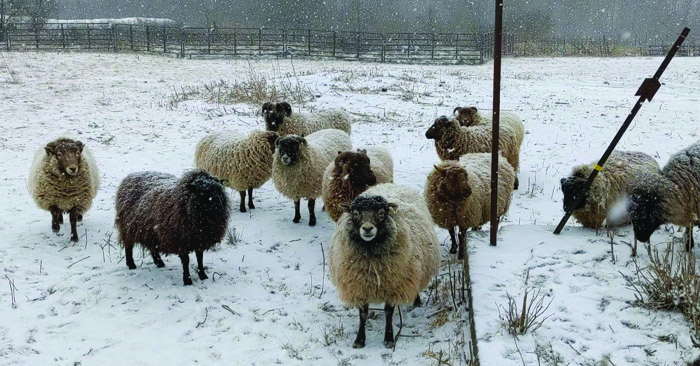
Spring shearing is also on my mind during winter. I double-check that my shearing stand and hand shears are in good condition, since I don’t use electric shears; I consider which fleeces I’ll be keeping for my own use and which I’ll be selling; and I think about how much fleece I’ll have the fiber mill make into roving.
Spring Again
I breathe a sigh of relief when signs of spring appear — we’ve made it through another winter! It’s most likely rainy and muddy, but the temperatures are rising, and the grass is slowly starting to grow again. The lambs usually arrive between February and April. After a week or so of being penned inside for monitoring, mamas and babies rejoin the flock outside. The lambs love exploring their new environment, which frustrates the ewes, who can’t keep track of where they’ll run off to next. The elderly ewes inspect the new arrivals, and then wander off to see if they missed a blade or two of new grass.
To everyone’s great joy, pasture rotation starts around the middle of April — we’re all tired of hay by this point! I walk the fence lines looking for spots that need repairs, run hoses to the water tanks, check the shelters, and fill the mineral feeders. Moving the flocks is simple enough: I just fill a bucket with sweet feed. My sheep know that buckets contain treats, and they’ll follow that sound. It’s a noisy endeavor, and some of them get over-excited and run in the wrong direction, but we’ll all get to the correct pasture in the end.
Shearing begins when the nighttime temperatures are consistently above 40 degrees Fahrenheit, usually in early May. I’ll only shear two or three sheep a day, so shearing is time- and labor-intensive with the couple dozen sheep I have. A few years ago, a damp April forced me to move the flocks from the winter area to their spring pastures without shearing them first. Although this shouldn’t have surprised me, I discovered the fleeces were cleaner after the sheep were on pasture, compared with when they were eating and sleeping on hay in the barn.
Every year since then, I’ve moved them onto grass before shearing, and I’m pleased with the results. The fleece will still contain vegetable matter, but the sheep don’t look like walking hay bales when I get them on the shearing stand.
The sheep are shorn, the fleeces are ready for processing or selling, the lambs are growing, everyone is enjoying the green grass, and we’ve come full circle to summer. Time to think about how much hay I’ll need for the coming winter!
Keba Hitzeman grew up as a free-range child on the farm she now owns with her husband, where they raise grass-fed and grass-finished sheep and goats. You can find her online at Studio at Innisfree.
Originally published as “Seasons of the Sheep: Year-Round Care for Flocks” in the September/October 2023 issue of Grit magazine and regularly vetted for accuracy.