Do pigs get cold? Help your swine thrive while overwintering by choosing cold-weather pig breeds, building a winter pig shelter, and more.
Your first thought of a pig may be of a pink-skinned beast wallowing in sloppy mud on a day bathed in sunshine. That’s a pig’s happy place, but swine are hardy creatures that can be kept in all seasons and thrive on farms in seasonal climates. The key to successfully overwintering pigs is to ensure they’re healthy and have proper shelter as well as enough food and water. With a few simple steps, your hogs will be as happy in snow as they are in mud.
On farms where pigs are kept in large numbers and are part of the farm’s annual income, overwintering is a normal part of pig-keeping. Sows are kept for years for breeding, and piglets are raised up at all times of the year. For smaller farms, homesteads, and hobby farms, the most common model is to purchase “feeder pigs” as piglets every spring, raise them up, and butcher them in fall. This model works well for many, but there are still reasons you may want to overwinter your pigs.
The first reason is to enable you to have your own breeding program. Instead of buying piglets every spring, keeping a breeding sow or two will allow you to farrow piglets yourself and open up the opportunity to sell piglets to other farms. Feeder pigs may also be overwintered, and while raising feeder pigs in winter generally costs more, feeder piglets are cheaper to buy in fall, and summer pig-raising has its own challenges.
Finally, if you keep pet pigs or pigs for land management, you’ll be overwintering them every year. At our farm in rural Maine, we use our sows primarily for land management, as they work much better than feeder piglets for moving land because of their mature size — and every winter, we make sure they’re as comfortable as possible.
Cold Weather Pig Breeds
Overwintering success starts with the pig. Not all pigs are created the same, and some breeds are much hardier than others. Selecting breeds for their hardiness will help them overwinter better, and they’ll also be more active foragers and healthier in summer heat. Hardy, cold-tolerant pig breeds include:
- Tamworths
- American Guinea Hogs
- Choctaws
- Gloucestershire Old Spots
- Kunekunes
- Red Wattles
- Large Blacks
Among other adaptations, these pig breeds are notable because they all have a significant amount of hair. It may not look like much compared with the fuzzy coat of a sheep or a goat, but the layer of hair on these breeds helps them survive winter weather.
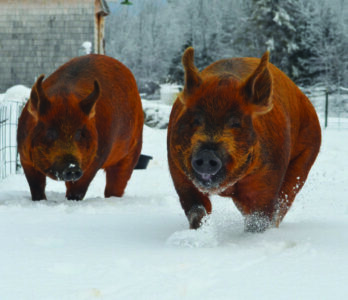
In addition to breed selection, you’ll also want to make sure your pigs are in peak health heading into winter. An underweight, hungry pig won’t tolerate cold weather well; it’ll continue to lose weight as forage becomes less accessible, and it won’t have the thin layer of fat necessary to protect it against winter’s worst chills. Equally, you don’t want a fat pig heading into winter, as that’s just as unhealthy. A healthy pig has a layer of fat to keep it warm, but an overweight pig with too much fat will struggle to move around, especially in harsher winter conditions.
Do Pigs Get Cold? Winter Pig Shelter and Forage
With healthy pigs and hardy breeds, you’ll already be ahead of the game for a successful winter with your pigs. But pigs will also need shelter. For the smaller homestead or farm, this usually means having a three-sided shelter within a larger dedicated pasture. Your pigs won’t need to be indoors all winter, or even most of the time — they’ll just need to be able to escape the elements when they want to. And they won’t need a large winter shelter either. An area of 8 square feet per pig should suffice, because they’ll mostly be using their shelter for napping. Pigs can be overwintered indoors in open barn spaces, but this is usually not practical for smaller farms.
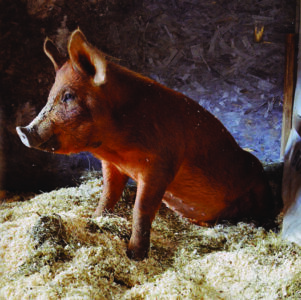
As with most livestock, the biggest dangers to pigs in winter weather are the wind and wet. So, the main purpose of a shelter is to protect them from those elements. Build a shelter with primary wind direction in mind, with the open side or door facing away from the wind. In particularly challenging climates, you can hang a thick cloth or old rug to make a door flap. A shelter should be as windproof and waterproof as possible — but there’s one other consideration. Pigs are curious animals with insatiable appetites and powerful jaws. Your pig shelter will without a doubt face some taste-testing and board-chewing, so use durable materials that are well-secured and avoid loose edges, as pigs may grab and tear at them.
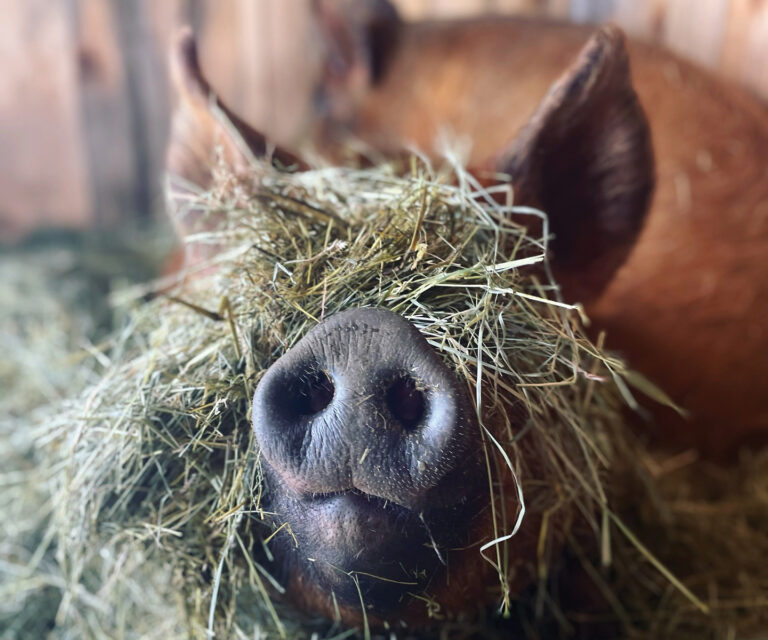
Pigs can be bedded down in straw, hay, shavings, or peat moss. Refresh their bedding regularly; we maintain a deep litter of 6 inches or more on the floor of their area. Pigs snuggle in deep and use their bedding as “blankets,” which keeps them warm on the coldest days. Your pigs will likely eat some of the hay if that’s offered as bedding, so refresh hay bedding more frequently. A base of shavings with straw on top is one of the warmest material combinations for wintering pigs.
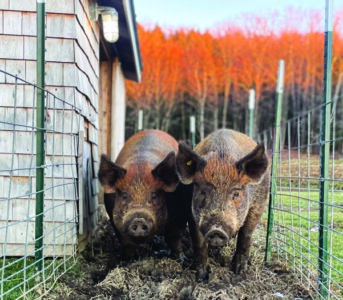
Beyond their shelter, pigs need a run area to stretch their legs. You’ll find they enjoy lying outside in the sun on warm days in wintertime and digging through snow for whatever they can find in the frozen dirt. Some pigs overwinter entirely on pasture, with winter shelter and other considerations added to their standard open-pasture space. Some have a dedicated overwintering area.
Either way, an area where pigs will winter needs a solid fence. Pigs are more likely to grow bored and escape in winter, because foraging options are low. Snow and ice can bury or short out electric lines. (Electric fences can work, nevertheless, but will require attention from the farmer after any weather event to ensure they’re still active and above the snow.) Hog panels are often the best option for fencing in pigs during winter; take care in installing them, and ensure snowpack doesn’t drift too high against them. We’ve found providing at least 1/4 acre per pair of pigs for winter pasture will give them room to exercise and stay entertained. The more space you offer, the less likely your pigs will challenge fences.
What’s on the Menu?
You’ll also need to consider water for your pigs. While pigs in winter don’t need a large wallow like they do in summer, they’re still animals that consume a great deal of water. An adult pig may drink as much as 6 gallons of water a day. A large water trough, such as a 50-gallon Rubbermaid, with a de-icer is effective, though sometimes the trough will also need rocks or bricks placed on the bottom as extra weight so the pigs don’t flip it over. Keep in mind that most de-icers need electricity to run, so you’ll be carrying water or running hoses temporarily in winter to refill this trough. Nipple waterers are a common way to water pigs in summer. Some nipple systems are heated and can work in winter, but I’ve found they’re slightly less reliable than bucket de-icers and will sometimes freeze up.
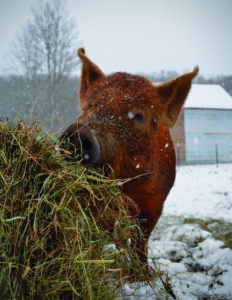
Finally, diet is an important part of a successful winter with pigs. Pigs are active and curious foragers, and in summertime, if they aren’t napping, they’re eating — consuming leaves, grubs, roots, berries, and everything they can dig up. To survive winter, pigs will need a lot more food provided by the farmer, since they can’t forage. Additionally, pigs need more food simply to keep warm in wintertime.
Before considering overwintering pigs, think about the extra feed costs as compared with summer pasturing. To offset the increased feed intake, consider options beyond simply buying more hog grain. Local restaurants and cafés may have leftover food and scraps they’ll happily let you feed to your pigs. Your own kitchen scraps can help supplement your pigs’ feed as well. Bales of hay can be tossed in the pig pasture area and provide both outside bedding and extra food. Farms with dairy animals, even a backyard homestead with only a few goats or a cow, can offer whey and excess dairy to ensure happy, healthy pigs.
With plenty of food, adequate shelter, and a reliable water source, pigs will overwinter as comfortably as they wallow in summer. Taking these extra steps will open new opportunities for the small farm, such as a small piglet program with your overwintering sows, or offering pork at a time of year when other businesses don’t. Whatever your reasons for overwintering your swine, it’s not hard to make it an enjoyable and successful experience for both pigs and farmer.
Kirsten Lie-Nielsen is an author and farmer in Liberty, Maine, where she and her husband are restoring a 200-year-old farm and raising Nigerian Dwarf goats and Babydoll sheep. She’s the author of two books on homesteading, The Modern Homesteader’s Guide to Keeping Geese and So You Want to Be a Modern Homesteader. She shares farming knowledge via her website, Hostile Valley Living, on social media @HostileValleyLiving, and through occasional classes.