Thinkin’ about buying a dairy cow, maybe a couple of lambs or a steer to fatten up in your pasture, but don’t know any local producers who might have animals for sale? Then how about pulling on an old pair of boots and heading for the nearest livestock auction barn?
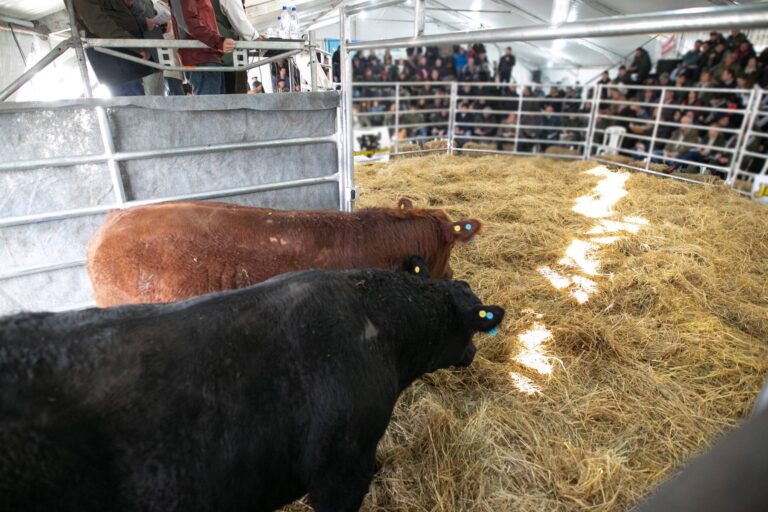
Rural America’s version of the stock market, auction barns are where livestock producers and buyers gather to buy and sell animals ranging from cattle, swine, goats and sheep to horses and llamas. More than 1,000 livestock auction sale barns still operate across the country, according to the Livestock Marketing Association, and they’re a great place to learn the nuances of buying and selling livestock.
You can find the sale barn nearest you by going online or calling your county extension agent. Be sure to call ahead, since most auction barns only have sales on specific days of the week, and certain auction days may be reserved just for beef or dairy cattle, or for goats or swine. The Farmers Livestock Auction in Booneville, Missouri, for example, auctions hogs and cattle each Tuesday beginning at 10 a.m. Be sure to ask the auction barn if they offer single animals for sale, in case you’re not looking to buy a hundred head of steers.

It’s important to get an idea of how much you should expect to pay before you put on your cowboy hat and head out. Beef cattle, sheep, goats and pigs are usually sold by the hundredweight, while dairy cows are sold by the head. You can get a good idea of recent selling prices online at MarketNews.USDA.gov.
Know the lingo before you set off. If you want an animal to fatten on your pasture, you’re looking for a weaned calf or yearling, or maybe a lamb or a young pig (otherwise known as a shoat). A young dairy heifer that’s 7 months pregnant is called a springer. A dairy cow that is presently giving milk is called “fresh,” while a cow that is not bred is called “open.”
If you’re serious about buying a farm animal that day, take a truck with a livestock rack or an enclosed animal transport trailer with you. If you don’t own one, maybe you can bribe a neighbor to haul home your bovine, ovine or porcine acquisitions. It’s generally not a good idea to load a calf or a couple of goats in the rear of an SUV. If you do, be sure to stock up on a dozen of those little scented pine tree thingies that dangle from your rearview mirror, because poop is … inevitable.
Plan on arriving at the sale barn at least an hour before the auction begins and take a walking tour of the animal pens, so you can get a close look at the age, size, quality and health of the animals you expect to bid on. Plan on wearing jeans and an old pair of boots because … well, because a full-grown cow is capable of producing 50 to 100 or more pounds of manure and urine daily.

The bidding process is relatively simple, although the auctioneer’s rapid-fire delivery style can make it appear complicated. Remember three things. First, it’s the auctioneer’s job to try to get the most money for an animal or group of animals she can. Second, remember the limit you’ve set for yourself and try not to go too far over it. Third, try to see who is bidding against you.
Many auction barns provide bidders with a numbered card you can hold up when you want to enter a bid. Be aware, however, that you may be bidding against professional livestock buyers and other seasoned pros who disguise their bids using secret signals. They may signify a bid with a barely perceptible nod, by touching their nose or tugging at an ear. It’s a game with its own set of rules.
It’s generally not a good idea to stand up during the auction process and wave at an old acquaintance, or you may find yourself the proud owner of a herd of feedlot steers.

And don’t be the first bidder when the action begins. The auctioneer often starts out with a high asking price, then drops it until he gets the first bid. Wait until another bidder makes a bid, then consult your cheat sheet to determine if you should make a higher bid.
The staff at a livestock auction barn normally includes one or more ringmen, whose job is to watch for bids from the bleachers, and then call attention to your bid with a loud “Yep.” When you’re ready to enter a bid, raise your numbered card in the air so the ringman can inform the auctioneer.
Once you’ve made your acquisition, it’s time to go to the sales counter and settle up. They’ll gladly accept cash or a check, but probably not American Express. In return, you’ll receive a bill of sale that may include the animal’s brand or ear-tag identification.
OK, now it’s time to back your truck or trailer up to the loading chute. If you are not a proficient backer-upper, you may be able to find a livestock producer or an auction barn employee who can help you out.
After you have your livestock loaded, it’s time to head for the ranch: where, of course, you will have already made certain your pasture is tightly fenced, or the corral or pig or sheep pen is securely enclosed; where you’ve already installed a water tank, purchased a supply of cow, goat, pig or sheep feed, and constructed a shelter to protect your livestock from the weather; and where you’ve written down the phone number for the nearest large animal veterinarian.

In our next installment, we’ll talk about techniques for tracking down fugitive livestock in the dead of night.
Cowboy poet and writer Jerry Schleicher makes frequent visits to livestock auctions near his Parkville, Missouri, home. So far he’s avoided any auction snafus.