Learn cattle auction terminology, tips for bidding, how to sell cattle at auction, and how to prepare before going to a sale barn.
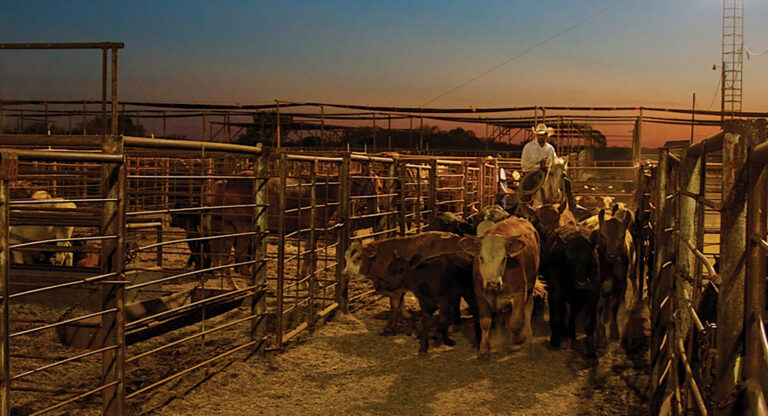
The confident hum of an auctioneer’s chant fills the Fredonia sale barn amid shouts and calls from sorters pushing cattle through the myriad pens and alleys behind the sale ring. It’s just another Tuesday afternoon in sunny Fredonia, Kansas. Nestled about 90 minutes southeast of Wichita, the Fredonia Livestock Auction is a bustling hub of activity on sale day, as cattle are hauled in from surrounding areas to be auctioned off and shipped via trucks to their various new homes.
The sale-barn owner, Brad Haun, stands inside the sale ring, calling out details for various groups of cattle — from vaccinations given, to age, to cows’ current stage of pregnancy — working hand in hand with his world-champion auctioneer, Blaine Lotz, to deliver an honest and speedy sale. My husband and I join the crowd and watch from fold-down seats just to the side of the ring. Partway through the sale, Brad sets aside his microphone to briefly visit with us. Taking a seat, he shares the history of his sale barn.
Years before, another barn had stood in the same place as today’s sale barn until a fire burned it down, leaving only the scale. For about two years, the town sat without a sale barn, and locals resorted to hauling their cattle to other livestock auctions to sell them. One of the original owners of the burned-down barn encouraged Brad to restart the sale. The sale barn had made a living for his family for many years, and he believed the community needed a cattle auction — and that Brad was fit to run it.
After some discussion, Brad and his father purchased the barn and set about rebuilding it. The entire barn had to be reconstructed, as the fire had destroyed everything except the scale used to weigh cattle. Brad tells me one of the challenges he faced was finding a way to get people to return to selling cattle at the Fredonia barn after they’d started selling elsewhere. Fifteen years later, Brad has a well-known and successful cattle auction that has people — both newcomers and longtime sellers and bidders — and cattle coming from all across the area.
Cattle Auction Terminology
Here are a few terms that’ll come up in this article:
- Auction: a place where goods (in this case, livestock) are sold to the highest bidder
- Auction barn: a space where livestock producers and buyers gather to sell and buy livestock and other goods
- Bid, bidder: an offer, or when someone makes an offer, to buy something at a certain price
- Bull: uncastrated male bovine animal
- Calf: a male or female bovine animal that’s under 1 year old
- Heifer: a female bovine animal that hasn’t had offspring
- Order buyer: a buyer who purchases livestock on behalf of another party
Inside the Cattle Auction Sale Barn
As you walk into the Fredonia Livestock Auction, you’re greeted by a cozy café on one side, which routinely serves up cheeseburgers and other comfort food, and a busy clerk’s office on the other. Straight ahead, the double doors lead to the auction ring, where you can settle into a chair and take in all the action.
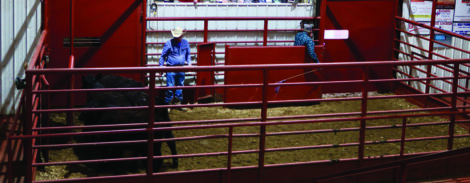
A red metal door on the left side of the ring breezes open, and cattle enter the ring. The scale beneath their feet takes the group’s weight and displays it on a screen to the left of the auctioneer’s booth. That same screen shares other relevant information, such as the number of head in the lot and the average weight of a single animal in the group.
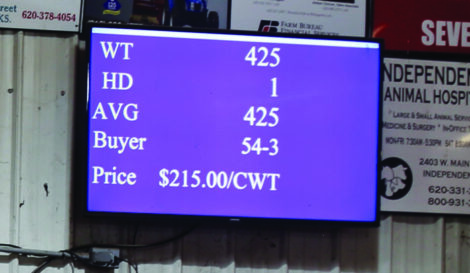
To the right of the booth, a second screen displays information about the previous bunch that just sold: the group weight, number of head, and average weight for a single animal; the bidder number of the buyer who purchased them; and the price they sold for.
If you sit for a while, you’ll notice how the auction team works like a well-oiled machine. Sorters have the cattle ready to come into the ring and pass an information card in with the group. Brad takes the card and tells the audience about the lot of calves before handing the card into the auctioneer’s booth and suggesting a starting price to Blaine.
For a newcomer to a livestock auction, all of this may feel like a whirlwind, especially when the bidding goes into full swing. However, a few key areas of preparation before stepping into the sale barn can help you overcome any confusion and navigate the process of buying or selling an animal.
Understand the Auctioneer and the Price
While it might take some practice, learning to understand an auctioneer’s chant is important to your success in purchasing cattle at a sale barn. While auctioneers may use “filler words” (such as “dollar bill” or “all the money now”), it’s essential to pay attention and catch the current price they’re calling for.
At most sale barns, cattle are generally sold by the pound. For example, if a group of five steers, each weighing an average of 480 pounds, is sold for $1.95 per pound, the final price would be the total group weight (2,400 pounds) multiplied by $1.95, equaling $4,680.
The longer you sit, the more you may notice how individual buyers in the audience have their own ways of placing a bid. For some, it can be as simple as a finger motion once they have the auctioneer’s eye. Having a solid group of cattle buyers at a sale barn is essential to a successful auction. As local rancher (and my father-in-law) Todd Krispense says, “You don’t have an auction if the buyer doesn’t come, and it takes at least two!”
While some members of the audience may be looking to buy a smaller quantity of cattle for their own personal use, another group in the audience is generally made up of order buyers (also known as “cattle buyers”), who make their living from days spent at the sale barns. Generally, order buyers are people who take orders from individuals or ranches for specific groups of livestock (certain weights, breeds, or those within a certain price or quantity limit) and then purchase the livestock on their behalf. For the rancher, this can save them time and hassle, as they can continue working back on the ranch and still have livestock, such as cattle, bought for them. For the order buyer, it can provide a means of income, as they make a commission off the cattle they buy.
Though it might seem like a person can save money by not hiring an order buyer, it can be worth the commission fee to some folks once they understand the amount of wisdom and insight an honest order buyer can apply when choosing which cattle to purchase. A group of steers could look like a great deal to you, but the order buyer may have a reason to hold off from purchasing them, such as the animals’ previous history.

According to Todd, order buyers are the lifeblood of the cattle auction nowadays, as most of the cattle that run through a sale barn will be purchased by them. As they sit and watch each group of cattle run through the auction, an order buyer might have multiple people they’re purchasing cattle for. As Todd notes, order buyers are given the task of juggling the cattle currently available for sale between who’s looking to buy and how much they’re willing to pay.
Todd also shares that selling cattle at a sale barn is straightforward: Bidders run them up to what they think they’re worth, and that’s the amount the seller will get, minus sale-barn expenses. For a buyer, though, it can require a bit more figuring. While the buyer doesn’t have to worry about the expenses of the sale barn, they do have to calculate freight and destination expenses. These destination expenses can include the order buyer’s commission and expenses incurred during transportation from unloading the cattle midway if it’s a long trip (although, many truckers will just drive it straight through nowadays).
Cattle Auction Tips: What to Look For
For anyone new to the cattle business, stepping into a cattle auction might seem somewhat intimidating, as the fast-paced sale requires quick judgment and decisions. So, have an idea of what you’re looking for in an animal before you even get there.
Here are some things to watch for once an animal enters the ring.
Disposition. Does the animal charge the fence or helpers in the ring? Is it frequently snorting or pawing at the ground? While you may never fully know what’s going on in the mind of your cattle, an unpredictable and mean-spirited animal can be a danger not only to your fencing, but also to you and your family.
Body conformation. While you might not need top-of-the-line quality in your cattle, it can be helpful to find animals that have good conformation (shape or structure). An example of poor conformation could be a calf that has a high-set tail, big ears, a long face, or lots of loose skin. Conformation can be a sign of quality in your animals, but it can also hold value in the future, as poor conformation can lead to health issues. For example, Todd says if a heifer is bought (intending to be bred and become a cow) but doesn’t have a wide-enough pelvic measurement, it can cause issues during calving. Another example can be cattle with crooked legs or poor feet, as they can eventually become lame.
Signs of illness or injury. Look for the obvious indicators of sickness, such as coughing, a snotty nose, bad or blind eyes, loose stools, or a lethargic attitude. Notice how the animal stands and moves around the ring. Does it appear to favor one foot or leg? Does it show any signs of lameness?
If you observe traits like these in an animal, it could be a sign to steer clear of bidding on it.
Have a Plan in Mind Before the Cattle Auction Starts
As with any purchase you make, find a seller with a good reputation. Listen to what the sale barn says — Brad calls out details about groups of animals before bidding begins at his sale barn, for example — and if you have a chance to visit with local ranchers beforehand, see if they have any recommendations on specific animals to purchase.
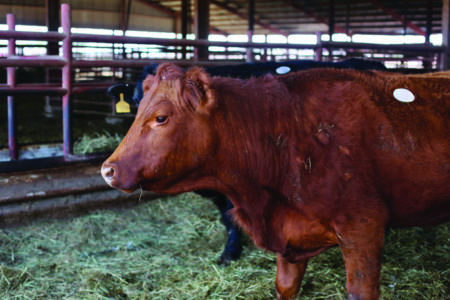
Before you raise your hand to make that first bid, have a plan in place for what you’re looking to purchase and what you’ll do with the animal once it’s in your care. A sale day can be an exciting experience, but don’t let the adrenaline sweep you away.
- Know how many head can comfortably fit on your available acreage or space.
- Consider both the amount of available grass and the feed that may be required later in the year.
- Bring a trailer to haul any purchased livestock, or hire somebody to haul them home.
- Don’t get a mixture of random cattle without plans to properly work them (such as young, uncastrated bulls that could mix in among any heifers or cows on your property).
- Listen closely for any vaccinations that have been administered if you don’t have the desire or ability to deal with vaccinating them soon after their arrival.
How to Sell Cattle at Auction
When searching for a sale barn where you can sell your cattle, Todd suggests to do your research and find a barn that has a good reputation, and where your cattle are likely to bring the best price. Ask questions and visit with people. Find out what their experiences have been at specific cattle auctions. Did they feel like the sale-barn staff treated their animal well? Did they get a good price for their livestock? If you visit a sale barn, notice how the facilities look. Are they well-maintained? Can you tell effort has been put into not only the barn but the whole operation? Todd suggests looking for a “reputable barn with an adequate number of buyers.” Remember, he adds, “You need more than two buyers.”
Cattle auctions offer many opportunities to learn and step a bit deeper into the world of both buying and selling livestock. By approaching with some caution and wise decision-making, you’ll have a much better chance at a successful experience with your livestock. Happy bidding!
Once your purchase is made and your cattle are loaded into your stock trailer, it might be an exciting, yet slightly scary, feeling as reality sinks in at the responsibility you just signed up for. Raising cattle can certainly provide some challenges at times and plenty of opportunities for learning, but it can also offer great rewards! From fresh meat or dairy (depending on the kind of cattle you purchase) to an extra stream of income, your family will enjoy the fruits of your labor!
Preparing to Bring Home Your First Calf
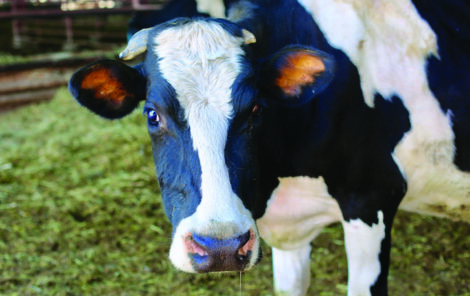
Have everything lined up before you even head to the cattle auction, even if you end up coming home with an empty trailer the first time or two. Here are some things you should have ready before you unload your cattle:
- An adequate acreage of good grass or a sturdy pen
and good-quality hay to feed. - Some form of shelter that’s seasonally appropriate.
- Sturdy fencing (and knowledge of where to find tools or supplies to make future repairs).
- A water trough and fresh, clean water.
- Feed and, if needed, protein to supplement with
later in the year. - Basic medications.
- One or two sorting sticks and a hotshot, if desired.
- A trusted local vet and, if possible, a nearby rancher to call in case of emergency or to answer questions.
Feature image by Flickr/Al Jazeera English (CC BY-NC-ND 2.0).
Ashleigh Krispense is a freelance writer from central Kansas, where she lives on a farm with her husband, Kolton, and their menagerie of critters. You can follow along with her recipes, ramblings, and farm happenings on her website, Prairie Gal Cookin’.
Originally published as “Let’s Go to the Cattle Auction” in the September/October 2023 issue of Grit magazine and regularly vetted for accuracy.