Learn about the domestication of animals in neolithic age. Humans and livestock evolved together over generations, and restoring this bond can heal a wayward agricultural system.
The domestication of plants and animals began around 10,000 to 12,000 years ago at the start of what’s known as the Neolithic period. This period marked a shift away from hunter-gatherer lifestyles to settled communities and the beginning of agriculture. What was a gradual transition that involved using stone tools, saving seeds of cherished plants, and raising livestock left a massive impact on the world as we know it today – and would forever change the ways humans and animals interact.
Some view domestication as humanity’s exertion of dominance and superiority: Changing plant characteristics and breaking the will of animals is essentially bending the world’s resources to fuel the fires of human consumerism. After all, wild animals are free to roam where they like and eat what they want (or at least what they find). But this purely negative framing of domestication just doesn’t sit well with me. It doesn’t feel authentic to my own experience living on our small farm.
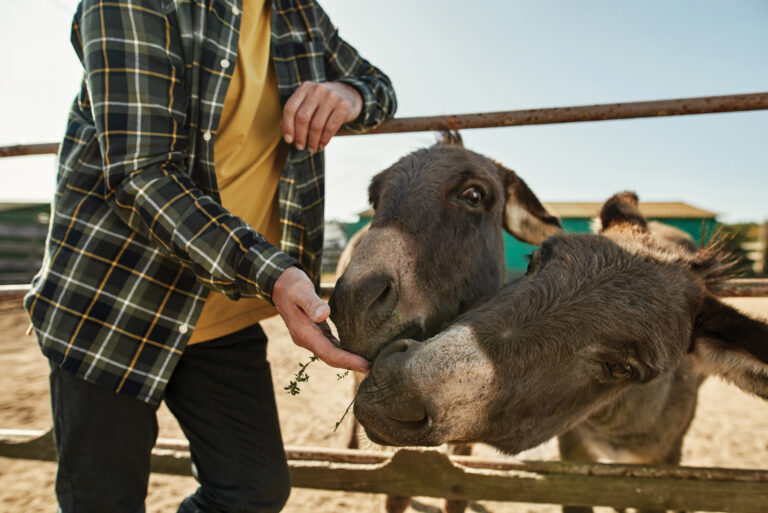
A more nuanced view dawned on me as I was sweating profusely in the summer sun, lugging two 5-gallon buckets of water to our dairy cow and sheep, who were lounging in the shade. On other days, I move the animals to fresh green pasture, shovel manure from their stalls, feed out hay in the frigid winter cold, and tend to numerous injuries. Of course, I’ll ultimately butcher a few lambs and a couple of pigs and take the milk intended for the calf, but while these animals are alive, they’re cared for. So, I’ve come to view people and their livestock as surviving in symbiosis across generations – our foundational fabric knit together via an ancient agreement for mutual success.
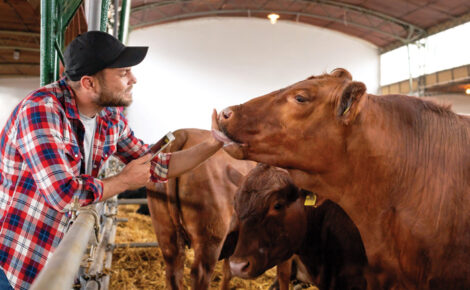
Likewise, as time has passed and industrialization has brought on an era of specialized farming practices with increased mechanization, the disconnect from and abuse of our livestock has created undue damage not only to the animals, but also to ourselves.
People and Livestock Coevolve
Coevolution is the reciprocal development between two or more species driven by natural selection, where each species evolves in response to the other. All of today’s cattle breeds descended from a wild ox called the “auroch” some 10,500 years ago. The auroch was larger than today’s cattle, with massive sweeping horns, and it roamed portions of Europe, Asia, and North Africa. The species declined because of overhunting and destruction of its habitat, and the last known auroch died in Poland in 1627. By this time, modern cattle had been domesticated for thousands of years, their appearance and quality drastically changed from those of their wild ancestors. Today, cattle and humans are among a few species that have no living wild ancestors.
Cattle are bred for abundant meat and to produce massive quantities of milk that far exceed the needs of their calves. But coevolution between people and cattle means some humans evolved to produce an enzyme called lactase, responsible for breaking down milk sugar (lactose). As dairying began to spread over certain parts of the globe, the prevalence of lactose tolerance in adults also spread. Both humans and cattle greatly benefited from this arrangement.
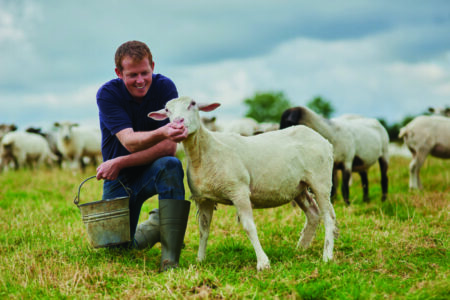
Sheep were domesticated around the same time as cattle (possibly earlier) and were paramount for human populations to sustain without the need to travel long distances. Early herders selected sheep for their wool coats and unique flocking instincts. Because humans have little hair on our bodies to protect us from cold or sun, we learned to produce textiles with animal fibers.
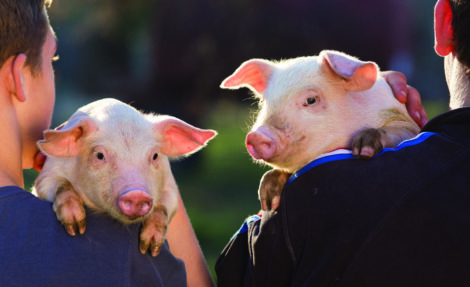
Pigs were domesticated around 8,500 years ago. This species had the potential to directly compete with humans for similar food sources (unlike cattle and sheep), but pigs can also turn spoiled foods or “garbage” into copious quantities of meat and fat. Over the centuries, they’ve been bred for abundant lard types popular in the past to the lean bacon types of today.
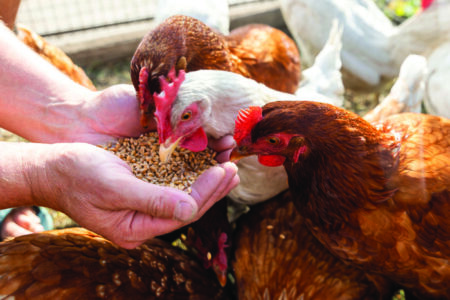
Chickens outnumber humans by a ratio of more than 3-to-1, with about 19 billion more chickens on Earth than people, making them the most numerous birds on the planet. Starting about 3,500 years ago, people bred the wild jungle fowl of Asia into numerous chicken breeds with varying characteristics, such as egg-laying ability or meat production. Chickens have also been valued for their ability to consume insects and other pests, contributing to the cleanliness and health of human settlements.
You can see that we humans and our animals have evolved to mirror one another. However, I won’t ignore the fact that, especially in modern history, coevolution hasn’t always happened in balance or solely for the betterment of society.
From Mutualism to Exploitation
Before farming became industrialized at the end of the 20th century, humans and livestock largely cohabited on small-scale farms with diversified crops. In the early days, farmers bred livestock for specific traits that met the unique requirements of geographic locations and circumstances. But as farming transitioned from a way of subsistence to a profit-maximizing commodity, compromises were made in this ancient exchange, and the results have been rather horrifying.
Specialization and quantity over quality have become the name of the Big Ag game. Specific livestock breeds are now bred to do one thing in excess, even to the detriment of the animal’s welfare and health of the environment: cows injected with growth hormones, meat chickens whose legs crumble underneath the weight of their bodies, pigs that never see the light of day, and cows fattened on grain, standing knee-deep in their own excrement.
The bond between people and livestock has broken – and the dreadful existence of the creatures we rely on for food can be eerily compared with modern society’s daily grind. We’re not healthier today than our grandparents were. Cancer rates have skyrocketed alongside obesity, diabetes, and heart disease. Many of us work in a form of sedentary confinement that offers us little movement throughout the day and unhealthy living conditions. In this way, our path through history continues to mirror that of our livestock, and we lack care, respect, and compassion for ourselves. It doesn’t have to be this way.
Change for the Better
We can amend the way we grow and relate to our food and, in doing so, heal the Earth. But how do we accomplish this on a large scale?
Contrary to popular belief (or clever marketing), large factory farming isn’t the most efficient way to feed people. In fact, it can be incredibly inefficient. Governments subsidize the production of corn, soy, and wheat to artificially drive down the cost of food. Taxpayers pay for the overproduction of specific commodity crops on consolidated farms, making competition challenging for small, diversified farms. Society takes on the collective costs of eroded soils and the use of chemical fertilizers.
The regenerative-agriculture movement is a beacon of hope for the future of farming – and perhaps represents the only feasible way forward. The regenerative approach emphasizes restoring and enhancing the health of the soil, water, and environment while boosting crop productivity. Pillars of this practice include keeping soil disturbance to a minimum, cover cropping, applying zero pesticides, and rotating livestock in a way that builds soil fertility. Many regenerative farms are more profitable than their conventional counterparts.
When livestock animals are cared for in conditions that align with their nature, they’re healthier, the soil is healthier, and the people who care for and eat them are healthier.
I’ll offer an example from my own farm, which on a given acre of pasture is home to multiple species that depend on one another for their individual grazing. In this system, each species eats different types of forage: The cows eat the grass, the sheep eat the forbs, the geese eat the seed heads, the pigs eat the stubble (along with some sheep manure), and the chickens spread the cow pies and eat fly larvae. None of them shares parasites, and they work together to make a single acre more productive. The animals move through a section of pasture within a day or two, leaving that particular area to rest and recover afterward. The animals are well-fed and the pasture is better off, sequestering carbon and becoming more verdant.
On an individual level, it may appear that the relationship between people and livestock serves people more. But at a macro scale, cattle, sheep, pigs, and so forth have experienced levels of longevity, health, productivity, and population growth just as extensive as those enjoyed by people.
All of this begs the question, who domesticated whom? And, perhaps more importantly, how do people and animals coevolve from here?
Human and non-human animals need each other for mutual success. Together, I believe we can learn from the past, heal the wounds we’ve caused, and recover what was lost when we turned our backs on truly caring for our livestock.
Nathaniel B. Munro is an agrarian writer and homesteader striving to live a deeper, more connected life along with his family in Maine.
Originally published in the September/October 2025 issue of Grit magazine and regularly vetted for accuracy.