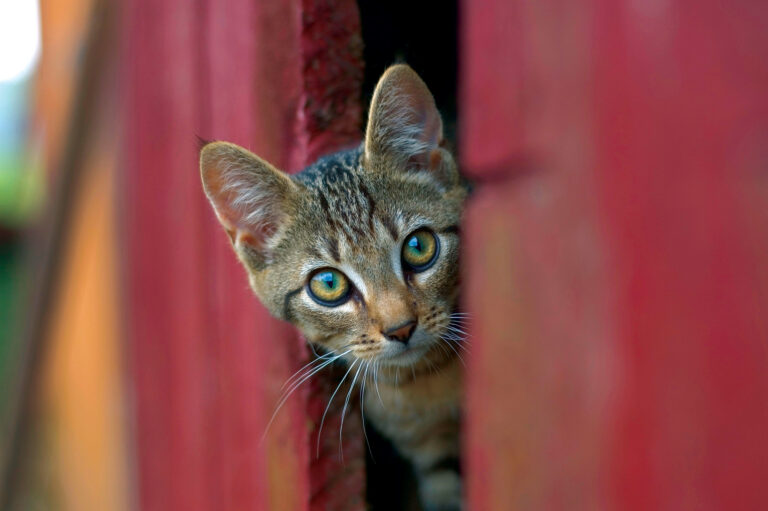
Learn about barn cats and the health risks associated with their prowling and eliminating critters from the homestead.
Rodents will wreak havoc in barns. Barn cats can help. Rodents destroy insulation, electrical wiring, bedding and leather, and contaminate feed supplies. They can harbor tapeworms and other parasites that can infect other animals that inhabit the barn. Hantavirus, a serious, potentially life-threatening disease present in some deer mice droppings, can infect humans who inhale the airborne virus when sweeping or cleaning up droppings.
Proactive farmers will want to eradicate rodents from the barn. Rat poisons, typically made of an anticoagulant that causes a delayed bleeding response, or a newer generation neurotoxin, are widely used to kill rodents. The problem is, other animals also love the taste of these poisons.
Enter the barn cat, stage (or stall) left.
Cats will hunt and kill mice, and occasionally eat them. Many of the squirming little parasites that live in rodents will now take residency in this new host. In their role as hunters and protectors of the barn, these cats are susceptible to some serious health risks. Outdoor cats typically live less than half as long as indoor cats. Barn cat owners are charged with providing their feline friends with the latest in preventive health care. The old farming adage holds: Take care of your animals, and they’ll take care of you.
Following is most everything you’ll want to know about barn cats, health risks and caring for your barn cat.
Initial and Ongoing Preventive Care for Cats
De-worming Cats
When your cat hunts and eats a mouse, the tapeworms, roundworms and hookworms that reside in the rodent may relocate to your cat’s intestines. From there, these parasites are always looking for even better digs, such as a human body.
Ask your veterinarian to prescribe a broad-spectrum dewormer such as Droncit Plus, which contains both fenbendazole and praziquantel. Depending on your cat’s exposure to parasites, the medication should be given as often as once a month.
In areas where mosquitoes dwell, heartworms are sure to follow. Make sure your barn cat is getting a monthly heartworm preventative that will kill any heartworms in their early stages. Heartworm infection, initially thought to be rare in cats, can wreak havoc in the heart chambers and lungs of affected cats. One or two worms are enough to cause a serious infection.
Vaccination for Core Cat Diseases
All outside cats should be fully vaccinated for the ‘core’ cat diseases, such as herpes virus, calichi virus and panleukopenia virus. This vaccination is available as a combination injection that is given at 10 and 13 weeks of age, and then annually. Although there are some risks of side effects from vaccines, the benefits far outweigh the risks for cats with a social, outdoor lifestyle.
In addition, the rabies virus vaccine should be given at about 16 weeks of age, then again at 1 year, and then every three years. In areas where bats are affected with the disease, cats are at risk. Bats with rabies become paralyzed, falling to the ground where they twitch around, irresistible to any self-respecting feline.
FeLV/FIV Testing and Vaccination
A simple blood test will reveal if your cat is a carrier of feline leukemia or feline immunodeficiency virus, the equivalent of HIV in cats. About a third of cats with feline leukemia will become irrecoverably ill, while the majority of cats do fine. However, it is important to know the status of each cat in your barn so that uninfected cats do not become exposed to an FeLV/FIV positive cat.
Cats that test negative for FeLV and FIV should then be vaccinated, which provides significant, but not fail-proof, protection. Wait at least a month before exposing a vaccinated feline leukemia-negative cat to a positive cat, in order to give enough time for the vaccine to stimulate the immune system to a state of readiness. The vaccination is repeated as a yearly booster.
Spay/Neuter Cats
Of course, your cat must be spayed or neutered. If your cat is feral, lure him or her into a humane trap cage by leaving it open overnight with food. Take kitty to your veterinarian the next day for immediate surgery. Better yet, ask a mobile veterinarian to do the surgery on the farm. Often, the cat can be anesthetized in the cage, recover and be back in the barn before it realizes that anything objectionable has occurred.
Feline Nutrition
A good quality dry diet is all your cat requires. Most barn cats are active enough to avoid the feline obesity epidemic. Free feeding, where a bowl is kept full most of the time, usually works well for all but the greediest felines. If your well has very hard water, consider offering filtered, softened or bottled water, since heavy mineral imbalances could lead to kidney problems.
Cats with ongoing medical conditions will benefit from customized prescription diets that are available for a wide variety of conditions. Special diets are available from your veterinarian for obesity, dental disease, kidney disease and heart conditions.
Feline Veterinary Care
Find a mobile veterinarian who can come to your farm once a year to examine and vaccinate all your cats. They can dispense deworming medication for the upcoming year at that time. Some mobile vets have a van that allows them to do spays and neuters right on the farm.
Cat Claws

Declawing surgery is not for barn cats. Barn cats need their claws to catch prey, fight off predators, and climb loft ladders to the far reaches of the barn.
Toxins in the Barn Spell Trouble
Old tractors with leaky radiators, batteries, fertilizer, pesticides, old rat poison and moldy feed all spell trouble for barn cats.
Believe it or not, antifreeze actually tastes good to many cats. Two teaspoons of antifreeze, which most cats will readily lap up, are fatal if untreated. Early signs of ethylene glycol toxicity are lack of coordination, staggering and other signs of inebriation. Affected cats may then start vomiting and showing signs of weakness. Finally, within 24 hours, terminal kidney failure will occur. If the toxicity is detected early and aggressively treated, some cats will survive. Treatment consists of intravenous injections of grain alcohol or a similar compound, which binds up the antifreeze in the bloodstream.
Leaky batteries contain acid and toxic heavy metals. Most cats are too smart to mess with them, but if a curious kitten takes a few licks, he could be fatally poisoned.
Many pesticides and fertilizers can cause severe shaking, trembling, vomiting and diarrhea if ingested. Rat poison sometimes sits for years in a corner of a barn loft, only to be discovered by a curious feline, so do a careful patrol of your property to see if anything has been overlooked. Cats sometimes eat mice that have eaten rat poison, and the anticoagulant passes right through to them, causing delayed bleeding three to four days later. Clear your barns of any toxins. All your barn animals will benefit.
What to Watch For
Barn cats are amazingly adaptable and independent, and usually remain healthy if provided with high-quality food and clean water. Unfortunately, cats that become ill will try to hide it, even from their human guardians, so that they do not appear weak to potential prey.
Check in with your barn cats once a week to look for any signs of acute or chronic illness. Monitor food and water intake to pick up evidence of decreased appetite or increased/decreased water intake. Barn cats will find their water from a variety of sources, so measuring water intake can be a problem.
Disease in Older Cats
Increased water intake along with increased urine production is a warning sign of disease, especially in older cats. Diabetes and kidney failure are the most common causes of increased water intake.
Weight loss is another warning sign of a significant disease. Long-haired cats can lose several pounds without a noticeable change in appearance, so be sure to feel for muscle mass on their hips and along their spines.

Older cats that lose weight despite increased food intake may have hyperthyroidism, a common hormonal disorder in cats that causes increased metabolism that progresses to a life-threatening disease if not diagnosed early and treated.
Serious dental disease is common in older cats and can lead to weight loss due to discomfort from eating. Gum disease and infections can cause fever and systemic illness.
Disease in Younger Cats
Even when fully vaccinated, young cats can be susceptible to infectious diseases, especially upper respiratory infections and eye infections. Signs of infection include lethargy, discharge from the eyes and nose, and sneezing or coughing.
Young cats often will get involved in some inter-cat hostility and skirmishing. A puncture wound from a tooth or claw will result in the development of a pocket of pus several days later, known as an abscess. In addition to making the cat ill, an abscess can be quite messy, as any experienced barn cat owner can attest.

Look for a painful swelling anywhere on your cat’s body, which may be accompanied by lethargy and a loss of appetite, usually a result of fever.
More vigilant cat owners may want to keep a digital thermometer on hand to check the rectal temperatures of any of their cats that seem ill. Getting a rectal temperature on an independent-minded cat can sometimes be challenging; consider it to be a two-person job. (Wear gloves or body armor, depending on your cat’s personality.) Any body temperature greater than 102.5 degrees Fahrenheit indicates a fever, unless your cat is overly stressed by the ignominy of the procedure.
Other Cat Diseases to Watch For
Male cats, due to their anatomy, are susceptible to a blockage of their urinary system that can quickly become life-threatening due to back-up of toxins in the bloodstream. Initially, these cats will show subtle signs of illness that might not be noticed by their owners.
Like their male counterparts, female cats can have urinary tract issues. They are susceptible to urinary tract infections. Signs of urinary tract infection in female cats also include frequent attempts at urinating, which may only produce small amounts of bloody urine.

If you see any type of urinary straining, call your veterinarian immediately.
The benefits of having a barn kitty far outweigh any drawbacks. Get a barn cat and get rid of the rat poison. Any mice in your barn will rue the day that your cat takes up residence. Cat owners should be wary as well: When you do enter the barn, be prepared for sneak attacks from the loft, or, in mellower fellows, the static rub of an affectionate feline against your pant leg. /G
Freelance writer, emergency veterinarian and pet-owner Dr. Jon Geller lives with his family in Fort Collins, Colorado.
Originally published as “Barn Cats: Your Best Friend in the Barn” in the September/October 2006 issue of Grit magazine and regularly vetted for accuracy.