Baking with ‘Red Fife’ wheat produces softer, more flavorful goods. You’ll see why this real heritage wheat grain is making a culinary comeback.
 This article is also available in audio format. Scroll down just a bit for the link and enjoy listening.
I remember going as a youngster with my grandparents to Greenfield Mills – a family-owned mill that was just outside of Howe, Indiana – to get freshly ground ‘Red Fife’ flour. My grandmother would then use the flour to make the most delectable sweet treats imaginable.
‘Red Fife’ is a cultivar of hard red wheat that first gained popularity in the 1840s when Scottish farmer David Fife (for whom the cultivar is named) grew the wheat at his home in Canada. Prior to that, its origins are a little murky. Some say Fife asked a friend in Glasgow to ship him the seed, others say that Fife brought the seed with him when he immigrated to Canada. Many experts believe the cultivar is the same as, or a relative of, a Ukrainian wheat called ‘Halychanka,’ although some believe that it’s an accidental hybrid created by Fife. Regardless of its origins, once ‘Red Fife’ got a foothold in Canada, it quickly spread throughout North America, and many modern hard red wheats can be traced back to this heritage grain.
‘Red Fife’ was arguably the most common wheat in North America until hybridized versions were developed for a shorter growing season and larger yields. As these new wheat types gained popularity, ‘Red Fife’ fell into obscurity and was largely replaced by its descendent ‘Marquis,’ which can be harvested earlier.
After going by the wayside for more than a century, ‘Red Fife’ is finally coming into its own again as people are once more embracing real food with real ingredients, often looking to the past for tried-and-true methods. The appeal of ‘Red Fife’ goes beyond its status as a heritage grain, however: The wheat has become a favorite among those with gluten sensitivities, and its rich flavor and soft grain make it a must-have for bakers and beverage-makers alike.
In the Field and On the Table
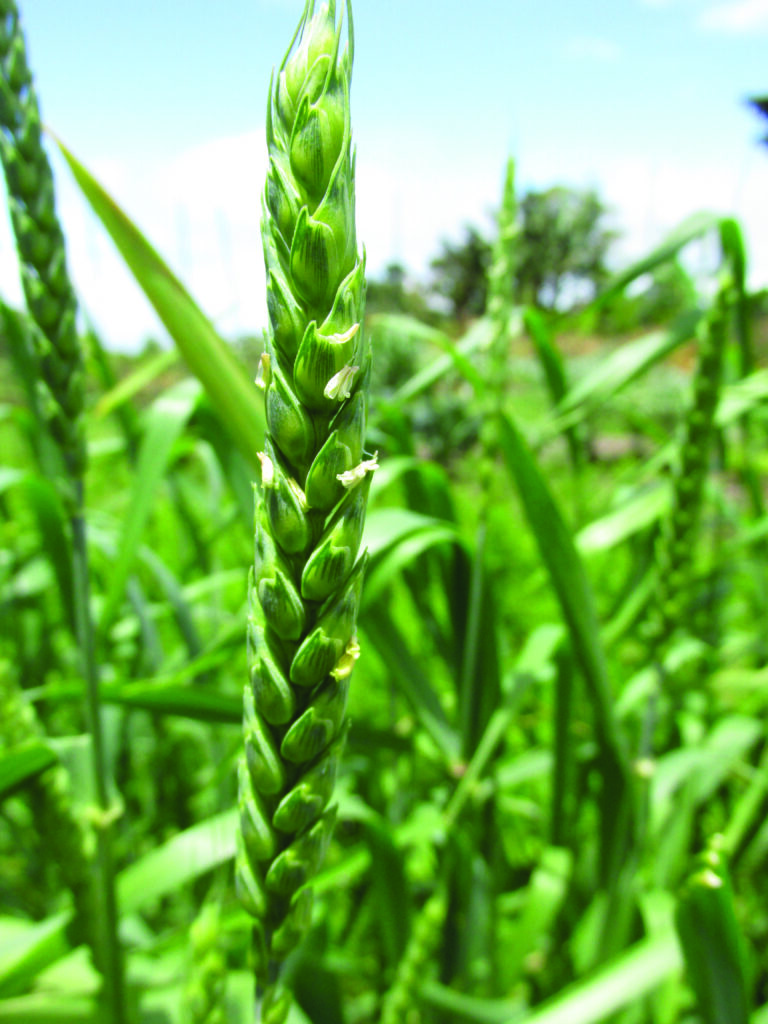
Depending on location, ‘Red Fife’ wheat can be planted in fall or spring. It’s a hardy crop that has some natural disease resistance. ‘Red Fife’ is also highly adaptable to various growing conditions and climates – one reason for its initial success and distribution. The wheat can be either red or white colored, depending on genetic interactions with environmental conditions.
‘Red Fife’ flour is considered by many to be one of the best bread flours available, and it’s slowly becoming more in-demand within the culinary community. One company working to facilitate connections between farmers and foodies looking for ‘Red Fife’ is Heritage Grains LLC – a group of agronomists, millers, consumers, and farmers who grow and supply wheat, as well as help connect growers and consumers. Based out of northeast Indiana, the group members have banded together to produce quality local wheats, and ‘Red Fife’ holds their primary focus.
“With ‘Red Fife,’ we get half the yield of modern varieties, but it’s healthier, which is why we’re promoting it,” Eric Wenger, a member of Heritage Grains LLC, says. “It doesn’t fit the model, so it’s a field-to-table sort of thing. People like what they’re used to, but once they’re convinced to try it, they want more. It’s a learning curve.”
Wayne Reinhard, another member of Heritage Grains LLC, follows up on the wheat’s health benefits. “It’s balanced, like in nature,” Reinhard says. “It’s a complete wheat with the right proportion of carbs and fats, and the omega-3s and omega-6s are completely balanced.”
‘Red Fife’ also seems to be well-tolerated by those sensitive to gluten – another reason Heritage Grains LLC is working to spread word about the wheat. “Folks can buy our wheat berries or flour and make baked goods for pennies on the dollar of what they’re paying for gluten-free foods in stores,” Wenger says.
Research into the gluten content and digestibility of heritage and ancient grains is still ongoing, and the results vary, but people who are gluten-sensitive have reported being able to tolerate these grains well. Studies suggest that the protein structure of heritage and ancient grains, including ‘Red Fife,’ makes them easier to digest than modern grain types. Those with non-celiac gluten sensitivity should still use caution when sampling heritage and ancient grains that contain gluten, and those with celiac disease should avoid any grains that contain gluten.
In the Mill
Flour milling is usually done with either a stone mill or a roller mill. Stone milling is the traditional technique, and involves grinding grains between two flattened circular stones. Roller milling involves grinding wheat between rolling cylinders. Both techniques are capable of producing whole-wheat flour – with germ, bran, and endosperm – although stone-grinding is most often associated with a whole-wheat product.

All of the ‘Red Fife’ wheat used by Heritage Grains LLC is stone-milled at Arnold Farms in Rushville, Indiana, by owner Oak Hawk and his wife, Emma. Milling is an essential part of the supply chain, as many folks neither want nor have the means to grind their own wheat berries. Arnold Farms uses a 20-inch Meadows Mill – a stone burr mill that’s capable of processing up to 400 pounds per hour.
Hawk says he enjoys milling ‘Red Fife’ because it’s not as dusty as other wheats, and the only downside is storage. ‘Red Fife’ that’s been milled to retain the wheat germ can’t be stored as long as white flours, because it has a higher oil content. The oil will go rancid if the flour is kept too long or stored incorrectly – which is why Heritage Grains LLC is readying their storage barn to be climate controlled. The ideal storage temperature for ‘Red Fife’ is between 45 and 55 degrees Fahrenheit.
In the Bakery
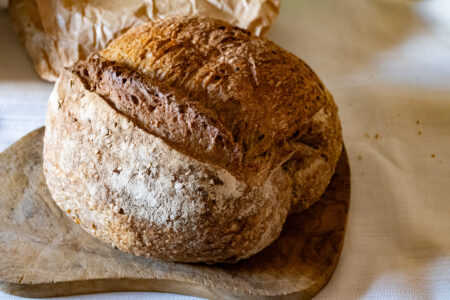
‘Red Fife’ can be a bit of a challenge to work with, but the results are worth the effort. It has a deeper, more complex flavor than common hard red winter wheats. The flavor has a slight cinnamon sweetness with a hint of anise. It’s also a softer grain, and the gluten is slower to develop, meaning it’s very easy to achieve a soft, tender crumb in things like muffins and cakes. Breads, however, are where the wheat really shines.
Sam Blythe, baker at Leviathan Bakehouse in Indianapolis, Indiana, is a big believer in ‘Red Fife.’ The brick and mortar bakery currently offers 10 different kinds of bread, and Blythe is working to expand the selection. The heart of the bakehouse is the oven, and ‘Red Fife’ is a staple part of the breads, cookies, and croissants that come out of that oven. Blythe is adamant that ‘Red Fife’ flour makes his breads more functional. “The bread is easier to shape, more elastic with the ‘Red Fife,’ ” Blythe says. “My signature whole-wheat loaf is 35 percent ‘Red Fife,’ and the trick is to add more water so that the strands are turning to sugar overnight, and a lot of the compounds are broken down so the bread is really soft and flavorful.”
Blythe said he recently tried a loaf made with 100 percent ‘Red Fife’ flour. “The flavor was way stronger, but in a good way. The texture, though not much different than other whole-wheat breads, was incredible; and the loaf had substantial body to it, and the inside was quite soft.”

Bre Suggs of Our Sons Bakery, an online-based bakery in Indianapolis, echoes Blythe’s sentiment for ‘Red Fife.’ Her family-operated enterprise is famous for its 60 varieties of Ummmy Bars, a combination cookie and cake recipe. She’s emphatic that you can taste the difference with ‘Red Fife’ flour. “The bars are softer, fluffier, and you can taste the fudgy richness in the bars,” Suggs says. “Without ‘Red Fife,’ the consistency is not so good. They have a gummier taste and are stickier.”
In the Distillery
Three Rivers Distilling Co., located in Fort Wayne, Indiana, produces vodkas, rum, gin, bourbon, rye whiskey, liqueurs, and moonshine – all from organic, non-GMO grains grown within 35 miles of the facility. A couple of years ago, Wenger asked the distillery to try ‘Red Fife’ from Heritage Grains LLC, and the wheat is now the mainstay in the company’s Cake Stand bourbon. It took two years to make the switch, but production manager Matthew Swygart is glad they did. “It brings out the creaminess in the bourbon,” Swygart says. “It gives it a distinct flavor that we don’t get with other grains. It adds character and a better quality of taste.”


The distillery has become one of the most prolific users of ‘Red Fife,’ making a 140-gallon batch of Cake Stand every other month. This amount of bourbon requires 600 pounds of ‘Red Fife’ flour from Arnold Farms. Pat Tanesky, master distiller, says, “We were just looking for the next best thing when Eric brought some ‘Red Fife’ flour in.”
In the Home
‘Red Fife’ has once again made a name for itself in the commercial culinary and beverage worlds, but where does that leave it with home bakers? Ideally, in their cookies, muffins, and breads. This heritage grain deserves a spot in our kitchens and on our tables, and I’d encourage you to give it a try. You’ll gain a flavorful flour full of potential, and you’ll become part of a movement to bring new life to a once-forgotten grain – a win-win.
Tips for Baking with ‘Red Fife’ Wheat
If you’re using whole-wheat ‘Red Fife,’ it will still have the germ, bran, and endosperm. Whole-wheat flour is more nutritious, but it can result in dryer products that take longer to rise. However, these obstacles are easily overcome, and it’s well worth the trouble. If you aren’t familiar with ‘Red Fife’ flour, follow these guidelines when making the transition. You can experiment to find your own best practices, but these tips will get you off to a good start.
- ‘Red Fife’ can easily be substituted in most of your favorite baked goods, including breads, muffins, cookies, pancakes, waffles, soft pretzels, and more. Because of its density, it doesn’t work as well in cakes.
- The No. 1 rule to remember when substituting whole-wheat ‘Red Fife’ flour in a recipe is to add extra liquid and let the dough rest and hydrate before baking. This will make the finished product tenderer and moister. In general, add 2 extra teaspoons of water for every 1 cup of whole-wheat flour. Also, set the dough aside for at least 10 minutes – up to a half-hour – before baking or kneading. This will allow the dough to soak up more moisture.
- ‘Red Fife’ is denser than white flour, meaning you don’t want to use as much. When substituting, plan on 3/4 cup of ‘Red Fife’ for every 1 cup of white flour.
- When substituting ‘Red Fife’ flour, start by replacing 25 percent of the total flour amount. After you get accustomed to its taste, try substituting one-third, and then one-half of the flour. Depending on how well you like its distinct flavor and texture, you can even use 100 percent ‘Red Fife’ flour. Generally, replacing up to half of the amount of flour called for will produce a product similar in taste to the original recipe.
- ‘Red Fife’ has a slower rise time than some other flours. If a normal rise would take two hours, dough made with ‘Red Fife’ will take three hours. It won’t rise as high either. To counteract this, many bakers add wheat gluten to their recipes. If you choose to do this, add 1 tablespoon of wheat gluten for every 2 to 3 cups of ‘Red Fife’ flour.
- Sift ‘Red Fife’ flour to give it more air, which will result in lighter baked goods. You can use a sifter, but a fine strainer works well too. Sifting will remove some of the larger wheat particles, but will leave most of the flour intact.
- If you like a sweeter bread, substitute 2 to 3 tablespoons of orange juice for part of the liquid called for in a recipe. The natural sweetness of the orange juice will result in a sweeter loaf.
- If your ‘Red Fife’ contains wheat germ, it will spoil faster than you may be used to. This is because wheat germ is an oil and will go rancid when kept too long. Stored in an airtight container, ‘Red Fife’ flour will stay good for three months in a pantry or six months in a freezer.
Growers and Collaborators
Heritage Grains LLC
260-402-5499
260-820-0828
Millers Arnold Farms
765-561-3518
Bakers Leviathan Bakehouse
1101 N. College Ave.
Indianapolis, IN 46202
317-493-1879
Our Sons Bakery
317-643-1033
Distilleries Three Rivers Distilling Co.
224 E. Wallace St.
Fort Wayne, IN 46803
260-745-9355
Lois Hoffman is a freelance writer and photographer with more than 20 years of experience covering topics related to rural living. She lives on a 37-acre hobby farm in Michigan.