Ingredients
- 1 pound apple mash from pressing
- 3/4 cup sugar, any kind
- 2 quarts unchlorinated water, just off the boil
- 1/2 cup raw, unfiltered, unpasteurized vinegar, or a vinegar mother
Directions
- Combine fruit and sugar in a sanitized half-gallon jar. Add 1 quart of the just-boiled water. Use remaining just-boiled water to fill the jar to the neck.
- When water cools to room temperature, add raw vinegar. Stir well with a wooden spoon. Unlike most ferments, you’ll want to get some oxygen into the mix. However, make sure the fruit scraps stay submerged; otherwise, they can become a host for undesirable opportunistic bacteria.
- Cover the jar with a piece of unbleached cotton (butter muslin or tightly woven cheesecloth), or a basket-style paper coffee filter. Secure with a string, a rubber band, or a threaded metal canning band. This is to keep out fruit flies.
- Place on your counter or in another spot that’s 75 to 86 F.
- Stir with a wooden spoon once a day for the first 5 or 6 days. After that, stir now and then, if you remember. You may see bubbles: That’s good.
- The ferment will begin to slow down in about 2 weeks, at which point it’s time to take out the scraps. When you remove the cover, you may see a film developing on top. It’s the beginning of the vinegar mother. Remove and set it aside while you’re straining out the fruit solids.
- Line a strainer with a piece of butter muslin or fine-mesh cheesecloth and strain the mixture into a new, sanitized jar. Press on the fruit and squeeze the cloth to get out every last tasty drop. Add the vinegar mother (if you have one) back into the jar and cover again.
- Check the vinegar in a month, when you should have nice acidity. However, it may take an additional month or two to fully develop. Test the pH: It should be 4.0 or below.
- Bottle the finished vinegar, saving the vinegar mother for another batch or sharing with a friend. Use the vinegar immediately, or age to allow it to mellow and develop flavors.
Ever wondered, ‘how is vinegar made?’ Learn how to make apple vinegar from scratch to transform your apple cores and peels into a nutritious, flavorful staple. Once you learn how to make vinegar at home, you’ll never have to worry about wasting fruit scraps again!
For thousands of years, vinegar happened in the same way — whether on purpose or by accident — slowly, over time. The history of the word in the West would lead one to believe vinegar is the result of an oversight: The French term vin aigre (“sour wine”), which comes from the Latin vin acer (also meaning “sour wine”), certainly sounds like wine gone bad. In China, where writings about vinegar appeared more than 2,000 years ago, the word cu (pronounced “sooh”) is used both for vinegar and as a way to describe feelings of bitterness.
Accident or not, vinegar became an essential ingredient everywhere, from the humble kitchens of peasants to the palace kitchens of kings. It’s central to bringing forth flavor; a splash of acidity will bring life and balance to almost any dish. It’s also been an important medicine throughout history and has long held an important role as a way to preserve food.
Vinegar is a significant staple around the world for all the reasons listed above, and because it’s easy to make — it happens on its own with any kind of sugar in a liquid that yeast turns to alcohol. Here’s how to make vinegar from scratch using kitchen waste, such as apple cores and apple pomace.
How Is Vinegar Made?
“Waste not, want not” is a way of life that’s been tossed out as we’ve ushered in decades of consumerism, TV dinners, and wasted food. Fortunately, in recent years, there’s been a growing effort to end food waste, not only in fields, factories, and restaurants, but also in our own kitchens. I’m most excited about the potential vinegar has to glean enchanting flavored acid from food scraps that were formerly headed to the waste stream. Not only will you extract delicious nutrition from peelings and other leavings, but you’ll also never need to buy expensive gourmet or raw vinegars again.
How to Make Vinegar at Home: Start with Apple Cores
At the beginning of my family’s homesteading adventure, I preserved anything that wasn’t nailed down. So it’s no wonder that when I read Farmer Boy again as an adult and came across a line about apple core vinegar, I was intrigued. Armed with the Foxfire books and Carla Emery’s The Encyclopedia of Country Living, but not the internet, I got closer to figuring out how to make vinegar at home. The next time we had mounds of raw peelings and cores from making dried apple rings, I made my first vinegar — a fruit scrap vinegar. It was OK, but not great. Christopher and I began to make hard cider, but I had yet to fully understand the role of microbes and the importance of sugar in this transformation.
Honestly, it would be a few years before I would intentionally try to make vinegar again. We were under the impression, as most fledgling home wine- or cider-makers are, that vinegar is something to be avoided. That it’s a mistake or a fault to judge yourself against. It was in moving beyond this thinking that I began my vinegar-making in earnest.
It wasn’t until this moment of intention that it clicked — I needed a decent alcohol for a good vinegar. I’d never made that connection with those first scrap vinegars. The cores and peels themselves didn’t have enough sugar and nutrients to feed the yeast and bacteria sufficiently. Basically, the apple bathwater — or infusion, if you will, of scraps — needs a sugar boost for the yeast to create enough ethanol for a rich, sour vinegar.
Depending on your apple varieties, or other fruit, vegetable, or grain leavings, these scrap vinegars may or may not have enough sugar. If you’re experimenting with your own fruit scrap vinegars, you have two choices: You can add sugar to be safe, or you can take a specific gravity measurement and add sugar only as needed. In most of the following recipes, instead of adding yeast (some old-school recipes add bread yeast to begin the process), you’ll let the wild yeasts that are already on the fruit skins go to work.
How To Make Apple Vinegar
This is a simultaneous fermentation. The yeasts will turn the sugar into ethanol, while the acetobacters, dropped in with the addition of raw vinegar, will be waiting in the wings to get started. As you consider how to make apple vinegar, think about your sugar choice. The sugar is yeast food, so it doesn’t matter what you use — white sugar, molasses, or honey. The yeasts don’t care. That said, while white sugar will keep the flavor neutral, like you’d expect with an apple cider vinegar, molasses or honey will impart their own flavors to your final apple pomace vinegar.

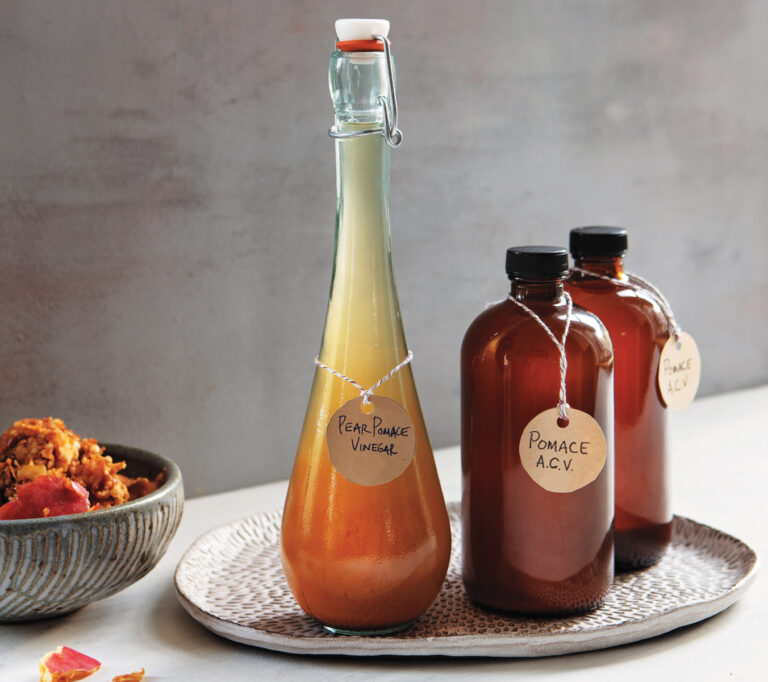
Variation: Pear Pomace Vinegar
At the edge of our garden is an old ‘Seckel’ pear tree that was likely planted in the 1940s or earlier. It’s still vigorous and well-formed, producing hundreds of the sweet, small, rusty-red-blushed fruit this cultivar is known for. Over the years, we’ve made dried pears, steamed pear juice, pear butter, and pear crisps with these small fruits. They’ve also been added to the annual cider-pressing bins. Only more recently did we begin to make a pear cider, or “perry,” that’s mostly these ‘Seckels’ with a bit of a super-sharp tannic pear. A few years ago, I couldn’t bear to toss the pomace. Unlike pressed apples that come out dry, the squeezed pears seemed to have a lot of goodness still left in them. Turns out they did. It was the best pear vinegar we’d ever tasted — well, it might’ve also been the first. We now make this every year and use it all year long in soda water.
The Apple Pomace Vinegar recipe above also works with any type of pear. Follow the instructions for that recipe, but omit the sugar. That’s right — the beauty of this vinegar is that it’s simply pomace and water. We’ve made it with sugar to test the process, and the final product comes out much more delicious without it.
More About How Vinegar Is Made
- How to Make Vinegar from Scratch with Corncobs and Husks
- What Is Vinegar Made out of? A Universal Scrap Vinegar Recipe
Excerpted from Homebrewed Vinegar by Kirsten K. Shockey. Photography by Carmen Troesser. Used with permission from Storey Publishing.