Expand your garden repertoire by growing leafy greens, and then bolster your culinary skills by learning how to cook greens and how to preserve them.
Years ago I watched a video about creating a survival garden in which the host discouraged growing leafy greens. He said something along the lines of: “Leafy greens are nice, but they aren’t high-calorie enough to bother planting.” My reaction? Well, let’s just say I couldn’t disagree more. In fact, I think leafy greens should be part of everyone’s garden — especially if times are tough or you want to be more self-sufficient. Here are eight reasons why.
Leafy greens are packed with nutrients.
What the survival garden guy failed to consider was that leafy greens are much more nutritious than the other vegetables he focused on. Kale and collards are just two examples. One cup (67 grams) of raw kale contains 68% of the daily value (DV) for vitamin K, 6% of the DV for vitamin A, and 22% of the DV for vitamin C. Kale is also high in potassium, magnesium, and calcium. Collards are a great source of calcium and vitamins A, B9, and C, plus 1 cup (190 grams) of cooked collard greens has a whopping 1,045% of the DV for vitamin K! All leafy greens are also high in antioxidants, known to help prevent disease and ease the effects of aging.

Nutrition experts tell us dark leafy greens are among the most nutrient-dense foods we can eat, and some even claim leafy greens offer more nutrition per square foot than any other food grown in the garden.
Greens come in a variety of flavors.
Hate store-bought kale? Me too! But growing leafy greens at home yields better flavor. In my experience, store-bought collards are pretty bitter and tough, but when I grow my own, I pick the leaves when they’re young — and the flavor and texture are fantastic.
When I want collards to have even less bitterness, I harvest them only after the first hard frost. Late fall and winter greens are the tastiest, because the plants convert some of their starches to sugar to protect their cells from freezing, and their flavor improves as a result.
Different cultivars and types of greens vary in flavor. Although I dislike dinosaur kale (also known as Tuscan or lacinato kale), I love the taste of the Russian kales (which are readily available from many popular seed sellers).

Besides kale and collards, you can choose from many different types of leafy greens, including mustard, cabbage, bok choy, sorrel, arugula, orach, Swiss chard, Malabar spinach, New Zealand spinach, and dandelion greens. Lettuce is a leafy green too, although it can be more finicky and is less nutritious than the other plants I’ve mentioned.
Plus, don’t overlook the delicious leaves of common vegetables. These include turnip, beet, and radish greens; broccoli leaves; and cauliflower leaves. Some may be off-putting because of their slightly prickly texture, but the prickles disappear as soon as they’re cooked. I’m especially fond of these plants, because you get two different types of food — greens and vegetable — from the space it takes to grow just one.
Greens take up little space in the garden.
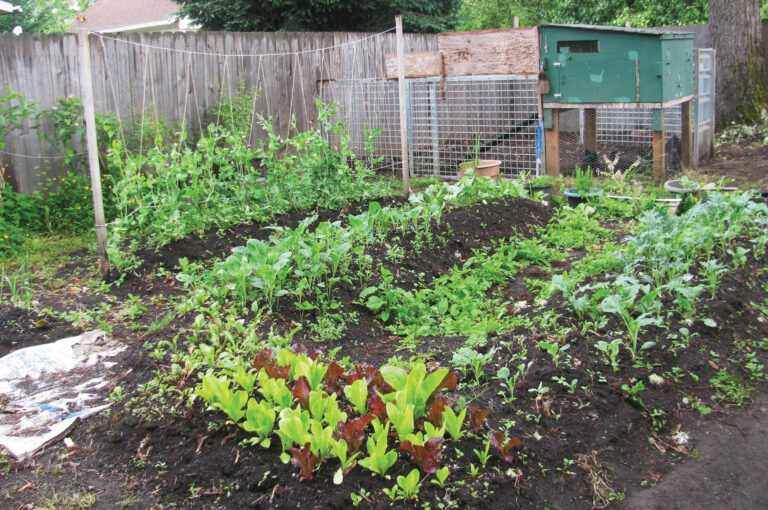
Unlike potatoes, corn, tomatoes, and many of the most popular home garden crops, growing leafy greens doesn’t require much room. Even if you live in an apartment building in a big city, you can grow a pot of kale or collards in a sunny windowsill or patio garden. These plants are shallow-rooted, so they grow well in a container, a small raised bed, or a tiny plot — and they add beauty to flower gardens and window planters. They provide quite a lot of food for the amount of space they take up. Just a few pots of kale can provide one person with fresh greens for most of the year.
Leafy greens grow quickly and abundantly.
Most leafy greens are edible as soon as they sport more than three leaves. This means you can harvest early and often. Leafy greens are also among the earliest producing plants in a spring garden.
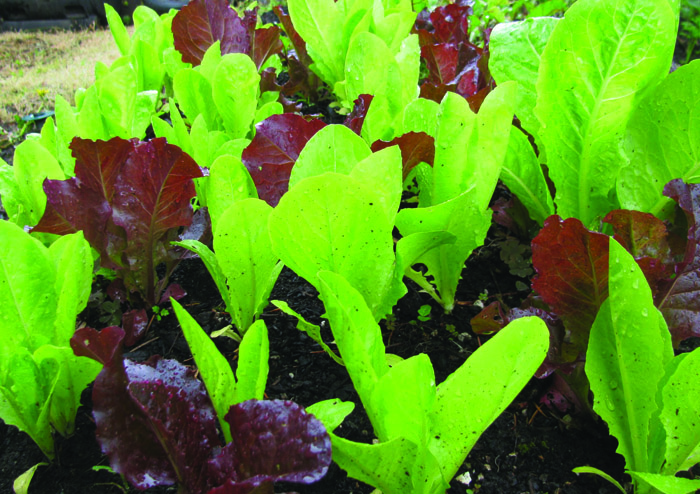
So long as you leave behind at least three leaves per plant when you harvest, leafy greens will continue to produce food until they die or go to seed. (Exceptions are greens that grow as a firm head, such as head lettuce or cabbage; they’ll provide only one main head per plant, and sometimes much smaller heads after the main one has been harvested.)
Leafy greens will survive winter.
Leafy greens are a good source of food during those lean months before spring hits, because many of them can survive under inches of snow. Kale and collards are hardiest, with collards winning the grand prize for not minding snow.
It’s easy to learn how to cook greens.
My favorite way to cook leafy greens is to remove any large central stems, stack the leaves, roll them into a cigar shape, and cut the roll into thin strips. Then, I sauté greens in bacon drippings or olive oil, seasoning liberally with salt and pepper, until the leaves are a bright-green color. For really fantastic flavor, I add some sautéed onions and chopped bacon. Super-easy, super-fast, and super-tasty.

Many leafy greens are also good eaten raw in salads or sandwiches, especially if picked young. Fresh greens can be made into pesto, or eaten in the same way you’d use spinach: as an addition to casseroles, quiches, enchiladas, pizza, soup, and stir-fries. Oiled and seasoned leafy greens can even be baked or dehydrated into tasty vegetable “chips.”
Finally, leafy greens are easy to preserve.
Instructions on how to freeze leafy greens are simple. First, remove any thick stems, then roll a stack of leaves into a cigar shape, and slice. Bring a large pot of water to a boil. Add the sliced greens; the water should return to a boil within 1 minute. (If it doesn’t, put fewer leaves in the pot.) Begin timing as soon as the water returns to a boil, blanching for 2 minutes, or 3 minutes for bigger, tougher leaves. Drain and immediately put the blanched greens into a sink filled with ice water. After the greens have cooled completely, drain them thoroughly, and then place them into freezer containers. Use frozen leafy greens within one year.
To dehydrate leafy greens, remove any thick stems and, if desired, slice as above. Place them in a single layer onto dehydrator trays and dry at 135 degrees Fahrenheit until the leaves are crisp and no moisture escapes when you tear them. Store them in an airtight container in a cool, dry, dark location. You can add dehydrated leafy greens to soups and stews, or powder them and add to any dish for a boost of nutrition. Use dehydrated leafy greens within one year.

To can leafy greens, the National Center for Home Food Preservation says you’ll need about 4 pounds per finished quart jar. Use only freshly harvested leafy greens, and trim away tough stems. Place the greens in a steamer basket and steam 3 to 5 minutes, or until well-wilted. Optionally, you can add 1/4 teaspoon of noniodized salt to each pint jar, or 1/2 teaspoon to each quart jar. Fill the jars loosely with steamed greens and cover them with fresh boiling water, leaving 1 inch headspace. Process pint jars for 70 minutes, or quart jars for 90 minutes, in a pressure canner. Never use a water bath canner for processing leafy greens. If you live more than 1,000 feet above sea level, consult National Center for Home Food Preservation for adjusted processing times.
To freeze-dry leafy greens, remove any thick stems, slice if desired, and lay the leaves on trays. You can layer the leaves on top of each other, but don’t overload the trays. Process until the leaves have no cold spots. Powder the freeze-dried leaves and store them in Mylar bags with oxygen absorbers for long-term storage, or vacuum-seal them in canning jars for storage up to a year.
Growing Leafy Greens
In spring, direct-sow the seeds of leafy greens into the garden once the soil is workable (not frozen and not overly wet). For a fall garden, check the seed packet for the days to harvest and add about four weeks. Count backward from your first frost date and plant on that day.
Although you should always consult the seed packet for planting instructions, the seeds of most leafy greens are small and usually should be covered by only 1/4 inch of soil. An easy way to sow them is to run your finger across the soil, making a small, shallow furrow. Sprinkle seeds into the furrow, then run your thumb along one side, lightly pushing a small amount of dirt back over the seeds. Pat the soil down firmly.
If your summers are hot, try growing leafy greens only in spring and fall, or, if you grow them in summer, plant them in partial shade. Heat-tolerant leafy greens include Swiss chard, collards, orach, Malabar and New Zealand spinaches, kale, and mustard greens.

Keep newly planted seeds well-watered; don’t let the soil dry out. Seedlings will likely need thinning. The easiest way to do this is to snip off young leaves at the soil level until you have the spacing recommended on the seed packet. These snippings make great additions to salads. I’ve also successfully pulled seedlings from the soil and replanted them elsewhere.
You may also start seeds indoors 2 to 3 weeks before the last expected frost date. If you plant purchased seedlings, you’ll have far fewer cultivars to choose from.
When growing leafy greens, be sure to water them regularly. Keep the area weeded, remembering that most leafy greens have shallow roots, so take care not to disturb them. I like to use a high-nitrogen fertilizer, such as fish emulsion, every 1 to 2 weeks while plants are small. Later, you may switch to a complete fertilizer applied every other week or so if needed. Organic straw or grass clippings make a good mulch that will keep moisture in the soil and, over time, will break down and feed the soil.
Leafy greens may go to seed when temperatures fluctuate between cool and hot, or as temperatures rise in late spring and early summer. Bolting makes the leaves bitter. Watch your plants closely, and at the first sign of bolting, harvest and preserve the greens. You can also delay bolting (and thus bitterness) by snipping off seed stalks as soon as they appear. If you miss this opportunity, you can try to remove the bitterness by bringing a pot of water to a boil, adding the bitter greens, and boiling them for 1 minute. Drain and repeat until the greens taste better, using fresh water each time.
Kristina Seleshanko lives with her family on a mountaintop homestead where she’s growing plenty of leafy greens. Beet greens and collards are her favorites. She blogs about homesteading at Proverbs 31 Homestead.
Originally published as “8 Reasons to Eat Your Greens” in the May/June 2023 issue of Grit magazine and regularly vetted for accuracy.