The male American woodcock became the first clue that winter was metamorphosing into spring. In the predawn murk of a late February morning, when I had just come outside to tend our chickens, I heard “peent, peent, peent” sounds as the avian no doubt strutted and preened for any nearby female. Then he lurched skyward and, achieving maximum height, vocal chirping and wing-generated twittering commenced as he plummeted back to Earth. No feathered female of his species could withstand an airborne, dancing dandy like him.
The second sign was a male phoebe that appeared on our Southwest Virginia land just as the last winter snowfall began to melt. He didn’t sing that morning, but a few dawns later, he compensated for his previous silence by constantly belting out his namesake call, “phoebe, phoebe, phoebe.” Soon, Miss Phoebe will arrive, and I wonder if the duo will build their nest on the eaves of our back door’s awning like they often do.
But the clincher signal that winter was changing to spring came on the last Saturday of February, which also turned out to be the final day of squirrel season, and the day after our onion sets and spinach seed tapes arrived in the mail. Our daughter, Sarah, her husband, David, and our grandsons, Sam and Eli, live across the hollow from Elaine and me. I called our daughter to see if 11-year-old Eli could spend much of the day with me. So much needed to be done – and experienced.
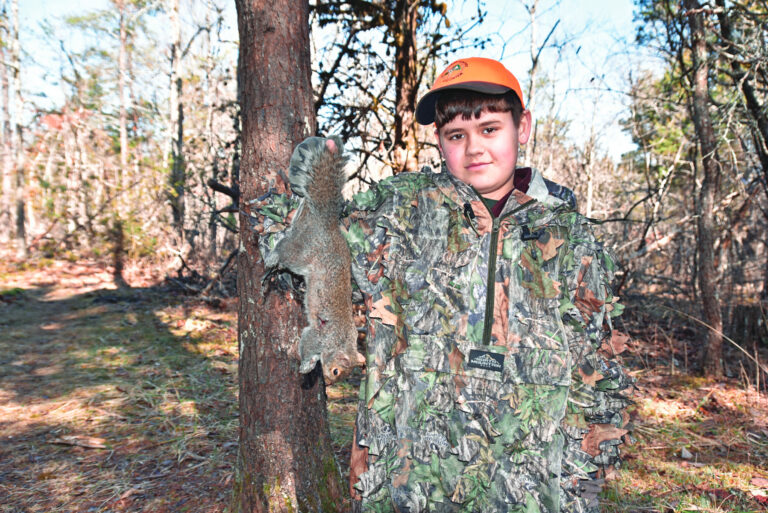
Eli says he’s not ready to hunt yet – and he’ll know if and when he is – but he delights in accompanying me. Two February bushytails already reside in our freezer, and Elaine pronounces that two more need to join them before she can make squirrel stew for the grandsons and us. So, just after 9 a.m., Eli and I enter the 38-acre woodlot that the two families share. Eli and I decide to hunt on the way to our hardwood hollow, where we’ll take a stand against a mature black oak. We down one gray squirrel on the way to the cove, but the biggest thrill for the youngster comes after we hunker down next to the hardwood.
He glimpses a silvertail long before I do, and his frantic whispering of “Granddaddy, don’t you see him, there he is, there he is!” finally results in my espying the bushytail among the leaf litter. The 20-gauge barks, and soon afterward, my grandson and I are admiring the final ingredient in next Saturday’s stew. But our land isn’t through sharing its bounty.
Eli and I trek down to the two springs that flow into a creek that forms the boundary between us and two neighboring farms. Both springs host abundant watercress, a traditional spring tonic in rural America. Our ancestors weren’t aware that this wild vegetable sports rejuvenating amounts of vitamins A, C, and K, plus calcium and antioxidants, but they did know that “cress,” as they called it, made family members perky after a long, lean winter.
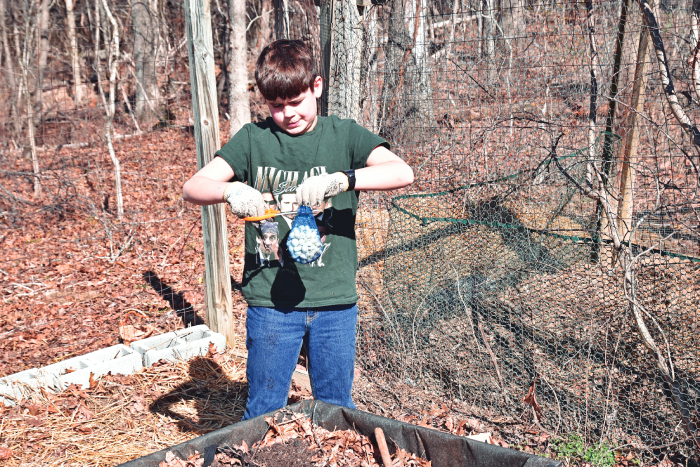
We arrive at the spring, and Eli doesn’t need instructions from me on how to gather this superfood; he deftly and quickly fills a bag with the peppery-tasting leaves. On the way back to the house, we pause occasionally to gather wild onion stems and leaves from the first dandelion I’ve seen this spring. Our last wild edible to clip becomes the falsely named bittercress, which annually first appears at our stoop, another sign of winter’s waning.
Elaine tosses the wild salad fixings, adding sharp cheddar, carrots, and asparagus (it will be a month or more before our plants bear). We would relish adding the watercress to our salads, but various wild creatures visit our springs to feed, drink, and, well, poop. Thus, such afflictions as giardia and salmonella make it imperative that wild cress be at least stir-fried before consuming it.
Besides, my favorite way to enjoy watercress is within Elaine’s mashed potatoes, which must be made lumpy (with skins on) and with generous amounts of butter, salt, and ground black pepper. Our entrée is a venison roast, which Elaine tops with a sauce made, in part, with venison broth.
A neighboring farmer has long experienced deer damage, and for two years, he has enlisted my help to control the white-tailed deer population. The broth comes from thigh bones from the first white-tailed deer I killed the previous season, and the roast originates from the fourth one, both from the farmer’s property. Elaine and I depend on all of our red meat coming from the deer I harvest each year.
After lunch, Eli and I head for the raised beds in our garden with a stop at our two adjoining chicken runs. The heritage Rhode Island pullets in one henhouse have been laying eggs since early February, and the nearly 2-year-old females in the second enclosure just began doing so during the past fortnight. Our 11 hens have already produced four eggs today, and more will likely appear.
I like to let Eli take the lead in as many ways as possible. So, I let him plant some 140 white onion sets, each several inches deep and apart. His mom has already instructed that she wants about 40 bulbs for one of her raised beds. On his own, Eli recalls the spacing of the spinach seed tapes, and the youngster deftly finishes the two plantings. As we stroll back to the house with the eggs, we both agree that it has been a marvelous last day of winter and first day of spring.
Bruce and Elaine Ingram are the authors of Living the Locavore Lifestyle, a book about hunting, fishing, and gathering food (with recipes). Contact them at BruceIngramOutdoors@gmail.com.
Originally published in the July/August 2026 issue of Grit magazine and regularly vetted for accuracy.