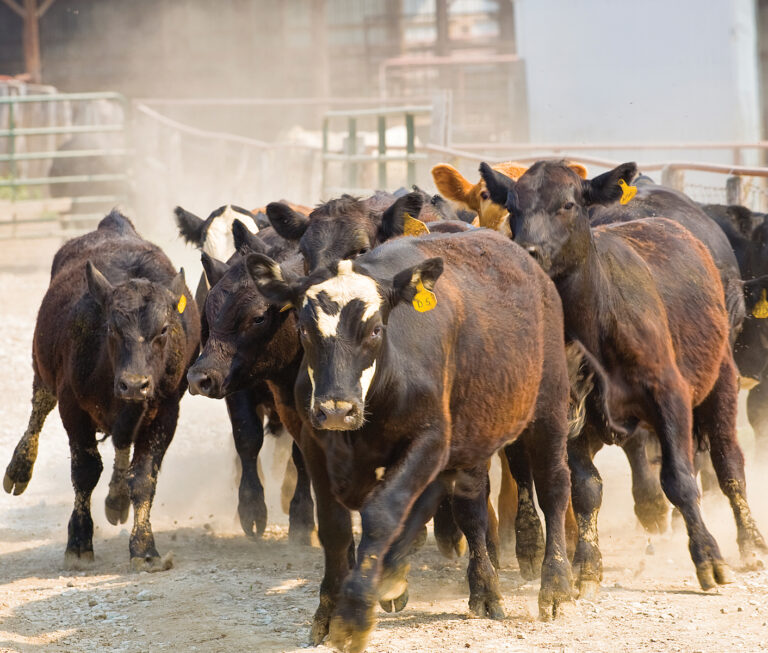
Raising beef cattle for profit on a small farm appeals to people for multiple reasons. While it is easy to do, it is important to understand a few basics before jumping right in. Having correct information will help you decide what breed is best for your property and how old you want the steer to be at purchase and slaughter. It is also vital to understand the nutrition behind raising grassfed beef, so you can keep your feeder steers healthy and productive.
Breed of Steer
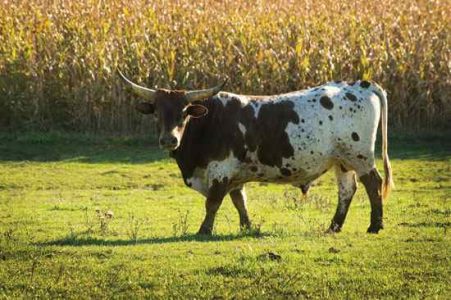
The breed of the steer you choose to raise will make a difference. Most breeds we are familiar with are specific for dairy production or beef production. A few of the breeds that are specific to beef production are Black Angus, Red Angus, Hereford, Limousin, and Charolais. Those are the more common breeds — check out the Livestock Conservancy for a list of heritage cattle breeds.
Beef breeds have been bred specifically for beef production. This means that producers have selected for traits that are good when raising cattle for beef, as breeding has occurred over numerous generations. This includes traits like high rate of gain, good marbling, good feed efficiency, compact body structure, calving ease, etc.
Dairy breeds are cattle that have been bred specifically for traits that are desirable in cows producing milk: high milk production, high milk fat percentage, high milk protein percentage, calving ease, etc. While these cattle are not bred to have high efficiency for turning feed into meat, they can make excellent feeder steers when fed the proper nutrition. While a female dairy cow is going to shuttle more nutrients to her mammary glands and produce high milk fat and high milk protein, a dairy steer can use those same traits to produce well-marbled beef.
The process will be slower and less efficient than it would be with a beef steer, but the outcome can be affordable, nutritious, and delicious.
Purchasing Feeder Calves
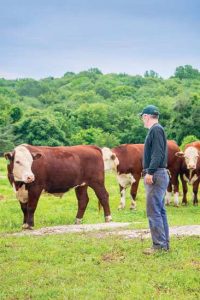
The age of the steer you purchase will depend on a few factors, all related to how you want to manage your property and animals. There are two stages to raising feeder steers: growing and finishing. The growing stage is exactly what it sounds like; the steer is still growing structurally. The finishing stage happens when the steer is finished growing structurally and will start to put on fat and muscle weight more quickly.
The easiest and fastest way to raise a steer is to buy a steer that just needs finished. These are steers that can need anywhere from two to six months until ready for slaughter. These steers will be larger and therefore more expensive. Usually you have these steers for such a short period of time that no health care is necessary, however, their feed efficiency will be influenced by what they ate as a calf, and that could potentially increase the time to finishing.
If you’re interested in growing and finishing your steers, you can purchase calves that are just weaned or even bottle calves. These calves will take about two years to grow and finish, depending on breed and what slaughter weights you are interested in producing. These calves will also be less expensive but will require more health care maintenance and attention, especially at the beginning.
Calves will need their initial vaccinations plus boosters in the first year, and then yearly vaccinations after that, depending on your management style and program. If you purchase bottle calves or just weaned calves, you will also need to have them castrated. Vaccinations and castration are not difficult and can be done on your own. Most large animal veterinarians are happy to work with small-scale farmers and show you what needs to be done the first time, so you can successfully do it on your own the next time around.
Steers that are kept healthy and free from parasites and disease grow much better. Additionally, if your steer becomes ill and dies or has a high parasite load, you may be unable to use the meat. But with care and diligence, you can avoid that heartbreak.
How much should you pay for your steer? We already discussed the price differences between bottle calves and finishing steers. But the answer to that question is going to depend on the market in your area. To get a good idea, spend some time each day on your local online classifieds checking steer prices. After a few days, you should have an idea of what the average price for your area is. As of the time of this writing, $1.40 to $1.60 per pound is an accurate ballpark figure, and calves at weaning are somewhere in the 500 to 600 pound range, typically, so a 500-pound weaned calf at $1.50 per pound would be $750.
Growing and Finishing Steers on Pasture
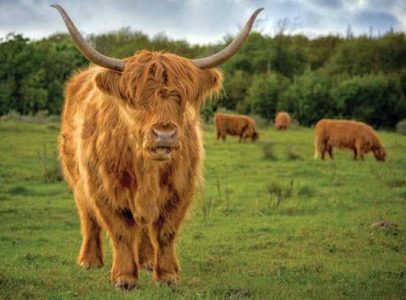
Most of the beef you can purchase in the grocery store spent its growing stage on pasture. Steers are typically only moved to feedlots for the finishing stage, and that is a small portion of their life in most cases. If you prefer grassfed beef and are interested in raising your own, there are some important nutritional principles you need to understand to be successful.
One method of finishing beef is not inherently better than the other. What works for you on your farm is going to be different than your neighbor or a large feedlot or rancher.
Second, not all pastureland is created equal. Different species of grasses and weeds are going to have different nutritional values. Even if you planted a specific mix of grass into your pasture, it will change over time based on the soil composition, the animal load, and the animal preference. Eliminating some of the weed load will improve the quality and nutritional value of your pasture.
Weed management is one of the keys to raising efficient pasture steers. Cattle do a good job of grazing evenly — they usually do not pick out certain grasses to eat first or eat down certain areas really low. Even with those positive grazing characteristics, your pasture will last much longer if you can divide it up and use a rotational grazing system that fits your needs and land. Dividing your pasture up into four parts and cycling through every 21 days is a great way to do it, but you may need to alter that based on your given situation. Allowing the grass and land to rest, even for just 10 days, is going to increase the productivity of your pasture and allow your steers to get more food on the same amount of land.
Grain Supplementation for Feeder Steer
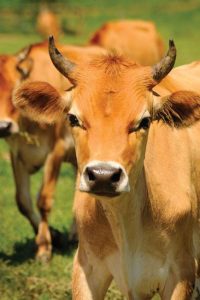
Even though you are raising your feeder steers on pasture, I propose supplementing with grain at two important points throughout the process. As we discuss grain, remember that all feedstuffs are simply vehicles for certain nutrients. Cattle are very capable of digesting grain, along with a wide variety of other feedstuffs.
The first time you might supplement with grain is during weaning if you are raising bottle calves. While a calf is born with a rumen, when they drink milk, the suckling action actually causes the milk to bypass the rumen and go straight into the abomasum, or “true stomach.” As they begin to eat solid feedstuffs like hay, grass, and grain, their rumen starts to be used and finishes developing.
The majority of digestion for cattle takes place in the rumen, and from there into the reticulum and omasum. The action and digestion of the rumen is carried out by smooth muscle contractions and the working action of papillae, tiny fingerlike projections on the inner wall of the rumen. These papillae help to move the feed in the rumen and also absorb valuable nutrients for the steer.
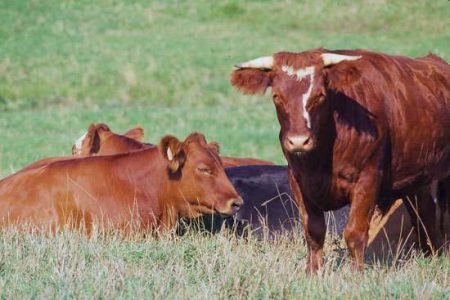
When a steer transitions from milk to solid feed during weaning, the rumen papillae are very underdeveloped. Hay stimulates the size of rumen development: Bigger rumen means more feed, which means more digestions, which means more beef.
Grain stimulates papillae development, which increases the steer’s ability to absorb vital nutrients from their food and move it through the rumen. This increase in nutrient absorption is important as your steer grows and then finishes, especially on pasture.
The second time I recommend supplementing grain is during the finishing period. I usually define finishing as about 90 days before slaughter, but the amount of time is really determined by the farmer. The shorter the amount of time to finish your cattle, the less time they have to develop more protein and fat, which influences the flavor and quality of the beef.
The great majority of feedstuffs cattle consume are broken down by microbes housed in their digestive system, mainly the rumen. The rumen is a diverse and varied ecosystem of microorganisms, and what you feed your steers will influence what lives in the rumen and how feed is broken down and utilized. Grain-loving microbes thrive when grain is being fed, and the end product of that process is high-energy nutrients the steer will absorb and use to build fat and muscle. This is one of the reasons why grain-fed cattle finish more quickly than grassfed cattle.
Since we are raising our cattle mostly on pasture grass, which is a largely unenergetic feed, supplying steers with a grain supplement will increase their energy efficiency and slightly speed up the finishing process.
Feeding a grain supplement allows us to capitalize on the most efficient nutrient breakdown pathway the microbes can provide. While a small grain supplement combined with grazing grass is not going to vastly change how your steer finishes, it will make a notable difference in terms of energy and efficiency and how the beef tastes. Steers also receive more profitable nutrients from the grain in a much smaller package. A steer can only consume grass until the rumen is full. Once the rumen is full, the steer cannot consume (or utilize) any more feed until the existing feed is digested.
One side effect of supplementing with grain, steers who are used to being fed grain and interacting with you can be easier to coax into a trailer or move from pen to pen when needed.
Mineral Supplementation for Feeder Steer
Lastly, it is important to supply your steer with a balanced mineral supplement. The easiest way to supply feeder steers with a mineral supplement is in block form. Professionally balanced mineral supplements are available at your local feed store for a very reasonable price. These balanced mineral blocks are worth it.
In order to grow properly and as efficiently as possible, your steer needs to have the required vitamins and minerals. The best way to feed a mineral block is to keep it in a feed pan or mineral block tray where it will not get wet. If your mineral block is getting rained on, the rain is washing all of those minerals and vitamins into the soil.
It is also important to note that a mineral block is not the same as a salt block. The only mineral in a salt block is salt (NaCl). While cattle do enjoy a good salt lick, it is not interchangeable with a mineral block.
Raising Beef Cattle for Profit on a Small Farm
Raising feeder steers on pasture is not difficult, but there are a few key nutritional elements to keep in mind as you do so. In the end, the best thing you can do is talk with your local farm veterinarian and other beef producers in your area to determine what might work best in your situation. Your pastures dictate management style somewhat, as well as your own research and beliefs.
If you follow the key points in this article, you’ll be raising some high-quality beef in no time.
Check out our A Field Guide to Heritage Cattle, the definitive breed guide for bovines.
Alli Kelley is the author of the food and farm blog Longbourn Farm (LongbournFarm.com), where she shares recipes and stories about her life in the country. Her education in ruminant nutrition and experience with farming give her a qualified and insightful teaching style, whether she is talking animals, land, or food.