Learn about miniature zebu cows, including being critically endangered, a friendly disposition perfect around children, and a good fit for hot, dry regions on small acreage.
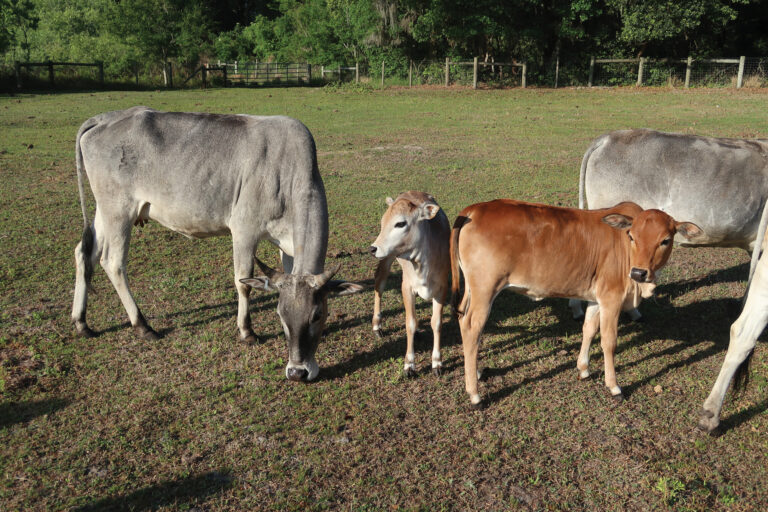
Sarah Green, of Kracken Crossings Farm, started raising Miniature Zebu cattle in 2020 on her small homestead just north of Tampa, Florida. Currently, she has a herd of six cows and one bull but is expecting two more calves soon. The critically endangered Miniature Zebu are naturally small and not a man-made breed. Good stock are under 42 inches at the back, with most between 36 and 38 inches. Zebus are an excellent addition to homesteaders who are short on space and live in hot, dry regions.
“I chose this breed because I have limited pasture space,” Green explains. “Because they’re smaller than other breeds, they eat less, so they don’t graze my pasture down.” Green has all of her Miniature Zebus on 5 acres. She’ll rotate them if they overgraze, which hasn’t been a problem with her current Miniature Zebu herd and their friends.
“They can live with anybody. They’re not aggressive, and they don’t get bullied,” Green says. “It would depend more on the individual herd, but I have a full-sized Brangus cross with them, and then my pigs run around out here. My horses and donkeys visit too, and they all coexist peacefully.”
Green chose to raise Miniature Zebu cows because they can be milked and used for meat. While they don’t produce a lot of milk – about a gallon per milking – it’s enough for daily use on a small homestead.
The pronounced hump between the shoulders isn’t just for show. “You can actually eat it,” Green says. “It’s a Zebu hump roast; there’s muscle and fat in there. It’s interesting. People that eat them say that’s the highlight of the Zebu. Not the rump roast, the hump roast!”
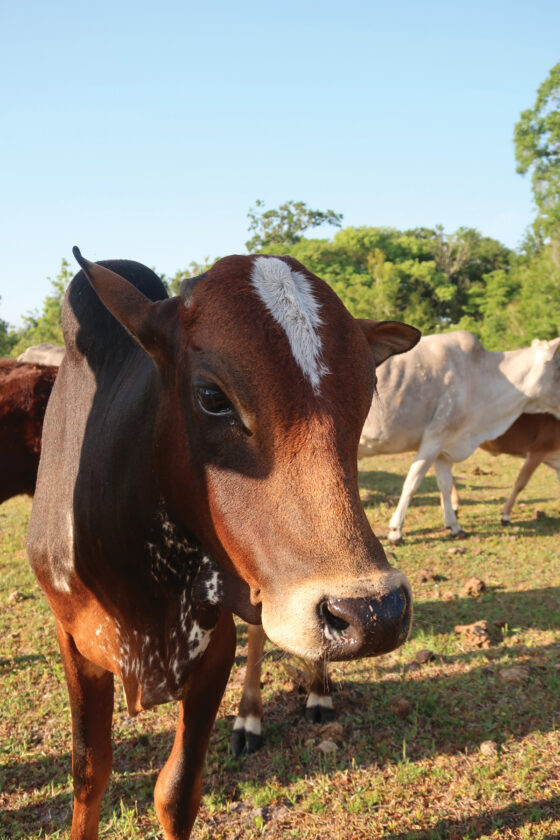
Green also chose to add Miniature Zebu cows to her homestead because of their gentle, friendly disposition. As she gives me a tour of Kracken Crossings Farm, the herd happily approaches us.
“They’re friendly. Some cows can be a little shyer, but these cows are very social and love to hang out with people. And they’re very cute. Look at those ears. He’s going to love on you,” Green says as her polled bull comes in for a pat. She adds, “He’s just a big boy.” By “big,” she means “small.” He stands at around 34 inches, while females can grow up to 38 inches.
Green also likes that Miniature Zebu cows are naturally heat- and disease-resistant. “Their breed originated in India, so they’re very heat-tolerant. They’re perfect for Florida weather, which is why there are so many Zebu breeders out here. The cattle don’t like the cold or the rain.”
Miniature Zebu Cow Breed and Breeding
Zebus can be any color. While their dominant color is gray, calves usually start out brown, and then lighten up. The horns of the bulls can grow quite large, so Green removes them to keep the herd, her family, and the bull safe from injury. The cows have smaller horns, so Green keeps those.
Breeding age can vary. Females can be ready as soon as 2 years old (up to 6 years), while bulls can be ready at 18 months, though generally, Zebus aren’t fully mature until 3 years old.
Green prefers to have cows that are larger than bulls because it reduces calving problems. Miniature Zebus carry female calves for about 283 days, and male calves for 4 to 5 days longer. Because the male calves are a bit bigger at birth, it’s useful to have a larger cow to begin with.
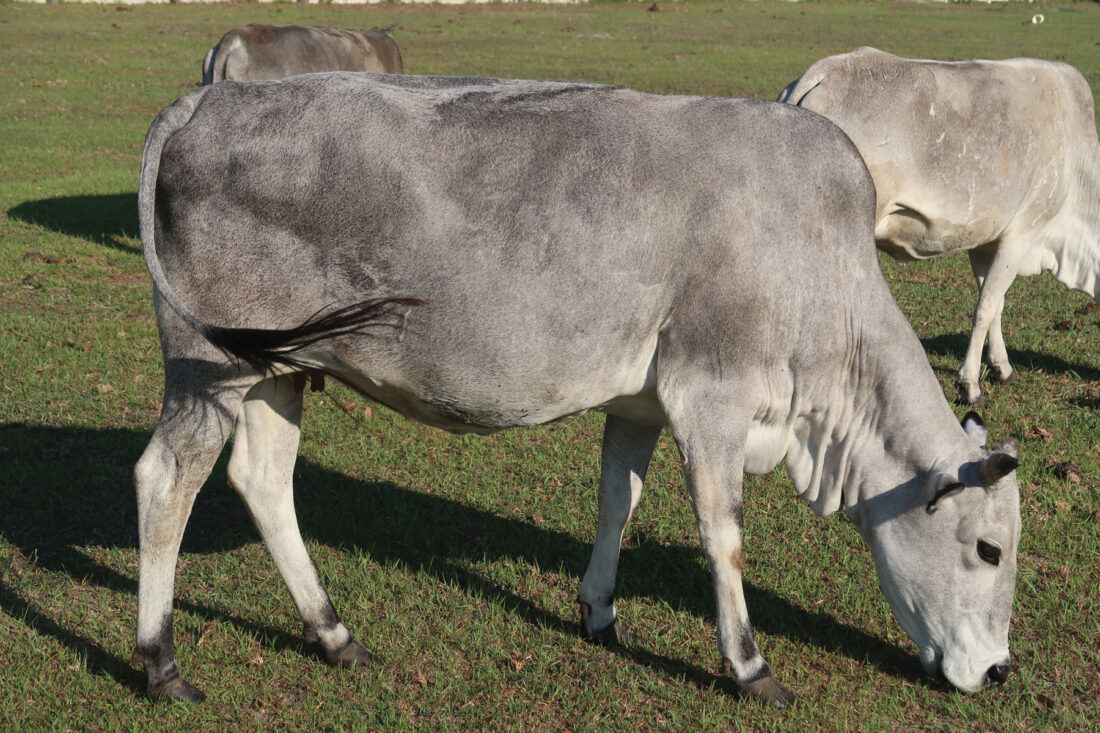
In Green’s experience, calves can stay with their mothers 4 to 6 months. At 4 to 5 months, Green weans them, halter trains them, and sends them off to a new home.
Miniature Zebu Cow Husbandry
Green notes that Miniature Zebu cattle are “easy keepers.” “I only deworm them based off fecal egg counts. I have a good relationship with our veterinarians, so
I’ve only had to do them twice in three years. And a lot of large cattle owners will do it quarterly or twice a year, depending on the breed.”
In addition to pasture, she always makes hay available for them. She also occasionally supplements with grain, which they usually only eat when they’re late in gestation or having trouble nursing. She says none of her cows have had trouble with those aspects of reproduction, so they’re not really into the grain.
Butchering depends on size. At 3 years old, her bull is 250 pounds, and her cows are about 350 pounds.
While Green doesn’t use her Mini Zebus as meat animals, she’s currently more focused on showing them, since there’s a large show circuit. For those interested in obtaining stock or showing, two organizations can help: the International Miniature Zebu Association and the American Miniature Zebu Association. Green’s herd is registered with both organizations.
“The International Miniature Zebu Association has an online herd book that lets you search for animals for sale or breeding. There’s also a Member Directory with phone numbers, emails, farm names, and websites so you can connect with other breeders,” Green says. To be registered with the International Miniature Zebu Association, you must have three generations of lineage recorded, whereas the American Miniature Zebu Association only requires one generation of lineage.
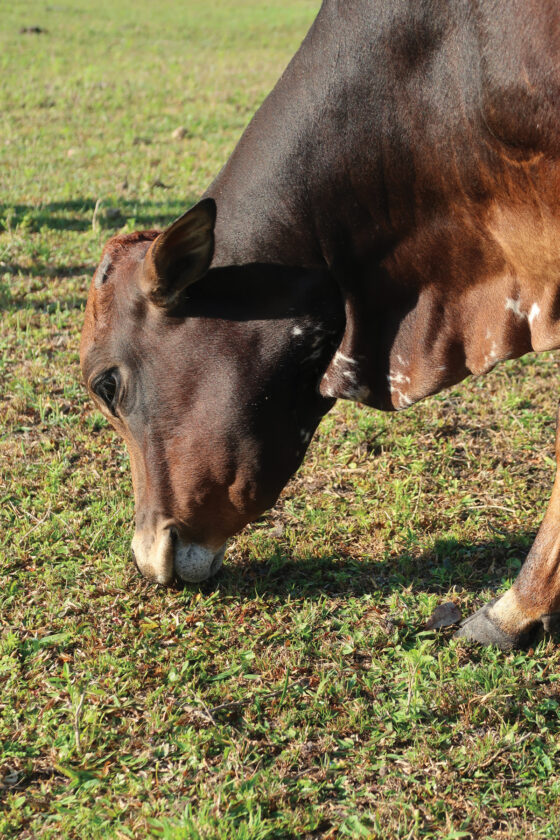
“There are open shows which take anyone with registered Zebu traits,” Green says. “The things they look for are a straight body for the bulls, with masculine structures such as a big, wide head and straight quarters.” She says that when they stand up, they can’t be cow hocked – judges want to see the ideal straight specimen.
Beyond showmanship, Green says Miniature Zebus are easy to manage. “My kids are quite young. I have a 4-year-old and a 2-year-old. My kids can come out and handle them, which, to me, is part of the reason why I got them as well. They’re less intimidating to be around.”
Green’s farm is in a rural-suburban hybrid neighborhood. She has signs around the pasture educating the public on the Miniature Zebu cattle breed. “I posted [the signs] mostly for the name, because people would come over and call them zebras all the time. People find them very interesting and will visit them on their golf carts.” And she says the social breed gives neighbors a warm welcome. “All my cows will go running to the fence when they see a golf cart pull up.”
Kenny Coogan earned a master’s degree in global sustainability and has published over 400 articles on pets, livestock, and gardening. He lives on a 1-acre homestead with chickens and ducks, managing a permaculture-style landscape. He also runs a carnivorous plant nursery in Tampa, Florida. Listen to Coogan co-host the “Mother Earth News and Friends” podcasts.