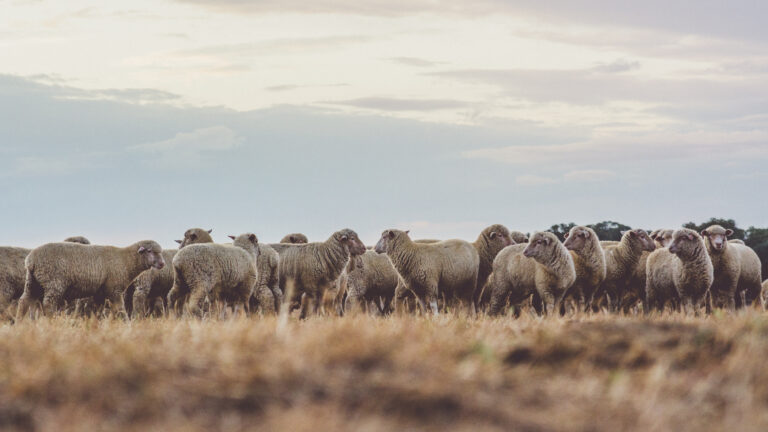
People have been keeping flocks of sheep for as long as history has been written down – longer actually. Experts say sheep were first domesticated about 10,000 years ago in central Asia, but they weren’t favored for their hair. Instead, those early animals provided meat, milk and hides. Around 5,500 years ago, we figured out how to spin wool into long strong fibers, and there’s been plenty of sheep and breed development ever since.
Today, hundreds of sheep breeds exist, and they are good for everything from keeping brush down in the pasture to making delicious meat and milk and providing fiber for the finest cloth. This wealth of diversity could make choosing the right breed difficult, but, fortunately, you don’t have to pick just one. Sheep farmers blend different breeds to get the traits they want in a flock. For example, you might want to use an Oxford ram for muscling, Polypay ewes for multiple births, then cross their lambs with Romney to add length and luster to the fleece. In time, your flock will be perfect for you.
Before you embark on a new sheep project, it’s helpful to identify why you want a flock. Are you interested in raising sheep for meat, breeding stock, fleece, milk, living lawn ornaments, fun or some combination of these? Are you doing it as a serious business or as a hobby? Do you want low-maintenance sheep, or are you willing to invest time and energy into a more demanding (and potentially more productive) flock?
Meat
For best meat production, consider fast-growing breeds with good carcasses. Sheep that breed out of season are best if you want to sell lamb for the Easter market. Generally, medium to large breeds are good for meat.
Productivity
Many of the rat-tailed sheep (Romanov, Finn, Friesian, Icelandic and Shetland) have litters of three to four lambs, rather than just a single or twin lambs like other breeds. As a bonus, these sheep don’t need to have their tails docked.
Fleece
Fleece characteristics vary between breeds. If you don’t want fleece and the associated work and cost of shearing, consider a hair sheep such as Dorper, Katahdin or Barbados Blackbelly.
Fleece has two main markets – handspinners and the specialty carding mills that cater to them, and the traditional commercial yarn mills. Whereas commercial mills want white fleece of moderate length, handspinners like colored and white fleece of varying lengths. Most handspinners prize fineness, luster and the cleanliness of the fleece; some prefer the wool of rare breeds.
The characteristics of fleece vary among breeds, including the following qualities.
- Staple length. The average length of wool from the skin to tip of the fiber is defined as its staple. A four-inch staple is the easiest to spin by hand. If the wool has a very long staple (e.g., longer than 10 inches), it may need to be combed, rather than carded. Long wool is often strong and somewhat coarse, and it can be used for rug weaving.
- Luster. A high luster (gloss) is desired by handspinners and found in breeds such as Romney and Corriedale.
- Softness. The softness, or fineness, of a fleece is described by either the micron count, or Bradford spinning count (also called wool quality number). The micron count refers to the size of the fibers; higher numbers indicate coarser fleece. The Bradford count describes how many hanks of wool can be spun from a pound of fleece; fine fleece has high numbers. For example, a soft fleece like the Merino has a micron count of less than 20 and a Bradford count above 80, whereas coarse rug wool has both a micron and Bradford count of about 35.
- Behavior. Although sheep have the reputation of lacking individual identities, each sheep has its own character, and breeds differ in general behavioral traits. Most of the primitive breeds are adapted to surviving on marginal land without human intervention. Often, they are alert, good foragers and good mothers. Some breeds tend to flock and can be herded easily by dogs, whereas others (often the best foragers) disperse over the land.
Milk Production
Good milk production is useful if you want to have a sheep dairy or if you have a flock that has a lot of triplets or even quadruplets.
For centuries, European dairies have produced sheep milk delicacies such as Roquefort, Romano Pecorino, Greek Feta, Ricotta and yogurt. Sheep milk has a rich, creamy flavor, much like Jersey milk. However, it has about twice as much fat and milk protein as cow’s milk, and is more digestible due to smaller fat globules.
Dairy breeds, such as East Friesian or British Milksheep, can provide 4-6 pounds of milk per day (compared to 60-80 pounds/day for a Holstein cow). Because of the relatively low yield, some dairies stockpile the milk in freezers until they have enough to make a large batch of cheese. Unlike cow’s milk, sheep milk does not separate after freezing.
Lactation is often five months long. Overall milk production per lactation can be more than 1,000 pounds for dairy breeds, 250-650 pounds for crosses between meat and dairy breeds, and 100 pounds for meat breeds. The most productive domestic breeds include Dorset, Rideau Arcott and Polypay.
Milking sheep can be challenging. Their teats are small and their temperaments are not always suitable for the milking stand. However, goat milking machines can be used on sheep, or they can be milked by hand. In both cases, they are milked from behind, rather than the side.
Janet Wallace has raised sheep for fleece, food and fun. She is an organic grower and freelance writer living near the Bay of Fundy in New Brunswick, Canada.
About the ALBC
The American Livestock Breeds Conservancy (919-542-5704) is a nonprofit working to conserve historic breeds and genetic diversity in livestock. The ALBC Conservation Priority List classifies rare breeds into five categories:
- Critical – fewer than 200 annual
registrations and an estimated global
population less than 2,000. - Threatened – fewer than 1,000 annual
registrations and an estimated global
population less than 5,000. - Watch – fewer than 2,500 annual
registrations and an estimated global
population less than 10,000. - Recovering – breeds once in another
category that still need monitoring. - Study – breeds of genetic interest that lack definition, genetic or historical documentation.
Barbados Blackbelly

Size: small
Appearance: brown, tan or red hair with black underparts and black stripes along either side of muzzle
Fleece: hair
Breeding: out-of-season; can lamb as often as every 6.5 months
Lambing rate: 200 percent
Behavior: active and alert, often nervous; highly protective ; good flocking instinct
Use: meat
Origin: Barbados from African stock
Environment: tolerant (also to poor grazing)
ALBC rating: recovering
An interesting-looking hair sheep. The lambs grow slower than in other meat breeds, but the ease of care may compensate for this. In some climates, can be raised without chemical intervention, making them ideal for naturally raised and grass-fed markets. The meat from the small lean carcass has a very mild flavor. Often used as a maternal breed to increase lambing rates and resistance to parasites. In the United States, the Barbados Blackbelly was crossbred with domestic sheep, primarily Rambouillet and the European Mouflon, to create separate breed called the American Blackbelly.
Barbados Blackbelly Sheep Association International
815 Bell Hill Road
Cobden, IL 62920
(618) 893-4568
Black Welsh Mountain

Size: small
Appearance: black body and wool; clean face and legs below the knees
Horns: rams, curled horns; ewes, polled
Fleece: light black to reddish-black; moderately fine with a short staple
Breeding: seasonal
Lambing rate: 175 percent
Behavior: not flocking; self-reliant; lamb quick to their feet
Use: lean meat; fleece for handspinners
Origin: Wales
Environment: good for range; don’t need grain
ALBC rating: recovering
A hardy dual-purpose breed with resistance to fly-strike and footrot. The meat is lean and tasty. Handspinners value “cuchddu,” the black fleece with red highlights.
American Black Welsh Mountain Sheep Association
P.O. Box 534
Paonia, CO 81428
California Red Sheep

Size: medium, rams weighing from 200 to 250 pounds and ewes from 110 to 140 pounds.
Appearance: Lambs are born solid rust or cinnamon red color, but as they mature they maintain the red face and legs, and at maturity fleeces turn beige or oatmeal color. Legs and face are without wool. Long, pendulous ears.
Horns: both sexes are polled
Fleece: beige or oatmeal colored, silky wool.
Breeding: non-seasonal, can be bred for three lamb crops in two years.
Behavior: Calm, gentle disposition and hardy, resistant breed. Ewes are patient but possessive mothers that instinctively care for their young.
Use: wool and Meat
Origin: California
Environment: does well when fed a balanced pasture grass and/or hay diet. The breed has successfully ranged in extremely harsh weather area ranches in Canada, Colorado, Idaho and throughout the United States.
ALBC rating: not rated
This relatively new breed produces wool that is prized by hand spinners and weavers, and the meat is highly desired for its tenderness and flavor. The California Red is a hardy, resistant breed that does well on grass.
California Red Sheep Registry, Inc.
P.O. Box 468
LaPlata, New Mexico 87418
505-325-2837
Size: medium
Appearance: dark brown clean face and legs; white fleece
Fleece: moderately fine and short
Breeding: seasonal
Lambing rate: 180 percent
Behavior: good foragers; alert; easy lambing
Use: flavorful meat; fleece
Origin: England
Environment: adaptable to wide range of habitats; good on pasture
ALBC rating: recovering
Strong mothering instinct, vigorous lambs, narrow heads and wide pelvic structures all contribute to problem-free lambing. The ewes are known for being productive for more than a decade. They produce high-protein milk that leads to fast growth in the lambs.
North American Clun Forest Association
21727 Randall Drive
Houston, MN 55943
507-864-7585
Corriedale

Size: medium
Appearance: heavyset white sheep; woolly legs and topknots
Fleece: heavy coat of fine, moderately long fleece with high luster
Breeding: seasonal
Lambing rate: twinning
Behavior: good mothering and herding instinct
Use: meat, wool
Origin: New Zealand, Australia
Environment: better for farm than range
ALBC rating: not rated
The Corriedale is a great dual-purpose breed with good carcass quality and fine, lustrous fleece valued by handspinners.
American Corriedale Association Inc.
P.O. Box 391 Clay City, IL 62824
618-676-1046
Cotswold
Size: large
Appearance: white but sometimes spotted face and legs; forelock and woolly legs
Fleece: very long, coarse, lustrous wool that hangs in ringlets
Breeding: seasonal
Lambing rate: 150-175 percent
Behavior: docile, excellent maternal instincts
Use: meat, wool for handspinners
Origin: England
Environment: good on range; poor heat tolerance
ALBC rating: threatened
One of the oldest breeds known. A hardy sheep that has easy lambing (because of a wide pelvic structure), strong foraging and maternal instincts. Cotswolds are used to increase milk production, body size and staple length in crossbred young.
Cotswold Breeders Association
P.O. Box 441
Manchester, MD 21102
410-374-4383
Dorper

Size: medium to large
Appearance: distinctive appearance with black head and neck, and white heavyset body
Fleece: mix of hair and wool, sheds in the spring
Breeding: long breeding season; can breed out of season up to every 8 months
Lambing rate: 150 percent can produce 2.25 lambs a year
Behavior: good mothering
Use: meat
Origin: South Africa
Environment: can thrive on poor pasture or in lush conditions
ALBC rating: not rated
Very hardy, fast-growing breed that doesn’t need shearing. Dorpers are used as terminal sires for fast-growing, well-muscled lambs, or used as a maternal sire to increase productivity, milk production and resistance of crossbred ewes. White Dorpers, which are solid white, are now available as well.
American Dorper Sheep Breeders’ Society
P.O. Box 796
Columbia, MO 65201
573-442-8257
Dorset Horn

Size: medium
Appearance: white faces; wooly white legs
Horns: Curled on both sexes
Fleece: short-staple, moderately fine fleece
Breeding: eight-month season
Lambing rate: usually twins (frequently triplets), can lamb twice year
Behavior: good mothering; docile
Use: meat, milk, wool
Origin: England
Environment: widely adaptable
ALBC rating: watch
Dorset Horn is a long-lived breed that is noted for its heavy milk production and high productivity. Lambs grow at a moderate speed, but produce well-muscled carcasses.
Continental Dorset Club
P.O. Box 506
N. Scituate, RI 02857-0506
401-647-4676
Friesian Milk Sheep
Size: large
Appearance: white wool; clean face and legs; rat-tail
Fleece: fairly heavy, moderately fine fleece with moderate staple
Breeding: year round
Lambing rate: 225 percent
Behavior: docile
Use: dairy, meat
Origin: Germany
Environment: don’t perform well under harsh conditions, in heat or on the range
ALBC rating: not rated
Also known as the German East Friesian sheep, this breed produces more milk than any other breed with an average milk yield of 1,350 pounds (160 gallons) per lactation with 6-7 percent milk fat. The large carcass has only mediocre quality.
Dairy Sheep Association of North America
HC 69 Box 149
Anselmo, NE 68813
308-749-2349
Icelandic

Size: medium
Appearance: range of colors from white to brown to grey to black; some have patterns such as badgerface; short-tailed;
Horns: most horned, some naturally polled
Fleece: a soft, lustrous undercoat with a long, coarse outer coat
Breeding: seasonal
Lambing rate: 170-180 percent
Behavior: alert, almost wild; rams can be dangerous; poor flocking instinct; good browsers and strong mothering instinct
Use: milk, meat, fleece
Origin: Iceland
Environment: suitable for cool climates
ALBC rating: not rated
The breed was brought to Iceland by the Vikings more than a thousand years ago; it is possibly the oldest pure breed of sheep in the world. The ewes are heavy milk producers, good mothers and often lamb until they are 12-14 years old. They have an excellent conformation as a meat breed and fine-flavored meat.
Icelandic Sheep Breeders of North America
9030 Cascade Road
Rochester, IL 62563
217-498-7522
Jacob

Size: small
Appearance: white with black splotches on body,; most have a badgerface (black cheeks and muzzle with a white blaze down the nose)
Horns: both sexes: two, four or six horns
Fleece: light, variable in crimp and length
Breeding: seasonal
Lambing rate: low, one or two,
Behavior: alert, almost goat-like; strong maternal instinct
Use: interest, fleece
Origin: Egypt? Spain? Scandinavia? Scotland? Many theories – few facts
Environment: widely adaptable
ALBC rating: threatened
A sheep with an intriguing look and mysterious background. Many rams have two long forward horns, and two others that curl back towards the ears. The breed is often raised as a curiosity, or for breeding stock. Typical of ancient breeds, Jacobs are hardy and rarely need assistance during lambing.
Jacob Sheep Conservancy
25780 S. Jewell Road
Beavercreek, OR 97004
snielsen@orednet.org
Jacob Sheep Breeders Association
83136 Rattlesnake Road
Dexter, OR 97431
541-747-6149
Karakul

Size: medium.
Appearance: most lambs are born black and fade to silver, also red, tan, brown and gold; pendulous ears and thick fat tails
Horns: Rams
Fleece: double-coated heavy fleece; outer fleece is coarse and long (6-12 inches), inner coat is soft
Breeding: a long season, can breed three times in two years
Lambing rate: usually singles
Behavior: strong maternal instinct; aggressive foragers; strong flocking instinct
Use: lean meat; pelts for lambskins (traditionally)
Origin: deserts in Central Asia
Environment: hardy and adaptable
ALBC rating: threatened
Karakuls are one of the world’s oldest breeds. This long-lived breed can thrive under rugged conditions; the fat in their broad tails is used as an energy reserve in times of poor feeding conditions. They also show resistance to internal parasites and foot rot. Lambing is easy due to the narrow heads and shoulders of the lambs. The pelts are used for “Persian lamb” coats, and, traditionally, the undercoat was felted and used in yurts and clothing.
American Karakul Sheep Registry
11500 Highway 5
Boonville, MO 65233
660-838-6340
Katahdin

Size: medium (but largest of the hair breeds)
Appearance: various colors and patterns; short tail
Fleece: hair in a range of textures, length and color; often coarse outer hairs and fine, woolly undercoat (which sheds in the summer)
Breeding: long season
Lambing rate: 200 percent, usually twins, sometimes triplets or quads
Behavior: strong mothering instinct; docile; moderate flocking instinct; lambs are born vigorous and alert
Origin: United States
Environment: adaptable by growing thick undercoat in cold winters and shedding coat in hot summers
ALBC rating: recovering
St. Croix, Suffolk and Wiltshire Horn were crossed to produce the breed, which was named after Mount Katahdin, the highest peak in Maine (where the breed was developed). Katahdins are productive sheep that are easy to care for. They need neither shearing nor docking, and are resistant to internal and external parasites. Ewes often lamb easily, have good mothering instincts and produce ample milk. The meat is lean and mild-flavored.
Katahdin Hair Sheep International
P.O. Box 778
Fayetteville, AR 72702-0778
479-444-8441
khsint@earthlink.net
Leicester Longwool

Size: medium to large
Appearance: long forelock, wool on legs; usually white, but sometimes black or silver
Fleece: heavy fleece (up to 20 pounds) of silky lustrous fleece; long locks with an average crimp
Breeding: seasonal
Lambing rate: 120-150 percent
Behavior: strong maternal instinct
Use: meat (large), wool for handspinners
Origin: England
Environment: widely adaptable; hardy
ALBC rating: threatened
The Leicester Longwool was developed in England in the 18th century, but it also has a long history in the United States. It was once a common breed; both George Washington and Thomas Jefferson imported Leicesters, which have large high-quality carcasses, to improve their flocks. By the early 1900s, however, the breed was almost extinct in North America. A renewed interest has led to an increase in the number of Leicesters, although it remains a threatened breed.
Leicester Longwool Sheep Breeders Association
Rt. 1, Box 172B
Albright, WV 26519
304-379-9100
Navajo-Churro

Size: small
Appearance: various colors and patterns; may be white, black, gray or brown
Horns: both sexes; rams often have four
Fleece: double-coated; long hair outer coat and a fine-wool inner fleece
Breeding: year-round
Lambing rate: often twins or even triplets
Behavior: protective mothers
Use: lean meat, fleece
Origin: United States (from the Spanish Churra)
Environment: adapted to wide range of habitats, but especially hot, dry regions
ALBC rating: threatened
Starting in the late 1400s, Spanish explorers brought the Churra sheep to North America. Over centuries, the Navajo Nation developed the Navajo-Churro breed. The hardy sheep are fairly disease-resistant and more productive than many other older breeds. The long fleece is used in traditional Navajo weaving, and the lean, flavorful meat is included in Slow Food USA’s Ark of Taste.
Navajo Churro Sheep Association
P.O. Box 135
Hoehne, CO 81046
churrosheep@mac.com
Oxford

Size: large
Appearance: dark brown face, white fleece, wool on legs
Fleece: heavy coat of fairly fine fleece with a moderately long staple
Breeding: seasonal
Lambing rate: 150 percent
Behavior: docile; good mothering instinct; not a great forager
Use: meat, fleece
Origin: England
Environment: best on good pasture
ALBC rating: watch list
The large, vigorous Oxford lambs grow quickly on lush pasture. The ewes are heavy milkers. The rams are often used as a sire breed to give size, muscling and wool production to lambs.
American Oxford Sheep Association
1960 E. 2100 North Road
Stonington, IL 62567-5338
217-325-3515
Polypay
Size: medium
Appearance: open white face, white legs, white fleece
Fleece: variable, from coarse to moderately fine with a short to moderate staple
Breeding: year-round; can breed twice a year in good conditions
Lambing rate: often above 200 percent, triplets and quadruplets are common
Behavior: docile, easily managed
Use: meat, multiple births, wool
Origin: United States
Environment: best on good pasture
ALBC rating: not listed
Polypays were developed in the 1970s at the U.S. Sheep Experimentation Station in Dubois, Idaho. The name refers to the expectation that the sheep could ‘pay’ the farmer a number of lambs. The goal was to create a sheep that could lamb more than once a year, have rapidly growing lambs, breed at a year of age, and have good carcass quality. The sheep was developed from Finn, Rambouillet, Targhee and Dorset.
American Polypay Sheep Association
15603 173rd Ave.
Milo, IA 50166
641-942-6402
Romanov
Size: medium
Appearance: black lambs fade to grey; rams have long mane of black hair; clear face with black and white markings (often badger-faced) and large eyes
Horns: usually polled
Fleece: double-coated; guard hair is mixed in with fleece
Breeding: out-of-season with ewes fertile at 3 months old; can lamb every 8 months
Lambing rate: 250-300 percent, every eight months
Behavior: lambs quick to their feet; ewes flighty
Use: multiple births
Origin: Russia
Environment: adapted to cold climates
ALBC rating: not rated
It is said that Romanov sheep have “lambs by the litter,” with quadruplets, quintuplets and even sextuplets being relatively common. Lamb survival is high due to the high milk production of the ewe and the vigor of the newborn Romanov lambs. On average, ewes are productive for 7.5 years. With cross-breeding, even ¼-Romanov blood in a flock increases productivity and milk production in ewes.
North American Romanov Sheep Association
P.O. Box 1126
5990 Beecher Road
Pataskala, OH 43062-1126
740-927-3098
Romney

Size: large
Appearance: long locks, wool on face and legs; range of colors
Fleece: fine, lustrous, long locks, high yields; sometimes shorn twice a year
Breeding: seasonal
Lambing rate: can approach 200 percent
Behavior: quiet temperament; little herding instinct but easily managed
Use: meat; fleece
Origin: marshy areas of England
Environment: best adapted to cool, humid environments; resistant to internal parasites and hoof rot
ALBC rating: not listed
Romney is an excellent dual-purpose breed. The white and colored fleece is highly valued by handspinners. The lambs grow more slowly than some other breeds, but produce a heavy carcass with delicately-flavored lean meat.
American Romney Breeders Association744 Riverbanks Road
Grants Pass, OR 97527
secretary@AmericanRomney.org
St. Croix

Size: small to medium
Appearance: most are white with colored spots; rams have a mane
Fleece: hair, sometimes mixed with wool and hair
Breeding: year round and can sometimes breed twice a year
Lambing rate: 150-200 percent
Behavior: excellent foragers, docile, alert but easily managed; good flocking instinct
Use: meat, milk
Origin: Caribbean, possibly originally from West Africa
Environment: adapted to a range of climates, including high heat and humidity; in cold climates, they produce a heavy coat that sheds in the spring
ALBC rating: threatened
St. Croix, also known as the Virgin Island White sheep, are used for meat production and sometimes in dairies. They have exceptional resistance to parasites, early maturity and easy lambing.
St. Croix Hair Sheep Breeders of North America
P.O. Box 1439
Goldendale, WA 98620-1439
Shetland

Size: small
Appearance: multicolored; short tails
Horns: rams usually have spiral horns; ewes are polled
Fleece: fine fleece with short staple; a range of colors
Breeding:
Lambing rate:
Behavior: alert, even wild; strong maternal instinct
Use: fleece, meat
Origin: England
Environment: can thrive under harsh conditions
ALBC rating: recovering
Shetlands are a primitive breed of sheep, at least a thousand years old. The sheep are hardy and lambing is usually easy. The lambs are slow to mature and are often kept over the winter before being marketed. The meat is known for its distinctive flavor. Shetland fleece is prized by handspinners and sometimes used to make “ring shawls” – shawls so fine that they can be pulled through a wedding ring. The fleece comes in an incredible range of colors and patterns.
North American Shetland Sheepbreeders Association
15603 173rd Ave.
Milo, IA 50166
Shropshire
Size: medium
Appearance: dark brown face and legs; white wool
Fleece: heavy fleece of medium-grade wool
Breeding: seasonal
Lambing rate: 175-200 percent under good conditions
Behavior: gentle, good maternal instinct
Use: meat, wool
Origin: England
Environment: adapted to a range of pasture conditions, especially cold wet weather
ALBC rating: recovering
“Wool from the tip of the nose to the tip of the toes” was used to describe Shropshires in their heyday. In the early 1900s, the Shropshire was the most common breed in the United States. However, breeders selected for small size and greater wool, resulting in a small sheep prone to wool blindness (heavy wool growth on the face covers eyes; requires regular face shearing). Since the 1950s, breeders have worked to ensure the breed has the original characteristics that made it so popular. Shropshire lambs are vigorous, grow quickly and have a superior carcass quality. The gentle disposition makes them suitable for a family flock. The ewes are prolific, give good yields of milk and are long-lived.
American Shropshire Registry Association
41 Bell Road
Leyden, MA 01337
413-624-9652
Southdown

Size: small to medium
Appearance: light brown face and legs; white wool; heavyset body
Fleece: low yield of moderately fine, short-stapled fleece
Breeding: seasonal
Lambing rate: single or twins
Behavior: docile
Use: meat
Origin: England
Environment: poor heat tolerance but otherwise adaptable
ALBC rating: recovering
Southdowns are noted for the excellent feed conversion. They are ideal for intensive management, including producing lambs for the Easter market. The lambs mature quickly and have good survival rates. The meat is noted for its flavor and tenderness.
The Babydoll Southdown is a miniature breed, less than two-feet high at the shoulder, recently developed from the Southdown.
American Southdown Breeders’ Association
100 Cornerstone Road
Fredonia, TX 76842
325-429-6226
Texel

Size: medium to large
Appearance: wide, white clean face with black nose; white clean legs with black hooves; heavyset body; white wool
Fleece: medium-grade in terms of both fineness and length
Breeding: five-month season
Lambing rate: 130 percent, 175 percent and 195 percent for lambs aged 1, 2 and 2+ years (respectively)
Behavior: poor herding
Use: meat
Origin: The Netherlands
Environment: pasture, not range
ALBC rating: not rated
Although the Texel breed was developed in the 1800s, it was only imported to the United States 30 years ago. Now there are flocks of Texels across the country. Rams are often used as a terminal sire to provide muscling. Lambs sired by a Texel ram have less carcass fat, greater feed efficiency and better carcass quality than lambs sired by black-faced rams.
North American Texel Sheep Association
740 Lower Myrick Road
Laurel, MS 39440-0000
601-426-2264
natsa@c-gate.net
Texel Sheep Breeders Society
15618 E. Davis Road
Opdyke, IL 62872
618-242-5060
Tunis

Size: medium
Appearance: lambs are born copper-colored but then develop white fleece (face and legs remain reddish); pendulous ears; white wool; thick tail
Fleece: lustrous, medium-fine fleece with moderately long staple
Breeding: out of season
Lambing rate:
Behavior: alert; strong maternal instinct
Use: meat, particularly for Easter market; fleece
Origin: United States
Environment: tolerant to both heat and cold; can thrive on marginal land
ALBC rating: watch
In 1799, the ruler of Tunisia sent a flock of Tunis sheep to a judge in Pennsylvania. The sheep became popular, and many more were imported (Thomas Jefferson preferred them to Merinos). Tunis are resistant to disease and parasites, and can thrive in a variety of challenging environments. Slow Food USA has listed Tunis lamb on in the Ark of Taste.
National Tunis Sheep Registry Inc.
15603 173rd Ave.
Milo, IA 50166
641-942-6402