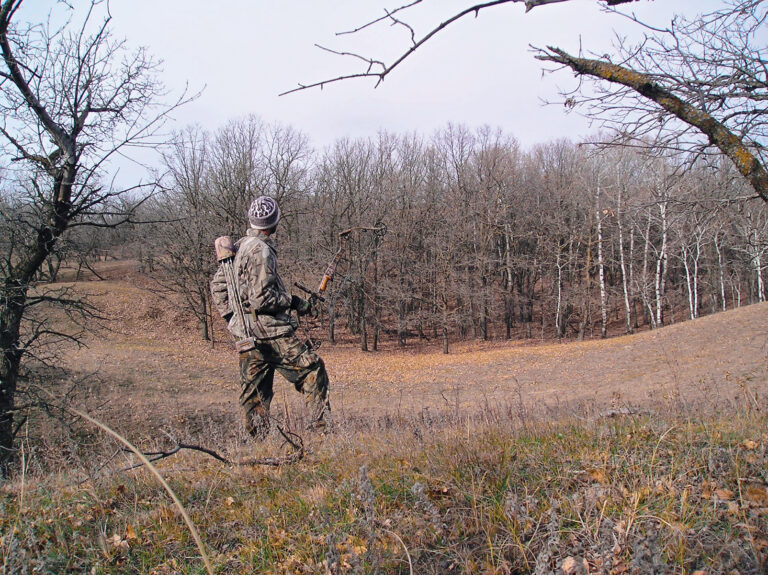
I’ve been obsessed with the flight of the arrow since I was a young child. When I was 5 years old, my dad built my first crude bow by attaching some baling twine to a green willow shoot. When I released the first arrow and watched it lob through the air, I was hooked.
Hunting with a bow opens an enormous amount of opportunity for a person to add healthy, delicious protein to the freezer, as well as experience heart-pounding excitement and make lifelong memories. I’ve bowhunted big game for nearly 30 years, and I’ve been fortunate enough to have taken white-tailed deer, black bears, pronghorn antelope, bison, and wild turkey.
Bows
The first step for an aspiring bowhunter is to get your hands on a bow. Perusing an archery supplier’s website or catalog can be overwhelming and expensive. It helps to break down the bowhunter’s needs before diving in.
The first and most important part of the package is the bow itself. Archery, in one form or another, has been traced back to at least the later Middle Stone Age. The bow and arrow were used for hunting and in warfare until the invention of gunpowder. At that point, archery developed into a sport for most areas of the world, practiced as a leisure activity.

Longbow
There are three basic bow configurations that an archer can shoot. The longbow, the most primitive form, is simply a wooden bow bent into a D-shape. As the name suggests, the longbow measures the “long” (vertical length, as opposed to crossbows that measure across), from 58 inches to over 70 inches, without the string. The longbow has a single string, measuring 3 inches shorter than the bow. Nearly all longbows are made of wood.
Howard Hill, the archery showman dubbed “The World’s Greatest Archer,” entertained untold Americans from the 1930s through the 1950s by performing unbelievable feats with a longbow. In the right hands, a longbow is deadly accurate.
Recurve Bow
Moving up the technology scale, the recurve bow has limbs that curve away from the shooter when unstrung. When the single string is attached, the limbs store more energy and offer greater energy than the straight limb of the longbow. Nearly as old as the longbow design, the recurve bow was first described in writings as far back as the eighth century BCE.

Recurve bows are made of both wood and metal. Olympic-style archers shoot incredibly modern bows, with all the bells and whistles, while many bowhunters use a simple wooden bow.
Compound Bow
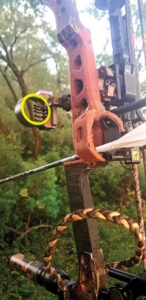
The last, and most common, bow is the compound bow. The compound bow has multiple strings that engage a levering system to load the limbs. Invented by H.W. Allen in 1966, the compound bow is the easiest to become proficient in. Unlike the longbow and recurve, once the string of the compound is drawn over halfway, the weight is relaxed. Called “let-off,” this means a 70-pound-pull compound bow with 70 percent let-off has a weight of only 21 pounds at full draw. Conversely, a 70-pound-pull longbow or recurve has a 70-pound weight at full draw. This mechanism makes it easier for an archer to hold and aim the bow.
What to Know Before Buying a Bow
The draw weight of a bow is critical for hunting. Many states have a minimum draw weight required for hunting, usually from 35 to 45 pounds. Compound bows are adjustable and can be set on a low poundage until the archer develops muscle and then increased for hunting. It’s important not to “overbow,” or draw too much weight. The bowstring should come back smooth and easy and not require gymnastics to hit full draw. Too much weight will develop bad habits that are difficult to break and will only cause frustration.
Custom, handcrafted wooden bows or top-of-the line compounds can easily exceed $1,000, but don’t be scared off by the price. Most bow companies offer middle- or lower-tier bows for a much more economical price, with hardly any reduction in quality. Used bows are also a viable choice. The best advice when purchasing a bow is to visit a local archery shop and shoot a variety of bows.
Bows are personal, and what works for me will almost certainly not work for another archer. I’ve been shooting the same compound bow since 2005, and many would consider it obsolete. Nonetheless, it works well every year on a variety of game.
Arrows
A bow is only as good as the arrow it fires. When I started bowhunting in the mid-1990s, aluminum was the predominant shaft material. Aluminum arrows could be manufactured extremely straight and heavy, but their durability was lacking. It was common to bend an arrow, and I remember trying to straighten arrows by bending them over my knee just right.

Enter the carbon arrow. Made from graphite, carbon arrows are either straight or broken. Carbon arrows can range from extremely lightweight to extremely heavy. The best choice is usually a medium-weight arrow, unless hunting large game. Select carbon arrows on the more economical side of the cost spectrum. Only the best archers will notice a difference in accuracy, and the savings can be used elsewhere.
Some traditional archers, using longbows or recurves, prefer wooden shafts. Wooden shafts are heavy and accurate but are prone to breakage. For those seeking to hunt as people did in the past, wooden shafts can’t be beaten.
Arrowheads
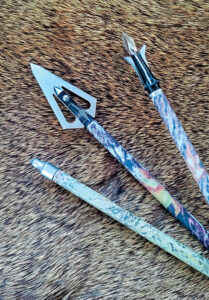
When shooting practice arrows, the shaft is tipped with a field point. When getting ready to hunt, however, the target tip should be swapped with a razor-sharp broadhead. Unlike a bullet, which uses high velocity to impart damage on the target, an arrow kills by hemorrhaging. A razor-sharp broadhead is essential.
Fixed-Blade
Fixed-blade broadheads have 2 to 4 static blades, with a sharp tip to ensure penetration. Longbows and recurves, with less energy in the arrow, usually shoot arrows equipped with fixed-blade broadheads. Hunters shooting less than 50 pounds should also consider a well-constructed fixed-blade broadhead.
Larger animals, such as bison, are best hunted with a stout, heavy fixed-blade.
Mechanical
Bows with higher energy also have the option of expanding broadheads. Fixed-blades can function as front wings and steer the broadhead away from the target, especially with fast bows. A way around that is to use broadheads that encase the blades in the point, only opening to full cutting diameter when the arrow strikes.
For animals the size of black bears on down, a mechanical broadhead works well.
Broadhead Cost
Some broadheads have crept into the three-digit range in terms of cost. These boutique broadheads are made from high-quality steel and are hand-assembled.
Economically priced heads work fine. Just don’t buy the cheapest, as they’re usually made from inferior parts.
Additional Aids
A budget of $750, or even less for a thrifty shopper, can allow you to purchase everything needed to be successful in the woods.
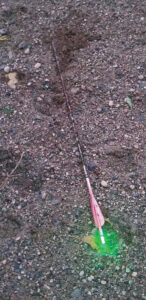
Though I often eschew electronic aids, the advent of the lighted arrow nock has been a boon for bowhunting. When the arrow is released, the nock at the rear of the arrow lights up. It’s not only great for seeing the arrow in flight, but the arrow is also much easier to find, especially in low light. I’ve found off-brand nocks much cheaper and just as dependable as the name brands.
An arrow rest holds the arrow on the bow, and bow sights help define the aiming point. They’re necessary on a compound bow, though many recurve and longbow shooters are “instinctive” shooters (without a sight). Much like throwing a ball, instinctive shooters aim by feel and muscle memory. For most, this requires a lot of practice.
Compound bows are usually shot with a release aid – a mechanical device that holds the string. When the trigger is pulled, the jaws open and the string is released. Recurve and longbows are shot with fingers, covered with either a shooting glove or a tab made of durable leather.
Sharpen Your Shooting Skills
Once you select a bow kit, start shooting! Unlike shooting a firearm, where every pull of the trigger comes with an associated cost of ammunition, shooting a bow is free. A couple of arrows can be used all summer, with the only “cost” of shooting in the energy of the shooter.
Most cities have public or private archery ranges, which are excellent places to sharpen muscles and accuracy, as well as meet other archers. For those who live in rural areas, a backyard practice range is easy to establish. My backyard range has bag targets and lifelike foam deer targets. I can shoot within seconds of stepping outside.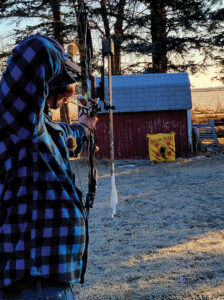
When shooting, it’s better to shoot 10 well-aimed arrows than 100 poorly aimed ones. When bowhunting, it’s exceedingly rare to get more than one shot, so always strive to make the first shot the best. Archery is a game of muscle memory and mental focus.
Time to Hunt
When
Hunting seasons for bowhunting big game are much longer than those for firearms in most states. Archery hunting is also allowed in more urban areas, especially in more populated states. Hunting during the earlier parts of the season is more comfortable for “fair weather” hunters, and late-season opportunities offer the die-hards a chance to grind out the end of the season.
Antlerless tags are a fantastic way to stock up on meat and are usually cheaper than antlered tags. Look to purchase an additional tag or even buy a few antlerless tags for the cost of one antlered tag.

Where
Public hunting areas offer an easy way to learn the art of archery. In some locations, public lands get hunted heavily and require keen skill, along with a dash of luck, to be successful. Generally, the larger the hunting area, the easier it is to get away from hunting pressure. However, some small, out-of-the-way locations can also offer wonderful hunting. I’ve enjoyed many great hunts on public lands, ranging from small, urban parks to vast acreages.
Hunting on private lands can offer less hunting pressure and more undisturbed animals. Owning your land is the easiest way to ensure private land hunting. When the habitat is good, even a small property can provide hunting opportunities.
In some states, such as Texas and portions of the East, leasing land for hunting purposes is popular. It’s getting harder to knock on doors and receive free hunting access, but it’s possible. When leasing or getting free access, make sure to treat the landowner well for the privilege. Listen to their wishes and respect the land. An end-of-the-year gift or offering to help with work on the property goes a long way toward cementing a good relationship.

Making It Count
When all the hard work and practice pays off, and a big game animal is close enough for an ethically released arrow, make the shot count. Though nature can be cruel, as hunters, we should always strive to make shots that lead to a quick death for the animals we pursue.
Unlike gun hunters, archers must aim to avoid bones. Even a white-tailed deer’s shoulder can be strong enough to deflect an arrow and cause it to miss the vitals. Instead, place the arrow through the rib cage, behind the front shoulder, and into the lungs. Such a shot will result in a short blood trail and a successful end to the hunt.
It’s easier than ever before to take up bowhunting, but don’t expect quick success. Learn to shoot a bow, understand the target animal’s habits, and enjoy time outdoors. Every day outside is a good day, and bringing home prime wild game meat is the cherry on top.
Jeffrey Miller is a freelance writer from North Dakota. He’s written for over 20 magazines and newspapers and three books on hunting, fishing, fur trapping, gardening, and modern homesteading. He lives with his family on the banks of the Sheyenne River in rural southeastern North Dakota.
Originally published in the September/October 2025 issue of Grit magazine and regularly vetted for accuracy.