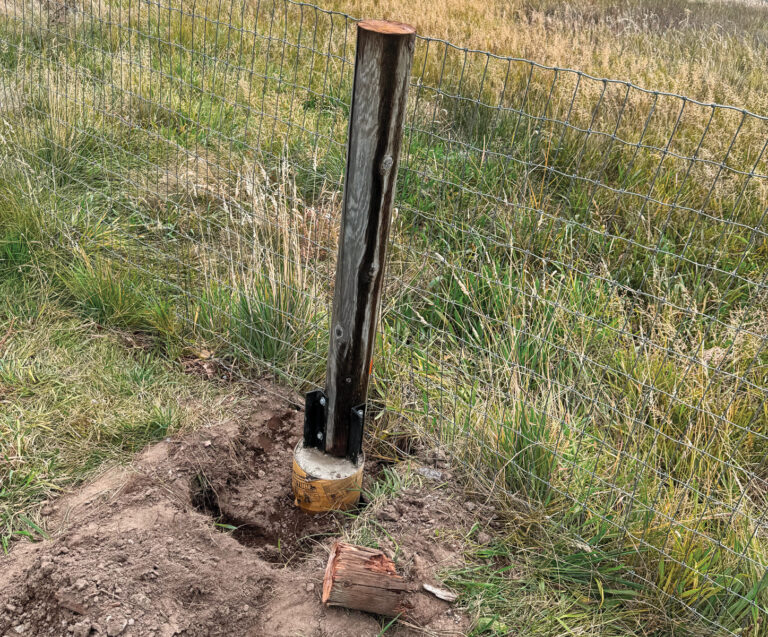
Learn how to remove a broken fence post set in concrete and attach wood fence to metal posts for an easy way to replace rotten posts, keeping your fences lasting while taking it easy on labor.
The property on which I now live came with a beautiful fence made of wooden posts and rails. The best part is that 90 percent of them aren’t rotten at the base.
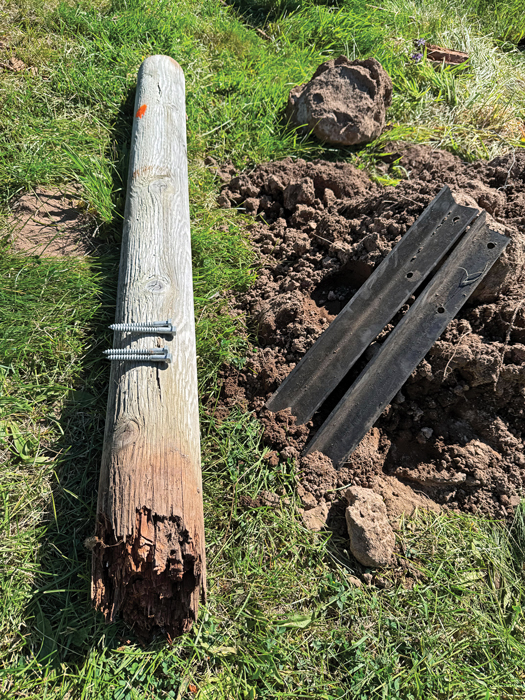
As for the other 10 percent, though … if the time machine in the garage was working, I’d go back and ask the Ghost of Landowners Past to please not put in so many wooden fence posts. He might say that they look good and are pressure-treated so they’ll last forever, and I’ll counter that I’m from the future and I know how this story ends. I’ll politely encourage him to crown the concrete bases and bring them above the level of the dirt with a nice reveal, so water doesn’t pool up and wet dirt doesn’t soak in and erode their toes. Failing that, I might even ask him to just skip the concrete in favor of some nice draining gravel. Of course, he won’t listen. His mind is made up, but it’s still a fantasy of mine.
The Fence of Theseus
As it sits, out in the field is a gorgeous-looking fence that got put in all at the same time and is reaching the age where the posts are starting to develop arthritis in their ankles en masse. The right thing to do is hire a fence company and replace the entirety of the fence and be done with it, but prices have changed a teensy bit since the initial install, and the menacing bill for replacing a few hundred posts isn’t appetizing.
When the first few posts went, it seemed like the only option was to maintain the status quo. A T-post smack in the middle of all of those nice-looking wooden fence rails would really look trashy. Years ticked by, with four or five post replacements every season as they started to exhibit the telltale listing that indicates that the Earth’s hunger for decomposables vanquished whatever chemical cocktail the manufacturer injected for longevity. One morning, I woke up in a cold sweat after a visit by the Ghost of Landowners Future. I realized that while I didn’t put them in at first and I don’t mind replacing them now, someday the retiree with bad ankles will be me, and he’s going to be the guy to do the work the next time they need to be replaced. Nobody needs to do this when they’re an old fart with dicey shoulders and knees and they’d rather not fuss with it. Maybe I’ll have the money to pay a pro at that point, and then again, maybe I’ll still be the same cheapskate I am now.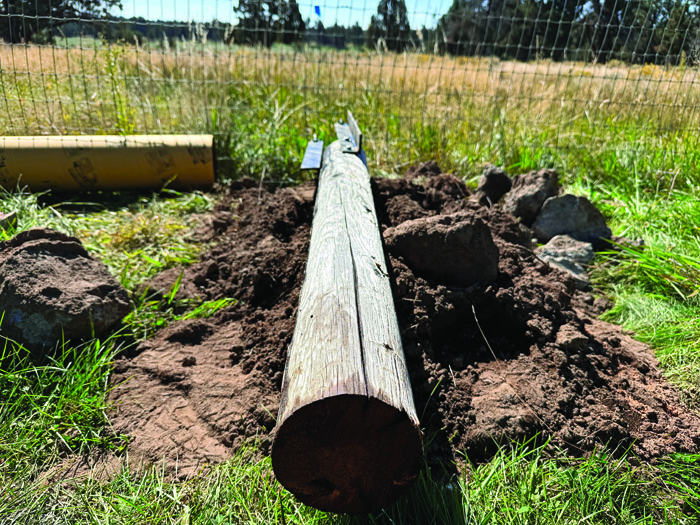
The Ghost of Landowners Present has a dilemma with three facets: First, the new posts have to match the old posts. Second, this also can’t cost an arm and a leg, at least not all at once. Finally, it has to be something easy to do when the owner isn’t the picture of health, youth, vigor, and fitness that he is today, or at least almost achieved once 20 years ago.
Attach Wood Fence to Metal Posts
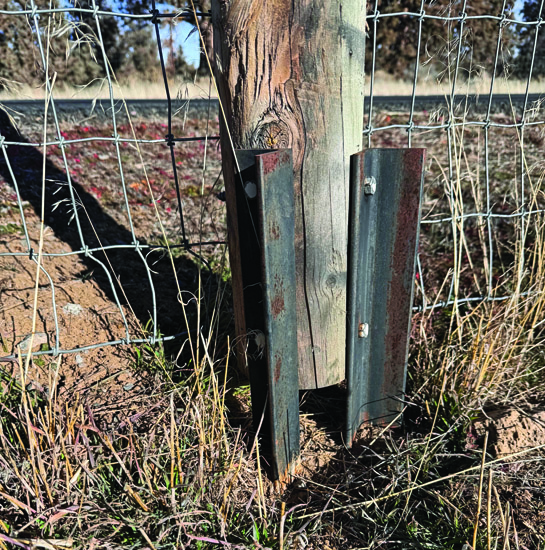
In my neck of America, the people who do it right buy used well-drilling pipe and weld it up into a fence that’ll last until long after the robots have taken over. Sure, the ground contact area might rust, but it’s going to take a long time, and a little bit of paint will delay it even further. To get the benefits of this approach but not be cursed with the bill or the sheer magnitude of the chore, there’s a hybrid approach: To delay corrosion, sink angle iron into concrete footings in the ground for stability, then lag bolt the wooden posts to the iron. This allows me to keep on keeping on with my casual replacement plan of a few posts a year. It also allows me to reuse the rotten posts – it’s just the bottoms that are rotten, and I have to cut off those parts anyway because steel makes up the bottom part of the post. What’s more, if they do go bad (and they will eventually), I won’t be pouring more concrete; I should just be backing out some lags and putting in a new post without a shovel in sight.
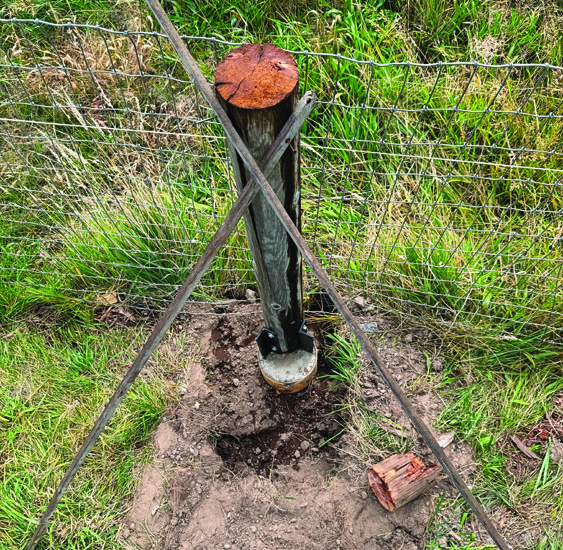
How to Remove a Broken Fence Post Set in Concrete
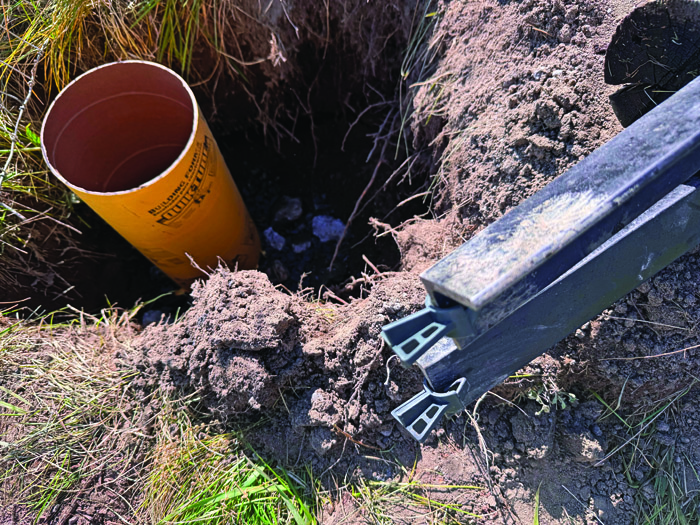
The old postholes aren’t quite big enough to insert two pieces of angle iron, so they’ve got to come out. There are a thousand clever ways of doing this, and I know, empirically, that almost none of them work. The closest thing to a cheat code in my spell book is to drill out the entrails of the old rotten wood from the concrete using an auger bit that’s given up on life, then soak the ground into a mud puddle. When you insert a long board in the augered hole, it can be pried around the mud puddle, loosening the old concrete footing from the neighboring dirt. Of course, the concrete still has to find its way out somehow, and when it does, there’ll be a hole that’s way too big and a mud puddle where the hole used to be.
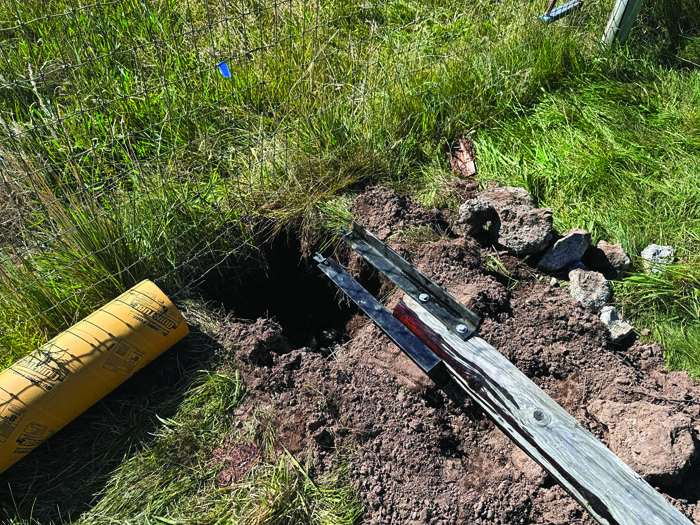
When this endeavor first started, I was pouring into commercial footing tubes, which didn’t have enough edge margin between the angle iron and the outside diameter, so their strength was questionable. Not only that, but those tubes really stack the price up quickly. Taped-up boxes, leaky buckets, and used feed sacks started taking over for the footing forms. I also failed to think through the desired length of the angle iron. It would’ve been favorable to try with pieces long enough to be stable with just tamped gravel around them, or to set them in a hole on plastic rebar chairs to keep them encased in concrete (to delay corrosion and the concrete-breaking expansion that comes with flaky rust). As it is, the angle iron sections are too short and have to be suspended over the hole. It’s not the most fun getting the asymmetrical, lagged post plumb, as it’s suspended under a ‘roided-up sawhorse tall enough to hang it from at just the right height where the concrete can be above the dirt and the fence post can be above the concrete.
I sunk two angle irons into each concrete footing so the post has a nice set of datums to align itself with, not to mention some extra strength when the steers pick out that particular post to scratch their itchy heads on. To establish those datum stops, I bolted the angle iron to the post before it went into the concrete. This will ensure the post – and all the posts that come after it – is where it should be. I put some old fence wire strategically into the concrete hole to add strength to the pour.
Got by Gophers
This project has been ongoing, so I decided to check the most aged of my angle-iron conversions and found the lags a little loose but otherwise in good shape. Note to self: Start putting lock washers on them. On more than one occasion, gophers have decided to augment the level of the ground with their own handiwork, undermining my efforts to keep the wood out of the dirt. If I ever figure out how to get rid of the gophers, I’ll be sure to let you know.
Josh Lau screws up things on his acreage, then writes about it, so everybody doesn’t have to learn the hard way. His Master Gardener wife keeps him fed so he can write.
Originally published in the March/April 2026 issue of Grit magazine and regularly vetted for accuracy.