Follow this practical guide to building an emergency food supply list with shelf-stable pantry items that work for everyday life and emergencies.
“I have $100 to drop on food for storage. I want fruit. What should I get?”
I replied to my friend’s text with a long answer describing how blueberries and strawberries, currently on sale, freeze splendidly without blanching and taste delightful when dropped directly into smoothies.
After a pause, my friend replied, “I meant canned food. We don’t have enough freezer space.”
Oh. That was a different story. “Peaches and pineapple.”
Facing myriad fruits and vegetables for food storage, you may get overwhelmed. Longtime gardeners have mastered this: They grow what they eat, and they preserve what they grow. But food-storage newbies may need guidance, and not everyone can cultivate expansive plots to preserve and fill their pantries. So they ask, “What should I buy for my cupboards?”
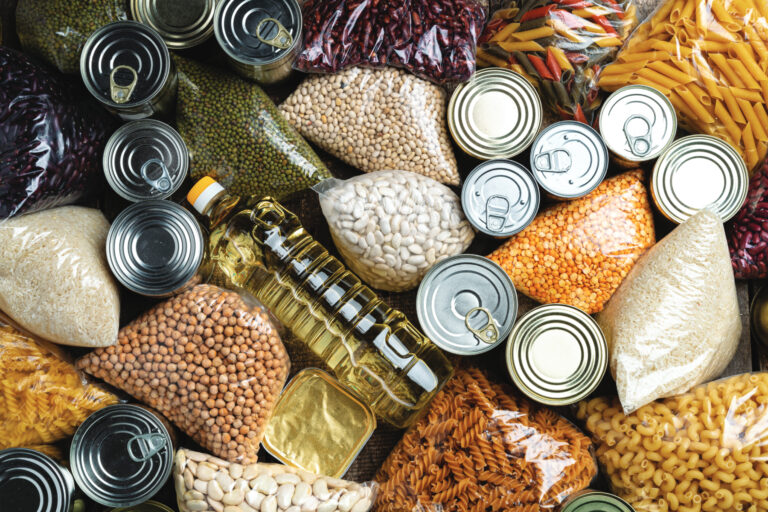
Food storage comes in many forms: dehydrated, freeze-dried, frozen, home-canned, bottled, and in aluminum cans. Each has benefits and drawbacks. I could write a book on all of these, but for this article, I’ll focus only on shelf-stable food that you can purchase from a standard grocery store. If you don’t have a pantry, think outside the box: Stack goods under beds, in coat or linen closets, under stairs, or even behind a line of books on a bookshelf. A friend of ours made a five-layer tower of cases in the family room, then set a couch on top for the kids’ video games. Cans will handle temperature fluctuations, rough handling, and direct light, plus they come with expiration dates and a simple way to judge safety: If the can bulges, toss it out.
Here are some options that have never failed my family or me.
Fruits
I rely on peaches, pineapples, pumpkin purée, and a few pie fillings.
Peaches earn their place because they’re useful. Eat them with cottage cheese, bake them into cobblers, purée them for baby food, or add them to baked goods. Pineapple works in desserts, savory dishes, and, yes, even on pizza, if that’s your thing.
Pumpkin purée stretches surprisingly far. It belongs in pies and breads, but it also adds body to soups and sauces. And while pie filling isn’t exactly a health food, preparedness isn’t only about calories. Sometimes it’s about morale. A homemade pie can make a hard week feel a little less hard.
Vegetables
Tomato products top the list, whether you like them stewed, diced, whole, sauced, or paste. If you’re not the culinary type and just need easy emergency food, purchase premade spaghetti sauce; it’s cheap and ready to go. Tomatoes become chili, soup, pasta sauce, stew, curry, casserole, and a dozen other meals.
After tomatoes, buy the vegetables you already reach for, not the vegetables someone else says you should eat. For my family, that’s green chiles, chipotles, olives, and artichoke hearts. Green beans have their place, but I’ve only used them three ways: three-bean salad, hot on a dinner plate, and in that salty casserole that people seem to love at Thanksgiving. We dislike rubbery canned mushrooms, but I’ve used canned spinach in several recipes with delightful results.
The goal here isn’t to build an impressive pantry. The goal is to build a useful one.
Legumes
Beans rule the food-storage world, but should you store them canned or dry? That depends on how you’ll use them and your cooking knowledge. Dry beans, though much cheaper, involve a bit more culinary knowledge to prepare, whereas it’s easy to pop open three different cans of beans plus some Italian dressing for that three-bean salad. (Add canned green chiles if desired.) I keep both in my cupboards, but the dry beans have sat for years while I rotate through my cans. Which isn’t a waste, because dry beans can last decades if stored correctly.
While I love frozen peas, I dislike pressure-canned mush-bombs. So, I don’t keep canned peas. I also didn’t grow up in a culture that eats split peas. That’s an important lesson: The food you use is never wasted. The food you avoid eventually goes to a donation box.

Grains
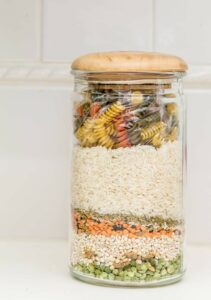
Nutritionally, remember this rule: Beans plus rice make a complete protein. So, if you store beans, also store rice in case you run low on meat or choose not to eat it. While brown rice is healthier, white rice stores longer, because the milling process removes oils that can turn rancid. The storage rule also applies to white flour versus whole-grain flour: Keeping the germ intact also shortens storage life, even if the flour is healthier. That doesn’t mean you should avoid them. It means you should store the version you’ll actually cook and eat. (In an emergency, will you be able to wait an hour for brown rice to cook, or will you need the 15-minute white rice option?) Preparedness is about practicality, not perfection.
Pasta
It seems just about every culture has adopted noodles or spaghetti, for good reason. It stores well on a shelf, it’s easy to prepare, and you can top it with your family’s sauce of choice. I’ve never had pasta go bad; we rotated through it too fast. Macaroni, shells, spaghetti, and Asian rice or bean noodles top our list as the most versatile to use with the sauces that we also store.
Processed Food
We live in modern times, and sometimes convenience matters. I won’t turn up my nose when I’m hungry, and popping open a can and heating the contents is certainly convenient. We always keep a few cases of soups or canned pastas specifically for emergencies. But I had to rethink how I stored them. Especially as COVID-19 encroached on us and the soups disappeared from the pantry.
I asked my daughter, “Can you stop eating the canned soups and just cook something?”
She blinked at me with a teenage tone of, “Then why would you buy it?”
“Okay,” I said after drawing a long breath. “If we’re too sick to cook, what are you going to do if all the soups are gone?”
After she admitted that I had a point, the soup usage slowed. But it didn’t stop. My husband had been present for The Great Soup Debate, but children and heads of households apparently follow different rules. So, I purchased more soups and hid them behind other, less palatable items that took more preparation. Problem solved.
Condiments and Fats
Nobody talks much about condiments in preparedness circles, but they should. Eating bland, disgusting food during hard times is like adding insult to injury. Consider expiration dates when storing condiments and rotate them often. A shelf full of rice and beans looks a lot different when salsa, spices, vinegar, ketchup, and hot sauce enter the picture.
The same goes for fats. Oil isn’t exactly exciting, and fats tend to expire faster than other foods, but it turns ingredients into meals. Store what you normally cook with and rotate it regularly.
Dessert and Joy
This is my favorite part of any “preparation” talk I give, and it may be the most important of all: Plan for joy. This could mean stashing a travel-sized board game in a 72-hour pack, choosing the honey-nut cereal instead of the plain one, or even stashing away some hot cocoa mix. Hard candies store practically forever if protected from heat and humidity, and jams and jellies can last for decades because of their high sugar content. When planning for survival, remember that good mental health accompanies physical well-being, and enjoying a little sugar rush can lighten the mood for a bit.
Preparedness isn’t only about surviving difficult days. It’s about living through them. When you’re building food storage, don’t ask, “What lasts the longest?” Ask, “What will my family actually eat?” That’s where a useful pantry begins.
Marissa Ames grew up in Salmon, Idaho, building fences, hunting, and herding cattle with her dad and gardening with her mom. She currently lives in eastern Idaho, where she grows a garden and teaches 4-H. As editor-in-chief of Grit, she enjoys representing the myriad lifestyles and experiences that define rural America.
Originally published in the September/October 2026 issue of Grit magazine and regularly vetted for accuracy.