Find creative solutions to factory farming by supporting local farmers, growing your own, joining a co-op, coordinating with your neighbors, and bartering.
If you’re like most people, you’ve noticed the growing cost of food. At the time of this writing, prices for eggs, poultry, beef, pork, and produce are going through the roof. Why? you may be asking. It isn’t because of the lack of food – though the Big Ag conglomerates have been quick to blame first the COVID-19 pandemic and now the avian flu for supply chain disruptions. Federal administrations take turns blaming each other. And I know of people who blame the average farmer. But why are cost hikes happening? I’ll let you in on a piece of it: because the corporations that own factory farms are driven by money, not by what’s right for their workers, the animals under their care, or consumers.
I grew up in the small town of Hudson, New Hampshire. At the time, the largest business was an early form of a factory farm: Jasper Poultry Farms. In his book Legendary Locals of Hudson, which he co-wrote with Laurie A. Jasper, Shawn N. Jasper documents, and even boasts about, the accomplishments of his family’s chicken business. Jasper tells us, “In 1969, there were 40,000 laying hens and 20,000 replacement pullets” on the four properties he owned. This was a massive operation for the time, with thousands of chickens all crowded into assorted buildings. Few at the time were vocal about anything being wrong with this style of operation. Decades later, however, we’re in an age of pandemics – both human and animal – and we’re seeing the risks factory farming can pose. If you cram large numbers of animals into one place, whether they’re hogs, cattle, or chickens, you’re asking for problems.
Ag Gag Laws
In her book Transfarmation: The Movement to Free Us from Factory Farming, Leah Garcés points out an additional snag. Laws enforced by state governments called “ag-gag” laws make speaking out against these factory farms illegal. These laws are designed to prevent whistleblowers and activists from recording, photographing, or even writing about animal cruelty on these farms. (I guess in some states, that might qualify me as an outlaw for writing this.) Because of ag-gag laws, photos of what happens inside these industrial farms, or even just outside these farms, are difficult to find. Garcés discusses the plight of farming families who were sucked into factory farming, primarily hog and chicken farms, as well as those raising beef cattle. She recounts the stink, the spray of manure, the health issues faced by both the workers and the residents forced to live by these facilities, and the inhumane treatment of the animals whose various parts grace our grocery stores. The more I dug into the issue, the more worried I became. That pound of ground beef or gallon of milk didn’t come from a happy cow playing soccer like the commercials show.
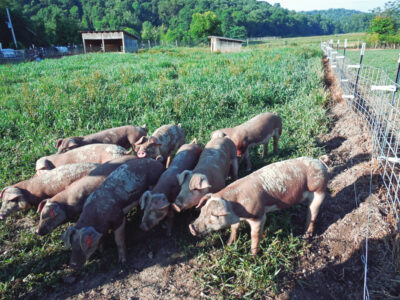
The technical term for factory farms is CAFOs, or “concentrated animal feeding operations,” and according to David Kirby in his book Animal Factory: The Looming Threat of Industrial Pig, Dairy, and Poultry Farms to Humans and the Environment, most of the protein in grocery stores comes from these operations. And who’s running these CAFOs? Familiar names include Cargill, Smithfield, Tyson, Perdue, and JBS Foods. Kirby references documents from the Environmental Protection Agency and the Centers for Disease Control and Prevention that state factory farms run by these corporations dump billions of gallons of untreated, toxic, liquid manure on farm fields, which pollutes water in rivers, streams, and people’s wells. More pollution is in the air around residential neighborhoods located near these fields. Many groups across the country fight these corporations and their practices, including the Missouri Rural Crisis Center, which is fighting to get ag land and the food supply back in the hands of local farmers, as well as to protect the environment through proper stewardship.
Political events throughout our history show that the government isn’t always ready to do what the people consider the right thing, especially when it comes to the food we eat, the health of the American people, and the protection of the environment. Massive changes in federal budgets and regulations over the past few decades tend toward good news for corporate giants and bad news for the American people.
Solutions to Factory Farming
We must take matters into our own hands. Money is the bottom line for factory farms and the politicians who support them, so the best way to fight corporate greed and what it’s doing to the American people is to hit corporations where it hurts: in their wallets. I refuse to purchase meat, poultry, eggs, or produce in the grocery store if I don’t have to. The prices are way out of whack, and it’s just too difficult to verify where the food comes from. Here are ways you can join me in avoiding giving your hard-earned dollars to companies that care more for profits than people.
- Grow your own. When it comes to produce, meat, eggs, and poultry, nothing beats growing or raising your own. Every cucumber, onion, potato, squash, or chicken you produce or raise on your own is one less you’ll have to purchase. A few dollars’ worth of quality seeds or chicks can easily pay for themselves in time. Don’t fall into the corporate trap even when taking this path. Many seed companies and farms that sell chicks (and the feed they grow on) are owned by these same corporate entities, such as Bayer. Stay away from commercial fertilizers and pesticides. Use organic compost to enrich your soil. You need to be watchful every step of the way.
![]()
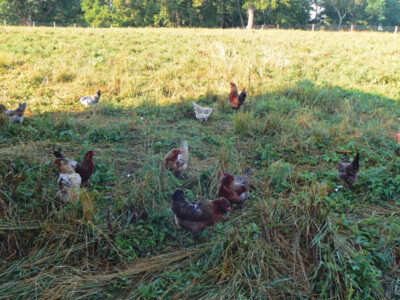
- Work with your neighbors. Most of us can’t produce all the food we need, but if you’re able to coordinate with your neighbors and friends, you can cover most of your collective bases together. I have one neighbor who’s a wizard with tomatoes. I have another who’s great with radishes and chickens (which have become a common sight running all over the place). I can grow beans and peas in excess, while others grow squash with no effort. We also agree not to use petroleum-based fertilizers or chemicals on our produce. When the bottom line only works by selling what we produce, those who raise livestock sell at a fraction of the going market rate. We’ve taken this process a few steps further by hunting and fishing. We agree to share what we take with others, whether it’s trout, deer, upland game, or waterfowl. I’ve often given fillets of salmon and lake trout to older people and veterans. It took us a few years, but now we have a food supply that benefits all of us.
- Join a co-op. Co-ops are great, especially for those who can’t grow or raise their own food. For the exchange of labor or an option to buy in, you get to share in the harvest. Although you won’t always know what you’ll get, you’re buying into a system of give and take. If you’re willing to accept that, this may be the way for you.
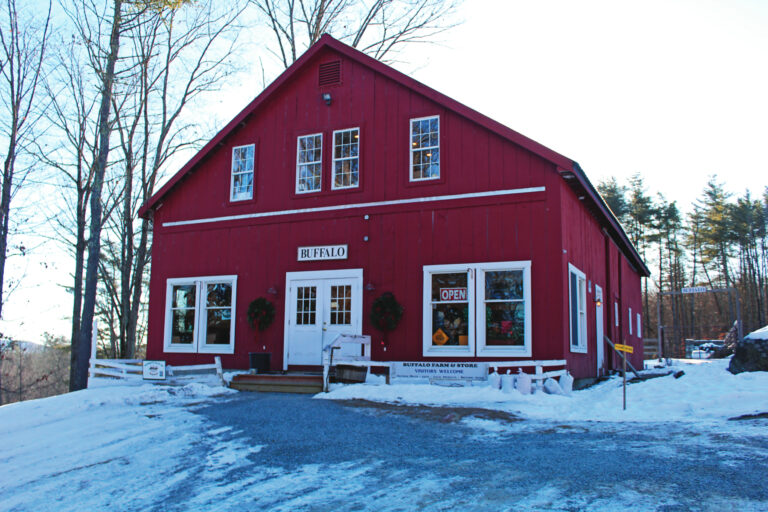
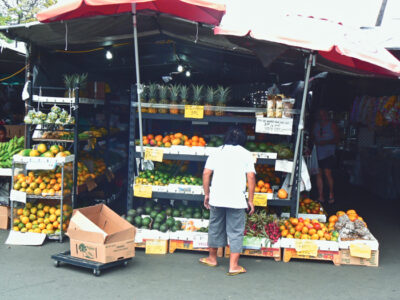
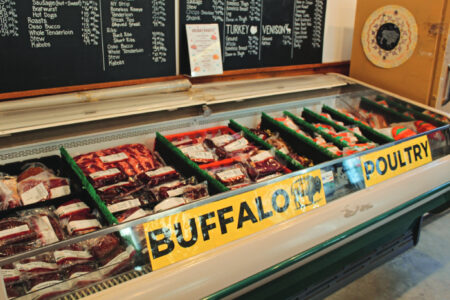
- Buy local. Though I hunt, fish, forage, and grow as much of my own food as possible, I still must visit local farms for some of my needs. I don’t grow apples, so I visit orchards that allow the apple trees to do their thing. The apples may not be “perfect,” but they’re nutritious. I don’t just go to any farm; I vet the ones I visit. I don’t want pesticides or antibiotics in the food I serve to my grandchildren. I also want to know the animals are treated humanely. This is a lot to ask, but it makes a big difference to me. For example, my bison, pork, and chicken comes from Yankee Farmer’s Market, and my beef comes from Rocky Meadow Farm. Many local farms offer packages where you can purchase a quarter, half, or even whole chicken, cow, bison, or pig. I usually purchase between 15 and 30 pounds of beef or bison to supplement what I’ve harvested from the wild, and if the grouse, woodcock, or pheasant harvest was light, then domestic poultry will be added to the larder. For certain products, I may pay a bit more, but the amount is worth it to me to know everything about what I’m purchasing.
![]()
- Barter. While co-ops and neighborhood swaps are forms of bartering, you can trade non-food items as well. In the past, I’ve traded my knife-sharpening skills for chickens and vegetables. Recently, I traded some waterfowl ammo for deer meat. The key to bartering is that when all is said and done, both parties are satisfied.
Can the System Be Fixed?
The corporations that own factory farms are largely run by suit-wearing businesspeople who grease the pockets of political figures, getting the right to control what and how we eat – and what we pay for it – in return. With a little effort, we can feed our families healthy food. The means to do so are out there, but it may take a little effort to find them. It’ll be well worth it in the end.
Dana Benner has been writing about all aspects of the outdoors, sustainability, and the environment for over 35 years. His writing appears in Grit, Mother Earth News, and Countryside & Small Stock Journal. He hosts programming on HCTV in Hudson, New Hampshire.