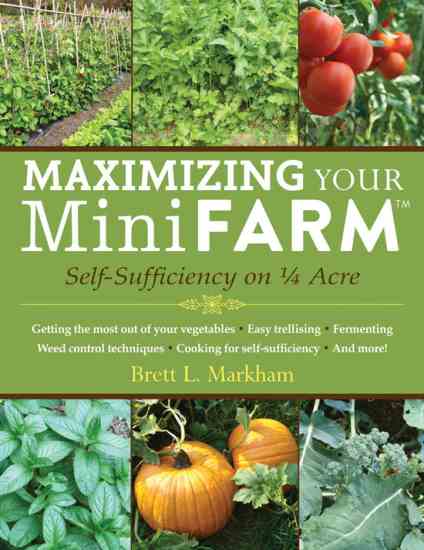
Mini farming is a holistic approach to small-area farming that can enable a gardener to produce 85 percent of an average family’s food on just a quarter acre. In Maximizing Your Mini Farm (Skyhorse Publishing, 2012), author and mini-farming guru Brett L. Markham breaks down the tips, tricks and planning advice that can make your small-area farm profitable and help you grow more food on less land.
You can purchase this book from the GRIT store: Maximizing Your Mini Farm.
Growing Beets and Chard
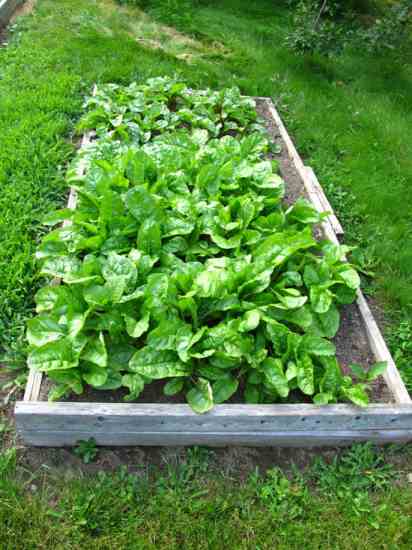
Beets and chard (also known as Swiss chard) are variations of the same beta vulgaris species commonly descended from a sea beet that grows wild around the Mediterranean. Though beets are grown for their roots and chard for their leafy greens, the greens of both are edible. Beets, beet greens and chard are an absolute nutritional powerhouse. The roots contain glycine betaine, a compound shown to reduce homocysteine levels in the blood. Homocysteine levels are predictive of coronary artery disease, peripheral vascular diseases and stroke, so beets are definitely a case where cleaning your plate is a good idea!
In addition to this, beets supply minerals such as manganese, magnesium and iron, as well as B vitamins such as niacin, pantothenic acid, pyridoxine and folates. Beet greens and chard are also an excellent source of vitamin K, which plays a role not just in blood clotting, but also in bone formation and limiting damage to brain tissues. They also contain vitamin C, beta carotene, zeaxanthin, lutein and a host of other important antioxidants.
That’s all well and good but … are they tasty? Absolutely! And, even better, they are among the easiest crops to grow on your mini farm.
Variety Selection
Given properly prepared soil, beets and chard can be grown practically anywhere in America that plants will grow. I’ve never tried a variety of either that wasn’t delicious, though you’ll find over time that certain varieties may grow a little better or taste a little better in your specific location. I’ll give you a list of my favorite varieties, and I think you’ll find them well-suited, but please don’t limit yourself to just my suggestions.
Beets: Bull’s Blood, Early Wonder, Cylindra, Detroit Dark Red
Chard: Ruby Red, Rainbow (a/k/a 5 color silverbeet), Fordhook Giant
Soil Preparation
Beets and chardgrow best in deeply dug, rock-free soils rich in organic matter that have a pH between 6.5 and 7.5. The beds should be fertilized normally, though adding a teaspoon of borax (mixed with something like bone meal or wood ashes for even distribution) per thirty-two-square-foot bed is a good idea because beets are sensitive to boron deficiency. One major problem with germination of beets and chard is that soil can crust over the seeds, leading to plants being trapped underneath the crust. This will cause uneven stands with different rates of maturity. To solve this problem, make sure there is plenty of well-finished compost in the soil.
Starting and Planting
Beets and chard can be grown as both spring and fall crops. During the heat of the summer when temperatures climb above 80 degrees and stay there, they’ll become bitter and tough. Chard can be harvested at practically any stage, but beets aren’t usually ready for harvest before 50-60 days. On the other hand, chard and beets don’t germinate well at soil temperatures below 50 degrees. In my area, the best time to plant is a month before last frost. This is late enough that the soil is sufficiently warm, but early enough that the beets are at harvesting size before the summer heat makes them tough.
Beets and chard can be succession planted, but in my experience this works best in the fall because the cooler weather during the later development of the beets keeps them sweeter, whereas a second spring crop of beets can be hit-or-miss depending upon the summer weather. For fall planting, plant your first crop about seven weeks before first frost and your second crop about four weeks before first frost.
It is entirely possible to transplant beets and chard that are grown inside first as seedlings. Though this is seldom done on a commercial scale because of the care required to avoid damaging the taproot and the tightness of the timing; on the scale of a mini farm, transplanting can improve production by allowing the grouping of more uniformly sized seedlings, thereby preventing plants that sprouted earlier from shading out those that sprouted later. Simply start the seeds inside in soil blocks two weeks before the seeds would usually be sown outside.
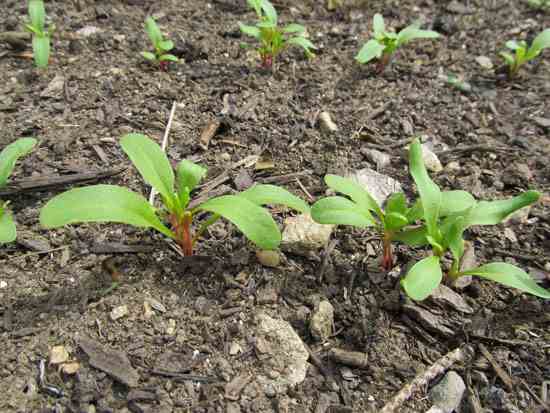
Whether using seeds or transplants, space your planting at 3″ in all directions for beets and 4″ in all directions for chard. During the spring planting, plant them about 1/2″ deep and keep the planted area evenly moist until germination. If a crust forms, use a standard kitchen fork to lightly break up the crust no more than 1/8″ deep. Because the seeds often contain seeds for multiple plants, about a week after germination you’ll want to go back and thin out the extras. Save the thinned plants–roots and all–for a delicious salad green.
Weeds, Pests and Diseases
Because the plants are spaced so closely together, once they start growing they will shade out most weed competition (provided the bed was weed-free at the start). What few weeds remain should be carefully pulled by hand.
Beets and chard seldom have pest or disease issues that are economically important on the scale of a mini farm, though in commercial monocropping with inadequate rotation quite a few pests and diseases are problematic. Cleaning up debris at the end of the prior season, rotating crops between beds, mowing the lawn and keeping grasses and weeds out of the beds are usually sufficient measures to avoid problems.
Leaf miners and other beet-specific pests spread from nearby weeds that are botanically related, such as lamb’s quarters, and the more generalized pests such as leaf-hoppers and carrion beetles migrate from tall grasses nearby. The diseases either accumulate in the soil from growing a crop in the same place year after year, or are transmitted by pests. So 95 percent of the time, just doing basic mini-farm maintenance will prevent any problems. Those few that remain, if they become economically threatening, can be controlled with organic sprays such as neem or pyrethrin/rotenone used according to label directions.
Harvest
Chard and beetgreens can be harvested as soon as they appear, but should be allowed to grow to at least a couple of inches before picking. Don’t harvest more than a couple of leaves from beets intended to produce roots, as doing so would reduce the yield. With chard, harvest the outside leaves first as they get large enough, and then the next layer of leaves will continue to grow. Keep harvesting like that in succession and the chard will produce for three weeks or more. As the beet greens or chard are harvested, you can store them in a plastic bag in the refrigerator for up to a week until you have enough to prepare or preserve.
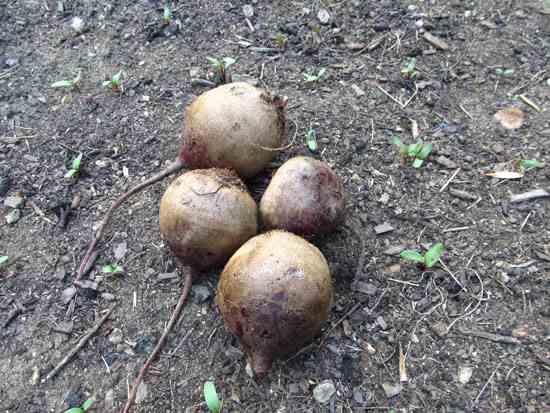
Though it varies somewhat with the variety of beet, in general, beets should be harvested when they are no larger than 2″ in diameter. If you wait longer than that to harvest (and especially if you wait until the heat of summer is intense), they tend to get woody. When harvest time comes, grab the leaf stalks just above the root and pull the beets out of the ground. Cut off the leaf stalks two inches above the root and set aside the leaves for eating, and then hose all the dirt off the beets outside. Let them dry for a bit, and then prepare or preserve as desired.
Seed Saving
Beets and chard are biennials, meaning they produce seed in their second year of growth. (Some varieties of chard will produce seed in their first year.) South of Maryland, you can mulch the plants with 6″ of straw at the end of the season and they’ll produce seed in the second year. North of Maryland, you’ll need to cut off the tops, store the roots indoors overwinter and then put the roots out again in the spring. They will produce a flower stalk four feet long.
Beet pollen is very mobile, so if you are saving seed, make sure you have only one variety of beet or chard in flower in your garden. Beets and chard are also subject to inbreeding depression, so you should have at least twenty plants in the flowering and seed-setting population.
To harvest the seeds, cut the stalk when most of the seed pods have turned brown and hang inside upside down for two or three weeks. Then, use your hands to strip the pods from the stalk into a bag, break up the pods so the seeds fall to the bottom of the bag, and discard the larger debris. You can separate the seeds from the smaller debris using the winnowing method described in the chapter on beans. Then, dry the seeds using a desiccant such as dried silica gel for a couple of weeks, and store in an airtight container in a cool, dark place.
Preparation and Preservation
Beet greens and chard can be stored in a plastic grocery bag in the refrigerator for up to a week prior to fresh use or preservation. Both beet greens and Swiss chard contain oxalic acid. Though the oxalic acid is not present in sufficient quantities to be problematic for most people, if anyone in your family is prone to kidney stones you can prepare them in such a way as to reduce the amount of oxalic acid. Cook the greens by boiling them in a couple of inches of water until wilted, and then discard the water and eat the greens.
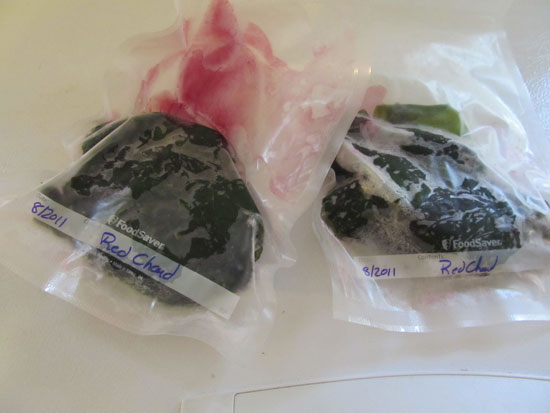
Greens are best preserved by blanching for two and half to three minutes, cooling in ice water for four minutes, drying and then vacuum sealing for the deep freeze. Unfortunately, they don’t stand up well to pressure canning and they don’t reconstitute well from dehydrating. Even so, I dehydrate many greens so that I can later reduce them to powder in the food processor and blend that powder into spaghetti sauce and soups for an added nutritional boost.
If not properly prepared, beets literally taste like the soil in which they were grown. The outer layer of the beet, known as the “skin” needs to be removed. Once the skins have been removed, the beets can be sliced, rinsed lightly, and then used in your recipes. This can be done by peeling the beets with a peeler, or by roasting and/or boiling the whole beets until tender and then slipping the skin off after plunging them into cold water. This latter method is best as it gets the entire layer that absorbed the flavor of the soil. When boiling beets this way, leave about an inch of the stalk at the top and don’t remove the root at the bottom. The loose dirt should be removed prior to boiling, and this can be accomplished using a high-pressure stream of water from a garden hose outside or by washing them off thoroughly in the kitchen sink and using a vegetable brush if needed.
Beets can be stored whole for as long as three months by cutting off the tops, leaving only 1/2″ of stem, and layering the beets in damp sand or peat moss in a container with a tight-fitting lid. The container should be stored in a cool place–preferably just slightly above freezing. Though beets can be frozen, the results aren’t impressive. Pressure canning them reduces them to an indistinct mush. The best long-term storage methods for beets are dehydrating and pickling.
Once the skins have been removed from the beets, they can be sliced uniformly, steam blanched for four minutes and then dehydrated until hard. Beets dehydrated this way will reconstitute just fine for soups and stews.
Pickled Beets Recipe
Ingredients:
6-8 lbs of beets with the skins removed, sliced uniformly
1 lb onions, skins removed and sliced thinly
1 thinly sliced lemon (rind and all, remove seeds)
4 cups of vinegar (either white or cider vinegar, 5 percent acidity)
2 cups of water
2 cups of sugar
1 1/2 tsp pickling salt
1 Tbsp ground cinnamon
1/2 tsp ground cloves
1 tsp ground allspice
Procedure:
Cook beets and remove skins. Slice uniformly. Slice the onions and the lemon, and combine with the sliced beets. Prepare a syrup with the remaining ingredients and bring just barely to a boil. Add the sliced beets, onions and lemon to the syrup, bring to a simmer and hold at a simmer for 15 minutes. Pack the vegetables into hot sterilized jars and then pour in syrup leaving 1/4″ head space. Adjust the two-piece caps and process in a boiling water canner for 10 minutes.
Yield: 8–10 pints of pickled beets.
This excerpt has been reprinted with permission from Maximizing Your Mini Farm: Self-Sufficiency on 1/4 Acre, published by Skyhorse Publishing, 2012.Buy this book from our store: Maximizing Your Mini Farm.