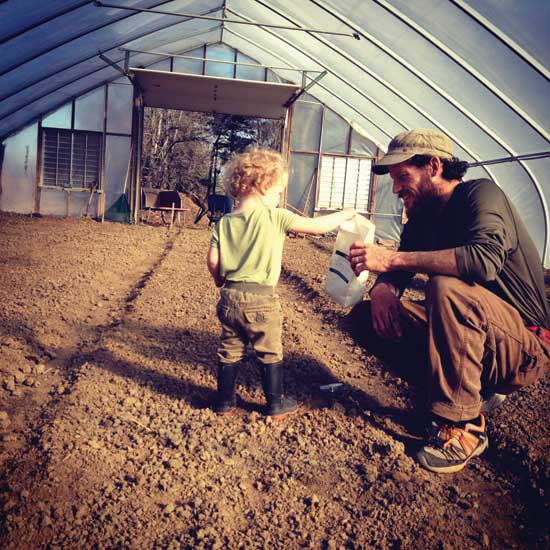
Around Valentine’s Day of each year, our family plants thousands of seeds by hand. This is much more than the simple sowing of the year’s crop; it becomes a form of meditation for us as we recite a mantra of intention for each seed we plant, such as: “Grow and thrive, little seed. Thank you for nourishing and sustaining us.” We find ourselves becoming enthralled in the repetitive motion of sowing seeds. It’s a joy to stretch every so often and look up at the sky, where rivers of starlings seem to fly for miles.
We are well into our fifth season as farmers at La Vista Community Supported Agriculture Farm, on the scenic bluffs overlooking the mighty Mississippi outside of Godfrey, Illinois. We offer fresh, organic produce grown with a lot of hard work, but also grown with a lot of contemplation. While this is certainly a business venture for our family, it’s also very much a vocation — one which has taught us more about ourselves, our connection to others, and our connection to food than we could have ever imagined.
This knowledge, though, has certainly come with its fair share of challenges — challenges that have taught us through trial by fire how to appreciate the art of being humbled, and how to learn from each season to improve the next. There is always an underlying current of the precariousness of the elements, but the welcoming arms of the La Vista community definitely make it all worthwhile. Indeed, we have built friendships that will last a lifetime, and growing food for others is a real privilege for us. Perhaps a look into our lives and the seasons on our Community Supported Agriculture farm can provide insight for others looking to make that next great leap.
Thawing out and digging in
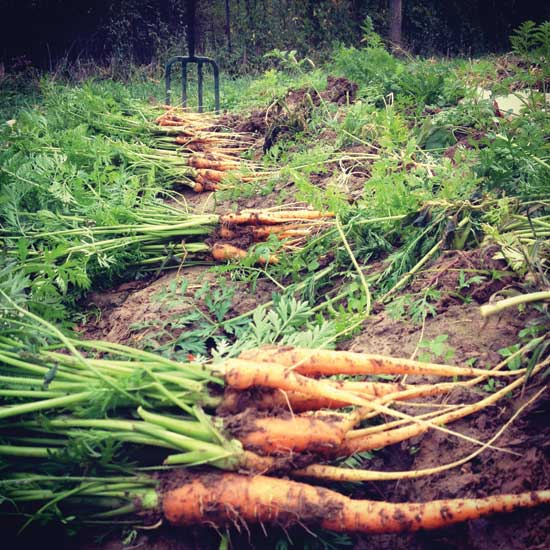
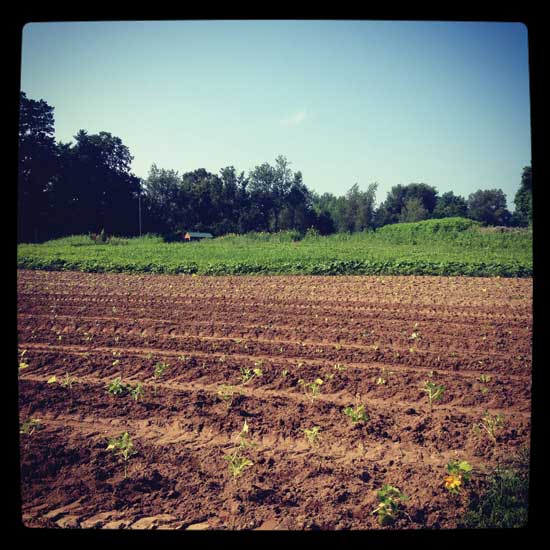
When the ground thaws, and the chill of winter lifts slightly from the fields, my husband begins to till the soil, adding compost and nutrients each step of the way. He sows the first seeds while still able to see his breath, beginning with hardy greens and following with root crops, such as carrots, beets and turnips. He then plants peas and gourmet lettuce blends, and then tills again in the weeks to follow.
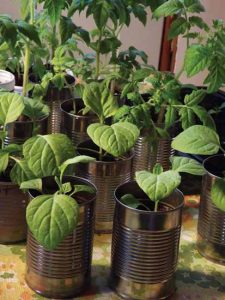
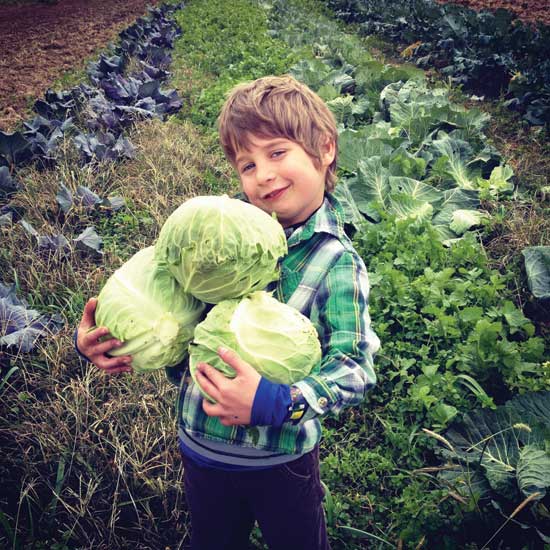
By then, the seedlings in the greenhouse have grown to their full potentials in the inch-wide cell packs they were planted in a month earlier. We hop on the back of the water wheel transplanter and push the bare roots of each healthy “plug” into the exposed earth just after the transplanter creates a hole filled with water. Quickly and efficiently, an apprentice and I cover each plug with soil, ensuring its roots are secure. We water wheel transplant cool-season crops, such as cabbage, broccoli, cauliflower, Napa cabbage, kale, rainbow chard, scallions and head lettuce.
With each passing day, there are farm chores to be done: organizing the outbuildings, sharpening the tools, placing additional seed orders, maintaining the plants in the fields, watering, hand weeding, cultivating, perennial propagation, and filling more trays with soil. Our days are long and filled with responsibilities, and our lists get longer as the seasons progress.
The ‘real’ work begins
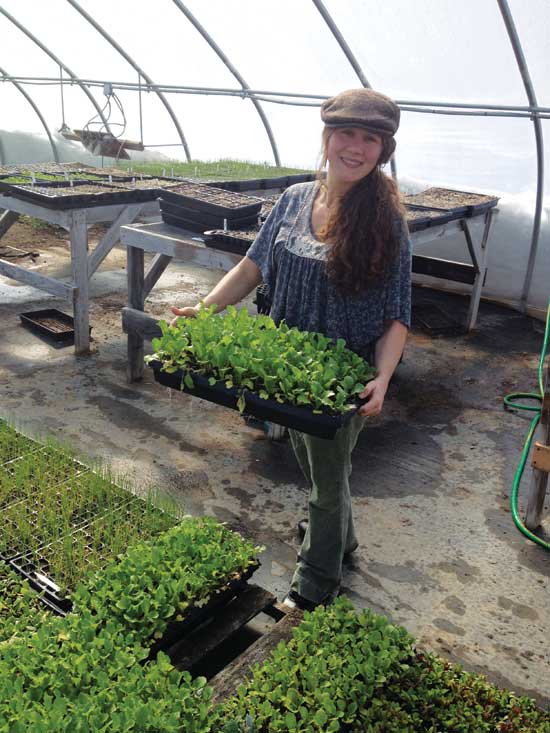
Before our farm season gets in full-swing, we offer a preseason share of gourmet salad greens. We cut these greens in the early morning in the humid high tunnel, a tedious and often relentless task. Knowing that families are getting the nutrients from the greens into their bodies the very same day we harvest them, however, gives us motivation to keep on cutting, leaf by leaf, our beautiful blend of lettuce, baby kale, baby spinach, and the occasional piece of chickweed that sneaks its way into our bins; we often don’t remove the chickweed because of its wonderful nutrient and mineral content.
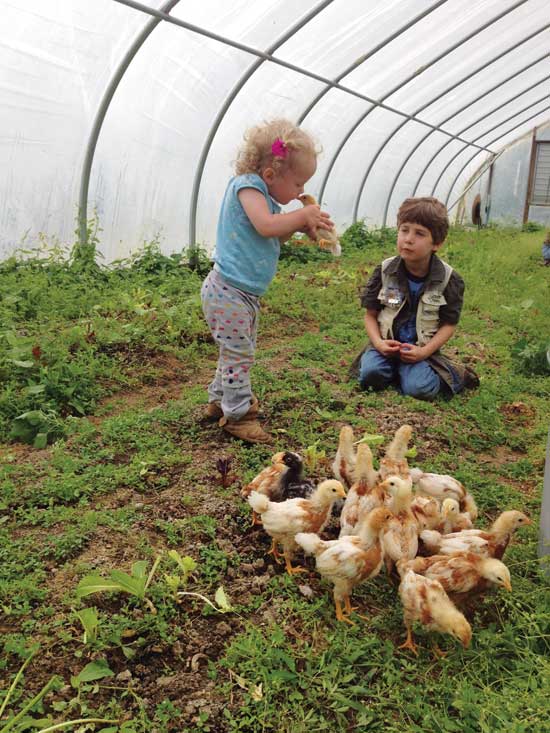
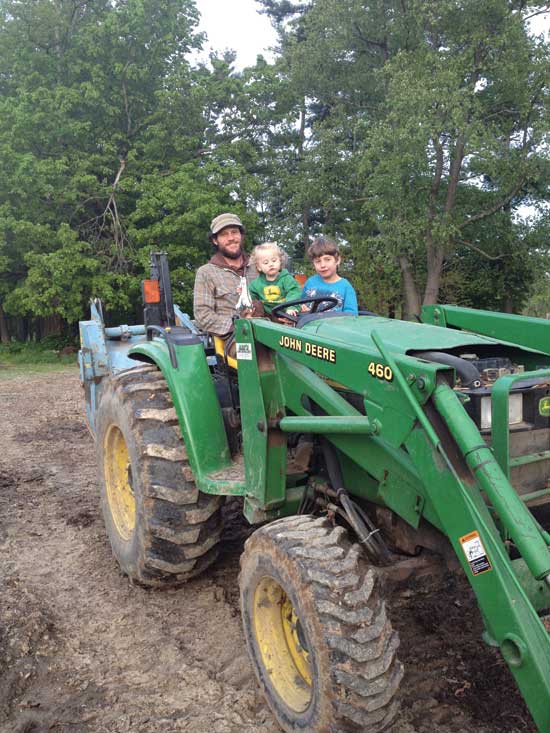
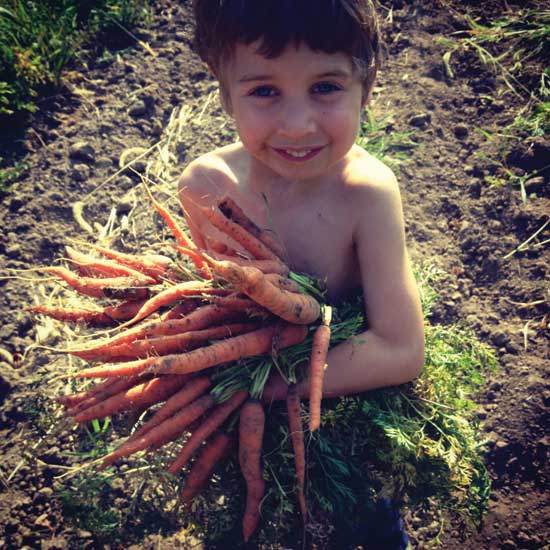
What’s more, watching our children eat greens right from the beds like bunnies is such a rewarding feeling. The astonishing evolution from seed to table occurs right before their eyes. They are consciously and instinctively learning where their food comes from, how it is grown and how to grow it themselves.
Summer harvests
Mid-May marks the transitional period for our farm and for farms across the Midwest. Our shareholders pick up their weekly share of seasonal vegetables, which includes cool-weather crops harvested the very morning they pick up.
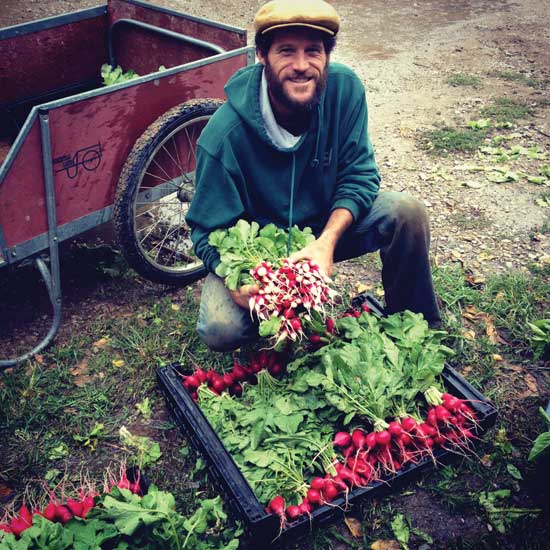
Our days are consumed by harvest once the share season begins, and it’s always surprising just how long harvest takes. For example, it could take up to two hours to harvest our numbers for the day for just one crop like baby turnips. We remove the yellow leaves and the leaves with bug holes in the field prior to taking them to the processing shed to be washed in ice cold water baths. In one late spring day, a typical harvest would consist of scallions, kale, chard, head lettuce, gourmet lettuce mix, spinach, bunched baby carrots, baby beets, baby turnips and fresh herbs all multiplied by 60 shares. By the time we harvest, transport to the processing barn, wash, remove yellow leaves, rubber bag bunched items, and set up the share room, the day has disappeared. On share pick-up days, it is normal for us to work 12 to 14 hours.
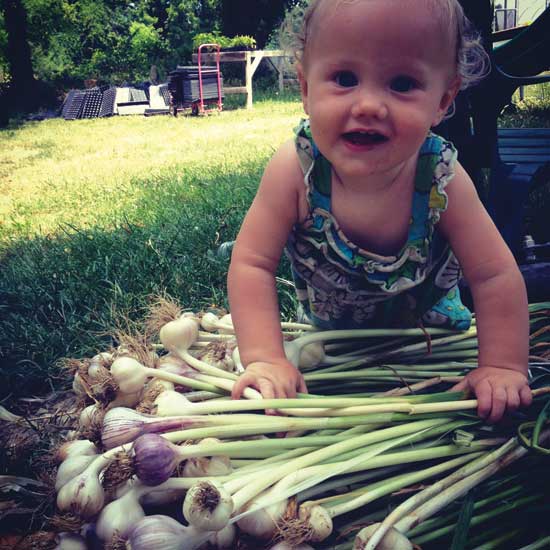
Our work schedule, aside from harvest days in rain, sleet or shine, are often determined by the weather. For example, if there is no rain in the forecast, we till and plant. If it is raining, we work in the greenhouse. We schedule volunteer workdays to accomplish huge tasks, such as harvesting and curing garlic. Throughout the season, we rely heavily on volunteers, who are vital to accomplishing our farm duties.
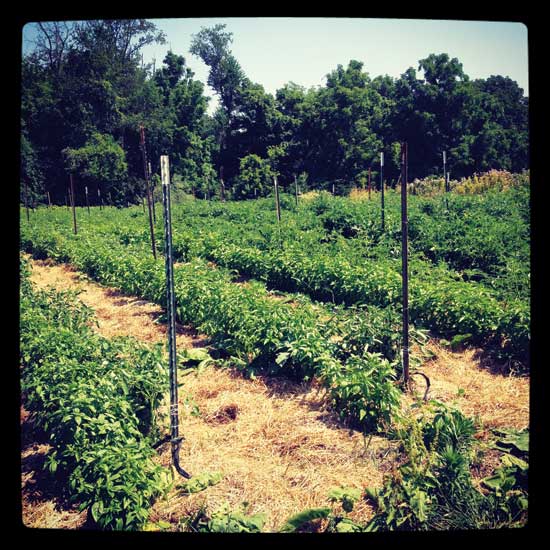
Mother’s Day of each year brings about the warmer daytime and evening temperatures, making it safe to transplant warm-season crops, such as tomatoes, peppers, eggplant, squash, cucumbers and other heat-loving crops. We also direct seed our you-pick crops, such as green beans, flowers and heat-loving herbs.
Memorial Day marks the time to start cool-weather crops for fall. We often just repeat the same crops we planted in the spring, but change some seeds from early to late varieties. Instead of starting our seeds in the greenhouse, we start them on tables under shade trees, where they germinate beautifully. Late spring brings on a fluid, seamless rhythm that does not end until late November — nonstop momentum.
By the summer solstice, the temperatures often stay in the 80s, 90s, and can reach up to 110 degrees. This is when cool-season crops bite the dust. We till the ground and make way for second and third successions and some new varieties of existing crops.
Crops planted in midsummer must be planted in the early morning and require drip irrigation to keep them alive in the brutal summer sun. Making this even more of a challenging time, we have experienced a drought that has lasted up to 48 days each summer with not a single drop of rain. Needless to say, our water bill skyrockets with each drought.
In 2012, the drought was particularly brutal for all of the farms in the Midwest, but miraculously, our only crop failures were a shortage of zucchini in the summer and butternut squash in the fall. We were disappointed, but we exceeded the average weekly value of $22 each and every week during the drought. We were able to offer plenty of bell peppers, 8 pounds of tomatoes, sweet potatoes, Yukon gold and red potatoes, scallions, root vegetables, and plenty of fresh herbs even through the 100-degree weather, which went on for weeks.
While growing a wide array of crops ensures that even in times of drought members are sure to get the full value of their share each week, we do face another challenge — our nemeses, insects … thousands and thousands of relentless squash bugs, cucumber beetles, potato beetles, borers, cutworms and aphids that swarm our crops throughout the year. We don’t spray pesticides, so we rely on row covers, crop rotation, and occasional organic applications, such as PyGanic. Nothing solves the problem fully, so we oftentimes have to just trust that our shareholders understand the occasional bug hole here and there, knowing that organic vegetable production is our choice.
The price we pay
There’s much more to being a farmer, though, than simply knowing how to outsmart nature from time to time. Being a farmer requires diligence, precision and efficiency, as well as long hours, backbreaking labor, and intense days in rain, sleet or sun, not to mention an incredibly strong work ethic. Harvesting tomatoes in 110-degree heat with red itchy arms caused by the oils in the tomato leaves, while being swarmed by mosquitoes and bitten by flies often takes the romance out of organic vegetable farming. But, we love what we do.
During the heat of the summer, I find solace in the early morning shifts. I arrive in the fields with my headlamp on before the sun kisses the horizon with a dozen harvest bins, harvest knife in one hand and high octane coffee in the other. I find peace in the fields at this hour, a peace that cannot be replicated. I can smell the dew as it is still heavy on the plants. I can hear the cardinals and the red-winged black birds chirping. I feel so connected and grounded at this hour that I often picture the plants’ growth — sinking their roots into the ground farther with each passing moment, and stretching their stems higher as the sun begins to rise.
But I would be remiss if I didn’t share with you the other side of the coin. Each treacherous summer, when we begin to question our dedication to growing at a scale that seems impossible with just a handful of farm workers, we yearn for a future that requires less than 80-hour workweeks and working in such harsh weather. It seems that it’s always after an 80-hour workweek of 100-degree days that a shareholder throws a complaint on the stack of cinderblocks already heavy on our shoulders. Most complaints come from folks who don’t know any better, so they don’t understand why “salad things” don’t grow at the same time in the Midwest. Even despite their lack of knowledge, and our gentle approach to educating them, we take the complaints to heart. It’s hard not to take complaints personally, especially after dedicating our waking hours to the farm for months on end, pouring our effort into keeping the plants alive.
The complaints, fortunately, do get balanced out with compliments, and those individuals who show gratitude and empathy brighten our days and make it all worthwhile. Of course, gratitude has a beautiful way of turning inches into miles in any given situation.
The fall brings rejuvenation. Cooler temperatures are such a relief. Awaking to the crisp, cool autumn air is such a liberating feeling after months of thick air and humidity. And it’s not long before we’re thinking of next year.
Get involved
Seeing the world from the potato’s-eye view makes us firm believers in the local foods movement; thank goodness it’s back and here to stay. We can’t stress enough how much we love what we do, finding so much joy and purpose in helping our community along the path to health and happiness. Take it from us, connecting with a CSA — or starting a Community Supported Agriculture farm — is good for your soul, as well as your body.
For more information on making your own farm business plan, check out Getting an Agriculture Education at the Farm School.
Read more: Make a Winter Vegetable Garden Work for the CSA and Community Supported Agriculture: Connecting With Food and Farmers.
Crystal Stevens is the assistant head farmer and communications specialist at La Vista. She is inspired by her husband, her children, and the beauty of the natural world.