“I’m from Idaho.”
I always said it with pride, never with a shrug or an apology. And I used it to explain why I was the way I was: how I knew how to garden and chop wood, mend a seam and field-dress a deer, survive hypothermia and bake a lard-crust apple pie. I even used it to explain my height: walking barefoot in the calving pen. (Get it?) But unlike name-dropping some states where listeners might nod and hum to the tune of “That Explains It,” Idaho made their eyes widen and their ears perk up.
“I’m from California.”
“That explains it.”
“I’m from Texas.”
“Yeah, that explains a lot.”But Idaho?
“Where’s that?”
The 43rd state in the nation, second to the left and all the way to the top, touching Canada. You know … Idaho?
For years, that question made me laugh. Later, it made me ache. How do you explain a place that shaped you so completely when most people only know it as a word on a potato sack?
We keep to ourselves, really. If you’ve seen our name, it was probably on a bag in the grocery store. But we’re also five generations of wide-brimmed hats and razor-sharp calluses, western saddles rubbed with oil and handed from grandparent to grandchild. We choose Blue Heelers and Australian Shepherds over hounds and Labs. We plant apricots, peaches, cherries, and apples, hoping for that one spring out of three or four when a late frost spares the blossoms.
Our excursions involve Dutch ovens, four-wheel drives, chainsaws, and a sidearm “just in case.” Wherever we go, we recognize the sharp scent of gasoline mixed with fresh pine sawdust, the musky smell of sweat-soaked horses pushing through sagebrush, and the cool, earthy breath of a shaded creek in the high desert.
I grew up in Salmon, “Halfway up and all the way to the right,” Idaho, near the birthplace of Sacajawea.

Dad had spent 22 years in the Navy before bringing us “military brats” to the place he’d always called home. Though he was born four hours south of Salmon, this was where he’d herded cattle, broken horses, packed mule trains into the mountains, built fences, and developed spring-water systems. After serving his country, there was nowhere else he’d rather raise a family.
He took a job with the transportation company that hauled most of the freight into town from places like Pocatello and Idaho Falls. If you bought a washer or dryer in Salmon back then, there’s a good chance Dad delivered it.
Mom worked as a certified nursing assistant at the local nursing home until the oldest three kids – all daughters – became teenagers. Then she stayed home to keep a closer eye on us. Feeding five kids still meant plenty of work. We raised, grew, or hunted nearly everything we ate except staples, such as flour, sugar, and rice. Even our cheese came from the local creamery, a place I can still smell when I close my eyes, though it shut down years ago. Raw milk came from my uncle’s dairy, where Dad milked cows every Sunday morning so my uncle could have the day off. We raised chickens for meat and eggs, along with turkeys, rabbits, and sheep. My yearly school clothes came from selling my 4-H lamb.
Summers rarely reached 100 degrees F, but they came close. We rose early, cared for livestock, and headed straight to the garden. Around noon, we ate tomato-and-cucumber sandwiches before escaping to the cool basement for naps. Then it was back outside until evening.
Summer slipped into fall, and the kitchen filled with steam from water bath and pressure canners. As we grew taller, the pantry grew larger too, with Dad expanding the walls and building sturdy shelves for rows of jars, squash, and potatoes.
Saturdays meant loading trailers and heading into the mountains to the “free use” timber areas, where loggers left behind shorter trunks, knotty sections, and treetops. We knocked on every pile before touching it to warn any rattlesnakes, then Dad cut stove-length rounds while the rest of us hauled them to the trailer.
We heard about other teens’ problems, and we had our share, but we didn’t realize how insulated we really were. My English teacher asked, “Does anyone have a pocketknife?” while opening a new manual, and a third of the class raised their hands. The teacher borrowed one, commented, “That’s a nice one,” and returned it.

That same year, during deer season, the principal sent out a reminder to the students: “If you went hunting over the weekend, take your rifles from your gun racks and leave them at home.”
I began high school the same year that Hal Ketchum sang about people leaving a small town and never looking back.
They go 90 miles an hour to the city limits sign / Put the pedal to the metal, ‘fore they change their mind.
I graduated eighth in my class out of 80 kids, which sounded more impressive than it felt. Then I left. I went to Utah, then spent 25 years in Nevada, still telling people, “I’m from Idaho,” as if saying it often enough could keep the trail dust on my feet. After that came Kansas and Georgia for a short time, with a few international stops in Zambia and the United Arab Emirates.
When I returned to Salmon, a little older and a lot more road-weary, my eyes glazed with tears before I could name what I felt. My husband sat beside me in our four-wheel drive. It had been a rough few years – the kind that wear down your certainty and leave you wondering where you belong. He, an Idaho boy himself, knew exactly where to go: home.
We have two children, both adults now. Mom died 20 years ago. Ten years later, Dad married another capable woman whom Mom had always admired. I’d been back a handful of times – for Mom’s funeral, after my husband’s mother passed away, and for a few Thanksgivings and Christmases. But those were visits. This time, we weren’t rushing back toward dreams of someplace bigger or better.
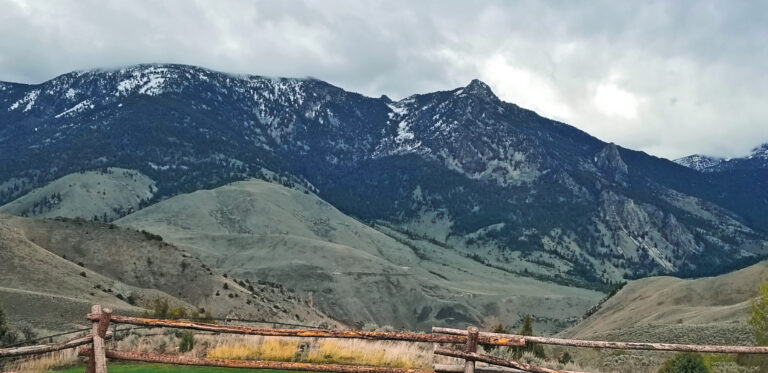
We rolled along at 65 mph between the snow-capped Salmon River Mountains to the left and the Lemhi Range to the right. Salmon rests where those ranges meet the Bitterroot Mountains near the Montana border. Of all the places I’d lived or visited, none had ever rivaled this view.

But it wasn’t the scenery that undid me.
It was the realization that the mountains hadn’t waited for me, and they didn’t need to. They received me as though I’d never really left.
My husband reached across the center console and took my hand as the tears finally came.
We were going to be okay.
We couldn’t restore everything we’d lost, and those years didn’t suddenly make sense. But some places remember us long before we remember ourselves.
We were home.
Which brings to mind Hal Ketchum again:
You keep your mansions of gold, buddy, I don’t care /’Cause I know where love lives.
Marissa Ames grew up in Salmon, Idaho, building fences, hunting, and herding cattle with her dad and gardening with her mom. She currently lives in eastern Idaho, where she grows a garden and teaches 4-H. As editor-in-chief of Grit, she enjoys representing the myriad lifestyles and experiences that define rural America.
Originally published in the September/October 2026 issue of Grit magazine and regularly vetted for accuracy.