Turn your food scraps into fertilizer by learning how to vermicompost with worms.
Charles Darwin estimated that an acre of garden space might hold 50,000 earthworms, and it’s easy to believe. After a good soaking rain, I hesitate to walk outside for fear of stepping on one of the soft, slimy invertebrates, and it’s difficult for me to consider how they can benefit us.
Since the classification system for earthworms has been in a state of flux since the early 1900s, it isn’t easy to get a fix on the number of earthworm species, but experts estimate more than 6,000 species of earthworms exist.
What Is Vermicomposting?
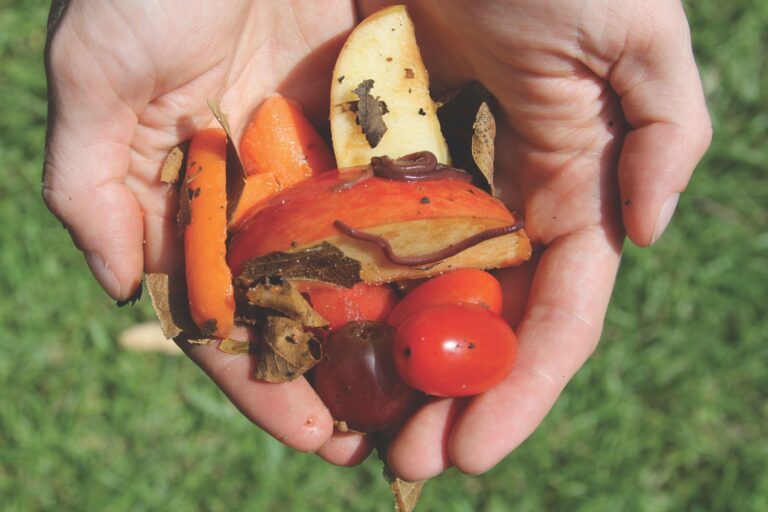
When it comes to vermicomposting — the process of using worms to convert organic kitchen waste into nutrient-rich organic compost — there’s one species that’s the odds-on favorite: Eisenia fetida, the red wiggler. There are three classifications of earthworms: litter, topsoil and subsoil. E. fetida thrives in the topmost layer of the earth’s decaying material, such as leaf litter. It doesn’t burrow through the matter, it actually eats its way through, consuming up to its own body weight per day. As organic material passes through the worm’s digestive system, it becomes laden with minerals and microorganisms. Voilà! Worm poop — known in scientific circles as vermicast, or worm castings.
Felicia McKee of Johnson City, Tennessee, is capitalizing on these lowly red wigglers. As a Certified Naturally Grown producer, a grassroots alternative to Certified Organic, she needs plenty of compost for her gardens. Fortunately, she has an abundance of vegetable peels, fruit rinds, egg shells, coffee grounds and more to feed the worms’ voracious appetite. Her payoff? Black gold — rich, environmentally friendly fertilizer that isn’t likely to damage water supplies.
Worm composting produces no foul odor. In fact, since the worms quickly dispose of kitchen waste, your trash containers might actually smell better. Minimal space is required, and as for time, the worms do most of the work. With a small initial investment, you could be harvesting your own worm poop.
How to Vermicompost
Sources for worms can be found online, in gardening magazines and elsewhere. But first you’ll need an aerated shallow bin with a large surface area. (McKee purchases plastic bins from discount stores, then drills holes into them.) Next, and this is extremely important, moistened bedding material like shredded newspaper or corrugated cardboard is added to the bin with a small amount of soil, sand or leaves to encourage digestion. With a spray bottle to keep the composting medium moist, and your “free” kitchen waste — no meat, oils, dairy or non-biodegradable products — you’ll be ready to start vermicomposting.
One pound, about 1,000 worms, would be a good start, though McKee started with fewer. She estimates that one pound of kitchen waste per day would require two pounds of worms. One thousand worms should double in three to four months if they are fed properly, kept at the right temperature — between 60 to 80 degrees Fahrenheit — and at the right moisture level — about 75 percent.
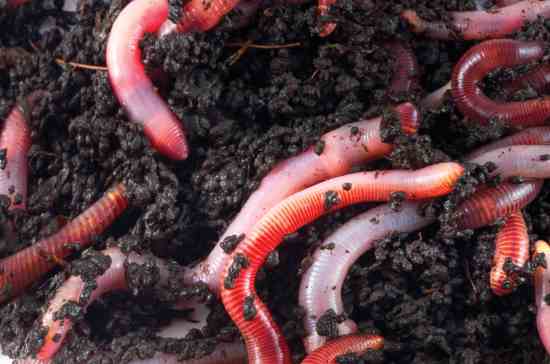
Newly hatched worms become sexually mature in eight to 10 weeks. They are incredibly prolific reproducers, about 900 eggs per year, and McKee always has a surplus of worms to sell. She laughs as she says, “I usually lose count when I’m working up an order, so I include extra, just in case. Matty and Moses are much better worm counters, but I still need a scale!” If a customer wants the end product, but only after the worms have “done their business,” McKee sells that too.
In the McKee household, whoever happens to be feeding the worms, counting them for a sale, or separating them from the vermicast is said to be on worm “doody.”
McKee even takes her worms on the road. During a recent trip to Southside Elementary School in Johnson City, Tennessee, in conjunction with their after-school garden project, she let the children play around with the worms and answered questions such as, “Do they eat the food with their mouth or absorb it through their skin?” and “Why do you start them out with paper for their bedding?”
After the presentation, McKee donated worms and a bin to the school so the children could make compost for their garden, a joint venture between the school and the farmers’ market in nearby Jonesborough.
The whole vermicomposting process sounds simple. So, if you’re tired of sending your kitchen waste to the landfill and want that nutrient-rich organic compost for your yard, garden or house plants, you’ve got the scoop on worm poop. So go ahead, go green; with a little red wiggler.