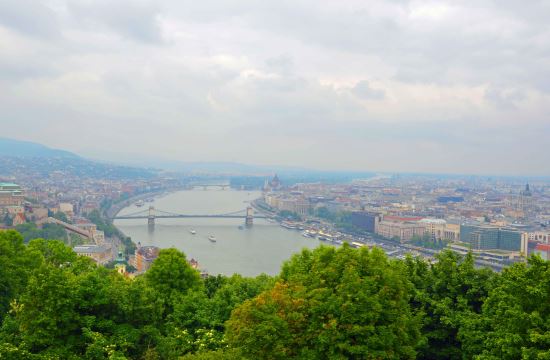
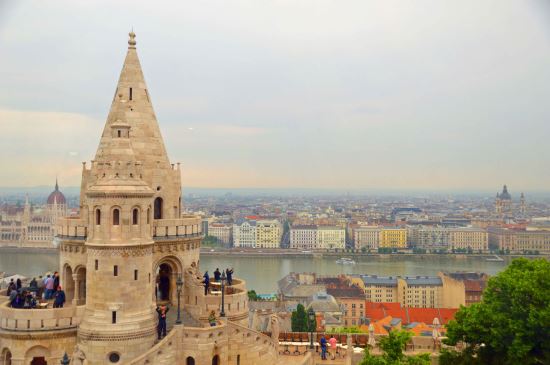
Budapest became a city in 1872 when three separate settlements — Pest, Buda and Óbuda (Old Buda) — were united. But settlement on the shores of the Danube River dates as far as the Old Stone Age. Second millennium BC Bronze Age sites have also been uncovered.
By the time of the Renaissance era, Buda and Pest were thriving. The royal court moved to Buda in 1347 and Pest developed into a prosperous trading center. In the fifteenth century Matthias Corvinus, King of Hungary and Croatia, extended the Royal Palace and Buda, together with neighboring Visegrád, became a center of Renaissance culture.
Before boarding the Viking River Cruises Lif to embark on the Passage to Eastern Europe cruise, I first stayed at Hilton Budapest in the Buda Castle District. The area was designated a UNESCO World Heritage site in 1987. According to UNESCO, “This site has the remains of monuments such as the Roman city of Aquincum and the Gothic castle of Buda, which have had a considerable influence on the architecture of various periods. It is one of the world’s outstanding urban landscapes and illustrates the great periods in the history of the Hungarian capital.”
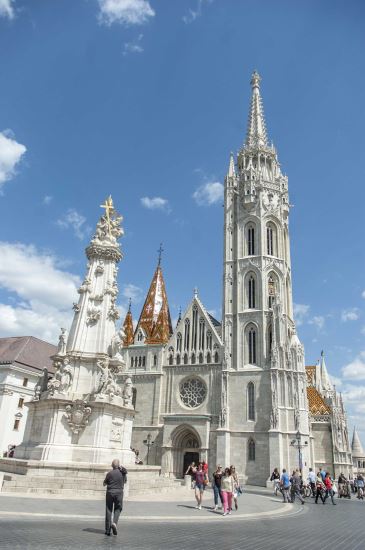
Matthias Church
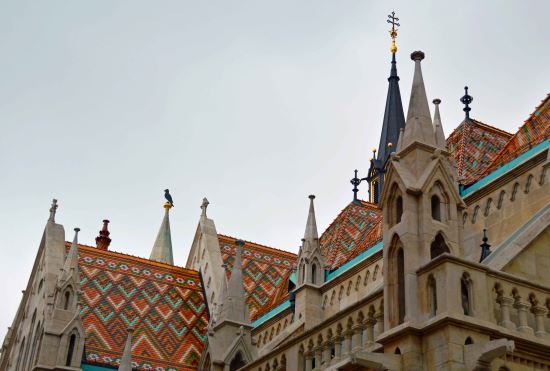
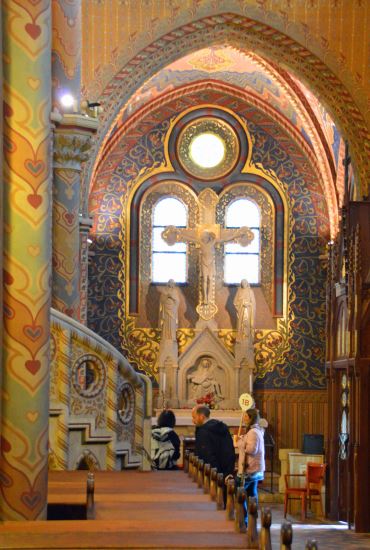
Finding reminders of medieval Buda was easy for me with Matthias Church right next to my hotel. Its towering spires glistened in the sunlight like the beginning of a narrative that continued as I walked through the massive doors of the church.
Built in the florid late Gothic style in the fourteenth century on the site of a former Roman Catholic church, it was, at the time, the second largest church of medieval Buda.
In 1526, the Turks took Buda and Pest. Under Sultan Suleyman I many churches were converted into mosques. This was a fortunate situation since the sultan could have decided to raze the church and replace it with a new mosque. Fortunate too, the paint he covered the Christian symbols with was later removed revealing the church’s original beauty. Gold, peach, and soft blues and greens are blended in ornate designs on the walls and support columns. Towering ceilings, also intricately painted in design, and the colorful stained glass windows envelop visitors into the hushed world of the past and its religious customs.
Leaving the church and walking through the neighborhood, it is easy to envision what it looked like centuries ago. The main streets follow their medieval paths and some houses date back to the fourteenth and fifteen centuries. Nearly every house has a plaque indicating the century it was built and providing details of its history.
Buda Castle
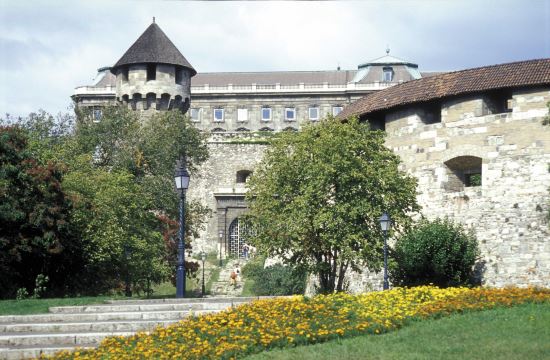
The first Gothic style palace was built during the reign of Louis the Great, King Sigismund and King Matthias — from the middle of the fourteenth century until the end of the fifteenth century with Gothic and Renaissance elements.
The Turks occupied the city from 1541 until 1686 when it was reclaimed by Christian forces. During the Christian siege both the Gothic castle and the residential part of the castle were destroyed. Following the expulsion of the Turks, restoration began in the Baroque style using the existing remains of buildings.
Throughout time other changes have been made and the castle size increased. Today The Hungarian National Gallery, The Budapest History Museum, National Szechenyi Library, Castle Theatre and eighteenth century Alexander Palace are housed here.
You can easily spend the better part of the day in the Buda Castle District by touring Matthias Church and Buda Castle, and wandering along quiet streets admiring the beautiful homes, lunching at a café and shopping.
Turkish Baths
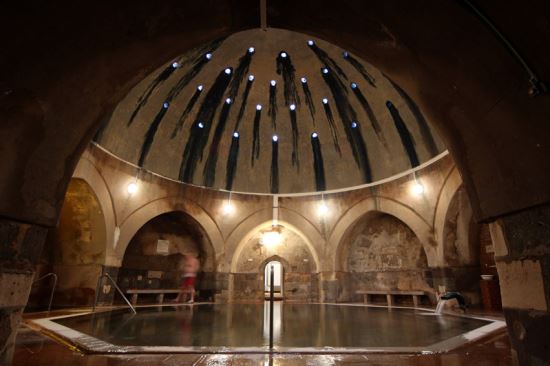
In the thirteenth century, the knights of St. John built the first healing center using deep underground hot spring waters. After the Buda Castle siege, when the Ottoman Turkish armies successfully captured the city, the Turks started to build a series of Turkish baths along the Danube River by using the same underground hot spring waters for relaxing, bathing and healing. Medieval Turkish baths in Budapest are not steam baths as in modern day Turkey, but historical Turkish baths with a central octagonal-shaped pool extended with other baths.
Kiraly Bath and Rudas Bath are the oldest thermal baths in Budapest built by the Ottoman Turks in the sixteenth century.
Kiraly Bath has dim lighting, getting its light from the sixteenth century dome holes covered in glasses. Turkish details can still be viewed, however over the centuries they have been combined with changes in the nineteenth century and in the Communist Budapest era.
Rudas Bath has features that make it stand out including detailed ornamentation. Rudas Bath also offers a complex bath and wellness experience, including a Turkish sauna.
Budapest is considered one of the most beautiful capitals in Europe partly because of its continuing effort to preserve its Renaissance heritage. There are a lot of medieval reminders to reflect on here; a lot of reasons to make the journey.