What is the difference between 4-H and FFA? While children in both clubs are encouraged to explore their interests through projects, the main difference between the programs lies in age requirements and who attends public schools.
The fair season was always filled with awe and wonder in my household, even from an early age. My father would take us through the livestock exhibits, and I’d look up at the cages of poultry in amazement at the various colors and shapes of chickens. I used to beg to have a few hens in our backyard as pets. I was shut down with the common misconception that we’d need a rooster.
It was in middle school that I truly found myself in a livestock setting. It started in an agriscience education classroom. I decided I wanted to be a farmer after a visit to a dairy farm, and I immediately signed up for an agriscience class and bought a Dutch rabbit I named Kool-Aid. I won third place in the spring show, and I was hooked. The National FFA Organization (FFA) and 4-H became my passion.
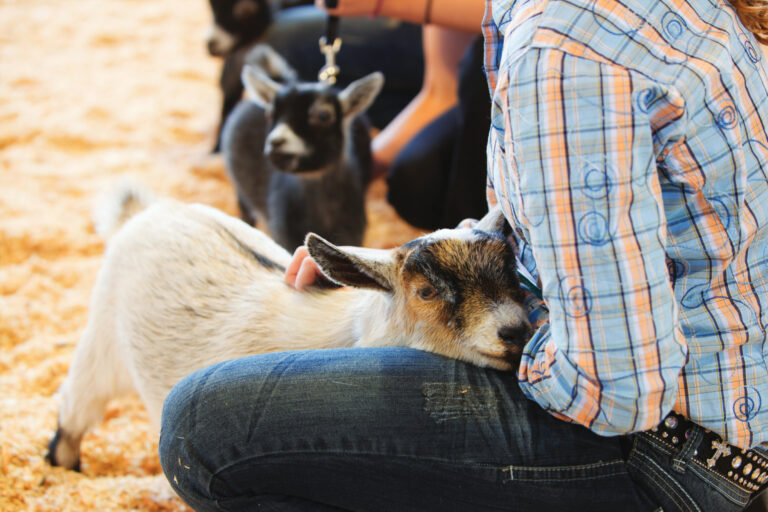
Years later, I competed with rabbits, chickens, and a goat named Echo. Echo became my best friend and gave me the support I needed during difficult times, as did 4-H and FFA. The lessons I learned helped shape the person I am today, and I find myself using these lessons with my children, especially as my son grows closer to joining 4-H.
What is the Difference Between 4-H and FFA?
FFA and 4-H are similar, with the main difference being age requirements. FFA is for students from fifth grade through graduation and even into college. 4-H offers regular programs for ages 8 to 18, as well as Cloverbud programs for ages 5 to 7. FFA is available mainly through schools, while 4-H operates both in and out of public schools and welcomes homeschool children.
Children and teens in both clubs are encouraged to explore interests through projects. Sometimes, these are agriculturally based, but not always. Both organizations encourage leadership, entrepreneurship, and community. Often, students choose a path of entrepreneurship and learn the responsibilities that come with it. Both 4-H and FAA offer leadership programs where students learn meeting agendas and planning, with additional focus on STEM (science, technology, engineering, and math).
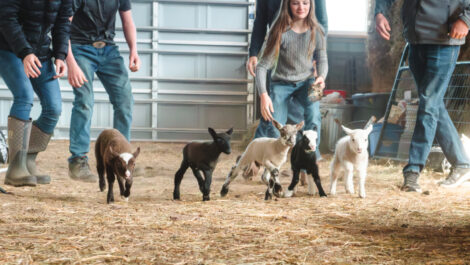
FFA students learn hands-on through supervised agricultural experiences (SAE) projects. The projects can vary from market animals to food preparation to research-based. This provides students with an opportunity to explore their interests. Regardless of the type of SAE, these can help provide an opportunity for a child to take initiative in their learning.
Being in FFA allows students to compete in contests and even get college scholarships. FFA encourages students to pursue career paths. In my most recent agriculture classroom, students learned interview skills and built resumes. Some advisers even helped students with job placement.
Many FFA programs offer various certifications, including for welding. This enables students to leave school qualified for a well-paying job. They also encourage alternatives to college, such as trade school. Trade schools help interested students to gain broader knowledge of options other than academics and receive encouragement to pursue their passions.
When I had my first son, I had the preconceived notion that he’d compete in 4-H, as I had. He grew older, and now he’d rather play Minecraft than work in the garden with me. He enjoys the chickens but loves to play video games.
For a while, people asked if I was upset that he wasn’t in 4-H. I laughed. 4-H isn’t just about agriculture; its main view is “learning by doing.” This means a child can do just about anything they want. My son can learn programming through 4-H STEM projects and enjoy his interests while doing so. Unlike other youth programs, 4-H gives the child a choice in what they pursue. Almost every interest your child may have can easily be a project area within 4-H.
These clubs allow kids to choose how they learn, rather than being told what to learn. Children thrive in a nurturing environment where they can be themselves. 4-H is often used in homeschool settings because it allows the children to choose their interests and form their own opinions on topics and self-identity.
Overall, youth programs are always a fantastic idea when your children are young. When kids are involved in activities that center around family, they’re far more likely to enjoy them. I often look back fondly on my time engaged in both groups. I encourage everyone to look into FFA through their local schools, and 4-H can be located through a local county extension office or the 4-H website.
Youth in Ag Spotlight: Braelie of Acorn-Sky Dairy Goats
At 9 years old, Braelie has been raising and showing her own goats for two years. She took an interest in dairy goats at 4 years old, when she started helping her mother with chores and milking goats. She was so diligent that her parents decided she could pick out her own goat. In 2024, they took her to a friend’s place, where there were a lot of dry yearlings of various breeds to choose from.
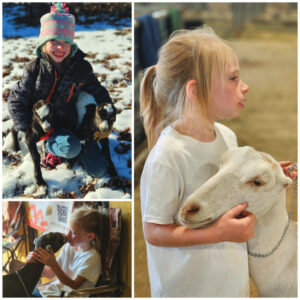
Braelie picked out a LaMancha doe, whom she named Peaches Snowcone, because the doe is white and has a little orange streak on the back of her neck. Peaches was incredibly wild when they brought her home, but in a matter of a few weeks, Braelie turned her into one of the most domesticated goats you’ll ever see.
Braelie has always liked the way the tiny ears look on LaManchas, and she wanted something different from the Alpines and Sables her mom has. More LaManchas followed Peaches, and Braelie started showing her goats during the 2024 show season. In winter of 2025, she joined 4-H.
She wants to improve her showmanship and earn a ribbon with one of her goats. One of the hard lessons she’s learned is that she can’t keep every kid born to her goats. She’s already sold a few kids to other youth members who are starting their journey, and she’s excited about potentially seeing those goats in the show ring in the future. She says you have to keep practicing and take care of your goats every day. She loves just spending time with them out in the pen.
Originally published in the March/April 2026 issue of Grit magazine and regularly vetted for accuracy.