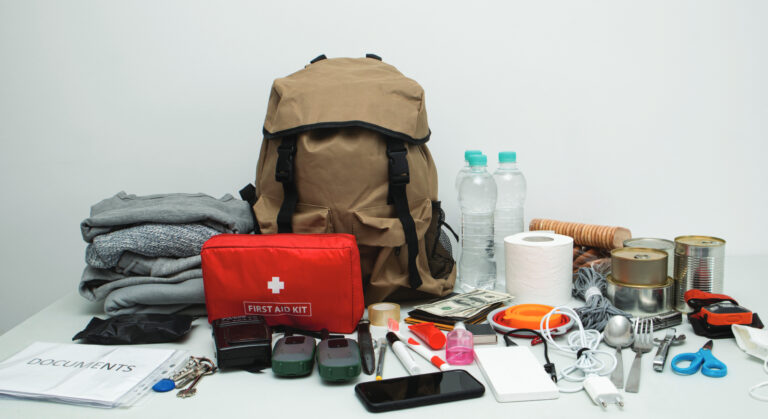
Be prepared, not scared, put together a go bag with bail-out bag contents to last 72 hours, enough time to get your family to a safer location.
I grew up near the Big Thicket National Preserve in southeast Texas on the banks of Lake Livingston. It’s the densest forest region in the state and one of the densest in the country. My parents were raised in Houston, but my father always felt like a caged animal growing up in one of the fastest-growing cities in America. In 1979, he founded The Backwoodsman Magazine, a publication dedicated to the “old ways” of living and focused on survival, primitive living skills, homesteading, DIY, fishing, knives, and more. My father was the publisher and editor for 42 years, and he passed away four years ago.
The fine folks here at Grit have graciously given me the opportunity to write about a subject that’s been covered extensively throughout the years at The Backwoodsman Magazine: being prepared. My goal is to help you take cues from my firsthand experiences and instill some confidence in being ready for the worst-case scenario. This includes not letting fear fully consume you in such circumstances.
My Family History
My father was blessed with the ability to catch a fish anywhere he cast his line, and he had dreams of becoming a professional bass fisherman, guide, and outdoor-sports writer as a teenager. In 1970, shortly after I was born, he decided to do the unthinkable back in those days: leave his secure job selling insurance to chase his dream.
In 1969, a dam was installed along the Trinity River, forming the 31-mile-long, 9-mile-wide Lake Livingston. The Texas Parks & Wildlife Department had plans to make it a premier fishing destination, and the department stocked it with various freshwater fish species.
My dad spotted his opportunity, and we left the big city to move to the middle of nowhere. When we first moved out there, the lake wasn’t even filled yet; that took a while.
There were no other houses, stores, or other signs of life. The nearest town was an hour away. Once the lake was filled, people began to move in, but it was terribly slow growth, and there was still little commerce except a boat marina.
Our trips to town felt more like reconnaissance trips. My mother was the ultimate planner, though it often seemed like we forgot something. My parents worked at home, and their trips into town were only every two or three weeks. My father’s dream was to be self-reliant, so we raised chickens, grew and maintained a massive garden, and lived off the land. He was able to provide food on a regular basis, since he was a fisherman by trade. There was a huge patch of the Piney Woods behind our house that contained everything we needed to sustain ourselves, so he became skillful at trapping, hunting, and identifying edible plants. The woods in the back of our house were what motivated him to start his magazine. I guess you could say we were prepared to live this way.
We didn’t live far from the Gulf (just over 100 miles), so we experienced a few hurricanes while living there. I can still remember how calm my dad was in those situations. It was very comforting at the time; I was young and terrified. He’d have flashlights lined up and the emergency radio on, with plenty of batteries on standby. I wouldn’t have called him the “Boy Scout” type, because he wasn’t, but he was as prepared as any Scout leader you could find. Every day, we had to prepare for some reason or other to sustain our lives living so remotely.
Why Prepare?
The truth is, most of us prepare in some way each day of our lives. Whether it’s meal-planning for the week or chopping wood for the upcoming winter, everyone practices some sort of preparation on a regular basis. Preparing has been a way of life for humans since the dawn of time; if they weren’t prepared, I don’t know if any of us would be alive today.
Early Americans lived a life of preparation because they had no other choice; they had to prepare for a steady source of food during winter cold and summer droughts. Those who lived in more inhospitable regions had to implement a different type of preparation into their daily routines. By living this way, their senses were sharpened, and their survival instincts were always front and center in their souls.
With the development of the industrial age and the growth of the United States, goods and services became plentiful, and many people settled into a life of convenience. These developments advanced our society and set us up for the technological age, which has made life even more convenient. But with all of these changes, our primal instincts have become severely suppressed. The “prepper” movement that we see in mainstream life today really began in the U.S. during the Cold War of the 1950s and ’60s, when families started stockpiling food, performing safety drills at schools, and building bunkers out of fear of nuclear aggression.
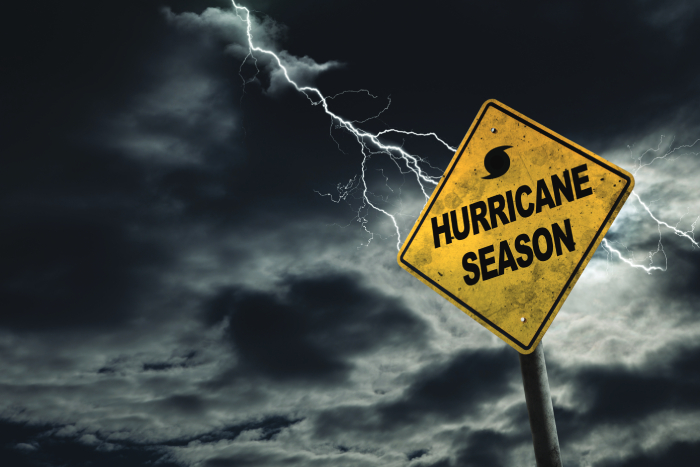
Back in 2017, my parents’ house was located in Fulton, Texas, a small coastal community 30 miles north of Corpus Christi, Texas. My parents were hurricane veterans and had been through many in their lifetime and never once left their home. Their plans were to ride out Hurricane Harvey, but as I sat in my living room in northern New Mexico, it was obvious from all of the weather reports that this storm was going to be deadly. Finally, I was able to convince them to leave a day before it hit. On Aug. 25, the eye of the storm went directly over my parents’ neighborhood. Their town was hit with a 25-foot storm surge that flattened the entire neighborhood.
When they left, they grabbed my dad’s bail-out bag, which had their personal documents, medications for them and their pets, and house insurance information. Luckily, they had another house to go to in the hill country of Texas.
I went down to the Fulton house to help afterward, and it was an unbelievable sight. It was humbling to see the power of Mother Nature up close. It was also painful to watch my parents have to start completely over in their mid-70s. But because they had all of their essential information with them, they were able to file their insurance claims immediately and try to move forward.
Buggin’ Out
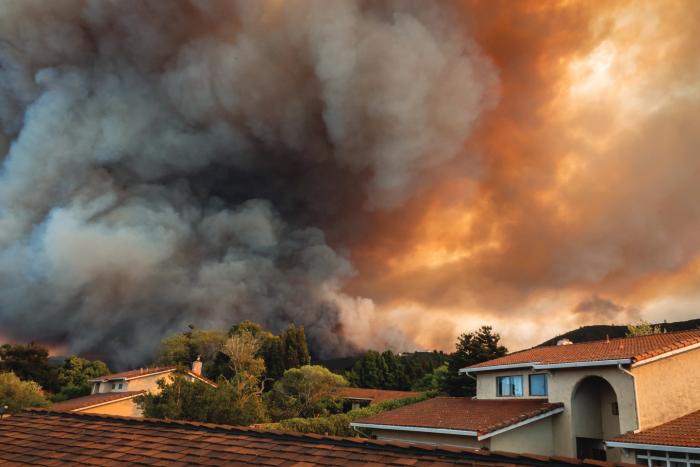
When I returned home to New Mexico, I immediately assessed how prepared we were as a family if something like that happened to us. We live at the base of the Sangre de Cristo Mountains, and it’s not “Will this mountain range go up in flames someday?”; instead, it’s “When will it happen?” The entire Southwest has been experiencing a major drought for the past 30 years. New Mexico has an extremely high amount of “dry” lightning strikes (lightning with no rain). In wildfire country, you could be out of a fire’s range, when all of a sudden the wind changes course and the fire is headed straight toward your house. For that potential hit-the-fan moment, I always keep a bail-out bag hanging in my garage, ready to grab-n-go!
Bail-Out Bag Contents
A bail-out bag is a portable bag with enough essential supplies for at least 72 hours in an emergency situation that requires you to leave your home. The purpose of this bag is for you or your family to be able to get to a safer location with some supplies.
Here’s a list of what I keep in my bag, which is similar to what most people should have in their bags:
- Important documents (identification, insurance, health notes, etc.).
- Medications for you and your pets.
- Nonperishable food items, including for pets if needed.
- A tarp, small tent, and sleeping bag.
- One headlamp per person, flashlights, and lantern, plus batteries if needed.
- A water purifier and iodine tablets for safe drinking water. Plus, a couple of bottles of water per person.
- A first-aid kit: adhesive bandages, gauze, antibiotic ointment, antiseptic wipes, pain relievers, medical tape, scissors, tweezers, and disposable gloves.
- A map and compass for navigational purposes.
- A hand-crank solar-powered radio to receive emergency information and weather reports.
- Hygiene items, such as toiletries and hand sanitizers.
- A foldable multi-tool knife.
- Cordage.
- This is optional, but I carry some sort of weapon for protection, which is a machete also used for other purposes.
The size of your family, how many pets you have, and other things about your current living situation should be factored in when you set up your bail-out bag. You may need two bags ready to go, or even one per person. (For a deeper look into planning a bail-out bag and setting up a plan, see “What to Take When Evacuating Your Home“ – Grit Editors)
I don’t like saying this, but nowhere seems safe anymore. Twenty years ago, I wouldn’t have said the following, but even if you live in a heavily populated urban environment, you should have a bail-out bag ready to grab and get the heck out of Dodge! A bail-out bag is definitely not a cure-all for emergency scenarios, but it will provide you with what you need if you have to evacuate your home and seek refuge; it will offer some peace of mind, which can lower your anxiety and stress levels; and, finally, it has the potential to save your life and the lives of your loved ones. Remember: Be prepared, not scared.
Charlie Richie Jr. is the owner, publisher, and editor of The Backwoodsman Magazine. For more information on this publication, visit Backwoodsman.
Originally published in the November/December 2025 issue of Grit magazine and regularly vetted for accuracy.