Feeding terminology is often used synonymously and can be confusing, especially for beginning or intermediate keepers of goats and sheep. It’s not uncommon to see words like “graze,” “forage,” “fodder,” and “browse” used interchangeably — particularly in informal writing. But understanding these differences is essential for the small-ruminate owner looking to improve the diet of their animals or reduce the cost of feed. Let’s go over some of these common terms, what they mean, and how they affect the nutrition input of sheep and goats.
Defining common feed terms.
“Grazing” is a verb used to discuss ruminants — often sheep or cattle — eating vegetation in an open environment. It’s usually applied to animals eating pasture and grasses specifically. But it can also be used to describe an animal eating any vegetation, especially when talking about goats.
“Forage” can be used as a verb referring to the act of locating food, but when discussing goats and sheep in official sources, it’s more often used as a noun to refer to the actual vegetation being consumed. So, as an example, “Sheep graze for forage in pasture.” “Goats may graze woodlands for leafy forage.”
“Browsing” is commonly used to discuss the act of looking for something in a leisurely way. In livestock literature, it refers to animals eating vegetation that grows at a high level. It can be used as a verb (“to browse for vegetation”) or as a noun (“feeding on browse”) and is most commonly used to discuss the eating habits of goats, though it’s occasionally applied to sheep or cattle.
Finally, “fodder” refers to any feed provided to livestock, including pellets, hay, sprouted grains, and others. It usually references feeds specifically grown or made for livestock, unlike pastures or woodlands where goats and sheep might otherwise find food. Therefore, sheep may graze for forage in their pasture in the summertime but be fed a fodder mixture of hay and sprouted grains in the winter.
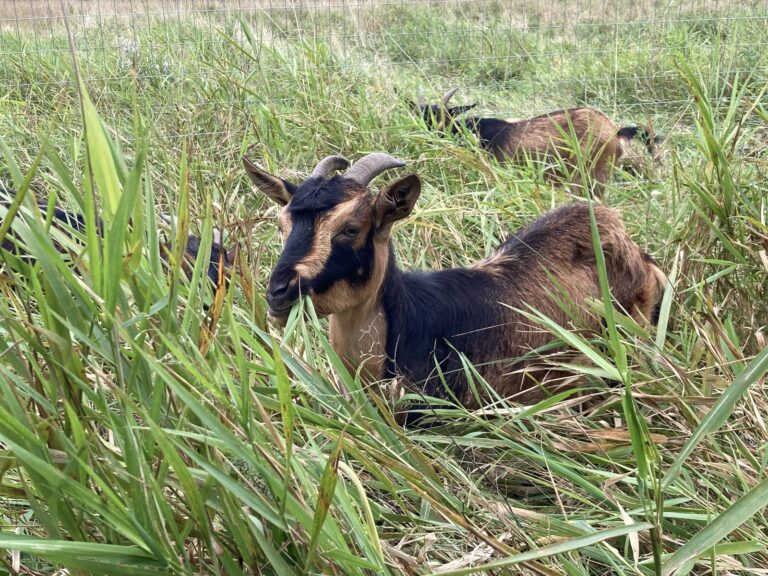
Often, people refer to sheep as “grazers,” meaning they mostly eat grass, and goats as “browsers,” meaning they leisurely sample brush and leaves.
Having defined these terms, sheep and goat owners can more effectively research and discuss their animals’ nutritional needs and available resources.
Sheep and goats eat differently.
Most immediately, sheep and goats are prey animals, which impacts the way they eat. Feeding processes for these smaller ruminants are often based on what plants they can eat the quickest and where individual bites will gain them the biggest mouthful. This allows them to consume a large amount of vegetation in a short amount of time. This is essential when predators are a concern. This style of eating means the nutrients aren’t fully absorbed immediately. Instead, they’re later digested more fully when the goats and sheep are safer, feel relaxed, and can chew cud.
How does a ruminate stomach work?
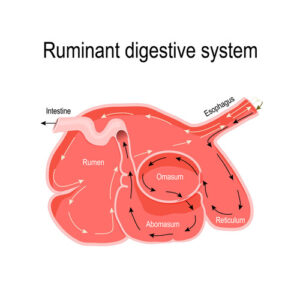
The digestive systems of ruminant livestock are vastly different from other mammals. Like other ruminants, the stomachs of goats and sheep are broken down into four chambers:
- reticulum
- rumen
- omasum
- and abomasum (also known as the true stomach).
This allows for several differences in the feeding patterns of these animals from the rest of the plant-eating world, both in digestion and grazing behaviors.
The rumen and reticulum work together. The rumen is the largest of the stomach chambers. It assists with delayed digestion by storing the food and allows the animal to digest plant matter more completely than their single-stomached counterparts.
The plant matter remains in the rumen for an extended time, where it ferments and the cell walls of the vegetation are broken down and absorbed. This digestion process is unique to ruminants and makes them far more efficient grazers than, for example, a horse.
Once the plant matter has been fermented, ruminants will regurgitate the mass back into their mouth for further chewing. This chewing is more relaxed and thorough than the initial intake of vegetation. Once completed, the vegetation is swallowed into the reticulum, where finer food particles are sent on to the omasum. Larger particles are pushed back into the rumen. The omasum has many folds that absorb nutrients and water before passing food on to the final chamber, the abomasum, that digests food in a way that is similar to mono-gastric animals.
How do goats and sheep choose their food?
What goats and sheep choose to eat can be affected by the environment and whether the animal has been bred with a specialized purpose in mind, such as dairy or meat production. Specialized animals, like heavy-producing dairy goats, are less able to meet their maximum production capabilities on forage alone and often require fodder supplements, even under prime grazing conditions. Less-specialized breeds, such as indigenous sheep and goats, are more likely to maximize their nutritional intake.
Goats are believed to have more efficient rumens due to their preference for woody plants, but both sheep and goats include browse in their diets. The process of chewing cud allows for a more complete nutritional gain from coarse and woody plant fibers.
How do sheep and goats find forage?
Small ruminants require less vegetation mass than cattle, and the ability of sheep and goats to thrive on coarser grasses and in woodlands makes them a practical livestock choice for many parts of the world. Goats, especially, are able to thrive on roughage that other animals — including the larger ruminants — will bypass. Sheep, too, can subsist on non-improved vegetation in areas that are otherwise unable to support cattle or crops. They’ve been shown to have an impressive ability to select the more nutritious vegetation in any given area.
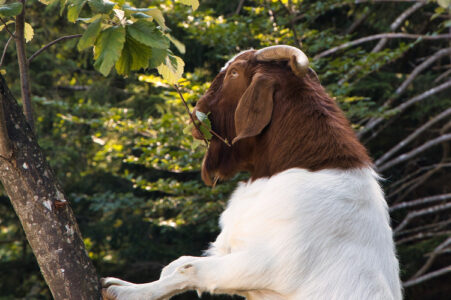
Studies done in heathland areas — where the acidic soil supports only tougher grasses and woody vegetation — have shown that both sheep and goats can graze in these areas successfully.
While sheep and goats have different nutritional needs — mainly their widely different needs for copper intake — they can successfully cohabitate in the right environments because of their different preferences for forage types. Early studies showed that most sheep will take only about 10% of their forage in browse, while goats will take about 60% in browse over grass. This means that in a diverse grazing environment, different preferences in plant species allow for each animal species to meet its individual nutritional needs without major overlap or competition.
Interestingly, studies on the exact nutritional needs of sheep and goats have resulted in different outcomes depending on the area and the breed of animal. Researchers have struggled to understand exactly how animals choose the plants they need — both in terms of nutritional completion and in avoiding toxic buildups from potentially harmful plants.
Behaviors and preferences may make a difference.
Animal behavior may play some role in how small ruminants choose their vegetation. While goats and sheep have both been shown to ingest hundreds of varieties of plants, the majority of an individual animal’s diet is likely to consist of about 80% of the same few vegetation choices.
However, each individual animal may show a different set of preferences in their own choices. Studies on sheep suggest that this information may be passed down through multigenerational grazing until lambs are weaned. After weaning, their own experiences may play a larger role in their forage habits.
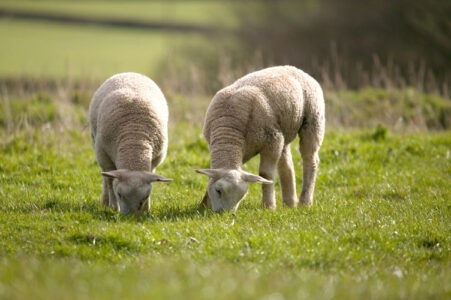
Further, differences in forage availability throughout the year make the matter more complex. Depending on the climate, dietary differences can vary between warm and cold seasons or between dry and wet months. These differences in environment and available vegetation can cause even greater variations in diets for goats and sheep. While sheep won’t move from grazing to browsing as readily as goats will from browsing to grazing, breeds native to certain areas of the world will adapt to changing seasons and thrive on vegetation they would normally ignore. For example, if the only available forage is pasture grass, goats will adapt their behaviors in favor of an all-grass diet.
While goats generally prefer to browse at or above head height, they’ll adapt to graze on low grasses when that’s the only option. (In that situation, co-grazing with sheep would cause significantly more competition and require a lower number of animals in the grazing territory.) The ability of goats to change their dietary habits according to the available forage is one of the traits that makes them thrive worldwide, in even some of the most rugged terrain.
Feeding fodder to sheep and goats
All of these environmental variations can be remedied by feeding sheep and goats on fodder rather than allowing them to free-forage or live on browse. This guarantees the animals gain a specific nutritional complement each day and, hopefully, maximizes growth rates for each individual animal.
This isn’t to imply that fodder is a magical solution. Fodder feeding means more work and expense for the farmer and requires changes in feeding behavior for the goats and sheep. Indoor feeding is usually done twice a day, resulting in 60% to 80% of the animal’s intake being ingested during these times. Since sheep especially tend to graze casually throughout the day, this requires significant behavioral changes in their eating habits.
Like the complexities of free grazing when it comes to nutrition, fodder has its own concerns. The most obvious is that science is unable to tell us the exact methods by which sheep and goats determine their nutritional needs at any given time of the year; for an individual farmer to recognize those needs is even more complicated.
Because grazing ruminants have been shown to do best when provided with a wider variety of vegetation, narrowing their choices can lead to a need to artificially treat parasites. For instance, ruminants require woody or stemmy materials to feed beneficial microorganisms within the rumen, creating heat that keeps their bodies warm in winter. Specific forages, such as Sericea lespedeza, have proven effective in limiting gastrointestinal parasites, although it can also be fed as pellets in a fodder situation with the same results.
Hay is one of the more popular forms of fodder, but it can vary in nutritional quality. In areas where hay quality is low, goats and sheep may appear to be eating well while actually suffering from severe nutritional deficiencies. Goats and sheep can also be equally choosy with their hay as they are with their vegetation choices, resulting in tremendous amounts of food being discarded by the animals.
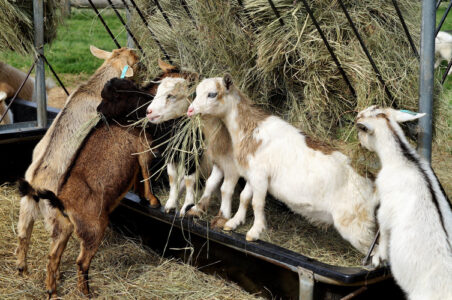
Fodder beets — or “cattle beets” as they’re sometimes called — need to be planted, cared for, dug, and stored. Grains need to be grown and harvested — and, depending on the methods of the farm, fermented or sprouted. Processed pellets will promise proper nutritional balances and can be a less expensive method of stall-feeding when measuring feed-cost-to-meat-production ratios.
However, for those raising both sheep and goats, feeding pellets will require separate feed areas or additional supplements since sheep and goats have different nutritional requirements. This may reduce the stocking rate — the number of animals in a given space — that a farmer can keep.
A well-fed farmstead is a happy one.
Understanding how our animals eat helps us provide them with the best possible diet. So, whether your animals graze for forage, browse, get fodder, or some combination, I hope you feel more confident in your knowledge of feed terms and more capable of supporting the health of your sheep and goats. After all, a well-fed farmstead is a happy one!
Sherri Talbot is the co-owner and operator of Saffron and Honey Homestead in Windsor, Maine. She raises endangered livestock breeds and educates on heritage breeds, sustainable living, and the importance of eating locally.