What flowers do bees like? Grow bee pastures with the color and shape of flowers bees prefer to harvest nectar and pollen from.
With the increasing attention being given to specialized floral plantings tailored to target groups, such as native bees, butterflies, and garden pest predators, it’s no surprise honeybees should get their turn with honeybee pastures.
What Flowers Do Bees Like?
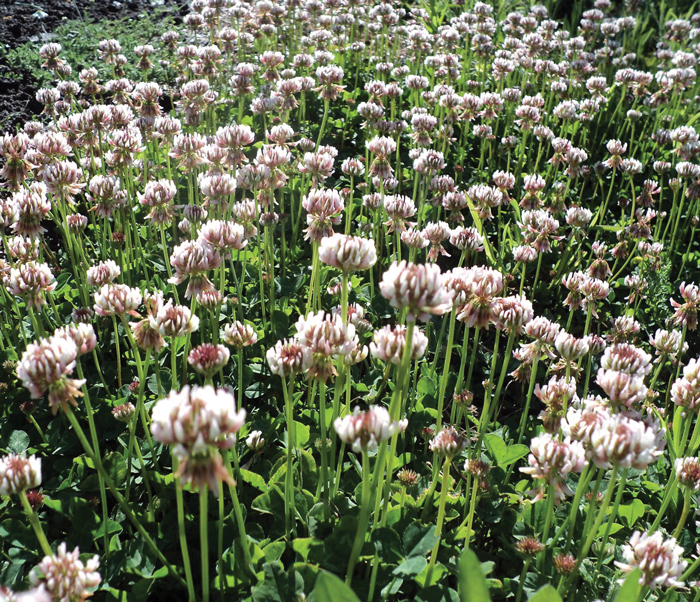
Texts on the history of beekeeping reflect that many plants were once marketed to, mass-planted by, and prized by beekeepers for their desirable nectar. Bees collected nectar from these plants to produce enormous quantities of honey with exceptional color, flavor, and resistance to granulation. Among these plants were white clover, hyssop, carpenter’s square (also called “Simpson’s honey plant”), fireweed, sainfoin, wingstem (occasionally termed the “golden honey plant”), and even the quite tall sourwood tree.
Providing only nectar-rich plants isn’t exactly the purpose of honeybee pastures. Though including plants that produce exceptional honey is a great idea, monocultures – though often well-intentioned in offering food – can lead to nutritional deprivation for beehives. The aim of these pastures is to provide a diversity of nectar and pollen, and therefore nutrients, for the longest period of time possible. With the abundance of pressures on the modern honeybee – including winter die-off, hive collapse, pesticide exposure, and the general decline of food sources because of habitat destruction – you might say fostering successive generations of healthy young bees is really the main objective of honeybee pastures.
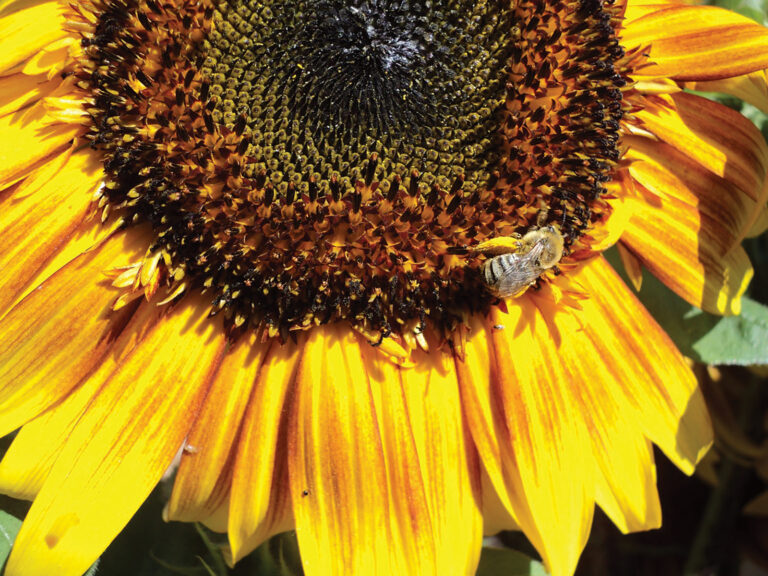
Pastures tailored specifically to honeybees focus on the plants they favor in particular. All bees can best identify and are most attracted to the colors blue, purple, violet, white, and yellow, so flowers of these colors stand out to them. However, the bees’ weight, body size, and tongue length result in varied speeds of gathering nectar and pollen. Disc-shaped flowerheads that aren’t too small, as with dwarf sunflower; small, closely clustered flowers, as in umbel flowers, such as dill or heather; and small flowers together on a single stem in the fashion of lavender and mountain mint, all facilitate rapid reward-gathering for the honeybee. Flowers with rather large or spaced-out flowers, such as foxglove, or disc-shaped but small flowerheads, such as coreopsis, slow down collecting and aren’t optimal. Honeybee pastures should be filled with plants that allow them to move with speed.
While plantings for native insects place special emphasis on native plants, this isn’t the case here. Both native and non-native plants can be included for honeybees, with no particular emphasis on providing overwintering spaces or nesting materials – for obvious reasons. Pastures may be as small or large as space allows. Ideally, they should be reasonably easy to grow and maintain; note which plants are listed below as drought-tolerant, an increasingly important trait to help ensure success. And, naturally, honeybee pastures must be a pesticide-free zone.
Honeybee Pastures
Honeybee pastures can differ in the amount of time for which they’re meant to be established, and the correlating plants for each kind.
Single-year pastures contain annual clovers, wildflowers, and ornamentals, and are reseeded each season. These pastures primarily consist of readily sourced, inexpensive seed.
Multiyear pastures include self-seeding annuals, biennials, and perennials – whether herbaceous, bushy, or woody vines – and they’re intended to remain for a five-year minimum. They require more planning and maintenance, in the form of weeding, resowing, dividing plants, planting to fill bloom gaps, but they also afford better opportunities to achieve sustained successional blooming.
Finally, permanent pastures include trees, bushes, and woody perennials in addition to an herbaceous understory. Not surprisingly, plant selection is of great importance with permanent pastures, as they’re intended to be in place for at least 30 years; these have the highest initial cost but the lowest annual cost.
An important note about tree and bush planting is that they must not be allowed to shade out too much pastureland, which will inevitably become less attractive to bees. Selecting plants with naturally sparse canopies and coppicing are effective ways to avoid poor outcomes.
When compared with single-year honeybee pastures, both multiyear and permanent pastures will require more maintenance and upkeep. However, this is only until these long-term pastures are established. Once in place, they’ll be not only more resilient in the face of challenging weather and therefore be a more dependable source of food, but they’ll also save you time as the land will no longer make the demands on you that annual cropping land does.
However, each type of pasture has its advantages. Single-year pastures will be able to draw honeybees for pollination to a smaller agricultural crop, as you can place them at a close proximity in more of a pinpoint fashion. In terms of consistent honeybee food, the multiyear and permanent pastures will always offer greater versatility and opportunities to create the optimum successional blooming, as you’ll simply have more plants at your disposal.
Note that herbaceous plants in any of these pastures will more successfully attract honeybees when planted in “clumps” of individual species of at least 4 square feet, as opposed to all plants in a pasture being mixed in a heterogeneous fashion.
Pop-Up Pastures
Pastures for any duration can make use of ground that might otherwise be left fallow or can serve a purpose in addition to pasturing honeybees.
Located along waterways, filter strips are permanent vegetation that reduce the flow of sediment, organic materials, pathogens, nutrients, runoff water, and other contaminants from agricultural fields, thereby improving water quality, and the nutrients and water removed can be used for beneficial plant growth. Aster, bee balm, black-eyed Susan, milkweed, self heal, and blue vervain are great options to make filter strips both useful and ornamental.
Single-year honeybee pastures can easily serve as green manure. Buckwheat, berseem and crimson clover, cowpea, partridge pea, dwarf sunflower, blue tansy, and radish are well-known soil improvers. Watch the degree to which these plants are allowed to produce seed to prevent them from becoming future “weeds.”
Well-timed mowings or the removal of seedlings before the next crop planting may be required to prevent this issue.
Roadsides, fence lines, and hedgerows can be filled with the shrubs and trees used in permanent pastures, creating a kind of farm-wide pasture perimeter. Steep tracts of land that are prone to erosion and aren’t viable for other uses can be planted with a base of clover and heather, and scattered with clumps of flowers for variety – possibly chive, bronze fennel, mint, and sea holly.
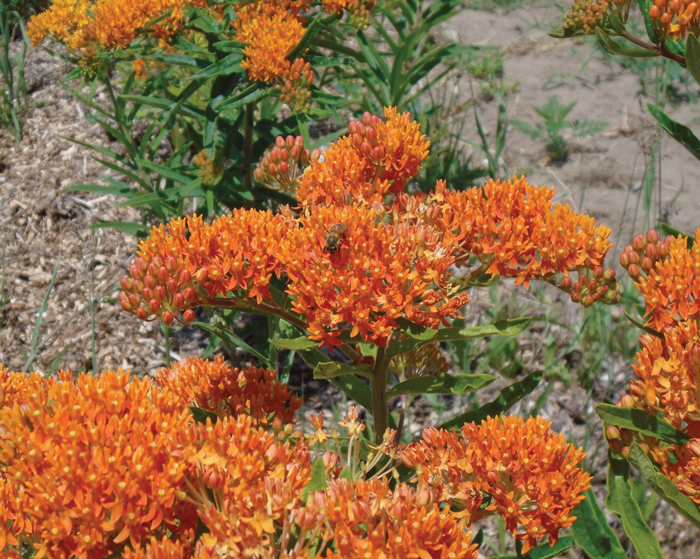
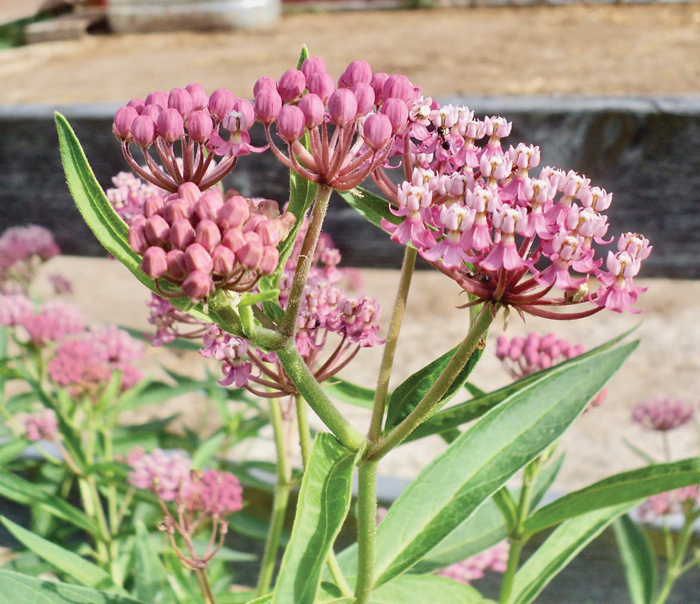
Especially damp or dry tracts of ground which are unsuitable for most agricultural production can be planted with honeybee favorites rather than left as scrub. Alsike clover, figwort, inkberry, tupelo, the famed single-source, high-end market honey plant, and wingstem all thrive in damp soils. Dry ground can support purple prairie clover, whose vegetative parts are adored by livestock as much as their flowers are by honeybees; lavender, a non-native and famous staple of French beekeeping; and Russian sage, a non-native plant with a reputation for being highly adaptable to all conditions. Plus, you can find a milkweed for any environment; swamp milkweed needs damp conditions, while common milkweed and butterfly weed do well where it’s dry.
Honeybee pastures, whether designed to function for one year or multiple years, are an economic use of your money, a practical use of your time, and an effective way to improve the health of your hives.
A great variety of flowering plants can be used to supply bees with nectar and pollen. Those listed here tend to offer both and are highly favored sources. Multiyear pastures can include plants listed in annual pastures and permanent pastures can include anything listed in both annual and multiyear pastures.
Flowers for Annual pastures
- Buckwheat
- Clover
- Cornflower
- Cosmos
- Cowpea
- Dwarf sunflower
- Lacy phacelia
- Marigold
- Partridge pea
- Radish
- Sunflower
- Tulsi
Flowers for Multiyear Pastures
- Alfalfa
- Beardtongue
- Bee balm
- Berry brambles
- California bluebell
- Coneflower
- Flowering currant
- Goldenrod
- Hawthorn
- Lobelia
- Speedwell
Flowers for Permanent Pastures
- Black locust
- Black sage
- Borage
- Chokecherry
- Hyssop
- Meadowsweet
- Mint
- Pussy willow
- Redbud
- Rosebay willow
- Sourwood
- Tulip tree
- Tupelo
- Wild lilac
- Wild cherries and plums
Plants determine the color of honey – choose from the dark amber of blanket flower, the white of milkweed, or the gold of wingstem. There’s also an array of honey flavors to sample, from the minty-ness of hyssops, the sweet vanilla flavor of meadowfoam (Limnanthes spp.), the light maple taste of sourwood, the deep molasses flavor of buckwheat, or the buttery richness of fireweed.
Leah Smith is a freelance writer and home and market gardener. She works on her family’s Michigan farm called Nodding Thistle (Certified Organic 1984 to 2009, principally by the Organic Growers of Michigan). She’s a graduate of Michigan State University.