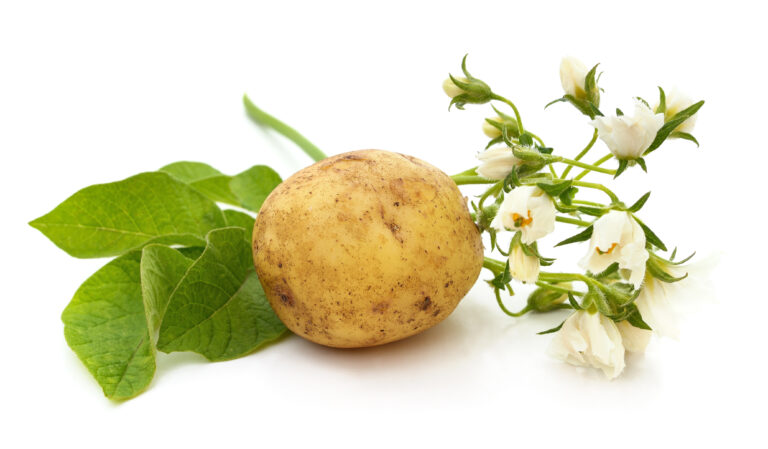
Folks offer all kinds of reasons for not growing potatoes. Some say potatoes are so inexpensive at the store it just isn’t worth the effort. Others say that potatoes take up too much space in the garden. Still others say potatoes aren’t worth growing because they attract pests like the Colorado potato beetle. I, on the other hand, will always grow potatoes because that’s the easiest way to sample the delicious palate of heirloom potatoes, and there’s nothing like the flavor of a new potato when it’s eaten just hours after harvest.
Picking a Potato
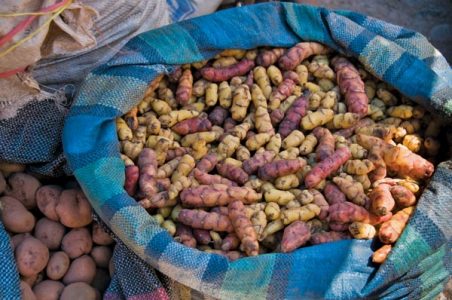
At a typical market in Peru, you might find 200 varieties of potatoes. The crop was developed by the Incas, and a great diversity of potatoes wild and cultivated is still found in the Andes. Of more than 5,000 varieties of potatoes, only a small fraction is available as commercial seed stock in North America.
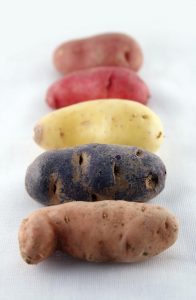
I grow several varieties of potatoes that differ in growing traits and culinary qualities. I consider the following factors when making a choice:
- Length of season. Varieties mature in 65 to 180 days. It’s great to have some short-season varieties for new potatoes, and long-season ones for winter storage.
- Resistance. Varieties exhibit varying levels of resistance to blight, scab, verticillium wilt and other potato afflictions.
- Yield. I want heavy producers like Viking, as well the specialty varieties, like All Blue, which have lower yields.
Although it’s essential to know how a variety can perform in the garden, it’s equally important to assess its potential in the kitchen. Although most cookbooks refer to ‘a potato,’ the variety used can affect the final dish. Culinary differences include:
- Taste. Flavor ranges from nutty to sweet, and from bland to intense.
- Texture. The texture can have a huge effect on a dish. Whether your mashed potatoes are fluffy or gummy might reflect the choice of variety, not your cooking skills. A waxy variety like Chieftain is ideal for potato salads and steamed new potatoes, whereas a mealy potato like Butte makes the perfect baked potato.
- Color. Potatoes range from plain brown skins with white flesh, to red skin with yellow flesh, to all blue and many variations in between. A potato salad made with three colors is a feast for the eyes as well as the tastebuds.
- Shape. Potatoes vary in shape from round to oval to finger-like. The latter look great served whole (steamed or grilled) and are prized by restaurateurs and gourmands.
- Storing. Generally, the long-season varieties are the best keepers.
Commercial seed potatoes are often used for seed stock; these are certified disease free. A few seed companies, such as Wood Prairie Farm, in Maine, sell double-certified seed potatoes – certified organic and certified seed.
Once you start growing potatoes, you can set some aside to plant the following year. However, over the years the quality of your seed stock may deteriorate due to the build-up of diseases, particularly scab.
Seed savers propagate many heirloom varieties. For example, members of the Seed Savers Exchange grow about 600 potato varieties, such as Black Russian, Blue Congo, Candy Cane, Inca Gold, Rambling Rose and White Mississippi.
Don’t use supermarket potatoes for planting. These are often treated with chemicals to suppress sprouting.
Cheating through chitting
Small potatoes (e.g. egg-sized) can be planted whole. Cut larger potatoes into chunks the size of a golf ball, each containing two or three eyes. Let these sit out, cut sides exposed, for a day to allow the surfaces to harden.
Greensprouting, or “chitting,” can be used to get an early start. Put the cut seed potatoes in a light, airy place with a temperature of 50 degrees for a week. Plant when the sprouts are 1 inch long.
You might find your seed potatoes sprout in the root cellar before planting time. Just break the sprouts off until you’re ready to plant. Some say that the sprouts can be broken off five times without affecting the plant.
Get growing
Potatoes can be planted early in the spring. They can handle light frosts and are often planted two to three weeks before the last spring frost is expected. If a hard frost is predicted, cover with a floating row cover or soil. (For more on floating row covers, see Early Season Secrets.)
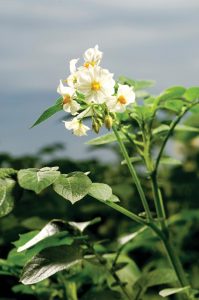
Some gardeners plant potatoes when flowers appear on the Shadbush (also known as Serviceberry and Juneberry), Saskatoon, Sugarplum or wild plum. Others plant when the first dandelions flower. An old saying advises that storage potatoes should be planted in the dark of the moon, and new potatoes in waxing moon. In Maritime Canada, many organic gardeners don’t plant the bulk of their potato crop until June, often not until after solstice; this way, the potatoes will avoid the peak numbers of Colorado potato beetles.
Storage potatoes can be planted much later; adjust the date according to the variety and the first killing fall frost in the area. Ideally, storage potatoes are harvested when air temperatures are cool.
Potatoes are flexible in terms of soil quality and fertility. They are often used as the first crop after breaking sod because they can tolerate acidic, rough soil. The pH can range from 5.5 to 7.0.
Potatoes grow best when the days are 64-68 degrees, and nights are below 60 degrees. Tuber growth is impaired when the temperature is either below 50 degrees or above 86 degrees.
Tubers are not really roots
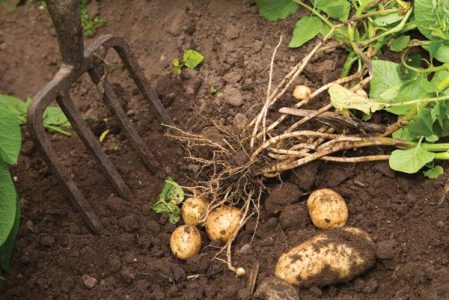
Even though a potato is called a root crop, the tubers come from the stem. Sprouts emerge from the eyes and develop leaves once they encounter light. Below the surface of the soil (or mulch), root-like structures emerge from the stem and potatoes develop from these. Gardeners aim to expand the area between the seed potato and the leaves.
Many gardeners plant potatoes in raised rows (about 1 foot high and 1 foot wide) with a trench (4 to 6 inches deep) down the middle. Place seed potatoes 12 to 18 inches apart in the trenches and cover with a few inches of soil.
Hill the plants once they are 8 inches high. Using a hoe or hiller attachment on a rototiller or tractor, push soil around the sides of the plant, covering all but the top few inches of growth. Repeat every week or two until flowering.
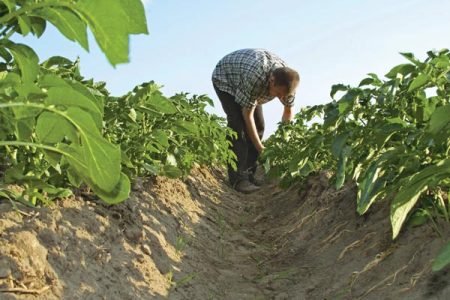
Mulch can be used instead of, or in addition to, hilling. A thick layer of straw, hay or leaves provides weed control, reduces moisture loss and inhibits the Colorado potato beetle.
Playing with potato planting
Potatoes can be grown in many different ways. In Newfoundland, where soil is scarce, many gardeners lay seed potatoes on the rocks and pile seaweed on top.
Potatoes can be planted in barrels half full of compost and soil. Once the plants are 8 to 10 inches tall, add more compost. As with hilling, continue adding compost until flowering. To harvest, push the barrel over and gather the tubers. Cages made of chicken wire or fencing can be used instead of a barrel.
In addition to planting potatoes in my garden, I use them when converting sod to garden. I lay cardboard on the grass, put seed potatoes in holes in the cardboard, and cover the whole area with a couple of inches of composted manure and straw. In the fall, I have soil ready for planting and a crop of potatoes as a bonus.
Weeds usually aren’t much of a problem in potatoes. Hilling controls the early weeds, and later weeds are suppressed by the dense canopy (assuming the plants haven’t been defoliated by Colorado potato beetles). Mulch provides additional weed control.
Potatoes need ample moisture after the plants start flowering, a good soaking every few weeks. Too much water will lead to ‘hollow heart,’ and too little will lead to tiny tubers.
Dealing with disease
Various fungal diseases can affect potatoes, including early and late blight, verticillium wilt and scab. Prevention is the key to dealing with these. For example, to reduce scab problems, plant clean seed in slightly acidic soil.
General methods to avoid fungal problems include removing crop residue from the field after harvest. If the plants are blighted, bury or burn them far from the field.
Adequate air circulation between plants and avoiding over-watering will help prevent fungal disease. If late blight is a problem in your area, focus on fast-maturing varieties that can be harvested before the blight hits. Also, choose varieties that are resistant to the common diseases in your neighborhood.
To inhibit fungal disease, you can spray compost tea on the plants. Copper-based solutions, such as Bordeaux Mix, can also be used. These should be used sparingly to avoid a build-up of copper in the soil.
Harvesting
Tubers begin to form around the time of flowering. Two weeks later, or when the flowers die, it’s time to grub for new potatoes. You can pull entire plants and remove the potatoes. Or, you can gently reach under the soil and pull the largest tubers. Given that new potatoes are best as soon as they are harvested, pick only as many as you will use that day.
The main harvest begins a week or two after the foliage has died. Between plant death and harvest, skins thicken on the tubers. If blight or a frost is coming, growers sometimes kill the plants early by mowing with a rotary cutter.
After harvesting, let the potatoes sit in a dark, well-ventilated place for a day or two to develop skins, particularly if you have harvested them early. I’ve come to terms with the fact that my house is a farmhouse (i.e. messy); in potato harvesting season, there are potatoes curing between sheets of newspaper under the kitchen table and in other nooks and crannies.
It is critical that potatoes are kept in the dark. If part of a tuber is exposed to light (during growing, harvesting or storage), it will turn green, which indicates the presence of bitter and slightly toxic alkaloids.
Store the potatoes in a cool, dark place, and you will have tasty and nutritious tubers throughout the winter. Show a bit of restraint, however, and save some potatoes to plant in the spring.
Check out these related articles:
Colorado Potato Beetle
Potato Seed Sources
Janet Wallace is an organic gardener, freelance writer and editor of The Canadian Organic Grower. She grows potatoes and many other vegetables in New Brunswick, Canada.