What?!? Love bees, are you crazy, how can you love a bee that stings? Those of us who keep bees are considered kind of different. But let me say that there is no bee like the honeybee. Bees produce many products for us and they stir within us a deep appreciation for the undying love they have for the colony. An individual bee will only live 3 to 4 weeks in the summer and work herself literally to death for the rest of the colony. She will make honey she will never eat. She is tireless in her work. If we could only emulate a small part of her character in our lives. Mankind does not benefit from any other insect more than we do from the honeybee. The honeybee colony pollinates our crops, which gives us more food from the field. She turns nectar from the flower into honey, she turns honey into beeswax, and we also use other products from the hive. Just think how the pioneers benefited from honey for food, a great sweetener and ingredient in cooking, beeswax for candles, waterproofing and sealing their canned vegetables. We love the honeybee because she does so much for us and we also enjoy the Art of Keeping Bees. We beekeepers love to talk about bees and this is why I am sharing with you my time with the bees. Come aboard and join the fascinating world of the Honeybee! Bee careful you might just catch bee fever!
Hi y’all, greetings from the Ozarks of Missouri, I’m glad to be here. The purpose of this blog is to inform and share with you the Art of Beekeeping. It is an art because there is no specific way to do it, each beekeeper has his or her own way of doing things and his/her own ideas about how to manage the bees, hopefully the outcome will be healthy bees and a good honey crop.
I am not an expert. I haven’t had bees in quite some time, but I have kept up with what has been going on in the beekeeping world and I have done a lot of reading and common sense thinking.

I have had the bee fever (explanation later) since before high school, a long time ago. I have finally succumbed to the fever and without total support from my wife, decided now is the time to jump back in with both feet. I have put together a roadmap of how to keep the bees alive and produce a honey crop. Only time will tell if it will work. I have read every article in Bee Culture magazine for the last five years and tried to decipher what will and will not work to keep the bees alive and producing.
Just to touch on the problems of the last 20 years when all the problems started with mites and disease. Around 80% of the beehive population and 99% of the feral bee population was wiped out by the varro mite which attaches itself to the bee and feeds off of it until the bee dies, and the mites also spread disease. Then, as you have probably heard about, we have CCD or Colony Collapse Disorder, where the bees disappear leaving the queen, a few bees and the brood in the hive. At this point we do not know exactly what causes it, only the symptoms up to the point when the bees disappear. Right now it points to nutrition and pesticides, possibly. But still with all these problems beekeepers still love their bees and will replace them when they die and try again.
Let’s explore “bee fever.” When I was a teenager, my best friend and I went to stay the night at his grandmother’s house. In her big barn, up in the hayloft was a huge feral bee colony that had built its comb onto the back wall of the barn. The barn was no longer used much for hay so the bees were left to themselves. We went up there and with a stick broke off the comb on the outside edge that had the honey. We ate some and chewed the beeswax just like gum. We took the rest and put it in a metal cup and set it on her warm morning stove overnight. In the morning the honey had separated from the wax, and we had pure honey for our pancakes. After this I had a love for bees and the bee fever. It wasn’t long after that, a teacher at school learned of my interest in bees and gave me a Walter T. Kelley catalog, thus started my beekeeping hobby. I had three or four colonies when I left for college. I ordered the equipment and one package of bees when I had 60 acres, but other things took my time so I sold that colony to a young man.
That brings us up to the here and now. I have a 10 year old son that I think will like working with bees, and I have the desire more than ever to get bees again. As I stated earlier, I am jumping in with both feet. I have three packages of Russian bees ordered, the first one to be here the last of April and the other two to be here the last of May. I will be sharing with you the beginning and the growth of Windy Ridge Apiary. My goals are to expand my apiary, sell nucs in the spring, and educate anyone interested in beekeeping. This blog is my first step in the education endeavor.
Windy Ridge Apiary is located in Southwest Missouri on 20 acres. I have built all the buildings and house on the place. Six years ago the area was hit by a tornado and stripped of the fences, barn and mobile home that were here. I bought it from the man who owned it when the tornado came through. I now have everything finished enough that I can concentrate on turning this 20 acres of grass into a food producing farm.

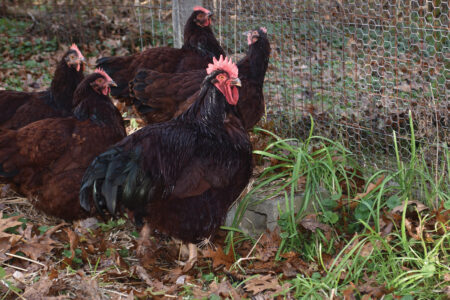
I am planning on some feeder calves, couple of sheep and, of course, chickens. We have one hen now that is about five years old that has survived attacks by dogs in town and opossum out here. Other chicks will soon join her as Orscheln is now selling chicks. Enough about me and the place. My goal here is to talk about honeybees. Most beekeepers are happy to talk about their bees, they are fascinating insects.
As a reader of GRIT, you are interested in the rural life and the things that go on out in the sticks. You like to hear about gardening, canning, sheep, cattle, etc. The honeybee is just as much a part of the farm as the others. Back when many farmers in the country had a cow for milk, a garden for vegetables, and chickens for eggs and meat, they also had a hive of bees for honey and the much used beeswax. My hope is that with more people moving out of the city to small acreages, they would consider a hive of honeybees a part of the rural life as much as a horse or calf, if not a hive at least plant some clover or wildflowers on the land. Grass is pretty but doesn’t help our wildlife, plus it has to be mowed to look nice
In the following months I will tell you how to establish a hive of honeybees and how to take care of them. We’ll talk about equipment and its many variables. Even the honeybee comes in different strains, which we will also go over. Most anywhere you live (with the exception of places where there are ordinances against having honeybees) you can have a single hive. They are easy to take care of, and one hive won’t cost that much or take that much extra time, while at the same time giving you the satisfaction of knowing you are helping pollinate the plants in your area and producing pure delicious honey.
Towards the end of April we’ll be installing that new package of bees, so stay tuned. If you have questions, just post in the comments, and I will cover what topics you’re interested in. Thanks for reading.