My local public library is starting a seed library. In honor of its launch, I’ll be exploring the basics of seed starting and saving, learning about which plants are best for particular applications, and how to plan and prepare for a successful growing season.
Successful seed saving begins with choosing seeds that have the potential to be saved (not in the religious sense). Seeds of any plant – herb, vegetable, or flower – are either open-pollinated (OP) or hybrids. Only open-pollinated seeds can be saved successfully.
What is an open-pollinated plant?
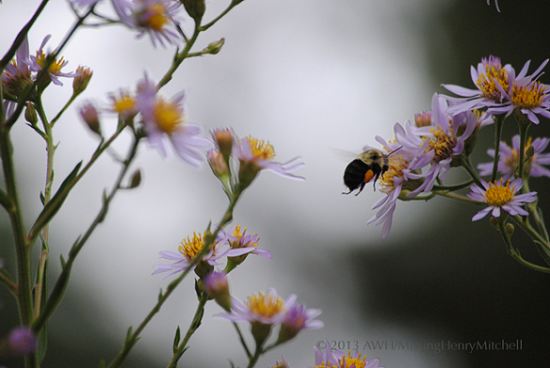
Open-pollinated plants are plants that are allowed to cross-pollinate by wind, insects, birds and other means, or they may self-pollinate. Over time and with careful selection, open-pollinated varieties can stabilize, meaning that the parents and offspring naturally share similar traits, closely resemble one another, and are easily distinguished from others in its species (e.g., one variety of tomato, like ‘Brandywine,’ is clearly distinguished from another, like ‘Cherokee Purple’ or ‘Green Zebra’).
What is an F1 hybrid?
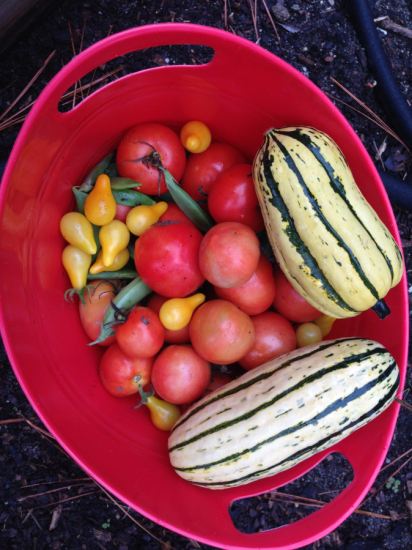
Hybrids are made by specifically crossing two different species or varieties. Growers breed commercial hybrids to produce a specific trait, like uniform appearance, concise ripening periods (useful for large-scale machine harvesting), resistance to bruising, or long shelf life. Many of the traits found in modern hybrids were selected with large-scale commercial agriculture in mind.
F1 refers to the first generation produced from a specific cross. If seeds are saved from the fruits of F1 hybrid plants, they will not be “true to type”; that is, they won’t reliably resemble the parent plant. To get a similar plant to the one that produced those fruits, a gardener would have to cross the original parents again. F1 hybrids are typically vigorous plants and good producers, but new seeds must be purchased year after year.
Are hybrids the same as genetically modified organisms (GMOs)?
No. While hybrids are made by crossing distinctly different species or varieties, GMOs are practically defined in the Cartagena Protocol on Biosafety as living organisms that possess “a novel combination of genetic material obtained through the use of modern biotechnology.” (Cartagena Protocol on Biosafety, Article 3, “Living Modified Organism”). (While the Cartagena Protocol does not specifically mention the term “genetically modified organism,” its term “living modified organism” defined in Article 3 is essentially synonymous.)
In practical terms, this means that GMOs are organisms that contain genetic combinations that couldn’t occur in nature. Think back to your grade-school biology classes: Remember learning taxonomy (kingdom, phylum/division, class, order, family, genus, species)? In GMOs, sometimes genes from organisms belonging to different kingdoms are shared, as in the case of Bt corn, corn genetically engineered to produce its own pesticide. To produce Bt corn, bioengineers inserted certain genes of Bacillus thuringiensis, a naturally occurring soil bacterium often used in mosquito controls, into the corn’s genetic material.
If hybrids are vigorous plants and good producers, and seeds are inexpensive to purchase, why should I bother trying to save seed from open-pollinated plants?
Open-pollinated seeds contribute to genetic diversity, which is important to help plants adapt to changing climates and related environmental factors (changing pests and diseases, etc.). Over time, a gardener may improve a variety so that it is particularly well adapted to the local environment, potentially reducing that gardener’s inputs (i.e., saving that gardener time and money!) to a crop, relative to non-adapted varieties.
Plus, it’s a lot of fun.
A quick comparison of open-pollinated vs. hybrid seeds and plants:
|
Open-pollinated seeds
|
F1 Hybrids |
|
Includes, but are not limited to, heirloom varieties. |
Are relatively new to the ecological scene, having developed with the advent of commercial agriculture. |
|
Are pollinated by wind, birds, insects, etc., in an uncontrolled way. |
Are made by human intervention, deliberately crossing two distinct species or varieties. |
|
Are more genetically diverse as a result of this open and uncontrolled pollination. |
Possess the genetics of the two parents, which may themselves have been crossed back with one of their parents. |
|
Will not all look or perform the same. |
Are very consistent in performance and appearance. Are typically vigorous and good producers. |
|
Have not been bred for specific traits, but may have been selected over time for taste, resiliency, disease resistance or other factors. |
Have almost always been bred by a grower to have specific traits. |
|
Are more likely to be well adapted to their particular region and its challenges. |
May not be well adapted to a given region and might be susceptible to particular disease or insect problems, potentially requiring more pesticides or active management. |
How do I know if I’m growing open-pollinated or hybrid seeds?
If you ordered the seeds from a catalog, look in the catalog entry or on the grower’s website. Hybrid types will usually have the words “hybrid” or “F1” in the description. These words may also be on the seed packet.
You may also do an Internet search of your seed variety’s name (what’s enclosed in single parentheses on the packet, like ‘Brandywine’ or ‘Big Beef’) to find out whether it’s open-pollinated or a hybrid.
Cornell University maintains a public, citizen-science database called Vegetable Varieties for Gardeners. Home gardeners throughout the United States can search the database to find varieties well suited for their growing areas, including both hybrids and open-pollinated plants. Creating a login allows gardeners to provide their own reviews of the varieties they grow and to help build understanding of regional adaptability of different varieties.
In another post, I’ll write about the differences between open-pollinated plants and heirloom varieties.
For more information on open-pollinated plants, hybrids and GMOs, see the following resources:
Open Pollination:Southern Exposure Seed Exchange
Bt corn: Health and the Environment (fact sheet), Colorado State University Extension