Select a brassica from our brassica vegetable list and learn to grow a world of crops, colors, and flavors under a single plant genus.
Aside from being common garden vegetables, what do cabbage, kale, collards, broccoli, cauliflower, Brussels sprouts, and kohlrabi have in common? They’re all members of a single species: Brassica oleracea. And for gardeners, there’s plenty more diversity within the Brassica genus.
There’s a multitude of Latin names and cultivars, but the main point is that this single genus yields a tremendous number of food crops, and crops of economic importance. I haven’t even mentioned the roughly 30 other species of brassica, most of which produce some relatively obscure forms of cabbage or mustard. Collectively, brassicas are sometimes referred to as cruciferous vegetables or cole crops, although these designations also include some plants outside of the genus.
Eat Up
Brassica vegetables are nutritious with high levels of vitamin C, fiber, and carotenoids. Compounds in brassicas also have anti-oxidant properties and possibly even anti-cancer properties — the latter is still being studied. Boiling reduces the levels of some of these nutrients, but briefly stir-frying, microwaving, or steaming helps retain the healthful qualities.
Brassica vegetables may be fermented and eaten. Sauerkraut is made from cabbage, and kimchi is made from napa cabbage. Some of the beneficial compounds in the plants are reduced during fermentation, but both are still high in vitamin C and fiber. The low pH of these foods means their vitamin C is more bioavailable.
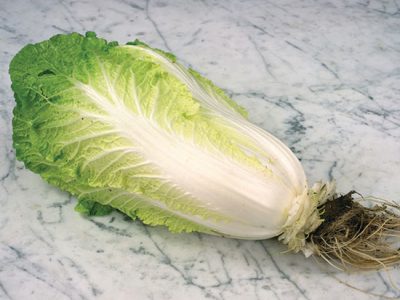
Red Express cabbage is cold-tolerant and good for northern states.[/caption]
All parts of brassica vegetables are edible. So, you can eat broccoli and cauliflower leaves, or cabbage inflorescences. In addition, brassicas do not need to be ripe to consume — you can eat their sprouts or leaves at any stage of growth. “Baby” kale, for example, is more tender, and some say better tasting, than mature kale.
Sunny Spot in the Garden
Brassicas grow best in full sun, but will tolerate light shade. They are heavy feeders requiring a lot of nitrogen, phosphorus, and potassium — the NPK of plant fertilizers. An application of compost, or plant fertilizer, to the garden before planting will help with early growth.
Halfway through the growing season, side dress the plants with some compost or liquid fertilizer. Be sure to watch throughout the growing season for yellow leaves (a sign of nitrogen deficiency) or purple leaves (a sign of phosphorous deficiency). Of course, some cultivars are bred to be purple, but you will know what you planted.
As heavy feeders, brassicas will do well following legumes in garden rotation. They should be followed by a “light feeder.” Planting brassicas two years in a row in the same plot runs the risk of disease, especially clubroot, and the soil may be depleted of nutrients.
If you are going to plant one species, you may want to plant as many varieties as interest you. However, some gardeners may worry about crossbreeding. Won’t all the different varieties hybridize? They would if you let them flower. However, most brassicas are biennials grown as annuals. As such, they won’t interbreed until the second year, and they will be on the compost heap by then.
Most brassicas will grow in soils with a pH between 6.0 and 7.0, but the top half of that range, 6.5 to 7.0, is better. If too acidic, the pH of garden soil can be adjusted with agricultural lime. Most soil amendments will have instructions on how much to add based on current pH and soil type. If you suspect your soil is acidic, it’s best to test it and apply lime before planting.
Proper Planting
Most brassica crops are biennials grown as annuals. In other words, in regions where they will survive the winter, they will flower and set seed in their second year. They do not thrive in heat. Gardeners in the northern part of the United States should sow seeds indoors four to six weeks before the last frost date for a spring planting. Gardeners in the southern U.S. should sow seeds in flats 12 to 16 weeks before the first frost for a fall planting. Some brassicas will do well in a northern fall garden.
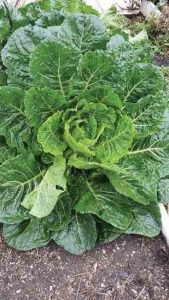
Brassica seeds are tiny and should be covered with a very thin layer of potting soil, only a millimeter or two thick. Keep the potting mix evenly moist during germination. Most cultivars germinate best around 85 degrees Fahrenheit, but will do fine around room temperature.
Transplants should be moved to the garden when they produce their first four or five true leaves. The first two “seed leaves” on the seedling are cotyledons; count only the leaves that emerge after this as true leaves.
In northern regions, transplant seedlings to the garden when there is no danger of frost, and temperatures most days exceed 50 degrees, but early enough so the crop can mature before the daily high temperature reaches 85. In most places, this means immediately or soon after the threat of frost is gone.
In southern regions, transplants can be moved to the fall garden when the temperatures are still high, but the plants will need to mature in cool weather — optimally 60 to 70 degrees — to be palatable. Most brassicas are fairly cold-tolerant, and Brussels sprouts even benefit in flavor from a light freeze. When temperatures sink toward, or slightly below, freezing, row covers will help protect the crops.
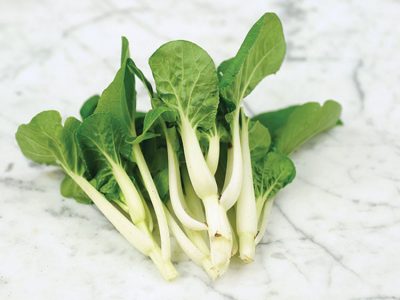
The spacing of plants depends on the cultivar. Some Brussels sprouts cultivars are planted up to 24 inches apart. Most cabbage, broccoli, and cauliflower varieties require 15 to 18 inches of spacing.
Kohlrabi and rutabagas typically need 6 to 8 inches, and turnips may only need 3 to 4 inches between each plant. The space between rows is greater, but proportional to the space between plants in a row. Seed packets will include the specific details for each cultivar.
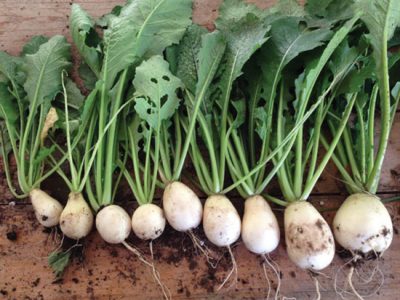
Seed packets provide growing time for individual cultivars, and most people are familiar with the mature form of the vegetable, so harvest timing isn’t too difficult. And you don’t need to wait for brassicas to fully ripen. In the South, it is common to harvest only a few leaves of collards as needed. This means that there is no single harvest, and fresh leaves are available continuously over a period of time. The same can be done with cabbages. In addition, you can break off small cauliflower or broccoli curds, or individual Brussels sprouts, and taste them before deciding to harvest everything from the plant. In the case of an impending hard freeze, you can harvest everything you’ll use before it arrives.
Rainbow of Brassicas
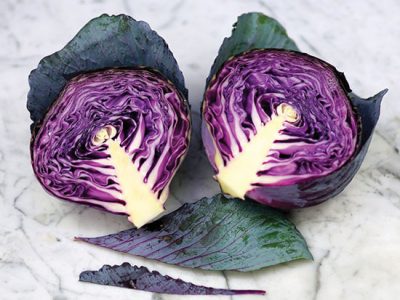
Brassicas show a wide variety of colors. In fact, some cultivars are grown as ornamentals. These plants are rich in carotenoids, a plant pigment. Broccoli is especially rich in carotenoids. These pigments typically confer a yellow or orange color to plants, but most brassicas don’t show these colors as other pigments overshadow them. A few ornamental varieties show these colors, but most standard garden cultivars do not. Plant colors run the gamut from greens to yellows to blue-greens. In addition, many cultivars are purple, from the plant pigment anthocyanin.
The head of a classic cauliflower is white, but this isn’t the plant’s natural color. White cauliflower heads are produced by “blanching” — folding the outer leaves of the plant over the head to deprive it of sunlight. When the heads, also called curds, of the cauliflower reach the size of a chicken egg, fold the outer leaves over them and fasten the leaves together using either a rubber band or a clothespin. Without blanching, the curds would have a green tint and would be more bitter than blanched curds.
Pest Problems
Brassicas are subject to all of the typical problems with garden plants, including downy mildew and powdery mildew. And there are a few problems that are especially pronounced. Perhaps because their parts are edible at every stage, not chemically protected, a wide variety of moths and butterflies lay their eggs on brassica leaves. Many of these insects even have “cabbage” in their name: cabbage loopers, cabbage webworms, and cross-striped cabbageworms, to name a few. The hungry caterpillars that emerge can quickly defoliate a plant, especially a young seedling. Keep this in check by closely examining transplants before transplanting to the garden, and cover plants with row covers. In organic gardens, treat with a Bacillus thuringiensis (Bt)pesticide. Simply inspecting the undersides of leaves, especially damaged leaves, every few days and removing caterpillars can be effective in smaller gardens.
Another problem especially pronounced in the Brassica genus is clubroot. Clubroot is caused by the fungus Plasmodiophora brassicae , which causes galls, or knots, in the roots. The root galls can cause plants to wilt and eventually die. Clubroot thrives in wet soils with a pH less than 6.5, especially when temperatures are in the 68 to 75 degree range. Control methods include crop rotation and increasing the soil pH to 7.1 to 7.2 — high for garden soils — with agricultural lime. The high pH doesn’t kill the fungus, but slows its growth drastically. Affected plants should be removed from the garden as soon as possible, and not composted. Even if clubroot has not affected your plants, it is best not to compost the roots of brassica crops. Serious clubroot infestations may require brassicas to be taken out of rotation in that plot for 20 years. This disease has caused serious problems in the canola fields of Canada.
If you’re interested in growing a wide variety of healthy vegetables, all from a single genus, here’s what to do. Identify the cool seasons in your region and plan ahead by seeding flats indoors, four to six weeks before you will transplant the seedlings into the garden. Check your soil pH, and if needed, adding lime to increase the pH to at least 6.5; closer to 7.0 will help prevent clubroot.
Add compost or fertilizer to enrich the soil, as brassicas are heavy feeders on nitrogen (N), phosphorus (P), and potassium (K). They are also sensitive to boron deficiency, so a tiny bit of borax (or any mineral rich in boron) is a smart preventative measure. During the growing season, keep an eye out for caterpillars. Use row covers to keep the moths and butterflies away. And finally, watch for yellow or purple leaves — signs of nutrient deficiencies — and side dress any plant showing lack of vigor.
This is more garden prep than many vegetable crops require, but with properly prepared soil, brassicas will develop rapidly, and you’ll soon have healthy, colorful plants filling your garden.
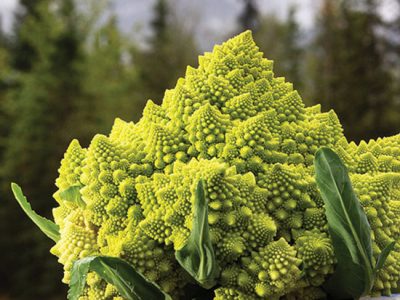
Grow rare varieties of broccoli along with your favorites.
Common Brassica Species & Cultivars
Brassica oleracea
• Wild cabbage (not cultivated)
• Acephala: kale and collards
• Alboglabra: Chinese broccoli
• Botrytis: cauliflower, Romanesco broccoli, and broccoflower
• Capitata: cabbage, savoy cabbage, red cabbagev
• Gemmifera: Brussels sprouts
• Gongylodes: kohlrabi
• Italica: broccoli
Brassica rapa
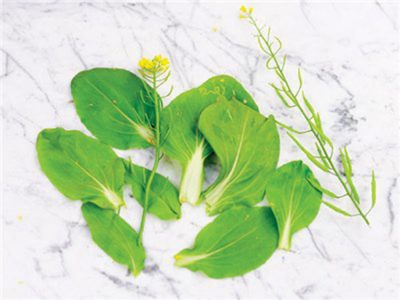
• bok choy
• Chinese cabbage
• napa cabbage
• turnip
Brassica nigra
• black mustard
Brassica napus
• rapeseed (including canola)
• rutabaga
Brassica juncea
• brown mustard
• Indian mustard
• leaf mustard
Brassica carinata
• Abyssinian mustard or Abyssinian cabbage
Home gardeners are unlikely to grow rapeseed, but commercially B. napus is the third largest source of vegetable oil in the world. Canola is a type of rapeseed that is low in erucic acid, which was at one time implicated as a possible factor leading to heart disease. The name canola combines “can-” for Canada and “-ola” for oil. The name was chosen by a coalition of Canadian growers looking to differentiate their product from other rapeseed oils and to find a more marketable name.
Chris Colby is an avid gardener who lives in Bastrop, Texas, with his wife and cats. His academic background is in biology, but his main interest is in brewing beer.