What is succession planting? Succession planting is a technique of continued planting of seeds with a goal of continuous and uninterrupted supply of harvested fresh vegetables.
The goal of succession planting is simple — to enjoy a continuous and uninterrupted supply of fresh vegetables. This type of planting is particularly important in small backyard gardens, where space is at a premium. Many of my favorite crops for succession planting are those that thrive in the cool or cold weather of spring and fall. They enjoy an extended growing season, unlike warm-season crops, which have a very specific window of cultivation between the frost dates.
Successful succession planting starts with a little planning. Make a list of what you want to grow, and then write in the expected planting dates and the number of days until harvest. That way, you’ll know how long it’ll take from the time you plant to when you can expect to start gathering each crop. Some crops, such as leaf lettuce, can produce over an extended period, so it’s also helpful to know the general length of the expected harvest. After the crop is finished, it’ll be time to replant.
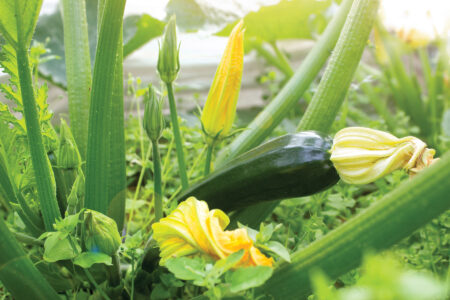
In addition to creating an endless harvest, succession planting can help you outwit insect pests by avoiding their prime season. If squash vine borers are a problem in your garden, you can plant a second crop of zucchini in early summer, after the adult borers have finished laying their eggs. To put succession planting to work for you, keep the following advice in mind.
Keep on planting
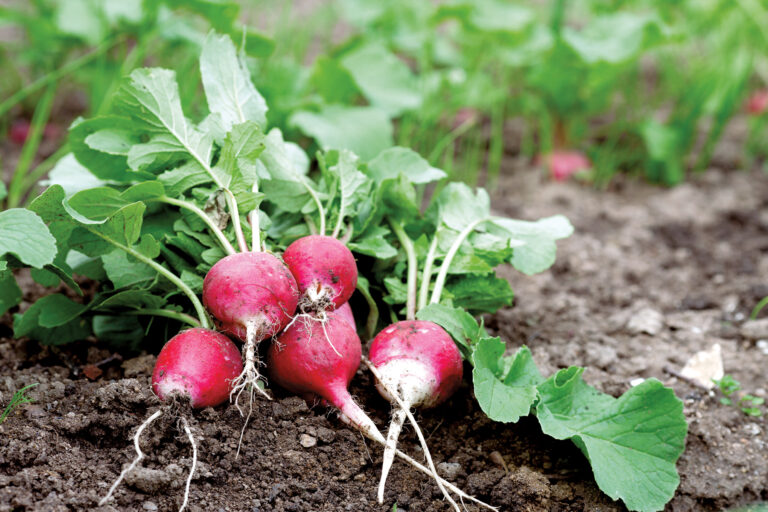
One of the easiest ways to practice succession planting is simply to keep on seeding. This technique works best with quick-growing vegetables, such as lettuce, arugula, radishes, and bush beans, which can be planted every few weeks. Continual sowing will produce a staggered harvest — that is, your whole crop won’t be ready at the same time. After all, who needs to have a whole packet of radish seeds mature at once? For a family of four, it makes more sense to sow about 20 radish seeds every two weeks. After radishes reach maturity, they start to lose their quality rather quickly. By planting in succession, you’ll be able to harvest perfectly mature radishes for months.
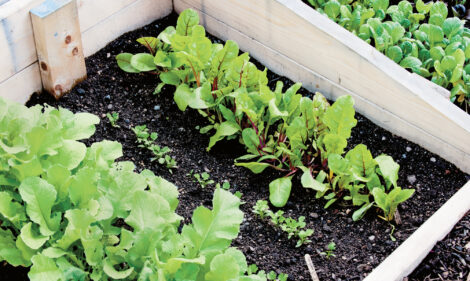
To keep on seeding, you’ll need to leave space in your garden bed for subsequent plantings. In our garden, we often divide a 4-by-4-foot bed into six mini-rows, each measuring about 8 inches wide and planted right up next to each other — no wasted space! I can sow a mini-row of leaf lettuce or mesclun mix every two weeks for a continuous crop from early spring to late fall. By the time my second and third mini-rows are ready to harvest, the first will be exhausted and ready for the compost heap. Then, I work an inch of compost into the original row and replant with more leaf lettuce, or another crop of my choice.
Some crops that are ideal for this type of succession planting are radishes, bush beans, beets, kohlrabi, carrots, and most salad greens.
Pick and sow
I also like to practice the pick-and-sow type of succession planting. This method allows me to grow a continuous series of vegetables in the same space over the course of the gardening year by following one crop with another. After the first crop is finished, I remove it and plant another in its place. For example, I often follow spring radishes with ‘Black Seeded Simpson’ lettuce, followed by arugula, followed by tomatoes, followed by a crop of fall radishes. The garden space is never empty, and by varying the types of vegetables grown in each successive planting, I help prevent the depletion of certain nutrients. You can grow any crop with this technique, as long as you plant at a time appropriate to the vegetable (cool, warm, or cold season) and leave enough time for the crop to mature.
Another easy way to use the pick-and-sow method is to let the season dictate what you plant. Start with a cool-season crop, such as peas or broccoli, which can be planted very early in spring (super-early crops can be grown under mini hoop tunnels). After this initial crop has been harvested, the weather will have warmed up, and you can plant a warm-season crop — corn, tomatoes, or bush beans — in the same space. After a late-summer harvest, pull the warm-season crop and replace it with another cool- or cold-season vegetable — kale, arugula, winter lettuce, spinach, radishes, or mache, for example.
Choose staggered varieties
My family loves broccoli, so I like to have an ample supply on hand from early summer to late fall. Keeping a handful of broccoli transplants on hand for succession planting every few weeks is a pain, though; I’m just not that organized! I rely on a third succession planting technique. Choosing staggered varieties enables me to make just two plantings — one in spring for a summer harvest, and one in midsummer for a fall harvest. The key is to select varieties that mature at different times so that each harvest — summer and fall — is extended for as long as possible. You can buy separate varieties, or you can buy a mixed packet of seed (often called “All-Season Blend”). By planting early-, mid-, and late-maturing types of broccoli at once, our summer harvest stretches over a period of about two months instead of three weeks. This mixture of maturity dates prevents all 40 of our broccoli plants from being ready at the same time, which might be fine for a market garden but not for a backyard family vegetable patch. No matter how much we like it, one family can eat only so much broccoli.
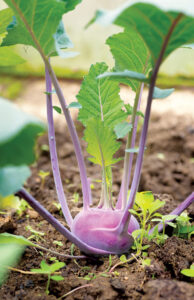
This technique will also work for many other crops, including cabbage, cauliflower, kohlrabi, beets, turnips, potatoes, tomatoes, and peas.
Related: Install a retractable hoop house for your small backyard garden.
Five vegetables to plant
- Leaf lettuce. Because we eat so many salads and because it’s so quick and easy to grow, I rely on leaf lettuce to fill in any unexpected empty spaces in the garden. A quick sprinkling of seed results in a generous harvest in just a few weeks. What could be easier? Plus, with such an array of leaf colors, shapes, and textures, lettuces are as pretty as they are productive.
![Greens And Tomatoes Inside Hoop House]()
- Arugula. Arugula is another workhorse in the garden. It tolerates the unstable weather of early spring and late fall, and it grows so quickly that it’s also known as “rocket.”
- Bush beans. Many bush bean varieties are ready to harvest in just 50 days, making them ideal for succession planting. We start sowing seed directly in the garden in mid-May and continue sowing every two to three weeks until late July.
- Radishes. Perhaps the perfect succession crop, radishes are ridiculously fast growing; they’re often ready for harvest in just 21 days. Unless you have a serious hankering for radishes, just sow a small amount of seed every week or two for a continuous supply of fresh roots. You can also succession-plant an assortment of varieties for an extended harvest. We like ‘Cherry Belle’ (21 days), ‘French Breakfast’ (28 days), and ‘White Icicle’ (35 days).
- Carrots. One of my garden goals is to have fresh carrots ready for harvest 365 days a year! Although that takes both planning and luck, we’re able to enjoy carrots most of the year. In spring, summer, and fall, baby carrots will be ready to pick in just less than two months. You can also get a jump on the spring crop by sowing a band of seed in a cold frame in late winter.
Five tips for success
- Plan in advance. Although I can’t claim to be a super-organized gardener, I’m always sure to order enough seed for a full year of succession planting. If stored properly, most seed will easily keep for several years. Even if you don’t use it all that first season, you can save the rest for the future.
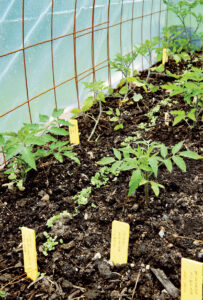
- Start more seedlings. By mid-May, my warm-season vegetable seedlings have been planted in the garden, and the space under my grow light is empty. But it’s not time to unplug for the season. Instead, I start planning for succession crops and fall and winter harvests. I begin by planting more cucumber seeds, which are relatively quick-growing and will supply a second crop of crisp cukes for a late-summer harvest, just when the first crop starts to lose steam. Also, I’ll seed more celery for a second yield in late summer and fall — the first planting tends to get pithy and hollow if left to mature. Then, in mid-June, I’ll plant a new crop of broccoli and kale that I’ll transplant to the garden in late July for a cool- and cold-season harvest. With a little protection, the kale will keep producing throughout the winter.
- Feed the soil. To keep production high, I always add a 1-inch layer of compost to the garden between successive crops. If your soil isn’t overly fertile, add a granular organic fertilizer at this time; follow the directions on the package.
- Turn over plantings quickly. To get the most out of your space, remove any spent crops immediately after harvest, or as soon as their production declines. Don’t wait for the last few peas to mature — just yank out the plants, toss them on the compost pile, and replant right away with another family favorite.
![Gardener Pulling Up Plants]()
- Don’t forget rotation. It’s important to keep in mind what’s planted where. Try to group families (for example, legumes, including beans, peas, and soybeans). If certain diseases or insects are an annual issue, it’s essential to keep rotating your crops. A three-year rotation is considered adequate for most problems — but the longer the rotation, the better.
Excerpted from The Year-Round Vegetable Gardener, © by Niki Jabbour, used with permission from Storey Publishing. Niki Jabbour is an all-season gardener in Halifax, Nova Scotia (Zone 6b). A popular lecturer, she’s been on the air since 2008 with her award-winning radio show The Weekend Gardener.