Assess and maintain grassland health and keep your herds well-fed on native grasses and forbs with these pasture management techniques.
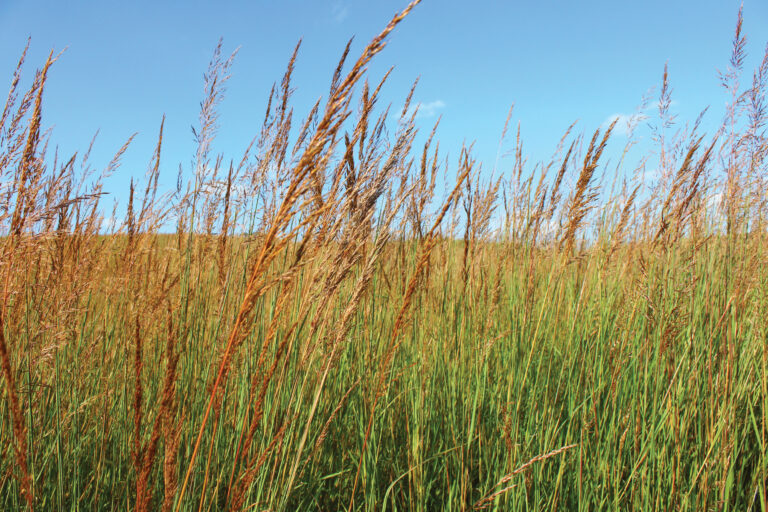
In the middle of a tallgrass prairie, it can seem like time stands still. Day after day, the bluestem grass sways in the breeze, and the buffalo wallows continue to look like a herd of bison passed through just the other day. Underneath this calm façade, though, an entire ecosystem is hard at work. With the right care, you can work in conjunction with that ecosystem to find a system for managing your grassland that benefits both your pasture and your animals.
Know Your Landscape
For centuries, tallgrass prairies have played a vital part in ranching and cattle production.
While these pastures can be left to their own devices, without proper management and care, they can fall prey to invasive trees and noxious weeds. As my brother-in-law, Klayton Krispense, says, “If not cared for, your productive piece of grassland can become a depressing section of wasteland.”
Doug Spencer, state grazing specialist with the Kansas Natural Resources Conservation Service, explains some of the basic principles of good grassland management: “Know your landscape and ecological context, the needs of the plants, the needs of the animals or livestock, and work to strike a balance of meeting needs while providing additional ecosystem services,” he says. “Herbivory [grazing and browsing], fire, and climate interacted to shape Kansas grasslands.”

When looking at your piece of rangeland, consider what factors are affecting it. What kind of forage does it produce? Is it grazed regularly, or has it been overgrazed? Has it been burned recently? Are invasive weeds present? According to Spencer, you should ask yourself whether you’re fully understanding and properly utilizing all the factors contributing to the current condition of your grassland.
Evaluate Regularly
Keep a watchful eye on your grassland to help avoid any unpleasant surprises. We regularly evaluate pastures in spring and fall, before we put the cattle out to grass and then again to know when to take them off.
In early spring, we perform regular maintenance and repair to our fences, and we evaluate the pastures to see if burning would be beneficial. If a piece of grassland is infested with small trees (such as cedars), was unevenly grazed the previous season, or was partially burned at some point, a controlled burn can help promote an even level of new growth, which helps encourage cattle to graze the entire pasture instead of favoring sections.
Signs of Grassland Health: Native Grasses and Forbs
Most pastures in our area of the Flint Hills consist of a blend of native grasses and forbs. Many forbs get a bad rap as “weeds,” but just because a plant is considered a weed doesn’t necessarily mean it’s harmful. Weeds can simply be unwanted plants in a particular place. According to research done by the Kansas Agricultural Experiment Station in 2012, up to 29% of a cow’s diet can consist of forbs. Before undergoing harsh treatments to remove the “weeds” from your pasture, consider whether some of them are beneficial feed for your herd.
Keep in mind, though, that some species of plants and trees can be harmful to an ecosystem, and even considered “noxious.” In grassland specifically, sericea lespedeza and musk thistle can cause concern. “Additional plants, such as teasel [common or cut-leaf] and old-world bluestems can be county-option-designated and are also on the increase in grasslands,” Spencer says. “While not noxious, there are additional plants that could be considered invasive or obnoxious within grasslands. Some woody species to be concerned with include eastern red cedar, hedge, and locust, but several others can invade depending on what the local seed source is. The loss of grasslands due to woody plant encroachment is a serious concern across the Great Plains. When grasslands are lost, we lose biodiversity, pollinators, working lands, opportunities for hunting and outdoor recreation, carbon sequestration, and water security.”
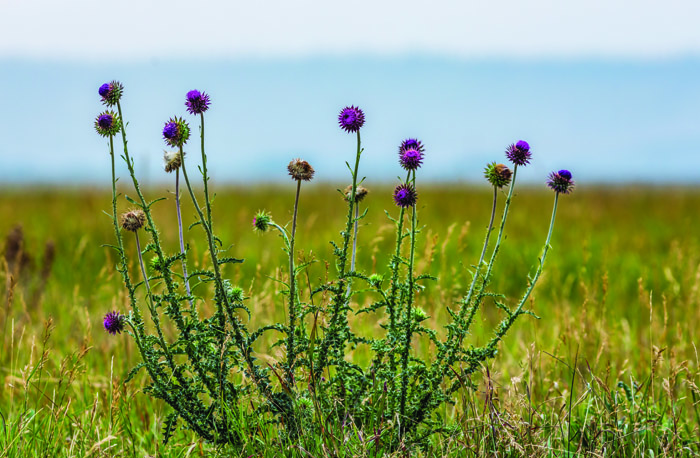
According to Spencer, a pasture that contains quite a few weeds could indicate a large amount of bare ground, allowing weeds a place to both germinate and grow. Broomweed can come up in large quantities if the ground was bare the previous fall. Weeds can also indicate a weakened community of native plants, which can be a result of anything from drought to overgrazing.
For help identifying weeds and developing a treatment plan, contact your local county extension agent or rangeland specialist. They may even have suggestions for preventative measures you can take to avoid the issue in the future.
Sometimes, a simple step can be taken to help prevent an infestation. For example, if musk thistle is located in our pastures, we remove the entire plant (with gloves!) and put any seed heads in a separate feed sack to be burned. If not managed properly, musk thistle can spread between pastures and cause issues for neighbors, so it’s important to keep on top of it regularly.
Grassland Soil Health
Healthy soil is the foundation of healthy grassland. When asked about soil health, Spencer tells people that grasslands are managed by observing only about a third of the whole situation, as about two-thirds of annual production remains underground, keeping the soil healthy and supporting the biotic community. “Complete turnover in root systems happens every three years or so and leads to high organic matter content in our grassland soils,” he says. “We make management decisions viewing a third of the situation, and our treatment of the aboveground community has a twofold impact belowground. It’s up to the manager to decide if that’s a positive or negative impact.”
According to Spencer, if you dig down into well-managed native rangeland, you’d hope to find healthy soil that’s dark in color thanks to the high organic matter content. It would be full of live roots and, as Spencer puts it, “well-aggregated, resembling cottage cheese curds.”
Not all soil is created equal, so it’s helpful to have a basic understanding of the various types of soil you might have. “Knowing your soils is part of knowing your landscape and ecological context,” Spencer says.
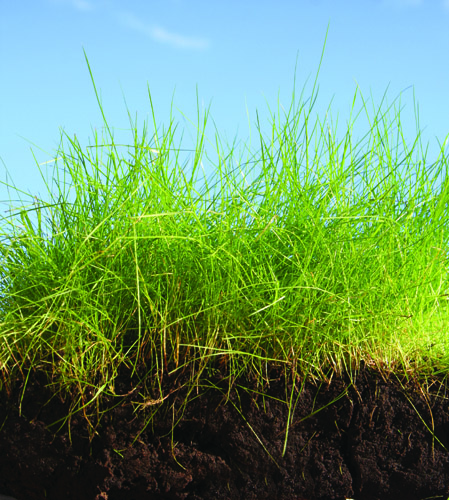
According to agronomist Andy Kelsey, soil types can change within every 1/4 to 1/2 mile. Some examples of common soil types in our area include Irwin silty clay, clime silty clay loam, reading silt loam, and Labette silty clay.
Clay is finely textured and “sticky” if wet. It can range in color from black to gray and even yellow in some places. Sandy soil has loose particles that don’t retain water or nutrients. Loam soil has larger particles, allowing plant roots to penetrate deeper and water to better infiltrate. An example of silt soil can be found in fields where water has washed the top layer of soil into a concentrated area called a “silt bar.” Silt particles are between the size of clay and sand particles, and they can feel somewhat slippery to the touch.
To learn more about your soil, check out the U.S. Department of Agriculture Natural Resources Conservation Service’s (NRCS) Web Soil Survey or the SoilWeb app, developed by the NRCS and the University of California, Davis, Soil Resource Laboratory. Results can be detailed, even down to a specific area of a field.
Manage Erosion
While erosion doesn’t affect grassland production as much as it can affect cropland, it’ll certainly change how your land continues to function. According to Spencer, if the plant community is weakened, it can lead to bare ground, offering more place for water runoff. In areas where cattle walk the same path day after day, eventually wearing a “cow trail” into the ground, water will flow to the lowest point, continually running down through the cow path as it cuts away dirt. Eventually, a ravine can form.

To help manage erosion, Spencer says you should maintain healthy grassland and watch for any changes in the pasture. “Identify where changes in water flow or vegetation cover are occurring or could occur, minimize the negative animal disturbances, and allow vegetation recovery,” he says. “Proactive management decisions will help prevent the need for costly items, such [as] engineered structures for erosion control.”
Pros and Cons of Controlled Burns
When a controlled burn is executed properly and during the appropriate season, it helps eliminate any remaining dead grass and debris from the previous grazing season, removes parasites and ticks overwintering in the grass, and promotes a more even growth of new grass. According to Kelsey, if a controlled burn is done at certain times, it can be used to target and kill specific weeds that are just beginning to grow, as well as any remaining weed seed.
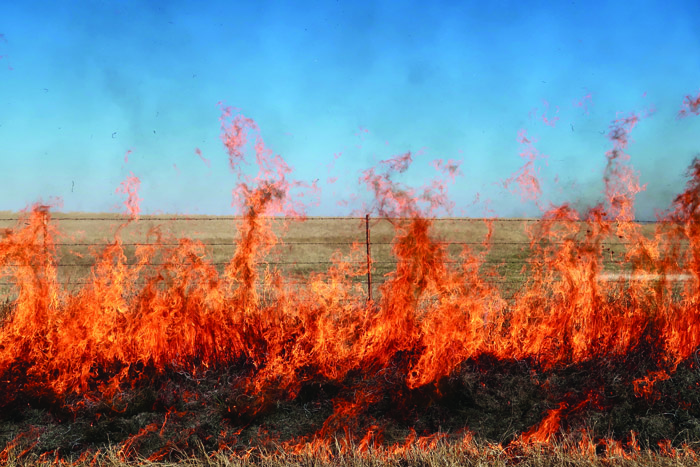
While fire certainly can be helpful, it has some drawbacks. Kelsey notes that as fire burns, nitrogen and sulfur are gassed off into the atmosphere (both of which are extremely important for good growth in a majority of plants), and potassium is lost as ash remaining after the fire then blows away.
As a grassland manager, weigh the pros and cons and make an informed decision before implementing a controlled burn. Consider the climate. Is it forecasted to be an extremely dry season? Look at how even the grass is. Notice if only a specific section of the pasture has been grazed and if there’s a large amount of tall, dead grass that could poke cattle in the eyes as they reach for the shorter, new growth.
Pasture Management and Grazing Systems
When keeping livestock on grassland, Spencer says you must know the carrying capacity of your pasture before you decide on a particular grazing system. While you have several options to consider, he suggests implementing a system that’s manageable for both your availability and your skills. You’ll also want to choose a system that meets the needs of both your grassland and your animals.
Methods of management can change from year to year and season to season. Spencer warned against continuing with the same management style just because it worked in the past. Keep in mind the changing variables each year, whether lack of rain, changes in the sizes of animals (and demand for forage), or any change in feed production due to an invasive species moving in. For example, according to my father-in-law, Todd Krispense, a local rancher and third-generation cattleman, it can be good to stock a pasture lighter or remove the animals sooner during dry years. Keep watch on how much forage is available, and don’t automatically assume you need to burn each spring. In colder climates, if grass is overgrazed in fall before going dormant and freezing, it can be hard on the root system. To avoid this, don’t leave livestock to graze too late into the season.
Grazing systems come in a variety of different shapes and sizes, from a single animal left in a pasture year-round to an intense “mob grazing” system, where a herd is regularly rotated to a new section of grass. What we implement on our farm is a hybrid system; we stock a single pasture heavily, but we don’t leave the cattle on late into the season.

It can also be beneficial to graze more than one type of animal at a time. Klayton Krispense raises Boer goats, which tend to eat forbs, woody plants (such as buckbrush), and other unwanted pasture plant species that cattle might normally pass up in exchange for grass. I encourage you to read more on multi-species grazing systems and the benefits they offer, including reduced parasite problems and targeted plant control.
According to Todd Krispense, when managing rangeland, it’s important to keep a long-term plan in mind. Even though it might seem like a particular practice or method is profitable in the short term (such as overstocking or overgrazing), some practices can be detrimental to your grassland and will cause damage when continued for a longer period. While some producers push for more animal productivity, an old rule of thumb for forage production is “take half, leave half.”
Whether you have a single animal or an entire herd, making an effort to manage your grassland effectively will be important to the long-term health, productivity, and profitability of not only your land, but your animals too!
Ashleigh Krispense is a farmer’s wife and freelance writer from central Kansas, where she lives with her husband, Kolton, and their menagerie of critters. You can follow along with her recipes, ramblings, and farm happenings on her website, Prairie Gal Cookin.
Originally published as “Manage Healthy Grassland” in the July/August 2023 issue of Grit magazine and regularly vetted for accuracy.