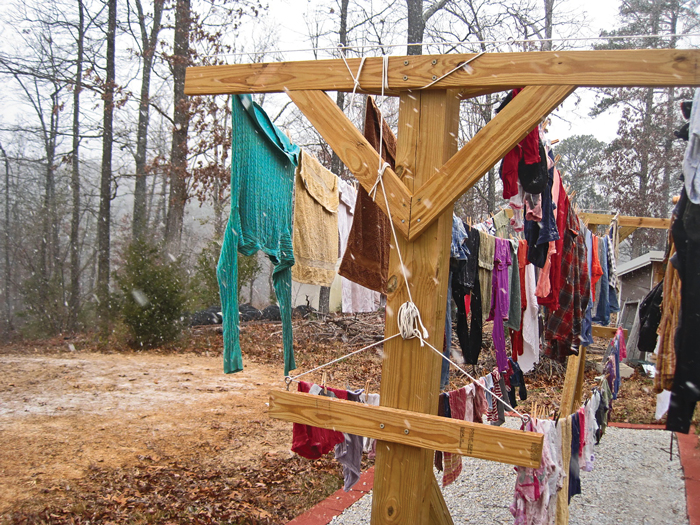
Moving off the grid can mean any necessary resource that is not self-generated. Discover what you need to consider and do some soul-searching before making the big leap.
Two hundred years ago, if you were living in the United States and said you wanted to go off-grid, you’d have gotten some confused looks. “The grid,” as we know it today, got its start in relatively tiny sections in 1880s New York City and wasn’t quickly or widely expanded from there. The first transmission line went up in Oregon in 1889 and in the mid-1920s only about half of U.S. households had electricity. It wasn’t until the Rural Electrification Act of 1936 that the grid really took off. Up until then, folks were generally used to cooking and heating with gas, coal, or wood and weren’t quick to change.
The modern usage of “off-grid,” popularized during the 1970’s back-to-the-land movement, was a largely unknown phrase until then. Since the 70s, however, off-grid living has become more than a technical achievement but a lifestyle, and interest in it has skyrocketed. The Internet boasts hundreds of thousands of forums, blogs, influencers, and YouTube channels using the term.
What Is ‘Off-Grid,” Really?
Clearly defining the grid shifts as its use in the modern vernacular expands. To some, it merely means the electrical grid: that source of electricity centrally generated and distributed. But to others, it means any necessary resource that is not self-generated, including water, sewage management, food, and even entertainment. Independence from power companies and city services (and their bills!), “opting out” of power outages and shortages, and building some semblance of self-sufficiency have become the daydreams of many grinding, nine-to-five workers. And while off-grid living is an idea easy to read or write or fantasize about, what does it take to achieve it?
My husband and I opt for a more flexible definition of “going off-grid,” to encompass any activity that allows us to declare independence from one or more of those formerly out-of-our-hands resources. We started out in the city and now live off-grid in the Ozarks. Having traversed the adventuresome years it took to get from small house in an urban neighborhood to a rural hand-built home independent of city services, I feel like I can talk about the subject with some authority.
The systems we ultimately chose are likely to be different from those you’ll choose. So, in addition to telling you what we’ve done, I list some of the decisions we made; the options we decided between. If you want to go off-grid as well, you’ll need to do a lot of personalized searching to figure out just what that’ll look like for you. Independence is the theme, after all!
Land and Home
Most modern homes are built with the grid in mind (electric or otherwise), and it can be both difficult and expensive to get them off it. In addition to the technical or physical challenges, society poses its own special set of hurdles. You may like your solar panels, wood-burning stove, and clothesline, but a suburban homeowner’s association may feel otherwise. This isn’t to say it’s impossible to live off-grid in the city or suburbs, but it can feel a lot like trying make a plot independent from the county rolls without the plot actually leaving the map.
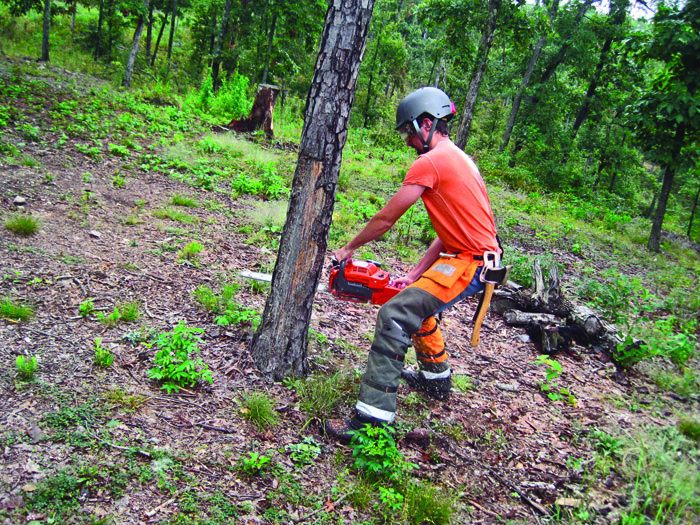
As a result, many who go off-grid end up building our own homes in the country. There tends to be more freedom to living and building the life you want the more backwoods you go. Out-of-the-way rural areas often have more relaxed zoning laws and fewer HOAs. If you’re willing to work and live on “unimproved” land — meaning a parcel without structures, utility connections, or even roads — you can more often find decently affordable property, too. I understand if you feel finding your own bit of land and building your own home is an intimidating prospect. It certainly can be, but I encourage you to also view the idea as thrilling and freeing. It’s probably the biggest DIY project of your life, meaning you’ll acquire dozens of skills you may never have attempted before.
There are many alterative styles of home that can be owner-built, all of them suited to different climates and environments. Our home took years to build, but in doing so, we were able to perfectly custom fit it to our way of life and our local climate. Your choice of style will require research to fully understand and implement, so I’ve listed books my husband and I depended on. As you research, don’t feel constrained by any one design style. Our home, for example, is a hybrid timber-frame house that’s half-buried and bermed with an earthship-style outer wall.
I almost exclusively favor older publications that aren’t sold as “off-grid” books, because I find most modern off-grid literature to be distressingly obsessed with gadgetry, fearful end-of-the-world rhetoric, and an over-emphasis on generating the excessive, modern requirement of electricity rather than the harder and worthier revitalization and rethinking of how to live.
- The $50 & Up Underground House Book by Mike Oehler
- The Timber-Frame Home by Tedd Benson
- Serious Straw Bale by Paul Lacinski and Michel Bergeron
- Stone, Log and Earth Houses by Magnus Berglund
- The Craft of Modular Post & Beam by James Mitchell
- A Logbuilder’s Handbook by Drew Langsner
- The Hand-Sculpted House by Ianto Evans, Michael G. Smith, and Linda Smiley
- Earthship, volumes I, II, and III by Michael Reynolds
- Earth-Sheltered Houses by Rob Roy
- Building Green by Clarke Snell and Tim Callahan
Dial Down to ‘Dessert Power’
One of the first images of off-grid living people encounter is an array of solar panels capturing the sun’s energy and converting it into electricity, no power lines or plant in sight. What I see off-grid enthusiasts fail to consider is whether humans actually need electricity in the first place — or at least how much is truly needed in a day. Humans existed for a long time without it, after all, so for me, the most sane place to start is ensuring all vital needs can be met without electricity. Then, by all means, explore the myriad ways to generate power in a way that makes sense for your area.
Options include solar arrays (which come with a steep learning curve if you decide to DIY), wind turbines, water turbines, and methane digesters. Our area is drought-prone, often without much wind, so a small solar array secures the power we want for lighting, fans, and charging a laptop for writing (and playing games, of course). However, we designed our house to safely function without any power, so we consider all our electricity to be “dessert power,” something fun and enjoyable to have, but not impossible to live without.
Water Sources
I believe a stable supply of self-sufficient water is more important than generating electricity. Again, folks lived without electricity for most of human history, but no one lived long without water. Water can be sourced and stored from several places. I strongly recommend you secure as many different sources of water as possible. If one fails due to drought, a broken part, or a leak, you’ll not be left high and dry.
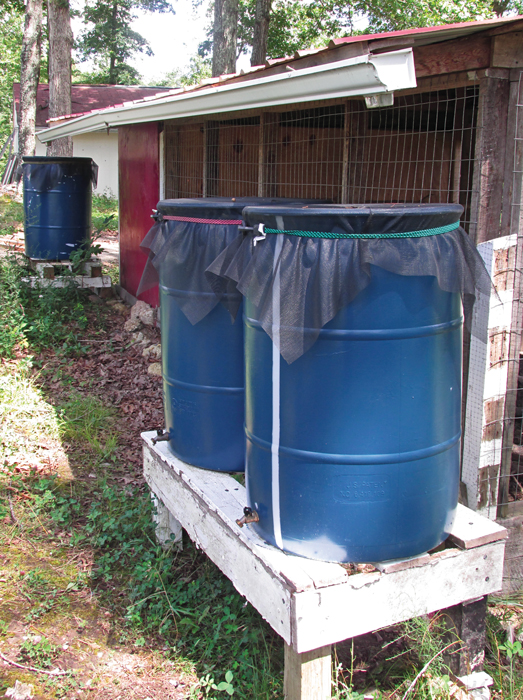
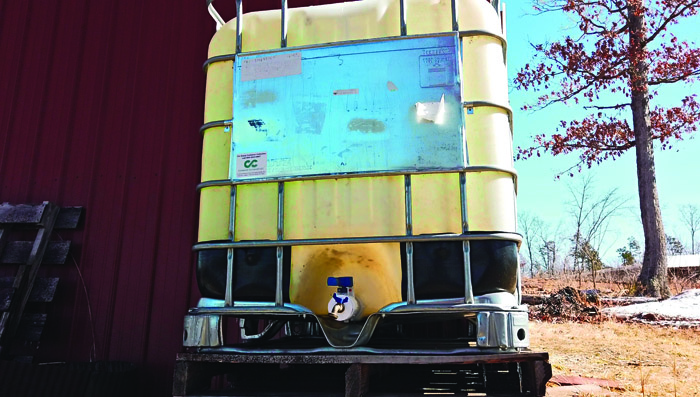
- Rain catchment. Though some states have regulations for how much free water you collect from the sky, most of us can still harvest this gift with nothing more cumbersome than a permit and the ingenuity to build a catchment system. Containers of all shapes and sizes can be used to gather the rain when it falls, from 55-gallon rain barrels, 275-gallon converted IBC totes, to multi-thousand-gallon cisterns. We add more rain catchment to our land every year, favoring IBC totes attached to metal roofs. The book Water Storage by Art Ludwig is a great resource for the builder.
- Surface water. Though the days of safely drinking unfiltered surface water are gone, ponds, lakes, creeks, and rivers still serve as a great battery of raw water for using on the garden or, after being purified, serving humans’ water needs.
- Groundwater. Water from deep below the surface of the ground is often safe for consumption. Many homesteads and farms are blessed with a well or a spring that gives the surface this deep-hidden hydration. Our land came with a preexisting well, so we installed a manual pump to give us human-powered water access. As the resident water-pumper and lugger, I can confirm that water becomes a very mindful resource when you’re responsible for pumping and carrying every gallon of it!
Waste Management
Taking your life back into your own hands also includes some seemingly unsavory elements — specifically, handling your own waste. Gone are the days of mindlessly flushing a toilet, running the tap, or tossing anything and everything into the trash. I see this as a good thing. Outsourcing responsibility for personal waste has caused some of the world’s biggest problems. As importantly, some of that so-called “waste” is hardly waste when handled purposefully.
- Toilets. Human poop and pee are pretty nasty, but when managed well, it can be transformed into something useful and harmless. Both composting and incinerating toilets function independent from sewage lines and can generate fertility for your land. They can be pricey to buy, but you can also DIY an affordable, effective composting toilet system if you’re up for the challenge. Joseph Jenkins’s The Humanure Handbook is my go-to resources on this.
- Greywater. The water left over after washing clothes, dishes, or bodies can be safely and effectively used in gardens to turn what once was waste into a resource (as long as you use a greywater-safe soap). Art Ludwigs’s Create an Oasis with Greywater is a beacon pointing the way to a saner way to use water.
- Trash. Unless you’re willing to shell out payments for a pick-up service to make the potentially long trek to your land, the only real option for dealing with your own garbage is to haul away or burn what can’t be recycled or composted. You can ameliorate this act by changing your lifestyle to generate as little garbage as possible. The best advice I can give is to embrace the responsibility or a near-zero-waste lifestyle.
Heating
Humans have successfully depended on fire’s warmth for millennia, so when it comes to off-grid heating, there’s no point in reinventing this wheel. If you carefully manage a woodlot on your own land, you can create a healthy forest ecosystem and provide yourself with a renewable source of fuel for heating and cooking.
When it comes to containing and using fire, humans have come up with quite a few innovative ways to bring it into their homes. Woodstoves are probably the most accessible and easiest to install, but if you are building your own home, you might consider the super-efficient, house-integrated masonry heater and its cousin, the rocket mass heater.
- The Rocket Mass Heater Builder’s Guide by Erica and Ernie Wisner
- The Book of Masonry Stoves by David Lyle
Cooking
There are three power sources that can be used to prepare meals in the off-grid home, and I use all three, depending on the time of year and weather.
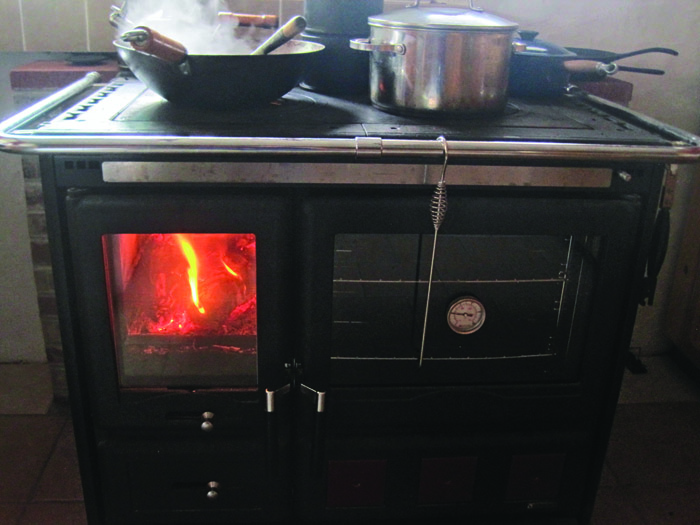
Fire is an obvious choice and likely already doubles as your source of heat. You can do limited cooking on the surface of a woodstove, but a wood-fired cookstove is where the real cooking and baking gets done. I use a wood cookstove to both heat my kitchen and cook food through all the cool-weather months. This appliance was the most expensive purchase I’ve ever made, but I considered the long-term independence that it offered worth the price.
In the summer, cooking indoors with fire is just untenable in our non-airconditioned home, so we shut down the cookstove until frost returns. We occasionally run electric cooking appliances off our house batteries or a portable, rechargeable battery unit, but the other 99 times out of 100, I’m cooking outdoors. We built an outdoor kitchen with a wood-fired cooking area for preparing our late spring, summer, and early fall meals. If you’re already used to cooking with a wood cookstove, you’ll face little to no learning curve.
We also use a Sun Oven solar cooker for some of our baking needs. This appliance uses an ingenious set of reflectors to capture and intensify the sun’s power, creating a hot box that reaches 350 degrees Fahrenheit within about 10 minutes when I use it. There’s no “set it and forget it” with a solar cooker, however. It needs to be constantly rotated to keep up with the shifting sunlight, and if clouds roll in, your food won’t cook.
Social Considerations
Another element of the independence that off-grid life requires is social independence. Now, that’s not to say you can’t have friends — far from it! But you will have to develop a certain degree of mental self-sufficiency that’ll allow you to whether both the literal storms and the interpersonal storms of critique, doubt, gossip, misunderstanding, and criticism. Going against the grain attracts plenty of negativity from those still on the over-cultural path, trust me. Prepare to be the odd one out in most conversations, even among other off-grid folks. Remember, people who go off-grid do so for deeply personal, often disparate, reasons.
All that said, when you interact with someone who lives off-grid, take the opportunity to learn from them, even if you don’t agree with all their personal philosophies. Seeing a living, breathing off-grid life in action can often be far more instructive than a pile of books. But I caution against spending too much time in online discussions, comments, off-grid forums, and the like. Many folks have no problem venting their opinions, judgments, and decrees over what is “truly” off-grid to them, but I’ve found many online posters are armchair off-gridders who don’t actually live the life that backs up their mandates. You’re better off forging the life you want without spending your time in pointless debates.
Going off-grid was one of the worthiest, and hardest, endeavors I’ve taken on. It was an entire lifestyle overhaul. For this reason, no single article can do more than scratch the surface the considerations you’ll need to make. The off-grid life is a challenging life, but it is also incredibly rewarding. I can’t imagine living any other way.
Wren Everett and her husband live on an off-grid Ozark homestead, where they seek to live as self-sufficiently as possible.
Originally published in the January/February 2026 issue of Grit magazine and regularly vetted for accuracy.