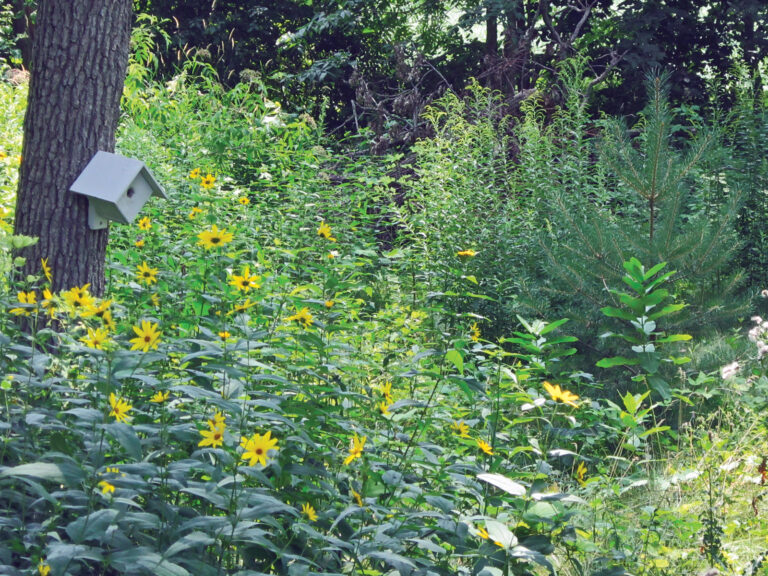
Learn how to rewild your yard by trading in turfgrass for a terrain full of beneficial native plants and biodiversity.
This is Part 2 of a series on how to foster biodiversity by reestablishing native plants. Read Why Is Rewilding Important? from the January/February 2024 issue.
In the continental U.S., a significant amount of the land area has been disturbed to varying degrees by urbanization, suburbanization, agriculture, roadway construction, invasive species, and resource extraction. Notably, approximately 50,000 square miles have been replaced with asphalt and concrete, and a 2005 NASA study estimated that 63,000 square miles – an area almost as large as Florida – have been replaced with the non-native turfgrasses that surround homes and businesses and occupy parks, roadsides, school and college campuses, cemeteries, and golf courses.
Turfgrass maintenance as we understand it today is traceable to England in the 17th century, when a manicured lawn signaled wealth and aristocratic social status. Today, lawn maintenance remains ingrained in society, despite grave ecological and economic consequences. This includes the fertilizers, water, and gasoline and equipment required to maintain lawns, and these can contribute to greenhouse gas emissions and loss of precious groundwater, as well as high expenses for those sustaining the lawns – expenses that end up being higher in the long run when compared with establishing and maintaining a native habitat, such as a prairie.
For native herbivorous insects, a yard planted with non-native turfgrasses, trees, and shrubs is about as useful as an asphalt parking lot, contributing toward population collapses of native species. If we wish to preserve these native species, beautify our lands, and sustain vital ecosystem functions and a vigorous economy, then we’d be wise to rewild our lawns now. It may feel like a small action, and it’s not the only answer to the threats facing native plants and animals, but imagine the opportunities we could create for healthy ecosystems to flourish if we all turned to transforming the areas around us however we can with a variety of native plants.
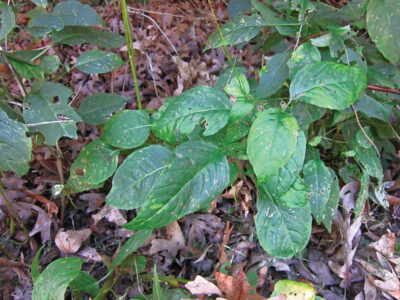
Edible Wild Plants to Consider
I harvest and eat a great abundance of wild greens that flourish on my property – mostly dandelion, lambsquarters, amaranth, stinging nettles, and violets. I also eat lesser amounts of basswood leaves, wood sorrel, Virginia waterleaf, purslane, and wood nettle.
Note: Before consuming or using any foraged plant, do your research and consult with botanical experts so you can properly identify and understand the species. Also, consult your health-care provider before incorporating any new plant into part of a diet or health regimen, especially if you’re pregnant, nursing, immunocompromised, or on any medications.
- Amaranth. Some people eat amaranth grain, but I like the nutritious greens. Amaranth grows near my house, in the dappled shade of dogwoods. On my property, amaranth seems to be slightly more tolerant of shade, but I also sometimes find it growing in full sun, within a few feet of lambsquarters.
- American basswood. When I purchased my property, no American basswoods were growing on it. A few years ago, however, two basswoods became established in partial shade. There are no basswoods on nearby properties, so I presume the seeds were delivered by animals. In spring, I harvest some young basswood leaves and eat them raw in salads. When the trees get bigger, I’ll be able to sustainably harvest a greater number of leaves without harming the trees. Basswood flowers can also be steeped in hot water to make a tea. American basswood is an excellent species for native wildlife; the fragrant flowers provide nectar for native bees and help support these important pollinators.
- Dandelion. While many sources say dandelion isn’t native to the U.S., my research says in centuries past, European biologists assumed a plant couldn’t be native to both Eurasia and the Americas, so any plant already known from Europe was labeled “non-native” in North and South America. Regardless, dandelions are widespread throughout the United States. We don’t need to eradicate dandelions from our properties, and we can easily and sustainably harvest and eat the nutritious leaves.
- Lambsquarters. Also called “pigweed” or “goosefoot,” lambsquarters is familiar to many gardeners. It grows best in the disturbed soil of my herb garden and elsewhere on my property. Before I learned it’s an excellent native edible plant, I’d uproot lambsquarters growing in my garden. Now, I always allow some of the plants to grow. The young leaves and tender shoots taste like spinach, and growing lambsquarters requires no effort on my part. So, I don’t bother growing spinach in my garden.
![]()
- Milkweed. I scattered common milkweed seeds in a sunny location on my property. The first season, only a few milkweed plants grew, but within a few years, they’d spread to cover about 150 square feet. In midsummer, the purple-pink milkweed flowers provide nectar for native insect pollinators. As a bonus, the young shoots and leaves of common milkweed can be sustainably harvested, and they’re fine vegetables when properly cooked and prepared.
- Raspberries. Shortly after I began my rewilding initiative, thickets of native raspberries and black raspberries became established in some parts of my property. In recent years, they’ve provided more fruit in middle to late summer than I care to eat or preserve. I sometimes harvest leaves from the canes and infuse them for a few minutes in hot (but not boiling) water. The resultant tea has a pleasant flavor that’s slightly reminiscent of the fruit itself. The canes grow prolifically, so I periodically cut some of them back to prevent them from spreading.
- Stinging nettle. Near my south property line, a large patch of stinging nettle plants grows in a decomposing mound of leaves. In spring and early summer, I can collect great quantities of young nettle shoots and leaves; I fill a large bowl with them in minutes. To avoid getting stung while harvesting, I wear gloves and use scissors. Cooked nettle greens are excellent, and I cook them into soups or sauces, as I do with dandelion greens.
- Violets. Both white-flowered Canada violets and purple-flowered “blue” violets grow throughout much of my property. Their heart-shaped leaves are the most abundant edible greens on my land. In some places, they form a patchy ground cover, and they invade my vegetable garden, so I can quickly and easily harvest a lot of violet greens. They’re good in salads or cooked into omelets or sauces. Violet flowers are also edible, and they occasionally attract fritillary butterflies, the populations of which have declined in recent decades.
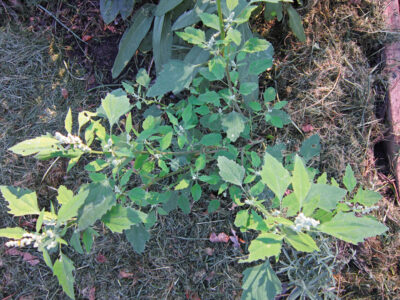
Because they’d been extirpated from my neighborhood, some edible native plant species didn’t recolonize my property on their own. So, I augmented the rewilding process by planting American plum, American elder, serviceberry, crabapple, American beech, butternut, red and black currant, gooseberry, sand cherry, and beaked hazelnut seedlings. These species can simultaneously provide me with nutritious food and help support native insects and other wildlife. Last year, I also planted native ostrich ferns in a shady spot near my house. Within a few years, I hope to sustainably harvest and cook some gourmet fiddleheads.
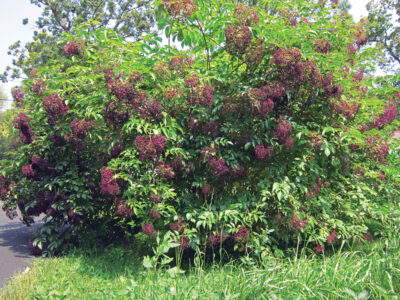
Thus far, I’ve reaped many benefits from permaculture, but my rewilding efforts are ongoing. Mayapples and wild leeks (sometimes called “ramps”) are choice edibles native to the forests of eastern Wisconsin. This spring, I hope to successfully reestablish these plants in the moist soil under my red maple trees.
My primary maintenance task is the vigilant removal of invasive species. Each year, I pull a few buckthorns, Asian honeysuckles, autumn olives, and lots of Norway maple seedlings.
Rewilding Movement
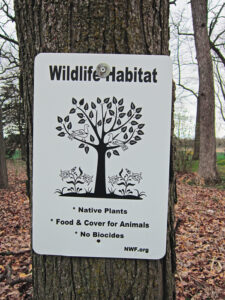
Despite the many benefits of doing so, some people might be hesitant to rewild their land. Neighbors might not understand, or they might initially disapprove. Anticipating this possibility before I rewilded my yard, I explained my intentions and reasons to my neighbors. I also used a website to design and order an inexpensive but sturdy and attractive metal sign that reads “Wildlife Habitat” and bears a stylized image of flowers and a tree with birds in it. I screwed it to a red maple tree in my yard (see image, right). Landowners who wish to obtain a sanctioned sign can seek official certification from a nonprofit organization, such as Wild Ones, which currently has 82 regional chapters in the U.S. Local Wild Ones chapters sell native plant species that are adapted to the biological communities and climatic conditions of their specific ecoregions. Landowners in the U.S. and Canada can also register and describe their native plantings or rewilded lands to add to the growing number of native acres nationwide, and this site offers inexpensive signs for purchase.
In some areas, misguided ordinances or neighborhood covenants might preclude full-fledged rewilding as I’ve done on my property. In such cases, landowners can plant and maintain more formal, carefully edged and clipped gardens containing exclusively (or mostly) native species. Though they require some maintenance, densely planted formal gardens exhibiting structural complexity and a rich diversity of plant species can provide many of the ecological and gardening benefits provided by fully rewilded biological communities.
The restoration of functioning ecosystems on private lands is both a boon to gardeners and an urgent ecological necessity. But we should also rewild our public areas – our parks, municipal lands, community gardens, and public schools and college campuses. To accomplish this, we need to enhance our society’s collective ecological consciousness. Our friends, families, neighbors, and elected officials need to understand the costs of maintaining expansive lawns. We can contact our mayors, alderpersons, city council members, park commissioners, and public school and college leaders about opportunities and plans for reestablishing native plant species on public lands. When casting votes in elections, we can consider candidates’ positions about eradicating invasive species and reestablishing functional ecosystems in public spaces.
In my home state, some positive change is slowly happening. A few private landowners in my community have rewilded parts of their properties. Some people volunteer to help remove invasive species from public parks and trail corridors. Native pollinator habitats and water gardens have been created at a few parks and libraries. Small rewilded areas have been established at the Northeast Wisconsin Technical College campus in Green Bay.
If we hope to halt the accelerating extinction crisis, then endeavors such as these must soon become widespread. Hopefully, these efforts reflect the beginning of a revolution in the way we use our private and public lands.
Ryan Paruch gardens, forages, and teaches college science courses in the Kettle Moraine region of eastern Wisconsin.