Are bees native to North America? Meet bees native to North America, including bumblebees, mason, leafcutter, carpenter, sweat, mining, squash, and long-horned bees.
When most people think of bees, they might picture the familiar honeybee drifting from flower to flower on a warm summer afternoon. But long before European settlers brought the honeybee to North America, thousands of native bee species were already pollinating forests, prairies, deserts, wetlands, and mountain meadows across the continent. Today, scientists estimate that more than 4,000 native bee species live in the United States alone.
Native bees are remarkably diverse. Some are tiny enough to fit on a fingernail, while others are large and fuzzy. Some shimmer metallic green or blue; others blend into bark, soil, and flower petals. Unlike honeybees, most live solitary lives, with each female building and tending her own nest. They don’t make honey or form large hives, but they remain among the most important pollinators in American ecosystems.
Bees Native to North America
From orchards and farms to deserts and backyard gardens, native bees pollinate the plants that sustain wildlife, ecosystems, and food production. To understand just how varied they are, let’s look more closely at a few of the species and groups found across the country.
Bumblebees
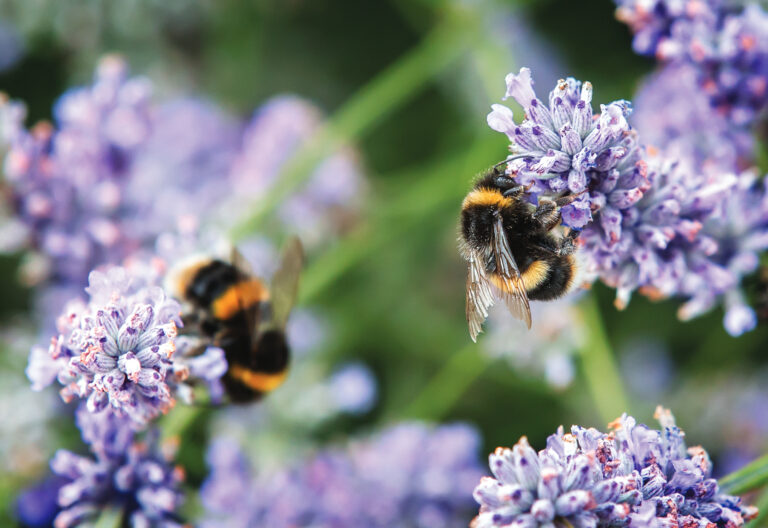
Bumblebees are probably the easiest native bees to recognize. Members of the genus Bombus, these large, fuzzy bees are known for their deep buzz and soft, rounded appearance. Unlike most native bees, bumblebees are social insects that live in colonies led by a queen. Even so, their colonies are tiny compared with honeybee hives, usually numbering only a few hundred bees.
Bumblebees thrive in grasslands, meadows, forests, gardens, mountain regions, and farmland. Their thick hair helps them stay active in cooler weather, so they often fly earlier in spring and later into fall than many other bees.
Most bumblebees nest underground in abandoned rodent burrows or other sheltered cavities, though some use hollow logs or thick vegetation aboveground. They do best in landscapes with blooms available throughout the growing season.
One of the most remarkable things about bumblebees is their ability to perform “buzz pollination.” By rapidly vibrating their bodies, they shake pollen loose from flowers, such as those of tomatoes and blueberries. Bumblebees are among the few insects capable of pollinating the poricidal anthers of certain nightshade plants, including tomatoes and eggplants. Honeybees simply can’t do this kind of pollination, which makes native bumblebees especially important for these crops.
Carpenter Bees
From bees that line their nests with leaves, it’s a short step to bees that tunnel directly into wood. Carpenter bees are some of the largest native bees in the United States, and, at first glance, they’re often mistaken for bumblebees. The easiest way to tell them apart is by the abdomen: Bumblebees are fuzzy all over, while carpenter bees usually have smooth, shiny abdomens.
Their name comes from their habit of tunneling into wood to create nests. Female carpenter bees chew perfectly round entrance holes into dead trees, fence posts, logs, or untreated wood, and then build long nesting galleries inside.
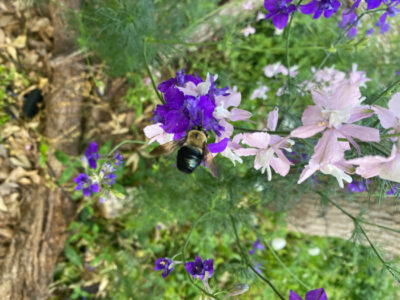
Carpenter bees are especially common in the southern and eastern United States, though they occur in many other regions as well. They thrive along forest edges and in areas with abundant wood, including gardens, farms, and suburban landscapes.
Even though they sometimes tunnel into wooden structures, carpenter bees are valuable pollinators for many flowering plants and crops. Males may hover nearby and act territorial, but they can’t sting. Females can sting, though they rarely do unless seriously threatened.
Leaving dead trees or fallen branches in natural areas can provide nesting habitat and support healthy native bee populations.
Mason Bees
If bumblebees are the most familiar native bees, mason bees are among the most efficient. Most belong to the genus Osmia, and many emerge in early spring just as fruit trees begin to bloom. They’re often metallic blue, green, or black, with a smaller, sleeker look than bumblebees.
Their name comes from the way they build their nests. Female mason bees gather mud and use it almost like tiny bricks to create walls and partitions inside narrow nesting spaces. Instead of digging tunnels themselves, they prefer ready-made cavities, such as hollow stems, abandoned beetle holes, cracks in wood, and tiny crevices in stone.
Mason bees are common in orchards, woodland edges, gardens, and suburban areas with flowering trees and shrubs. Because they emerge early, they rely heavily on spring-blooming plants, such as redbuds, willows, and fruit trees.
Part of what makes mason bees such efficient pollinators is the way they carry pollen. Honeybees neatly pack pollen into little baskets on their legs, while mason bees carry it loosely on hairs beneath their abdomens. As they move from flower to flower, pollen tends to fall everywhere, which is excellent for pollination.
Their habitat needs are simple: flowers, mud, and safe nesting cavities. A hollow stem left standing through winter or a fallen branch can provide a suitable home.
Sweat Bees
Not all native bees are large or easy to spot. Sweat bees are among the most common native bees in North America, though many people barely notice them because of their small size. Some species are dark and understated, while others gleam metallic green or blue in the sunlight. Their name comes from their attraction to human sweat, which provides moisture and salts.
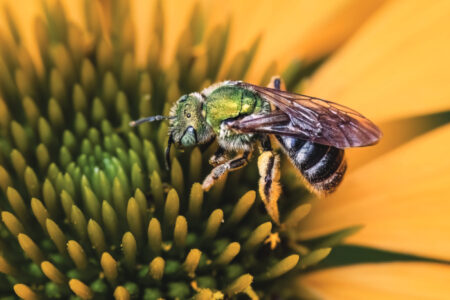
Their success comes largely from their adaptability. Sweat bees live in deserts, forests, wetlands, grasslands, gardens, and city parks. Many species nest underground in sunny patches of bare soil, though some use wood or stems instead.
Sweat bees pollinate many wildflowers and garden plants, playing a major role in supporting ecosystems across the country.
Ground-nesting bees, such as sweat bees, benefit from loose, undisturbed soil. Leaving a small patch of bare earth untouched can provide an important nesting habitat for these bees.
Leafcutter Bees
Like mason bees, leafcutter bees are solitary nest builders, but their construction method is entirely different. These calm bees belong to the genus Megachile, and they’re famous for cutting neat circles from leaves and petals to build their nests.
Across the United States, leafcutter bees live in city neighborhoods, backyard gardens, forests, farms, and grasslands. Many nest in hollow stems, rotting wood, abandoned insect tunnels, or bee hotels, while others nest underground.
Female leafcutter bees carefully snip pieces of soft leaves using their strong jaws and carry the fragments back to the nest. Inside, they shape the leaf pieces into tiny chambers, which will protect developing larvae. Gardeners sometimes notice smooth, crescent-shaped cuts along rose leaves, which are often signs that leafcutter bees have been visiting.
These bees are also valuable pollinators for vegetables, wildflowers, and agricultural crops. Alfalfa leafcutter bees, for example, are widely used to pollinate alfalfa grown for seed production.
Mining Bees
Many of the smallest native bees live close to the ground, which brings us to mining bees, also called “digger bees.” These early spring pollinators belong to the family Andrenidae, and in many places, they’re among the first signs that warmer weather has finally arrived.
Female mining bees dig tunnels into sandy or loose soil, creating little mounds around the nest entrances. Even when many bees nest close together in one area, each female manages her own nest independently.
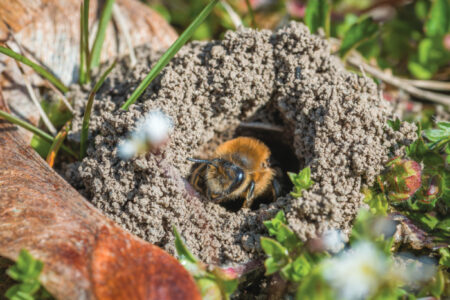
You’ll often find them in meadows, prairies, woodland edges, gardens, and lawns with suitable soil. Many species specialize in certain native plants, forming close relationships with the flowers they depend on year after year.
Because these bees rely on exposed soil, landscaping, such as heavy mulching, paving, and compacted ground, can make nesting difficult. Sunny, well-drained patches of natural soil are especially valuable to them.
Squash Bees
Some native bees take specialization even further. Squash bees, for example, focus almost entirely on plants in the Cucurbitaceae family, including pumpkins, zucchini, cucumbers, melons, and gourds.
They’re early risers, becoming active just after sunrise, when squash flowers open for the day. By afternoon, when the flowers begin closing, squash bees have often already finished most of their work.
Squash bees usually nest underground near vegetable gardens and agricultural fields, making them important pollinators for farms and home gardens.
Because squash bees spend so much time around crop plants, they can be vulnerable to pesticides. Gardens with untreated soil and pollinator-friendly practices help create a safe habitat for these dedicated little pollinators.
Long-Horned Bees
Other native bees are tied less to a single crop than to entire seasonal plant communities. Long-horned bees get their name from the unusually long antennae found on males, and they’re commonly found in prairies, grasslands, and open woodlands throughout the United States.
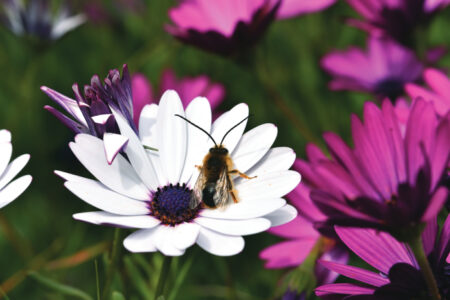
Many species are closely connected to sunflowers and other late-season wildflowers. In late summer, they can often be seen steadily moving between blooms in open prairie landscapes.
Most long-horned bees nest underground in sandy or loose soil, and healthy prairie ecosystems provide the flowers, shelter, and nesting habitat they need.
Habitats Native Bees Need
Taken together, these bees show just how varied native pollinators can be. Yet despite their differences, most rely on three things: flowering plants, nesting sites, and protection from harmful chemicals.
Flower-rich habitats are essential, because bees depend on nectar and pollen for food. Native plants are often the best choice since many bee species evolved alongside them. Prairies, meadows, wetlands, forest edges, deserts, and backyard gardens can all become valuable habitats when native flowers are present.
Nesting sites matter just as much. About 70 percent of native bees nest underground, while others rely on dead wood, hollow stems, rock crevices, or other natural cavities. Slightly less-manicured landscapes usually support more pollinators.
Modern development, pesticide use, and habitat loss have placed increasing pressure on many native bee species. Still, even small efforts can make a real difference. Planting native flowers, reducing pesticide use, preserving dead wood, and leaving patches of bare soil can all help support healthy bee populations.
Competition or Coexistence?
Once habitat enters the conversation, another question often follows: How do native bees fit alongside the honeybees many people know best? The relationship between honeybees and native bees remains an active area of scientific debate. Some researchers believe large numbers of managed honeybees can put pressure on native pollinators by competing for pollen and nectar, especially in fragile ecosystems. Others point out that diverse, flower-rich habitats can often support both with little conflict.
In many places, native bees and honeybees coexist well when a variety of blooms are abundant throughout the growing season. Problems are more likely when flowers are scarce where honeybees are introduced in large numbers within a short time.
Because of this, many conservationists focus less on framing honeybees and native bees as rivals and more on improving habitats for all of them. Expanding native wildflowers and creating more pollinator-friendly landscapes can help support both honeybees and native bees alike.
We Need the Bees
Whatever the balance between managed honeybees and native pollinators may be in a given place, one fact is clear: Native bees are quiet champions of American ecosystems. Whether they’re nesting underground in a prairie, sheltering inside a hollow stem, or visiting wildflowers along a woodland edge, these pollinators help sustain the landscapes around us. Together, native bees form an intricate pollination network that supports both wild ecosystems and agriculture.
Protecting native bees doesn’t require vast stretches of untouched wilderness. Sometimes it begins with something as simple as planting native flowers, leaving a patch of soil undisturbed, or letting one corner of the yard stay a little wilder. Those small spaces can become important refuges for the remarkable bees that have been part of North America’s landscapes for millions of years.
How to Help Native Bees
Planting a variety of pollinator-friendly flowers is one of the easiest ways to support native bees, as they provide nectar and pollen throughout the growing season. A shallow water source also provides pollinators with a safe place to drink.
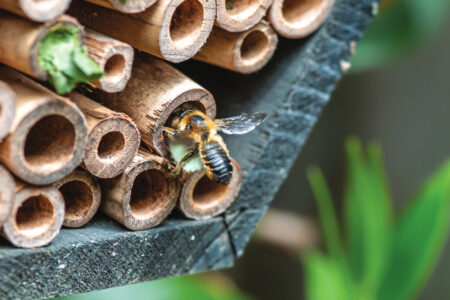
Another good way to encourage native bees is by building bee hotels. Many species will use hollow stems, wood, old bricks, or similar sheltered spaces for nesting. The species that move into a bee hotel vary based on your location. Mason bees, leafcutter bees, and certain solitary wasps are common visitors in many regions. Because species prefer different-sized holes, it helps to offer a range of sizes.
How to Make a Bee Hotel
Bee hotels can be made from cardboard tubes, bamboo, hollow plant stems, or untreated wood. They should have a roof or other shelter from rain, and the nesting holes should be 4 to 6 inches deep, closed at the back, and open on only one side.
Bee hotels also need occasional maintenance. Replace old materials every couple of years and store the hotel in a dry place during winter to help prevent mold and rot. Check for any parasites, including chalcid wasps (Monodontomerus spp.) and the Houdini fly (Cacoxenus indagator).
- Bamboo. Bamboo works especially well because it’s naturally hollow and comes in different sizes. Cut it into 6-inch sections and make sure each piece is open through the center. Because bamboo has solid joints, or knots, you may need to cut around them or drill through them. Bundle the prepared bamboo with twine or place it inside a wooden box, can, or jar to hang it.
- Untreated wood. Untreated wood is another easy option. Use scrap wood, fallen branches, or purchased lumber that hasn’t been chemically treated. Drill holes into the wood without going all the way through, so the closed end forms a safe nesting chamber. To hang the hotel, add an extra hole near the top for rope or wire.