Similar to a woodburning stove, a fireplace insert is professionally installed inside the fireplace to create an airtight seal.
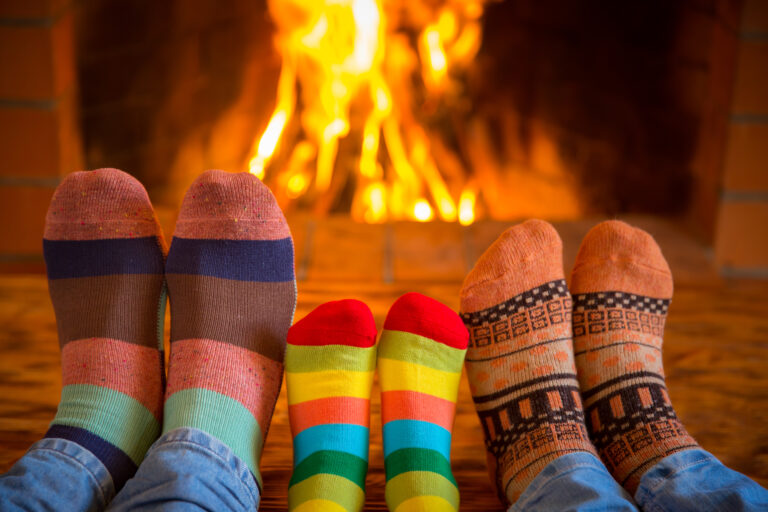
Our family has been burning wood for years. Initially, it was the brick fireplace with the oak mantle that caused us to fall in love with the house. We envisioned romantic evenings by the fireplace… Well, maybe romantic is the wrong word. After all, we had a 3-year-old, a 4-year-old and a 14-year-old living in the house back then. If nothing else, we figured that we’d be able to trim our utility bills so that we could afford the occasional romantic dinner out without the presence of any children!
In that first year, we learned that the utility savings were a myth and that we’d never be able to afford a dinner more exotic than ramen noodles if we didn’t address our skyrocketing heating costs. We began by caulking and sealing every crevice that we could find, but minor air seepage wasn’t our biggest issue.

The problem was that masonry fireplaces are highly inefficient. Most of the heat produced by the flames is swept up and out the chimney before you realize it. In addition, our chimney was causing not only the heat generated by burning wood to be sucked outside, but also the heat produced by our furnace. The combination was costing us a small fortune here in central New York where our winters are punctuated by blizzards and bone-numbing cold temperatures.

For us, the solution was to install a fireplace insert. Similar to a woodburning stove, the insert was professionally installed inside the fireplace to create an airtight seal. Equipped with an electrical blower, the unit forces heated air out into the living quarters of the house. It also has the ability to burn the gasses that are released as the logs are consumed by the flames, making it an extremely efficient choice for us.
About $500 worth of wood can help us to save about $1500 in heating costs when compared to operating our furnace alone. Not to mention the fact that a substantial portion of our wood is gleaned for free from the city curb.
Our family tries to reduce, reuse, and repurpose as many things as possible and cold fireplace ashes are no exception. They are added to the garden periodically to enhance the soil and are even provided to the quail for dust bathing!
There is very little that is more devastating to a family than a house fire. Between what is devoured by licking flames and what becomes saturated with water, there is rarely much left to salvage. The process of sifting through the remains is heartbreaking…and it is one that we hope to avoid.

Each year, we try to do our part to reduce the risk of a house fire. We try to only burn properly aged and seasoned wood to avoid the buildup of creosote in the chimney. We also hire a professional chimney sweep to ensure that the flue is in good shape for the coming season. Nothing beats reading by the fire when there’s blustery weather outside!