So you’re ready to start planting raspberries and establishing a patch of these delicious berries. But where to start? Find the answers to common questions, such as “how much sun do raspberries need,” and much more below!
“Mmmmm.” A sigh of delight escapes me as I savor the giant red raspberry I just popped into my mouth. Perfectly ripened, warm, and bursting with the juicy sweetness of summer sunshine, this berry tastes like jam! Standing knee-deep in berry bushes, I’m convinced this is what summer should taste like. Berries like that one keep me going back for another and another and another. This is a great thing in our garden, because during the peak fruiting season for these berries, there are a lot to pick!
My family has grown red raspberries on a small scale for years. Red raspberries grow wild and are quite nostalgic for those who live in the northern United States. I’ve heard tales from folks who’d go out as young’uns to pick buckets and buckets of these tasty berries, which their mothers would bake into juicy pies. Around our area, though, wild blackberries definitely rule the fencerows and fields. Not a wild raspberry in sight.
While red raspberries don’t grow wild here in northern Alabama, we’ve found them to be a valuable addition to our Zone 7b garden plot. We’ve had successes and failures and learned a lot. But I know one thing for sure: I’m a big fan! They’re a bit delicate for the fresh-berry market, but to me, they’re the most valuable berry crop on our homestead. They yield a considerable bounty for our personal enjoyment. They’re quick to produce and have a long growing season in our garden, and their upkeep is minimal among the small fruits.
Planting Raspberries
Our two favorite cultivars through the years have been ‘Caroline’ and ‘Heritage.’ They’re both everbearing types. ‘Caroline’ generally gets started a little earlier in the season than ‘Heritage.’ Our picking lasts from June to the first frost, which in our area is generally in October.
Setting up a red raspberry patch is a simple project, especially if you already have a cultivated area. We’ve had excellent success starting with bare-root plants from online suppliers, but you may be able to source them locally, depending on your area. The day your bare-root plants arrive will be a happy one!
Plant them in fall in a garden bed that’s been prepared by first forking the soil and then hoeing and raking. Add fertilizer according to your soil’s needs. Raspberries thrive in rich, well-drained soil and full sun. Plant them up to the crown of the plant (roughly where they were previously planted at the nursery), about 12 to 18 inches apart. Compact the soil around each plant and give it a deep drink of water. Giving your new plants a nice layer of mulch will help keep weeds at bay while the raspberry canes get established.
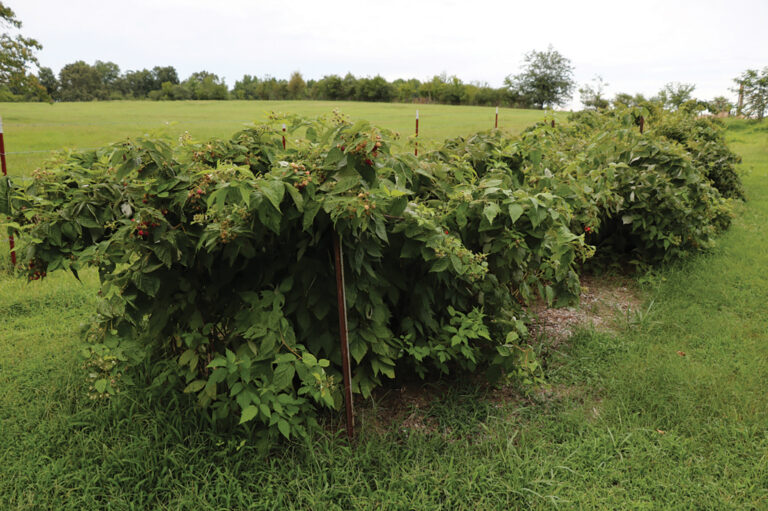
Now is also the perfect time to set your trellis or support system in place. As the plants grow, the blooms and developing berries at the top will begin to weigh the canes down and, without support, they’ll flop over on the ground. This isn’t the end of the world. I’ve picked a lot of berries from collapsed canes, but it does require more effort. A simple “corral” of rope or wire, held in place by T-posts at the four corners, will help keep your patch tidy and much easier to pick, saving you time in the long run.
You’ll probably be able to harvest a few berries the first year, and your yield will increase in time. At the end of the season, cut the canes down to the ground and dispose of them to help prevent the spread of disease. Blanket the patch with a covering of mulch, and it’ll be ready for winter. In spring, I’m amazed at how much the plants have spread underground: You’ll probably need to thin them back to keep your patch manageable and to give the plants room to thrive.
It’s quite refreshing to watch raspberries come up and mature, growing without much assistance of any kind. We simply wait and watch, working with our more labor-intensive garden plants until the raspberries redden.
When to Harvest Raspberries
Once the berries begin to ripen, they become part of my routine. For me, morning is the best time to collect them for peak ripeness. For the highest-quality berries, I like to pick daily or every other day, depending on the yield. If the berries come off the plant easily, they’re perfectly ripe. If a berry is really squishy, it’s past its prime. With a little practice, you’ll be a pro!
Then, it’s time to bring these juicy, red berries to the kitchen. We eat them fresh by the handful and also over vanilla yogurt, atop buttered pancakes, spilled over freshly baked brownies, in tasty pies, and on layer cakes. The possibilities are endless! We also freeze gallons and gallons to use for stocking the pantry with delectable jam and baking our favorite treats through winter months. I hope you’ll tuck some red raspberries into your homestead’s garden and enjoy trying these time-tested recipes in your own kitchen.
Hurrah for Red Raspberry Recipes
Maggie Bullington enjoys living on her family’s homestead in rural Alabama. When she’s not writing, you may find her gardening, cooking with farm-fresh ingredients, or working with her brother at Lucas Forge.
Originally published as part of “Hurrah for Red Raspberries” in the May/June 2023 issue of Grit magazine and regularly vetted for accuracy.