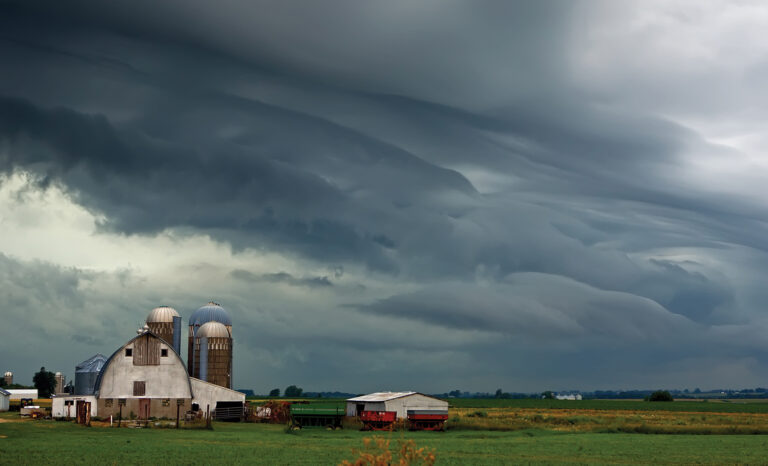
Learn how to successfully budget your money by following the recommended emergency fund guidelines for a farm enterprise.
I know a couple who live on 2 acres in a ranch-style home built when they got married, in the early 1970s. Their house recently needed a new roof, as aging homes do. As a Generation X renter of a small house on 3/4 acre, I thought a repair like this might cost $5,000. My guess was two-thirds short. Although the $15,000 new-roof price tag came as a shock to me, the couple were prepared because they’d planned and had an emergency fund.
Financial professionals stress the importance of an emergency fund for those times when something goes terribly wrong. This could be rebuilding after a natural disaster, or losing a season of work because of injury or illness. Having such a fund can mean the difference between keeping and losing the farm. Read on to learn how a farm consultant and a financial planner explain the ins and outs of building an emergency fund for your situation.
What is the Recommended Emergency Fund Amount?
Kirstin Bailey lives on her family farm in Brainard, Nebraska, where her family grows fruits and vegetables and keeps bees. In her job as a senior project associate at the Center for Rural Affairs, she works with beginning farmers and beekeepers and women landowners on all manner of farm-business and farm-life matters. Bailey says she thinks it’s getting harder for folks to save for financial emergencies. Despite the rising costs of everything, an emergency fund is no less important. “Knowing your budget and anticipating upcoming costs is a way to determine how much money you’ll need in case of an emergency,” she says.
That “b” word, “budget,” plays a significant role in emergency preparedness, but is something a lot of people struggle with. Having a handle on your budget will help ensure you’re saving enough.
A savings account that can cover 3 to 6 months of living and farm expenses is appropriate for an emergency fund, according to Alex Vasichek, owner of Elevate Financial in Fargo, North Dakota, and an AFFP. (AFFP is a designation for financial planners who’ve completed training as an Agriculture Focused Financial Planning professional.)
“Having some cash on hand is always important,” Vasichek says. To calculate your average monthly expenses, total up your ongoing monthly costs, such as the mortgage payment, as well as the costs you incur only a few times a year — truck maintenance, for example. Then, multiply this amount by 3 and again by 6 to determine the scope of an emergency fund to cover 3 to 6 months of expenses.
This amount varies greatly from household to household, Vasichek points out. Monthly expenses may be low to begin with for rural folks — but income may also be low, by design. Putting aside the right amount is often a challenge. Saving money beyond six-month expenses involves long-term financial planning, including investments and brokerage accounts, and is a subject for another article.
Not Just Cash
Emergency financial preparedness also involves other aspects of life and business besides cash savings, particularly for anyone making some portion of their income from their property, such as small-scale market farmers and livestock farmers with local customers. Bailey points out that having diversified markets and having the right insurance are two ways you can mitigate risk.
Diversifying your markets might mean growing multiple crops so the season won’t be a wash if one were to fail. It can also mean vending at multiple farmers markets instead of just one, or having a community-supported agriculture (CSA) program while at the same time selling to a handful of chef clients.
As far as insurance goes, a reputable agent can help you secure the right policies. These could cover your farm liability, as well as other coverage for your particular situation. Also, “there are a few good insurance options for small farmers through the USDA, like the Whole-Farm Revenue Protection and Micro Farm program,” Bailey says. (See “Ensuring Insurance” below.)
How to Successfully Budget Your Money
“There’s a difference between being prepared for an emergency and having funds available,” Bailey points out. “The best way to be prepared is to take some time to do some planning, thinking about what could possibly happen and how you’d handle it.” When you write down all the ways you’re spending money, you’ll find patterns and, most likely, surprises in where your money is going. From there, you can find places to cut your spending and redirect those dollars to an emergency fund. Vasichek says, “Regardless of how frugal we are, there’s usually still some spending where people are like, ‘Oh, yeah, I can probably rein this in a little bit.’ It’s human nature. I tell people that life should still be fun. The biggest thing is budgeting.”
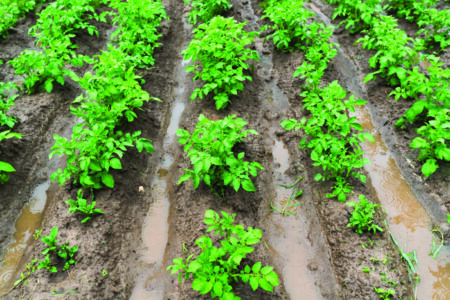
It’s too easy to continually reinvest in your property and your interests. This season, I had to choose between a walk-behind tilther or putting money toward an emergency fund. Although the $600 implement is spiffy and would be fantastic to own, the emergency fund won out. In the end, both my garden and my fund were winners, as a neighbor purchased a tilther thanks to grant funds, and I was able to borrow it for prepping my garden beds.
No matter what your hobby or interest, Vasichek points out there’s always a decision to be made between saving or upgrading to the next project or gadget. It all comes down to discipline. This is true for every aspect of financial planning, from a basic emergency plan to saving for retirement.
On the flip side of budgeting and planning to reduce spending is budgeting and planning to bring in more income. “One of the best ways for farmers to save money is making sure they’re pricing their products fairly,” Bailey says. “I wish more small-scale farmers and homesteaders thought about their prices and how much it costs to produce an item. Selling low to be competitive hurts so many people in the long run — not only the seller’s business, but other farmers as well. A lot of beginning farmers don’t take into consideration the time it takes to produce a product and compensate themselves for that time.”
Just how much does it cost to produce your product? An enterprise budget can help answer that question. Enterprise budgets are typically made available at no charge by cooperative extensions and cover all kinds of farm products, from grass-fed beef to zucchini to wheat. They lay out expected production costs, operating costs, and returns. Although these budgets are often formulated for large-scale operations, they can be interpreted for small-scale farms as well.
The Bigger Picture
Emergency financial preparedness is important in the short term for life’s surprises, but it’s also the building block for future security. With an emergency fund, you’ll more likely be able to hold on to your family’s property through ups and downs. Without an emergency fund, you could be forced to choose between paying the mortgage or making a necessary repair. An emergency fund is one more step toward ensuring you’ll have a legacy to pass along in your family.

Also, with an emergency fund squared away, some form of retirement will become more possible.
Vasichek emphasizes that emergency financial preparedness “doesn’t have to be built in a day. You don’t have to have that cash now.” In his experience, many people do nothing because they’re uncomfortable talking about money, think that savings of any kind is out of reach, or simply don’t know what to do. “I wish people would just start the conversation,” he says.
Planning for a financial emergency isn’t easy, but the sooner you start, the more feasible it will become. That new roof could be barely a bump in the road.

Ensuring Insurance

The following is a summary of insurance options that might fit into your farm’s emergency financial preparedness. You can also find resources from Penn State Extension’s project on “Financing Small-Scale and Part-Time Farms” at and from your state extension service.
- Life insurance offers a financial cushion to the beneficiary in the event of your death, sometimes meaning farm expenses can continue to be met if the farm has to stop operating for a time.
- Disability insurance may offer payment if you can’t work due to illness or injury. Depending on your policy, this can be for the short term or long term and may replace part of your income or cover your expenses.
- General liability insurance covers bodily injury and property damage, personal injury, and product liability. Be sure to carefully read the policy exclusions to make sure your farm activities are covered.
- Property insurance covers buildings and equipment from loss by fire, storms, and vandalism, but generally not floods. Read the exclusions here too.
- Workers’ compensation insurance is a consideration whenever you hire someone or have friends volunteer to work for you.
- Federal crop-insurance programs typically apply to commodity crops. For market farmers, the U.S. Department of Agriculture’s Whole-Farm Revenue Protection plan and Noninsured Crop Disaster Assistance Program may be options. Learn more at USDA: Risk Management Agency.
Help with Farm Financial Planning
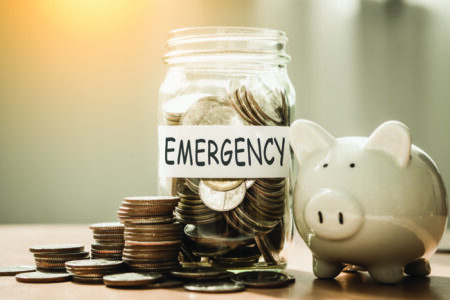
You may be good at growing tomatoes or raising lambs but terrible at financial planning. That’s okay, because you weren’t born knowing how to create an emergency financial plan — but you can learn. Here are some resources recommended by Kirstin Bailey of the Center for Rural Affairs, and financial planner Alex Vasichek.
- Get in touch with your state and county cooperative extension offices. Many state universities employ experts on financial preparedness.
- Small-business development centers can help with business-plan development or review small-scale farm businesses.
- Your state or local farmer-support nonprofit may offer financial education. Ask your county extension office for help in finding an organization.
- Check out books on basic financial preparedness and literacy. Vasichek recommends Rich Dad Poor Dad by Robert T. Kiyosaki and Sharon Lechter.
- Financial-planning professionals can help with basic tasks, such as setting up an emergency fund, and offer advice to help with future decision-making. “A lot of times, people don’t meet with financial planners because they’re intimidated, but the sooner you bring someone in and make sure they’re a good fit for you, the sooner they can help you,” Vasichek says.
Lisa Munniksma is a freelance writer, podcast host, and small-scale farmer living in Kentucky.