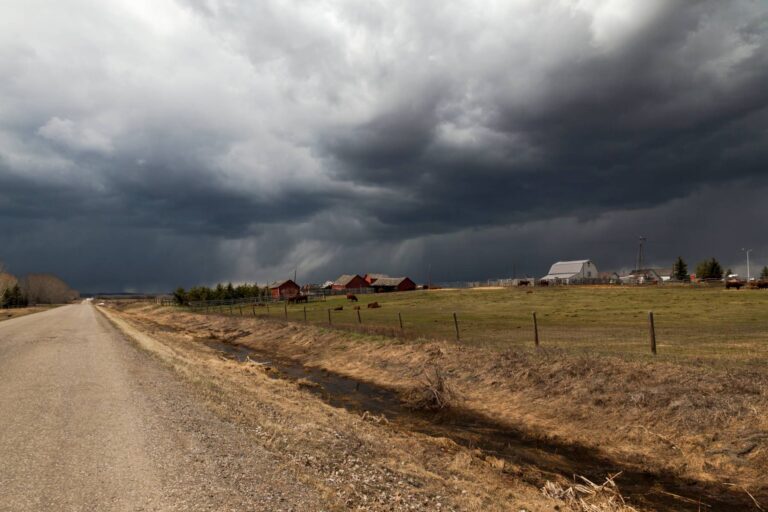
I have a black and white photo of a tornado sitting on a cabinet in my house. It always used to hang on the wall in my grandparent’s house, and now that they are gone, it reminds me of them. But the picture also reminds me of the awesome and terrible power of those tornadoes.
Our family farm had a tornado near-miss back in the early 1990s, many years before we moved out here. The tornado struck our neighbor’s farm, just across the road, and took their barn and house. I often think about what we would do if the unthinkable happened, and we were to be struck by a tornado or other disaster. My family would hopefully make it to the cellar, which must be accessed by going outside. But what would happen to the animals? What about other possible disasters? I’m sure others of you have had the same thoughts. And it is wise to plan ahead.

First, make a plan. Think about the possible disasters or emergencies that could (realistically) happen on your farm. Flash floods, tornadoes, fires, hurricanes and blizzards are all possibilities and can cause even more stress if you are not prepared. Write out your plan and make sure everyone knows what the plan is and where the written plan can be found. If your plan includes evacuating animals, be sure you have room on your trailer for them all, or arrange for someone to be on standby if the need for evacuation arises. Be sure to include contact information for yourself, contact info for your veterinarian, farrier, etc., and other alternative contact numbers such as friends, family and neighbors.

Next, make a farm disaster kit. This can be an overwhelming task, but if you make a list and work on it a bit at a time it is much easier. Include in your kit a list of the animals you own, copies of registration papers, vaccination records, a livestock first-aid kit, halters/ropes, buckets, tools for cleaning up poop/downed fencing/tree limbs, rags, flashlights, radio, extra batteries, and other such items. You may also want to include copies of insurance policies, especially if you happen to have any animals insured. Your kit will depend on what types of animals you have, how and if you plan to move them, and what type of disaster you are addressing.

It is important to make sure you can identify your animals after the disaster is over. Take photographs of all animals, especially any distinguishing markings or characteristics. Keep extra back up files of all records (including photographs) on an external drive that is someplace safe. If you don’t have your records stored electronically, keep extra hard copies someplace besides in your barn or home. Animal identifying neck or leg bands can also be helpful to keep on hand. Write your name and contact information on them ahead of time, and keep a permanent marker with them in case other information is needed.
Make sure your truck, tractor, utility vehicle, trailer, etc., are serviced and ready to move quickly. Have an extra can of gas around as well, and tools at the ready for changing tires.

Another thing to think about is what will happen when the disaster is over. If your farm is destroyed by a disaster, you may not immediately be able to bring your livestock back. Make arrangements with neighbors, family or friends on what to do in the aftermath of a disaster.
Be sure to schedule an annual review of your emergency plans, kits, and other disaster information. None of your hard work will be worth it if the information is out of date, your flashlight batteries don’t work, and you don’t even own half the animals on your list anymore. Check your supplies and update your plan regularly.

As a final thought, consider becoming a volunteer for your local Animal Response Team. These teams are made up of people who are trained to deal with animals in a disaster. However, many times these volunteers do not have experience handling livestock. Volunteers with livestock handling experience are usually very appreciated. Most states now have Animal Response Teams, and some groups are even more locally oriented by county or cities. There are training opportunities that will be beneficial for your own emergency preparedness.
So … get a kit. Make a plan. Be prepared!